Modular-Muse — JifferHarriman.com

modular-muse.com is the home page for this project. It is a large part of my PhD work at the ATLAS Institute. Modular-Muse is an instrument building platform that consists of hardware board and software library to explore new ways of creating musical instruments. The Sound Clippys Board is an Arduino based board that allows for simple circuits to […]

via Modular-Muse — JifferHarriman.com

Modular-Muse — JifferHarriman.com

Arduino Theremin Shield

OSH Park engineer Jenner Hanni posted on Wickerbox Electronics about his Arduino Theremin project:

arduino-theremin.png

This is a sort of false theremin that turns the distance between your hand and the rangefinder into notes. There are three cap sense pads you can touch to change the key, and the program remembers your most recent song so you can choose to play it back.

The KiCad schematic and layout, along with the the Arduino code, have been released on Github under the CERN Open Hardware v1.2 License:

githubwickerbox/Arduino-Theremin


Jenner shared the board on OSH Park:

Arduino Theremin v1.3

5670bac024b8feaab01201cebb24c0a1
Order from OSH Park

Arduino Theremin Shield

“I Can Reflow” Merit Badge — Hackaday

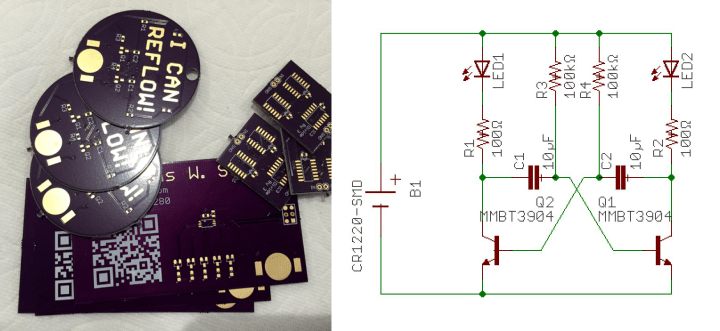
[Nick Sayer] can reflow, and he can prove it. He designed a simple blinking-LED circuit that uses SMD parts to, well, blink LEDs. That’s not the point, though. It’s designed to be a test platform for reflow soldering, and to use a minimum number of valuable parts. Plus, it says “I can reflow!” in exposed…

via “I Can Reflow” Merit Badge — Hackaday

“I Can Reflow” Merit Badge — Hackaday

Easy Bubble Watch Oozes Retro Charm — Hackaday

[Rafael] made a sweet little retro watch that’s a fantastic introduction to hardware DIY. If you’ve programmed an Arduino before, but you’ve never had a board made, and you are up for some SMD soldering, this might be for you. It’s got some small components, so ease off the coffee before soldering, but it’s nothing…

via Easy Bubble Watch Oozes Retro Charm — Hackaday

Easy Bubble Watch Oozes Retro Charm — Hackaday

DIP Protoboard for C.H.I.P.

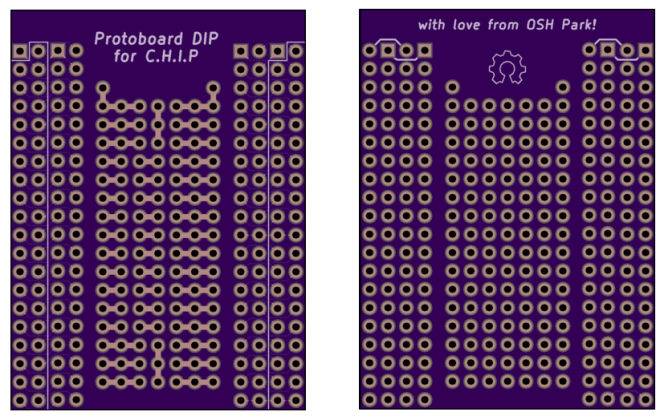
Electrical Engineer Jenner Hanni (of OSH Park and Wickerbox Electronics) designed a protoboard DIP for the Next Thing Co. C.H.I.P. (“The World’s First Nine Dollar Computer”):
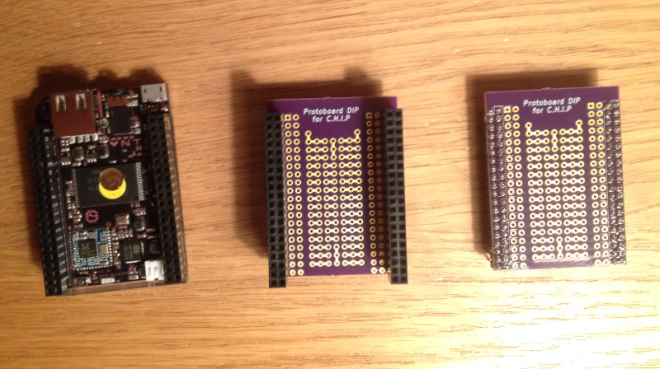
dip1

DIP Protoboard for C.H.I.P.

for when you need something more durable than a breadboard

The KiCad schematic and layout are available at the Github repo. The project is released as Open Hardware under the CERN Open Hardware v1.2 License.

This project was created using the CHIP DIP KiCad template from Wickerlib.  The protoboard holes are connected where indicated by exposed copper, for easier wire routing and soldering.
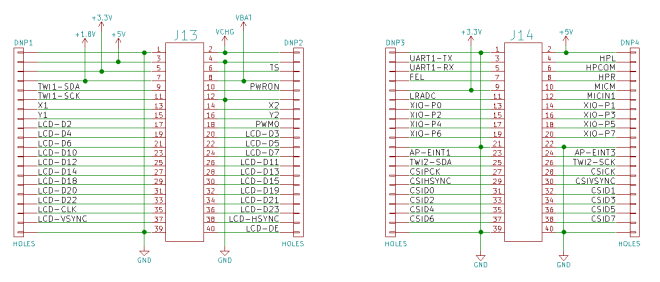
chip-dip-schematic Jenner has shared the board on OSH Park:

DIP Protoboard for CHIP

$17.50 for a set of three

chip-dip-oshpreview

Order from OSH Park

Bill of Materials

For a non-stackable version, you can just use two standard 0.1” (2.54mm) pitch 1×40 headers, each snapped in half.

For a stackable version, you can use two of these extra-tall 2×20 female headers from Adafruit. The connectors are from the Samtec SSQ family so you could shop around for other distributors, but Adafruit has by far the best price for this particular component.

License

This project is released under the CERN Open Hardware v1.2 License.

DIP Protoboard for C.H.I.P.

Retro watch with Bubble display

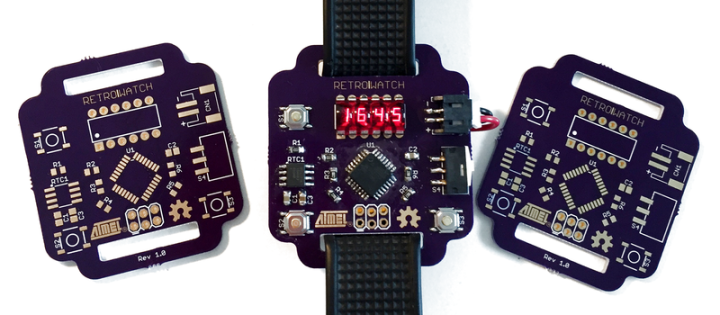
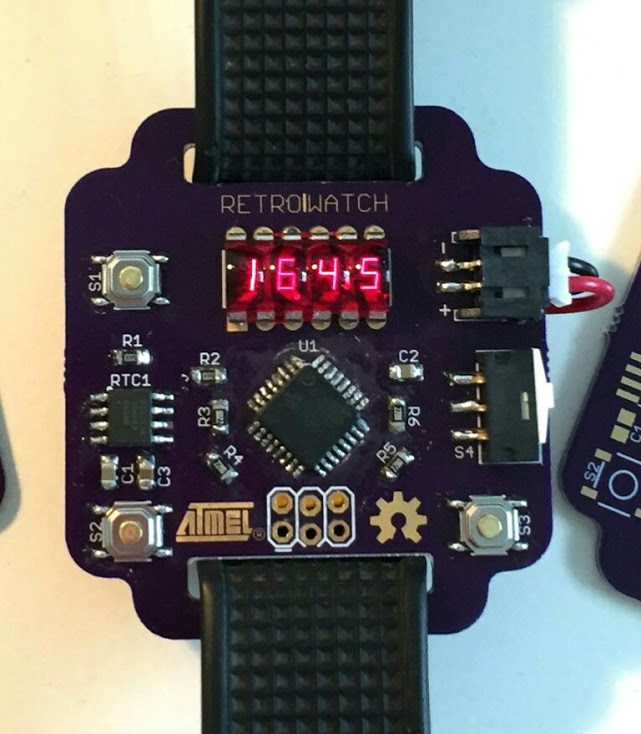
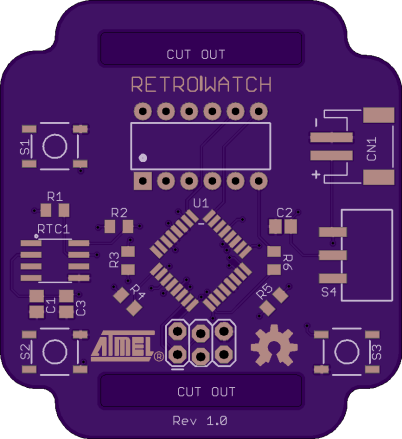
16 - 1 (3)Rafael Riber created a retro watch with HP QDSP-6064 Bubble display like 1970’s HP calculators:

RetroWatch

The display is controlled by an Atmel ATMega328P-AU MCU with Arduino code, and the time is kept by a Maxim DS3231 Real-Time Clock module, that stays connected to the LiPo battery at all times, keeping time even when the microcontroller and display are not powered.

RafaelRiber shared the board on OSH Park:

Order from OSH Park

Retro watch with Bubble display

Omniwheel Robot Laser Tag

dualomnibots

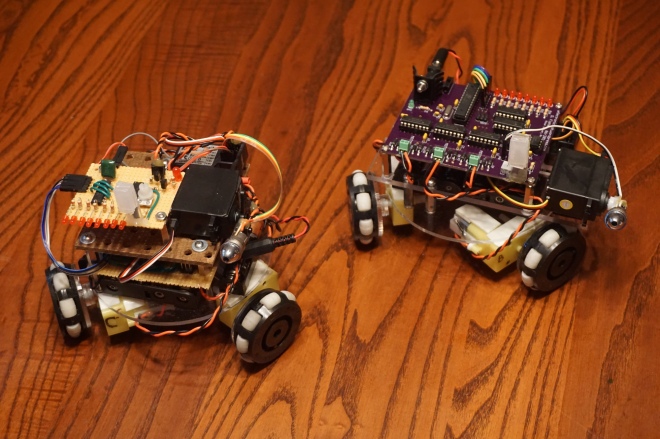
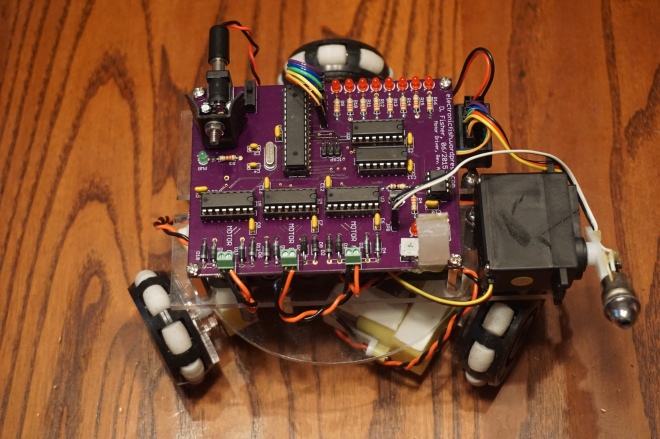
Dan Fisher created this Atmel ATMEGA328P-based controller board to mash-up laser tag and battle bots:

Battlebots – laser tag style!

omniclose1

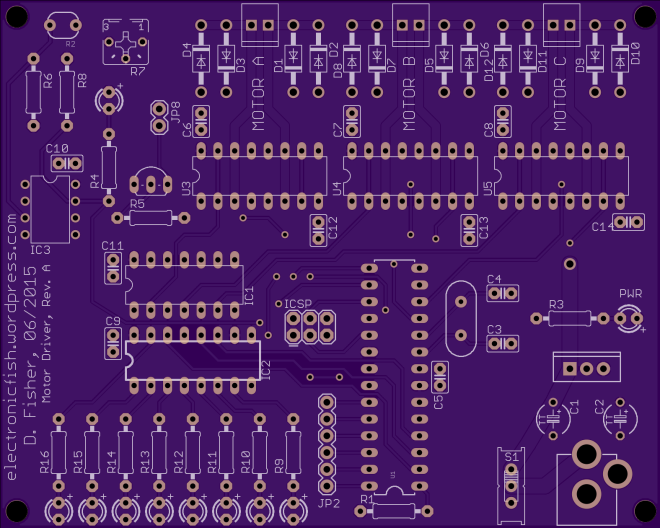
This is my version of a control board for this project from Make Magazine. It uses dual H-bridges ICs (SN754410) to drive each motor (channels are doubled for up to 2A continuous current per motor, 4A peak for very short times). Power LED. Also 8 LEDs run by a 74LS595 shift register for “blinky” fun! Photoresistor allows for a laser hit to be detected and affect the omnibot.

fisher0251 has shared the board on OSH Park:

Omnibot control board, Rev. Ai

Order from OSH Park

Omniwheel Robot Laser Tag