The Portland State Aerospace Society (PSAS) is building ultra-low-cost, open source rockets and satellites that feature some of the most sophisticated amateur rocket avionics systems. Nearly all of the PSAS rocket designs, schematics, and code they develop are published on GitHub.
PSAS is currently working on the exciting open source OreSat cubesat project to give Oregon educators free access to satellite imagery:
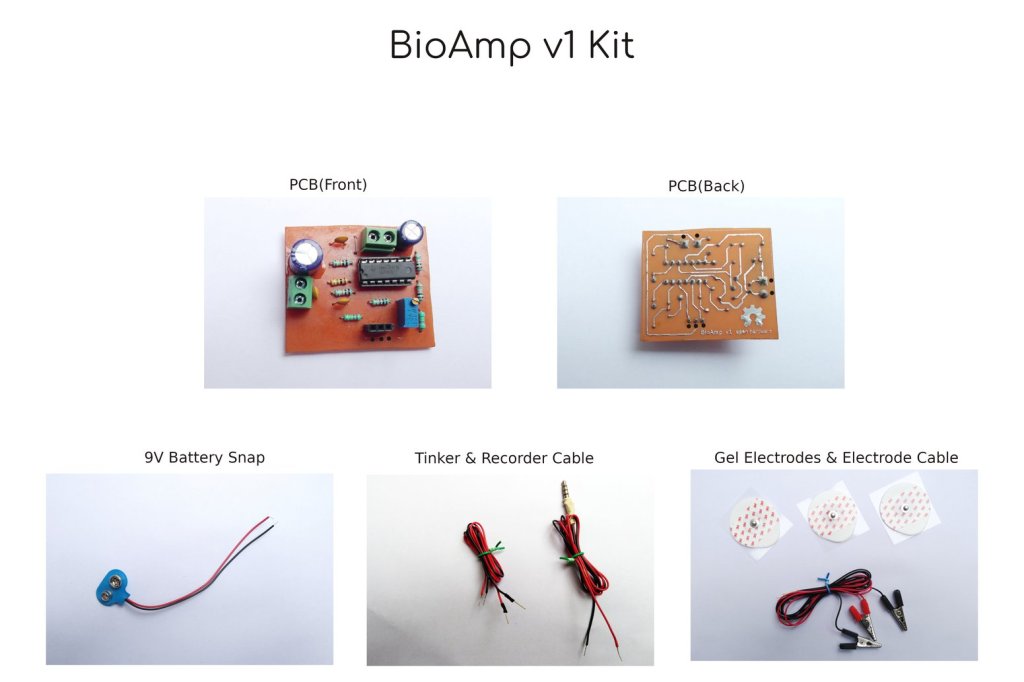
The BioAmp v1 designed by Deepak Khatri is a bio-potential amplifier for tinkers & hackers alike, who want to build projects that incorporate signals from the human body:
BioAmp v1 is an open hardware board that can amplify biological signals and it can be used for sampling bio-potential differences. This board can be used for signals like EEG, ECG, EKG and EMG. You can use the included recorder cable for recording the signal on a pc using audacity OR on mobile using Backyard brain’s spike recorder app. The other cable with male headers, which I will call the Tinker cable, you can use it for connecting the board’s output to a breadboard for amplification and filtering, OR you can connect it directly to Arduino.
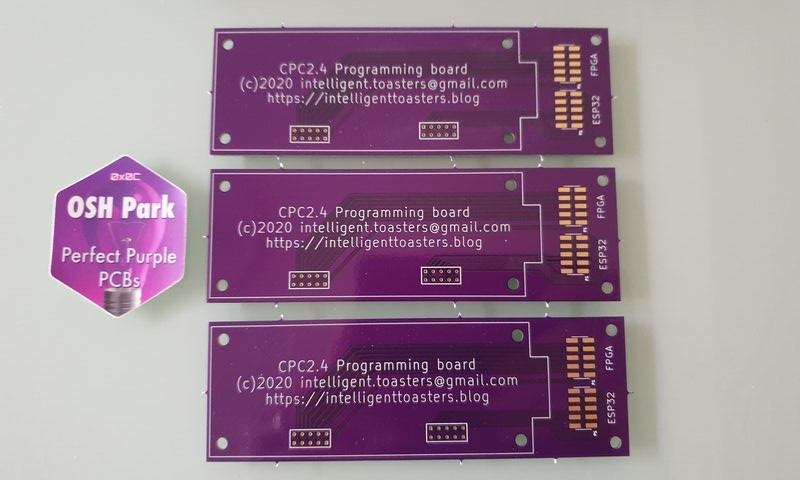
The CPC2 daughter board described in my last post arrived quicker than expected, but dry assembling the board revealed some unforeseen problems. So this post contains another lesson learned.
Before I desoldered the headers on the bottom of the CPC2, I thought I’d check the alignment of the pin headers on the daughter board against the mating pads on the bottom of the CPC2. One of my spare CPC2 boards aligned perfectly, but revealed an issue that I hadn’t considered.
Fortunately, the daughter board was only a two layer board and so fairly inexpensive. So while I won’t be using it for now, it’s another lesson learned. It was also good to prove that Kicad is both easy to use and natively works with the file upload at OshPark.
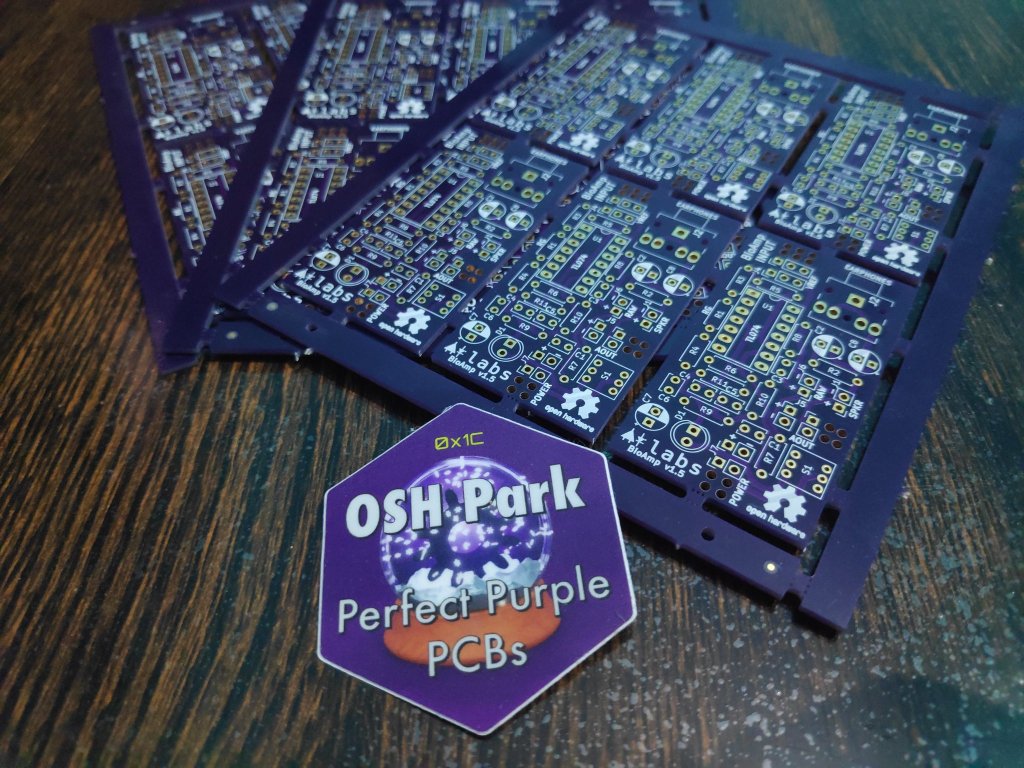
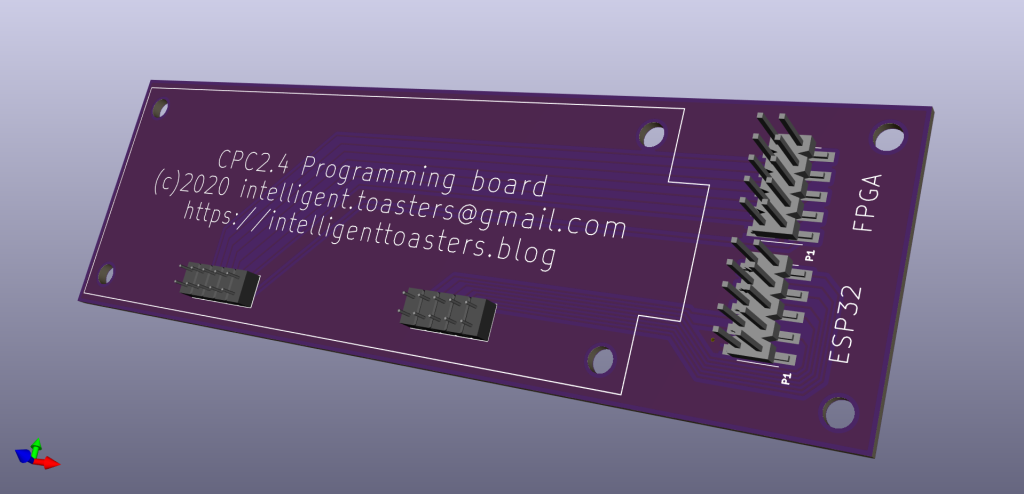
On a final note, compare the OSH Park PCBs with the KiCad render. Spooky how similar they are, right?
Dave Neary will be joined by Limor Fried of Adafruit, Alicia Gibb of the Open Source Hardware Association, and Jason Kridner, co-founder of the BeagleBoard.org project. They will discuss the role that open source software development has played in enabling an open hardware community to develop, and the role that open source software plays in the economics of open hardware companies.
Circuit Sculpture was one of our most anticipated workshops of Hackaday Remoticon 2020, and now it’s ready for those who missed it to enjoy. A beginning circuit sculptor could hardly ask for more than this workshop, which highlights three different approaches to building firefly circuit sculptures and is led by some of the most prominent people to ever bend brass and components to their will — Jiří Praus, Mohit Bhoite and Kelly Heaton.
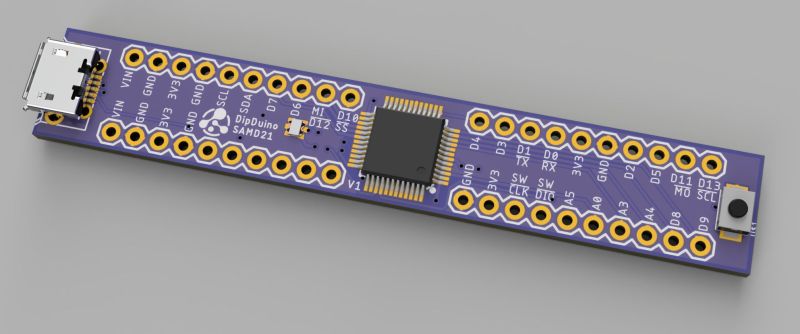
Hey everyone. Ive been busy working a new job and been kind of sick lately. So i havent had much time to do any physical work but i do have a new board. Its based on my DipDuino but using the SAMD21 instead. This is a beautiful little PCB with tons of power in a nice small form factor.
The MCU of choice here is the ATSAMD21G18 which is a 32-Bit ARM Cortex M0+. The PCB operates on 3.3v and can be powered and programmed via USB Cable. You can also power with USB pin on the header but please dont do both at the same time as there is no real protection for your USB port.
The SAMD21G18 runs at 48MHz and has 256KB of FLASH and 32KB of SRAM. Its a great part. The Arduino Zero uses the same MCU and this means that i will also preprogram this to run as an Arduino Zero for out of the box programming. No need for a debugger.
Here is a render. The PCB is 71.63mm x 12.06mm [2.82in x 0.47in] … No actual PCB made or tested but maybe soon.
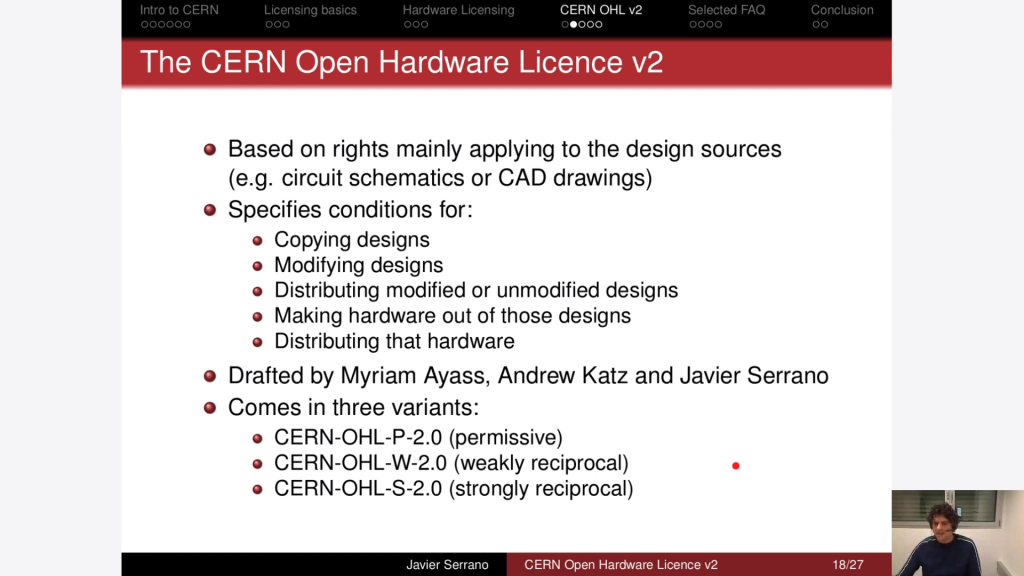
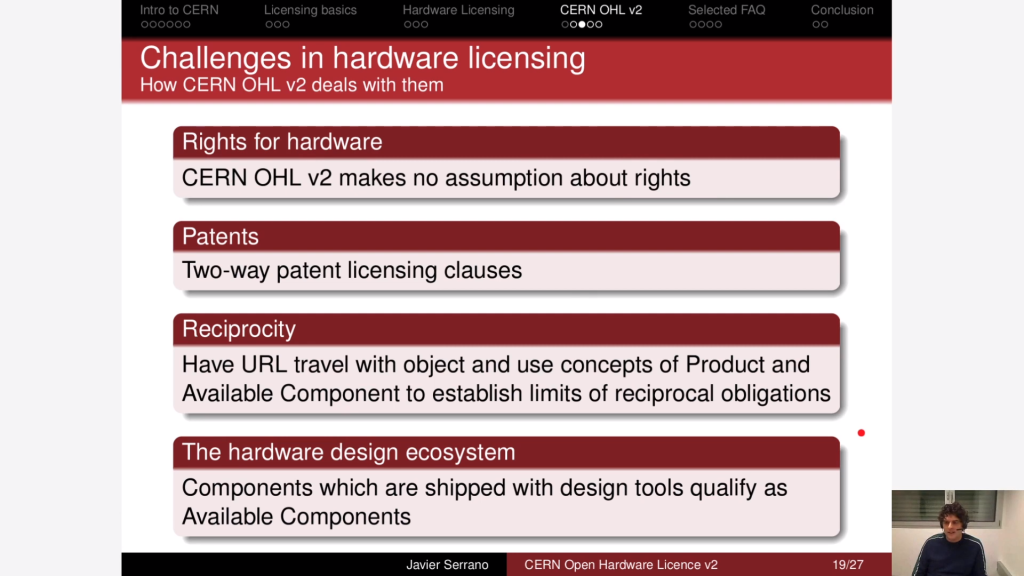
CERN, the European Laboratory for Particle Physics, updated the CERN Open Hardware Licence (https://cern.ch/cernohl) this year. This new version maintains the original goal of providing a sound legal basis for the sharing of hardware designs, while bringing in numerous improvements.
Javier is one the authors of the licence. He will introduce licensing, open-source and the challenges related to licensing of open-source hardware designs, along with the solutions provided by version 2 of the CERN OHL.
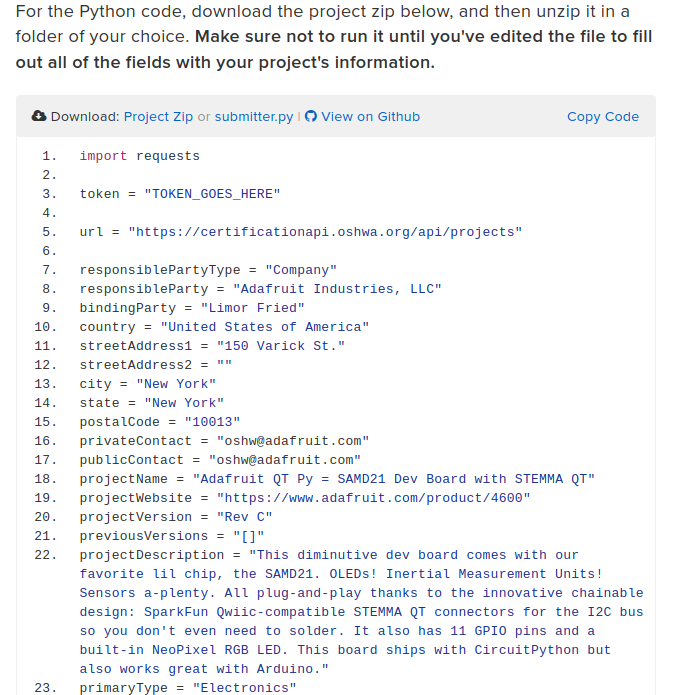
OSHWA (Open Source Hardware Association) is an organization that, among other things, has created and maintains a process to allow users and companies to certify that their projects are open source. This past spring, many of the boards that Adafruit manufactures were certified. Those certifications were submitted semi-manually, which took quite a while. Now, OSHWA has an API that allows you to submit projects much quicker and can make submitting large numbers of projects at the same time much easier and more straightforward.
In this guide, you’ll learn how to submit your open-source project for certification using this API and a Python script. It’ll will take you through the process used by Adafruit to submit a project.
Where does he get such wonderful toys? [Glenn] snagged parts of a Grass Valley Kalypso 4-M/E video mixer switcher control surface from eBay and since been reverse engineering the button and display modules to bend them to his will. The hardware dates back to the turn of the century and the two modules would have been laid out with up to a few dozen others to complete a video switcher console.






 OSH Park