LiFePO4 battery power for makers

Patrick Van Oosterwijck is working to make LiFePO4 battery technology easy for makers:
3992821439830785525.JPG

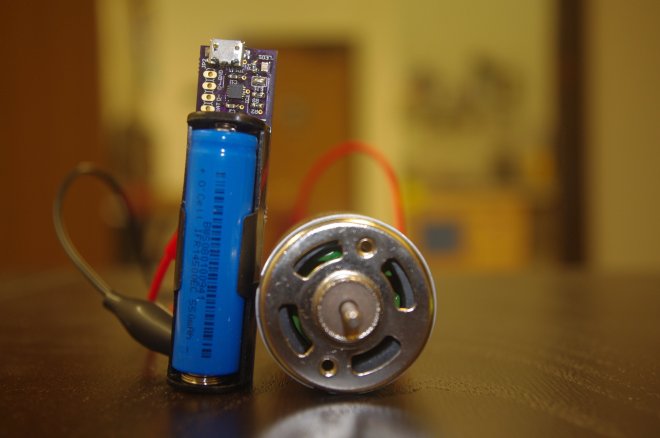
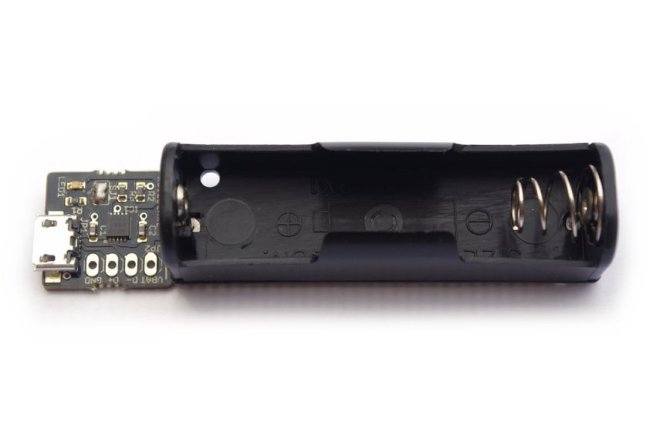
LiFePO4wered/USB

LiFePO4 is a battery technology that finds wide application in power tools and electric vehicles. It is an inherently stable chemistry (which makes it safe), is environmentally friendly (no heavy metals), has very high power density and many more recharge cycles than other Lithiums.

Easy to use module to get started with LiFePO4 in your own designs. It’s basically a battery with an integrated USB charger. All connections are on a 0.1″ grid for easy integration. Take power straight off the battery holder terminals, or if that doesn’t fit in your design, cut off the battery terminals and connect to the 0.1″ header footprint.


The EAGLE design files are available in this GitHub repo:

githubLiFePO4wered-USB-OSHW


The assembled board is sold on Tindie:
2015-01-05T20:04:55.558Z-lifepo4wered-usb.jpg.855x570_q85_pad_rcrop.jpg

LiFePO4wered/USB: A complete USB chargeable 3.3V power system on a module

  • LiFePO4 battery technology–made convenient for makers.
  • 3.2V 550 mAh LiFePO4 battery is included!

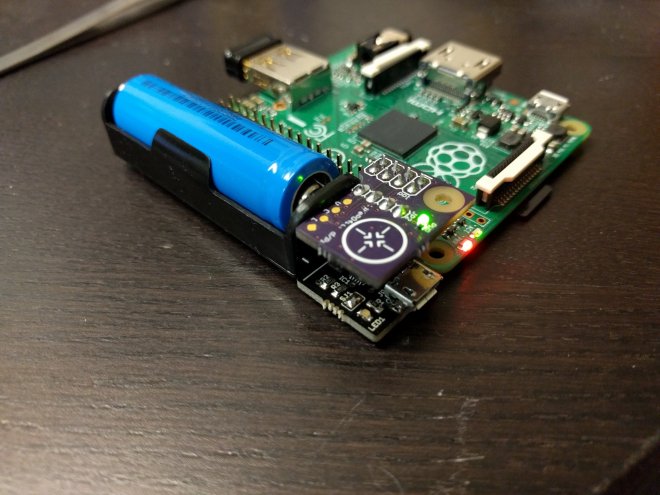
Patrick also created this LiFePO4 battery power manager for Raspberry Pi:
4853551455579281898.jpg
LiFePO4wered/Pi

The project is built on top of a LiFePO4wered/USB module. A small board is added with an MSP430G2131 microcontroller that takes care of monitoring input and output voltage, monitoring a PCB touch button, driving a power indicator LED and switching the load (the Raspberry Pi power). The microcontroller is also connected to the Pi’s I2C bus and monitors the Pi’s running state. The small board connects to 8 of the Pi’s GPIO pins but leaves the rest free to allow prototyping using fly leads.


Library, command line tool and daemon for the LiFePO4wered/Pi module:
githubLiFePO4wered-Pi


LiFePO4 battery power for makers

Teensy Super Audio Board

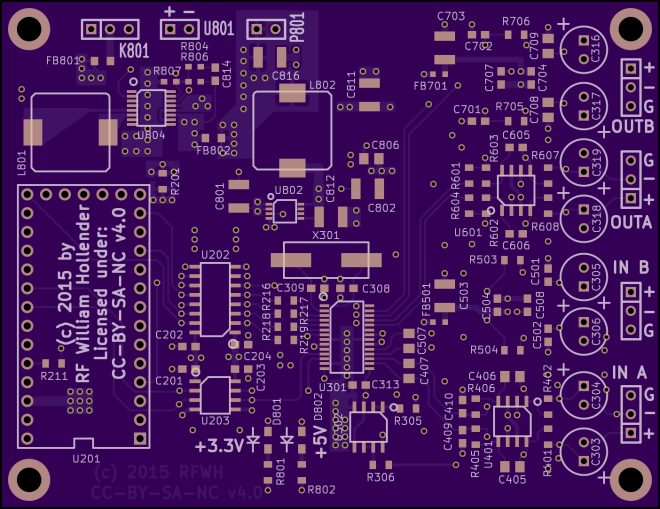
RF William Hollender created this professional quality 24 bit 192kHz audio breakout board for Teensy 3.x, Raspberry Pi, and more:

Teensy Super Audio Board

3005691439395112289

Professional quality audio breakout board, mainly targeted towards Teensy 3.x and Raspberry Pi 2, but also should be compatible with any boards having an I2S and I2C interface broken out (FPGA boards with enough GPIO included).


Hollender described his motivation in this forum post:

PJRC Forum: 24 bit audio boards

I mentioned a while back in the Audio Library thread that I was interested in putting together a high quality (24 bit) audio board. I finally got to a point in my projects where a higher quality audio codec board would be helpful, so I dove in and put together 2 designs. One design uses a slightly better performance codec (a Cirrus Logic CS4270) than the SGTL5000, and the second uses the highest quality codec I could find that is easily hand solderable (the CS4272).


The KiCAD board project including libraries are on GitHub:

github SuperAudioBoard


whollender has shared the board on OSH Park:

SuperAudioBoard

i
Order from OSH Park


Hollender recorded this video about his project for the Hackaday Prize SemiFinals:

Teensy Super Audio Board

Reddit DIY Electronics contests

Screenshot-3

/r/diyelectronics on Reddit currently has two electronics design contests going on:

An Unconventional Clock

Deadline is April 3rd for this beginner contest

The mission here is simple: give me a clock you won’t see in a store.

Perhaps a word clock. A lava lamp water clock. An alarm clock that slaps you in the face and eats your hair (warning: audio). I don’t care.

Buck Regulator Olympics

Deadline is April 30th for this advanced contetst

The goal is to build a switching buck DC-DC converter from discrete components that can step down a fairly common input voltage to another common output voltage–in this case, 3.3V.


Reddit DIY Electronics contests

Joe Grand’s Creaturepod

We are big fans of Joe Grand!  You may know him from his awesome designs like Emic 2 Text-to-Speech, Defcon badgesJTAGulator and many more on Grand Idea Studio.  We loved watching Joe introduce cable TV audiences to hardware hacking on the Discovery Channel show Prototype This!

Here’s a fun project from Joe Grand that he has shared on OSH Park:

Creaturepod

Screenshot-9

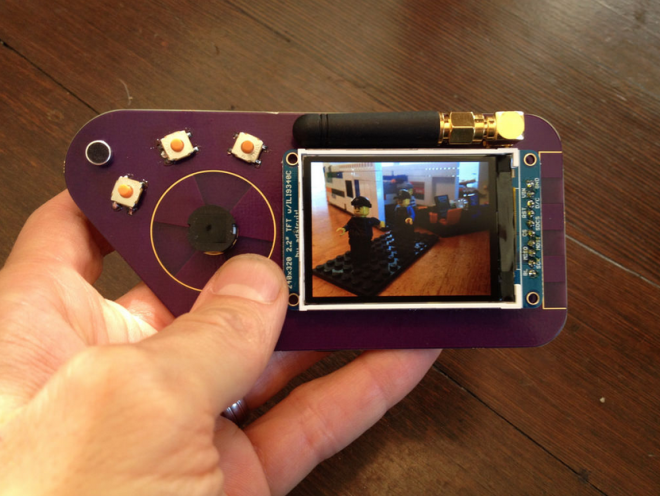
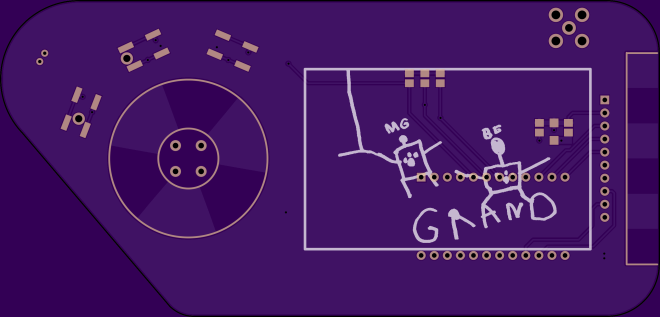
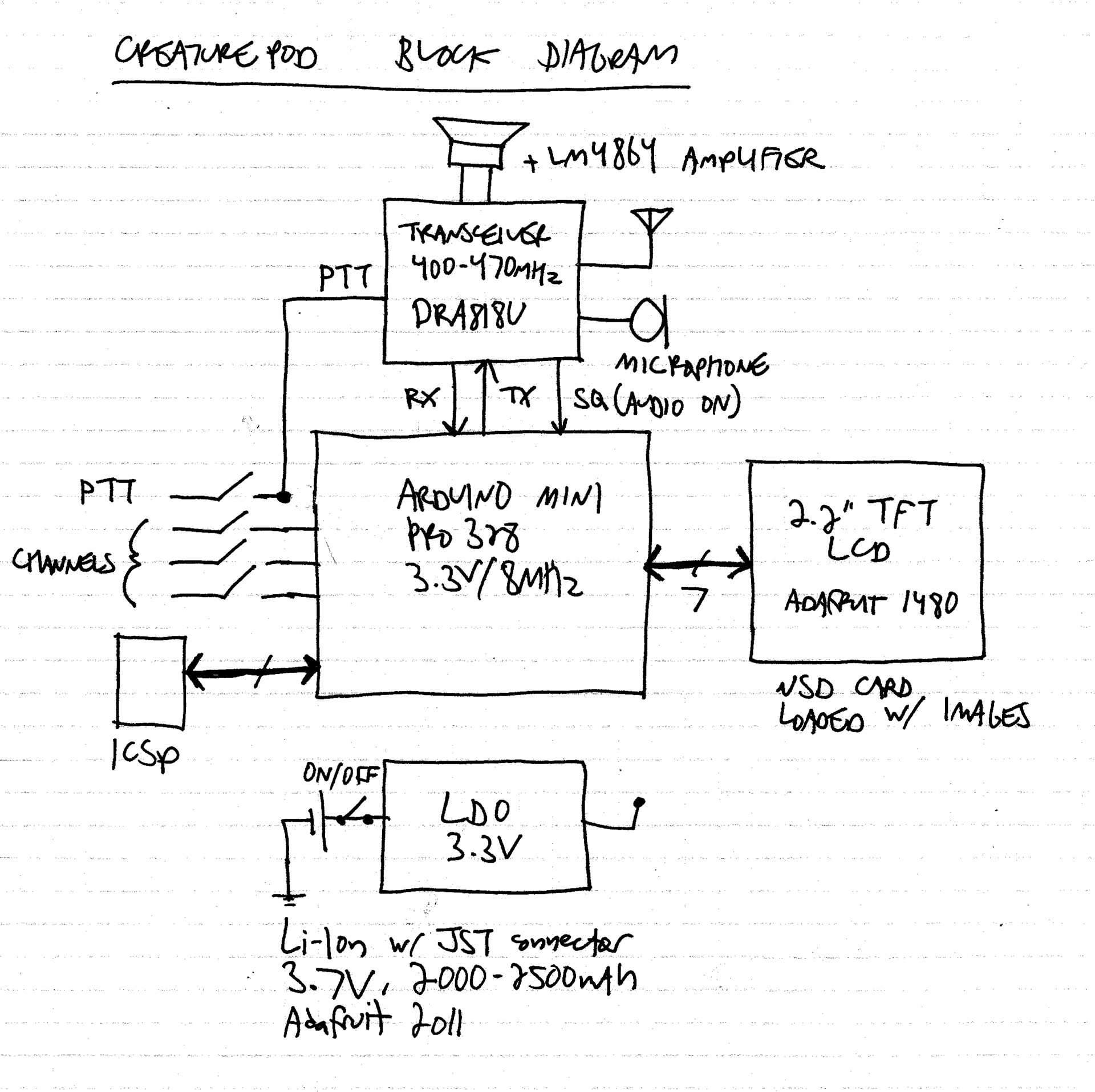
The Creaturepod is a portable walkie talkie system that enhances children’s interactive play. It mimics the fictional Creaturepod from the popular children’s television show, Wild Kratts.

Joe writes:  “The design features an Arduino Mini Pro 328, 2.2-inch TFT liquid crystal display (LCD), DRA818U voice transceiver module, electret condenser microphone, speaker, and buttons for channel/ frequency selection and push-to-talk capability. Bitmap images are stored on a microSD card and displayed on the LCD to indicate the currently selected channel. A 2000mAh Lithium-Polymer battery provides more than 20 hours of playtime before recharging is necessary.”

Documentation links:

Shared Project: Creaturepod

4d7acf2752051593c5221ba01f18bcc2
Order from OSH Park

Joe Grand’s Creaturepod

Self Portrait on Circuit Board

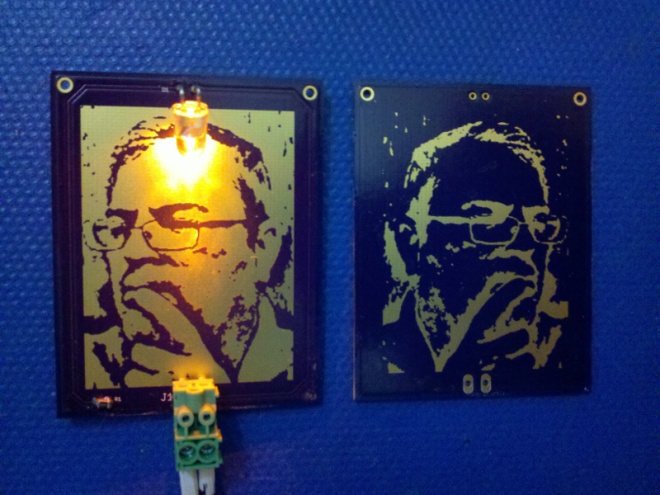
Ronald Sutherland created a PCB with a self portrait on the copper layer:

15027,Assembly (1)

Self Image on Circuit Board

I guess at some point everyone does this…

15027,Schematic.png

Ronald has shared his project on OSH Park:

OSH Park Shared Project

2 layer board of 1.86×2.36 inches (47.14×59.87 mm).
Shared on January 30th, 2015 21:48.

Order from OSH Park

Self Portrait on Circuit Board

D-DAQ: monitor automotive perfomance

Michael O’Brien created this project to monitor automotive performance:

Hackaday.io: D-DAQ

7720981407734515656

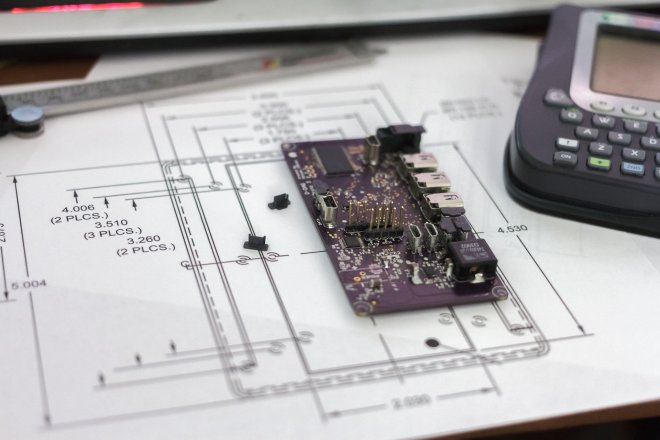
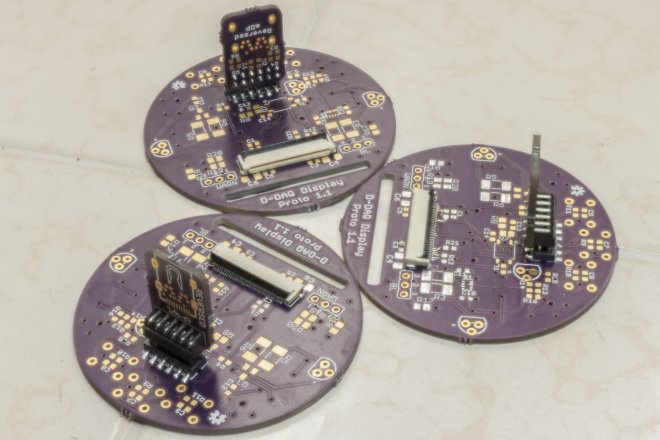
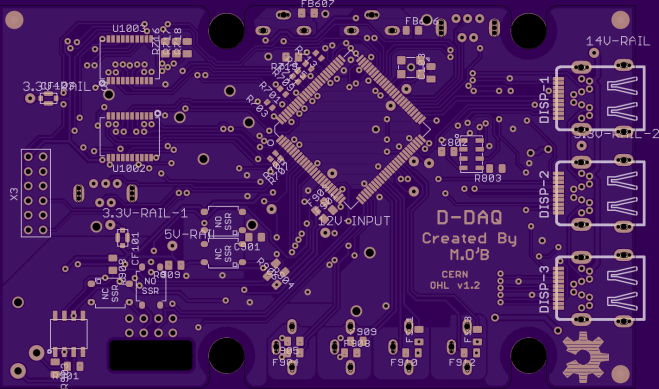
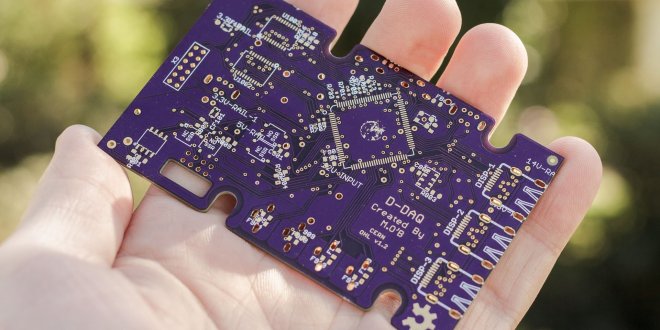
“D-DAQ is the new incarnation of the Doniol Boost Gauge. It is designed with around a modular paradigm and high quality parts. Though by it has battery voltage, EGT, Boost up to 85 psi, and a 5V aux sensor of your choosing, it can be expanded via 10 additional analog inputs, 2 impulse inputs, and future CAN integration.”

775091403764763587

“As for outputs, you can add up to 3 OLED displays to view everything on, though this too is not limited to the displays in development.”

Michael made this 2 minute overview video for The Hackaday Prize:

Digital-Corpus has shared several projects on OSH Park including:

D-DAQ Mainboard Proto 4

i (13)
Order from OSH Park

Michael wrote about his experiments with plated slots in his hackaday.io project log:

OSH Park Manufacturing

2023311411082399404

6690031411082430041

NOTE: Internal Cutouts and Slots

We officially support non-plated slots and cutouts that are at least 100 mil wide (0.1inches / 2.54mm).

Whenever possible in your designs, we advise replacing small or plated slots with a large via. Typically, setting the hole size equal to the slot length is sufficient to fully replace the feature with minimal design impact.

D-DAQ: monitor automotive perfomance

USB Cable Tester

davedarko wanted an easy way to check a USB cable, so he created this project on hackaday.io:

USB cable tester

5558291444434631901

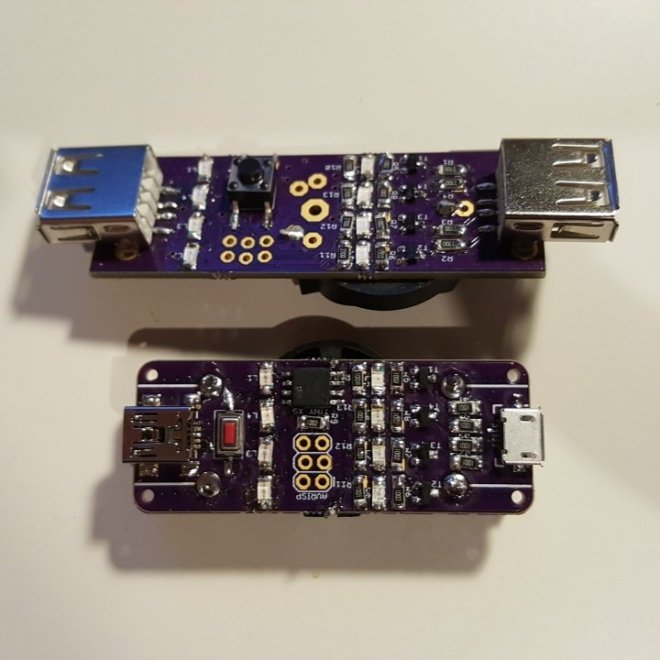
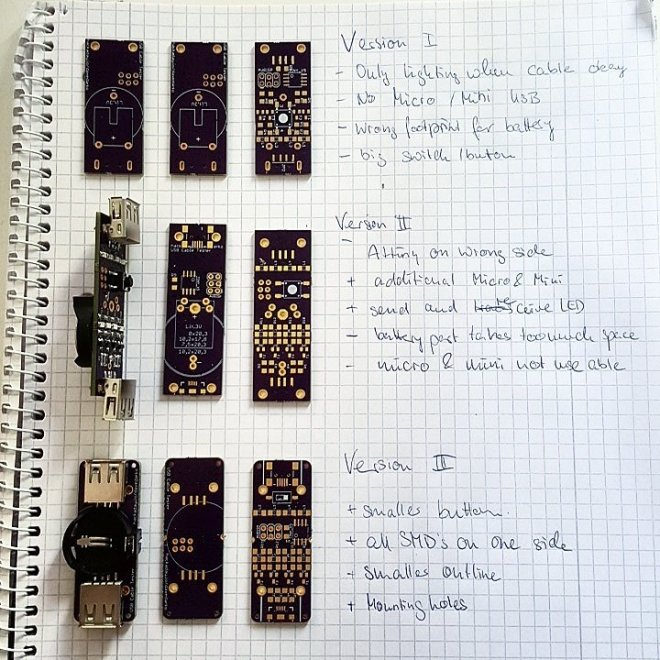
Test your mini, micro and A-A cables with this little device!

632561443089790694

A little ATtiny45, some LEDs and transistors – battery powered. It scans through the cable with some blinking LEDs, then goes to sleep.


The design files and source code are shared on GitHub:

/USB-Cable-Tester


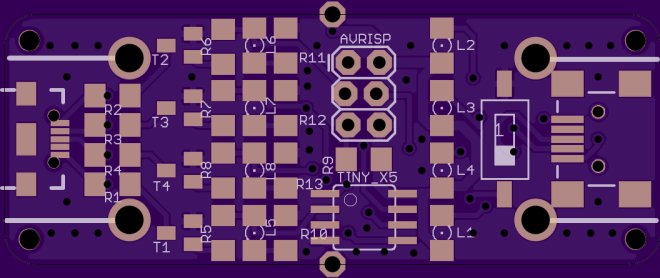
And the board is a shared project on OSH Park:

USB cable tester

6678a5a4c38017f8c5ba15347c45892a.png

Order from OSH Park

USB Cable Tester

Vinduino: wine grower saves water

Reinier van der Lee created the Vinduino project (Vineyard + Arduino) to better manage the irrigation of his Southern California vineyard:

Vinduino, a wine grower’s water saving project

Monitoring soil moisture at different depths to determine when to irrigate, and – more importantly – how much water is needed. Save 25%!

Reineir explains further on his project page:

If you want to learn about saving water, talk to a farmer. California farmers, including myself, voluntarily aim to reduce agricultural water consumption by 25%. This reduction is more than the annual urban water use, much more effective than any residential water reduction can achieve.

The project includes:

  • DIY calibrated gypsum soil moisture sensors
  • Hand held sensor reader for soil moisture, salinity & water pressure
  • Solar powered remote sensor platform:
    • 3 electrically separated inputs for soil moisture sensors
    • Wifi (ESP8266) or Appcon RF module for long range connectivity (miles)
    • Irrigation valve control, optional pressure sensor for valve operation feedback
    • DHT-11 temperature/humidity sensor

Vinduino has produced impressive results:

  • In 2015 we saved 25% , or 430,000 gallons, of irrigation water.
  • Cost saving on water and labor was $1,925
  • Cost to achieve these savings was $635
  • Minimum configuration for developing countries, incl. salinity measurement: $60


ReiniervdL has shared two project on OSH Park:

Vinduino-R V0.1: Remote soil moisture measurement 

2 layer board of 3.69×3.15 inches (93.65×80.01 mm).
Shared on June 7th, 2015 21:33.

Order from OSH Park


2 layer board of 2.39×2.00 inches (60.66×50.80 mm).
Shared on June 7th, 2015 21:33.

Order from OSH Park

Vinduino: wine grower saves water

Sunburn Monitor

This UV monitor on hackaday.io was designed to help prevent UV-caused skin damage:

Sunburn Monitor

 This is a UV monitor based around the SI1132 light sensor and an ATMEGA168. It uses a sound-based interface, where beeps signal settings for skin type and use of sunscreen, if any. This is to save the power and cost of a display, and also in recognition that the device will be used outdoors in bright sunlight, where only reflective displays would be usable.

SI1132 was chosen as it produces a ‘calibrated’ UV index and takes up very little space. ATMEGA168 was chosen as a cheap uC with hardware I2C support which is supported by the Arduino environment (to allow a broad range of users to easily modify the code as they see fit).

The design files and source code are hosted on GitHub:

/Sunburn-Monitor

matrixwide shared the board design on OSH Park:

Sunburn Monitor V 0.2


Order from OSH Park

Sunburn Monitor

MIT Rocket Team

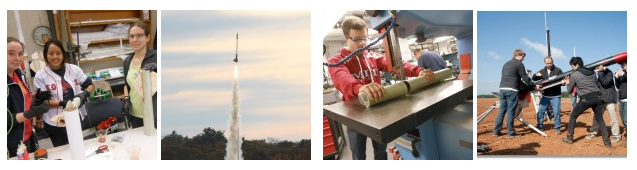
OSH Park is proud to be a sponsor of the MIT Rocket Team:
RT3-1024x323.png

Massachusetts Institute of Technology’s student-run rocketry club

rocket.png

Their latest rocket is designed to ascend 10,000 ft and deploy a parachute for the descent:

Project Therion

Project Therion is named after the many-headed dragon of biblical lore. Our rocket is designed to ascend 10,000 ft, where it will deploy a small pilot parachute. The rocket will descend under the pilot to 5,000 ft. At 5,000 ft, a 67 foot parafoil will unfurl from within the rocket. A flight computer will guide the descending vehicle back toward a designated landing site.

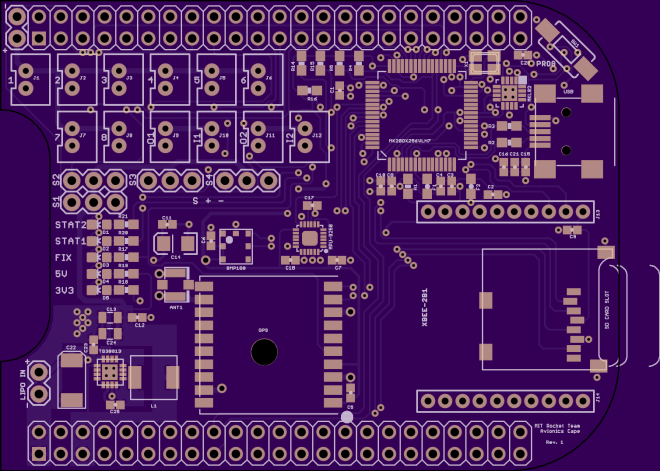
Avionics is developing a Linux-based Guidance Navigation and Control (GNC) computer to help the parafoil find its way home. The instruments were designed as a Beagle Bone cape, which is currently being manufactured. The avionics instrumentation includes GPS, barometric altimeter, nine degree of freedom sensor, and a pitot tube.

The board design for the Avionics cape is shared on OSH Park:

MIT Rocket Team: BeagleBone Avionics Cape

by jswiezy.
d13cfd380a3e26b8503a57a828f2894b (1).png

Avionics All-In-One Board

Order from OSH Park

MIT Rocket Team