Teardown 2025 Call for Proposals

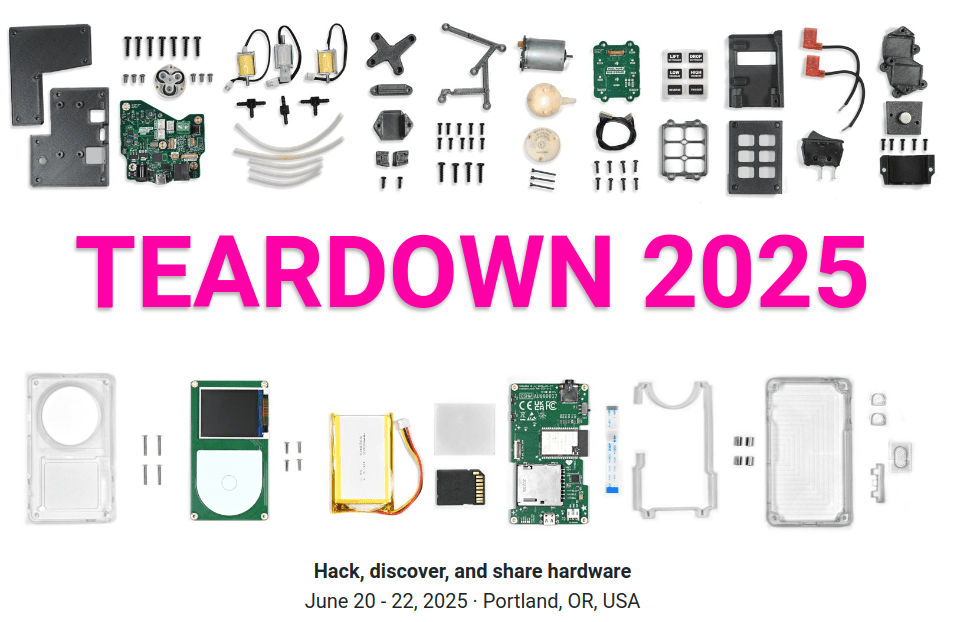
Teardown is amazing annual June event in Portland for hacking, discovering, and sharing hardware. The call for proposals closes on Wednesday, January 15th:

Call for Proposals

Teardown 2025 is a great opportunity to spread your ideas, show off your work, solicit feedback, enrich the hardware community, and foster collaborations. Previous events have featured amazing talks and workshops on a wide range of hardware topics — FPGAs, DIY AI, KiCad, firmware, BOMs, covert blinkenlights, the DMCA, security, RISC-V, prototyping, and so much more. Installations and demonstrations have included circuit sculptures, modular synths, DIY satellite receivers, retro gaming computers, robotic arms, and electronic jewelry.

Would you like to participate? There are four general session formats:

  • Talk: 25 or 50 minutes
  • Workshop: the standard workshop slot is 80 minutes, hands on
  • Demo: show off your project in one of the common areas, attended
  • Installation: display your creation in one of the common areas, unattended
Teardown 2025 Call for Proposals

Introducing The World’s First Ruggedized Satellite

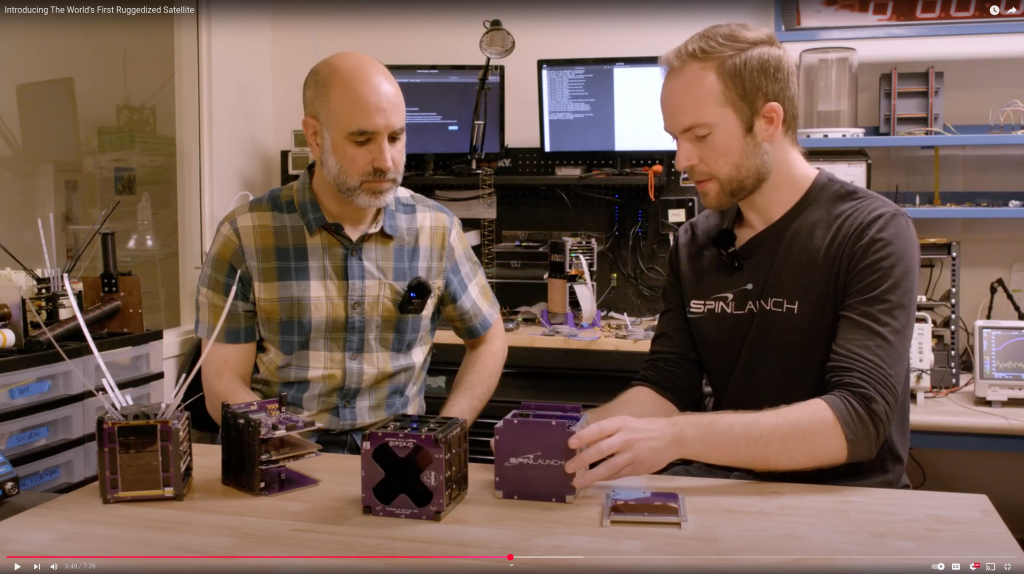
We were excited to see our friends at the Portland State Aerospace Society (PSAS) team up with SpinLaunch to test the limits of OreSat:

Introducing The World’s First Ruggedized Satellite

Think satellites are too fragile to survive high-g environments? Think again. We’re excited to unveil our latest ruggedization milestone: spinning a Portland State University satellite to 10,000Gs! Partnering with Portland State’s satellite program, OreSat, we demonstrate the feasibility and process of ruggedizing off-the-shelf spacecraft. Learn how strategic design tweaks and a shift of engineering intuition pushed an existing satellite over the finish line, ready to be launched with SpinLaunch’s revolutionary technology.

Introducing The World’s First Ruggedized Satellite

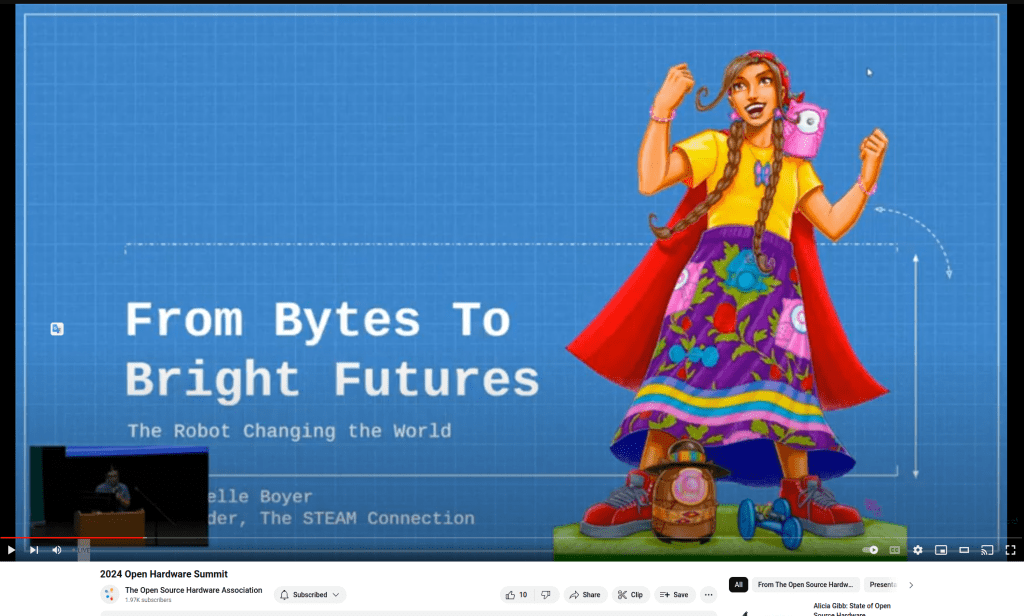
2024 Open Hardware Summit is live from Montreal

The 2024 Open Hardware Summit is taking place May 3rd and 4th in Montreal, Canada:

Speakers include world renowned leaders from industry, academia, the arts and maker community. Talks cover a wide range of subjects from electronics, mechanics to related fields such as digital fabrication, fashion technology, self-quantification devices, and IP law. As a microcosm of the Open Source Hardware community, the Summit provides an annual friendly forum for the community.

You can watch all the talks on the live stream:

2024 Open Hardware Summit is live from Montreal

OSHWA announces Open Hardware Trailblazers

From the Open Source Hardware Association:

OSHWA recently announced a call for Open Hardware Trailblazer Fellows. Thanks to the generous support of the Alfred P. Sloan Foundation, OSHWA is taking a giant step towards expanding open source hardware in academia through the Open Hardware Trailblazer Fellows initiative. The one-year fellowship provides grants to individuals who are leading the way as open source hardware expands into academia. The fellows will document their experience of making open source hardware in academia to create a library of resources for others to follow.

The call was incredibly competitive. We received truly amazing submissions. The fellows were chosen by the program’s mentors and an OSHWA board selection committee.

Congratulations to the Open Hardware Trailblazer Fellows!

Read more about the fellows…

OSHWA announces Open Hardware Trailblazers

Open Source Hardware Certifications For August 2020

Salman Faris writes on Make about the latest Open Source Hardware certifications:

Open Source Hardware Certifications For August 2020

Hello Makers, In the month of August we had 14 newly certified open-source hardware. Today I will introduce each of them to you. I hope it may help you in the next project or product.

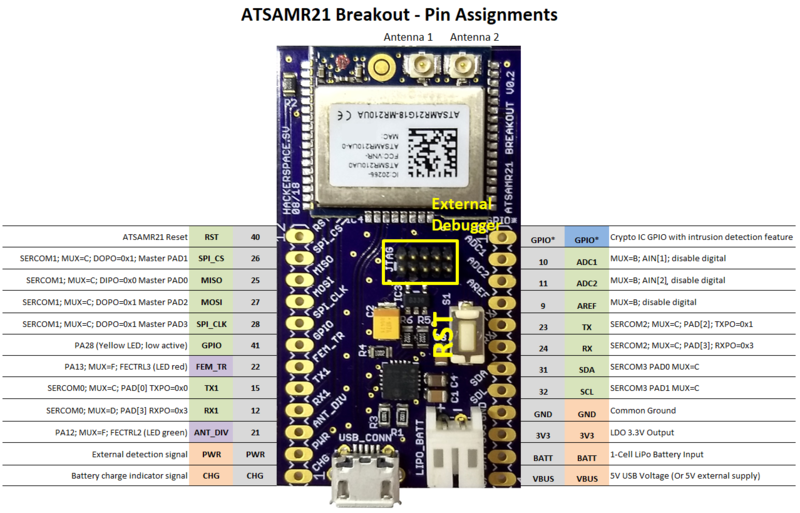
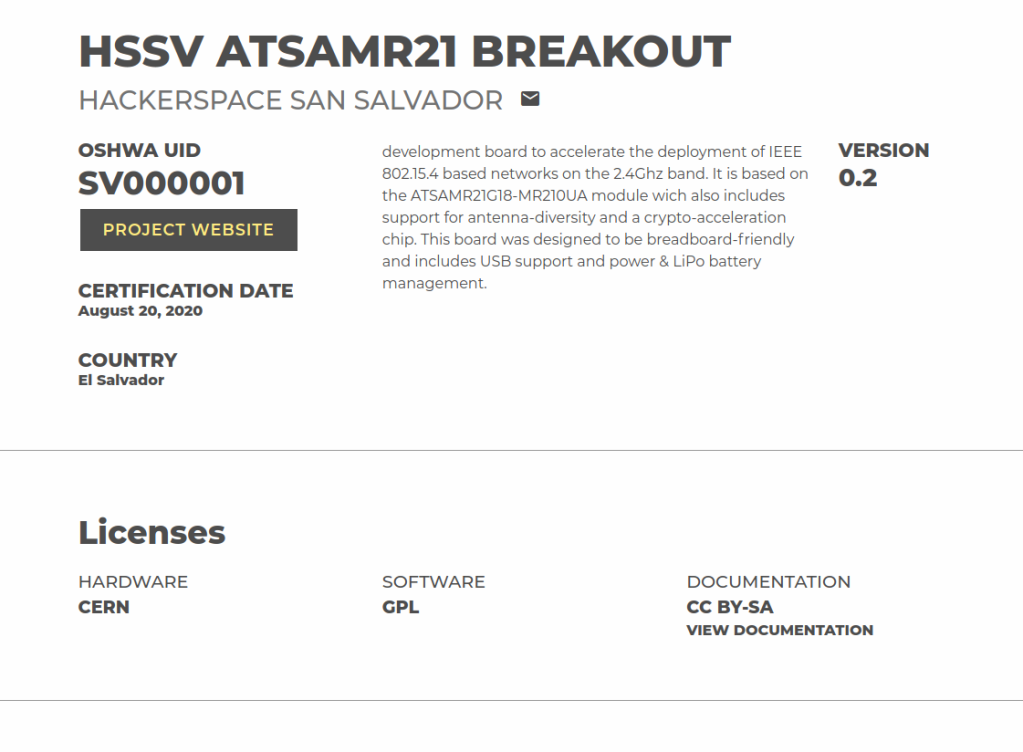
HSSV ATSAMR21 Breakout is a development board to accelerate the deployment of IEEE 802.15.4 based networks on the 2.4Ghz band. It is based on the ATSAMR21G18-MR210UA module which also includes support for antenna-diversity and a crypto-acceleration chip. This board was designed to be breadboard-friendly and includes USB support and power & LiPo battery management.

The Boards are pre-loaded with the bossa bootloader (used by Arduino) with the command line tool bosses and they have a small development batch. If you are interested in collaborating on the development please contact them. This is the first certified open-source hardware from El Salvador.

Certification Page

Project Page

Open Source Hardware Certifications For August 2020

October is Open Hardware Month

October is right around the corner, which means it’s time to get ready for Open Hardware Month! This year with the theme is Label and Certify to the spotlight on two ways to help the world know your hardware is Open Source:

Label and Certify This Open Hardware Month

Open Hardware Facts

Inspired by our Executive Director Alicia Gibb, and created by board member Jeffrey Yoo Warren, the Open Hardware Facts Generator helps you declare the licenses used in your project using a format similar to the US Nutrition Facts Label. Listing your licenses in one prominent place (such as the README of your repository) helps users immediately know what they can and can’t do with your source, rather than having to browse through individual files.

OSHWA Certification

The OSHWA Certification continues to grow, with almost 1,000 projects from over 40 countries! If you’re not yet familiar, the certification program provides a way for consumers to immediately recognize hardware whose meaning of “Open” conforms to the OSHW Definition. It also provides a directory for OSHW creators, which stands as evidence that your product is in compliance with the OSHW Definition.

Hosting and Joining OHM Events

We invite individuals and companies alike to host events relating to the theme, or supporting Open Hardware more generally. Unlike previous years, we expect most events to be virtual due to COVID-19. Thankfully, both labeling and certifying can be done from home! If you choose to host an in-person event, we expect you to follow all local health guidelines to help keep our community safe. Find what you need to plan an OHM event at the OHM website.

Looking for an OHM event to join? As events are submitted and approved, they’ll be listed on the OHM website as well. For virtual events, we’ll also list the online platform being used and the event’s time zone.

October is Open Hardware Month

DIN SPEC 3105: industry specification published for Open Source Hardware

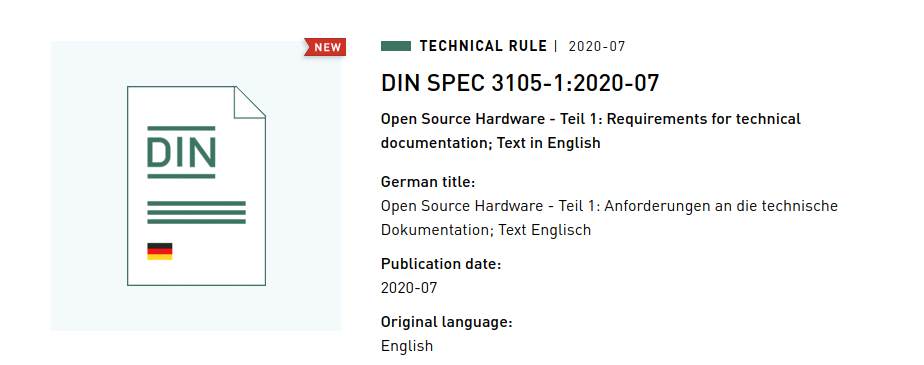
The German standards body DIN now has a specification for Open Source Hardware documentation:

GitLab: Open Hardware Standards

Open Source Hardware: Technical Documentation Requirements

The published specification is available from DIN:

Screenshot from 2020-08-03 09-00-11

Jérémy Bonvoisin wrote on Twitter:

The icing on the cake: this is the first standard to be published by DIN under cc license and to adopt an open and community based process for any of the new version to come! It’s both a progress for open source hardware AND for standardisation processes as such!

More information is available in this paper by Jérémy BonvoisinJenny MolloyMartin Haeuer, and Tobias Wenzel:

Standardisation of practices in Open Source Hardware

Standardisation is an important component in the maturation of any field of technology. It contributes to the formation of a recognisable identity and enables interactions with a wider community. This article reviews past and current standardisation initiatives in the field of Open Source Hardware (OSH). While early initiatives focused on aspects such as licencing, intellectual property and documentation formats, recent efforts extend to ways for users to exercise their rights under open licences and to keep OSH projects discoverable and accessible online. We specifically introduce two standards that are currently being released and call for early users and contributors, the DIN SPEC 3105 and the Open Know How Manifest Specification. Finally, we reflect on challenges around standardisation in the community and relevant areas for future development such as an open tool chain, modularity and hardware specific interface standards.

DIN SPEC 3105: industry specification published for Open Source Hardware

“Why (and how) public institutions should release more of their hardware designs as Open-Source Hardware”

cernopensourcelhc

Javier Serrano of the Open Hardware group at CERN has written a new blog post:


Preliminary note: this article is co-authored with Carlos Serrano. Javier is with CERN, the European Laboratory for Particle Physics in Geneva, Switzerland. Carlos is with LBNL, the Lawrence Berkeley National Laboratory in Berkeley, CA, USA. Both CERN and LBNL have public statements on their mission, which includes the maximisation of positive impact of their developments on society. The means employed for reaching those goals differ, of course, as a function of the circumstances of each development and, to a lesser extent, are also subject to opinion. This article presents the personal opinions of the authors, hoping to foster productive discussion, and is in no way intended to represent an official communication from either LBNL or CERN. A pdf version is available in the Open Hardware Repository, with a few extra footnotes in places where more detail might be welcome by some but could otherwise interfere with the reading flow in Medium.
“Why (and how) public institutions should release more of their hardware designs as Open-Source Hardware”

MNT Reform: Introducing the Much More Personal Computer

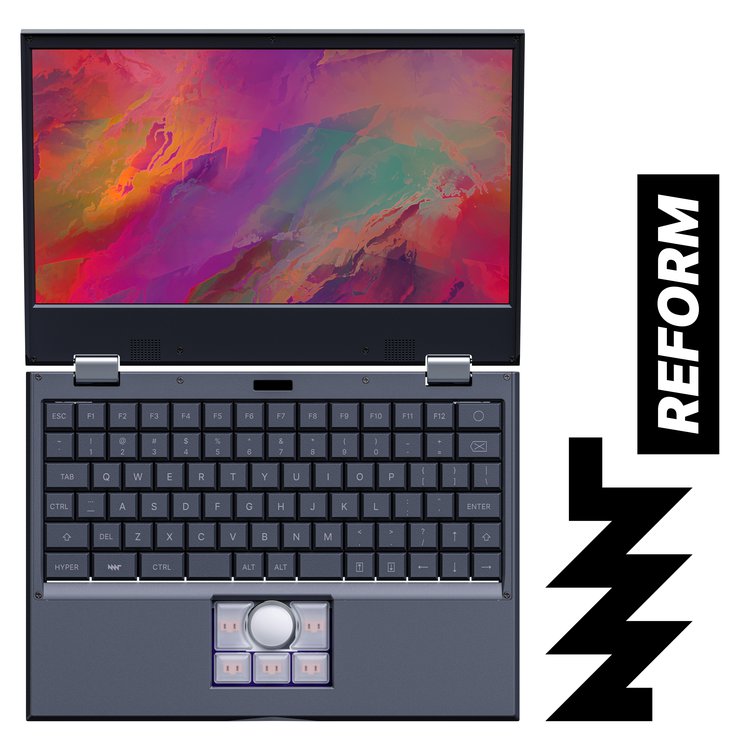
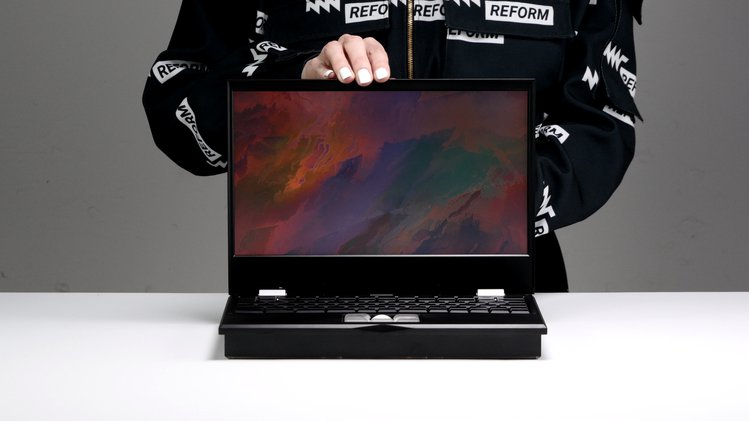
The Reform laptop from Lukas and Greta at MNT Research in Berlin has now launched on CrowdSupply:
product-mnt-reform_jpg_project-body

MNT Reform

The open source DIY laptop for hacking, customization, and privacy

Mobile personal computers are becoming more and more opaque, vendor controlled, and hard to repair. Modern laptops have secret schematics, glued-in batteries, and components not under user control, like the Intel Management Engine or the Apple T2 security chip. Many people decide to tape over the built-in cameras of their laptops because they don’t know if they can trust the device or the software running on it.

Reform goes in the opposite direction. It is designed to be as open and transparent as possible, and to support a free and open source software stack from the ground up. It invites you to take a look under the hood, customize the documented electronics, and even repair it youself if you like. The Reform laptop has no built-in surveillance technologies, cameras, or microphones, so you can be confident that it will never spy on you. Built not around Intel technology, but NXP i.MX8M with 64-bit ARM Cortex-A53 cores, Reform has a much simpler architecture than conventional laptops. This simplicity also makes for a more pleasant developer experience.
20200422-reform-hero_jpg_project-body

We are excited to have helped MNT prototype parts of the Reform:

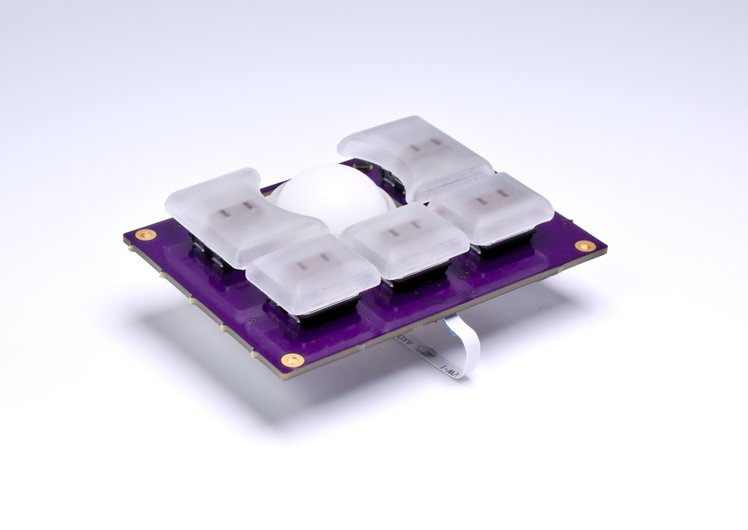
Trackball

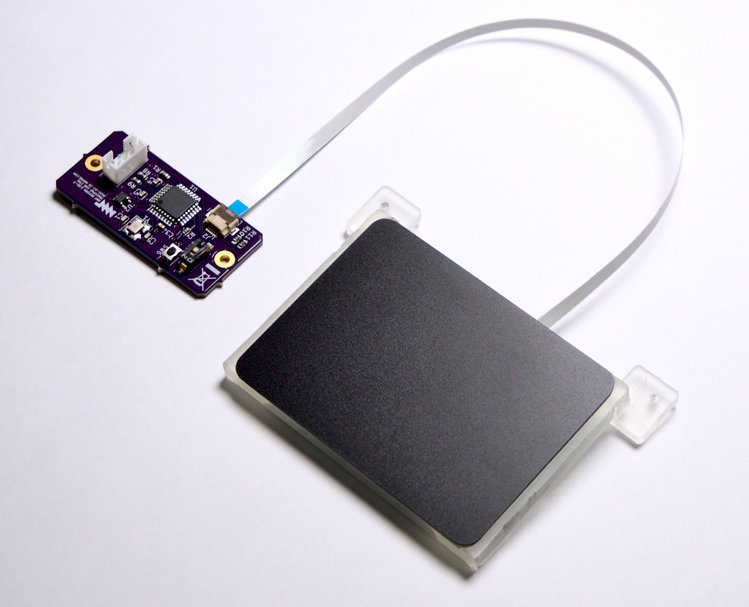
The new Reform trackball has five buttons, so you don’t have to worry anymore about how to do a middle click or use the trackball as a scroll wheel (hold bottom left or right button and roll the ball up and down). Of course, because our trackball firmware is open source, you can adjust the button functions to behave exactly as you like. We developed a custom SLA-printed mechanical housing for the trackball. For the ball’s optical motion tracking, we are using a Pixart PAT9125EL laser sensor interfacing with a ATmega32U2 MCU with open source firmware.

Trackpad

If you prefer a trackpad over the trackball, you can choose it as an option. The trackball and trackpad are interchangeable modules. The trackpad is based on the capacitive multi-touch sensor module TPS65-201A-S by Azoteq. Like the trackball, we drive it with a custom ATmega32U2 PCB and our own open source firmware.

And it is excellent to see that it is certified OSHW:

Certifications

Reform is open source hardware certified by OSHWA (Open Source Hardware Association)DE000017.

Licenses are:

  • CERN OHL-2.0-S (hardware)
  • GPL 3.0 (software, firmware)
  • CC-BY-SA 4.0 (documentation, artwork)
MNT Reform: Introducing the Much More Personal Computer

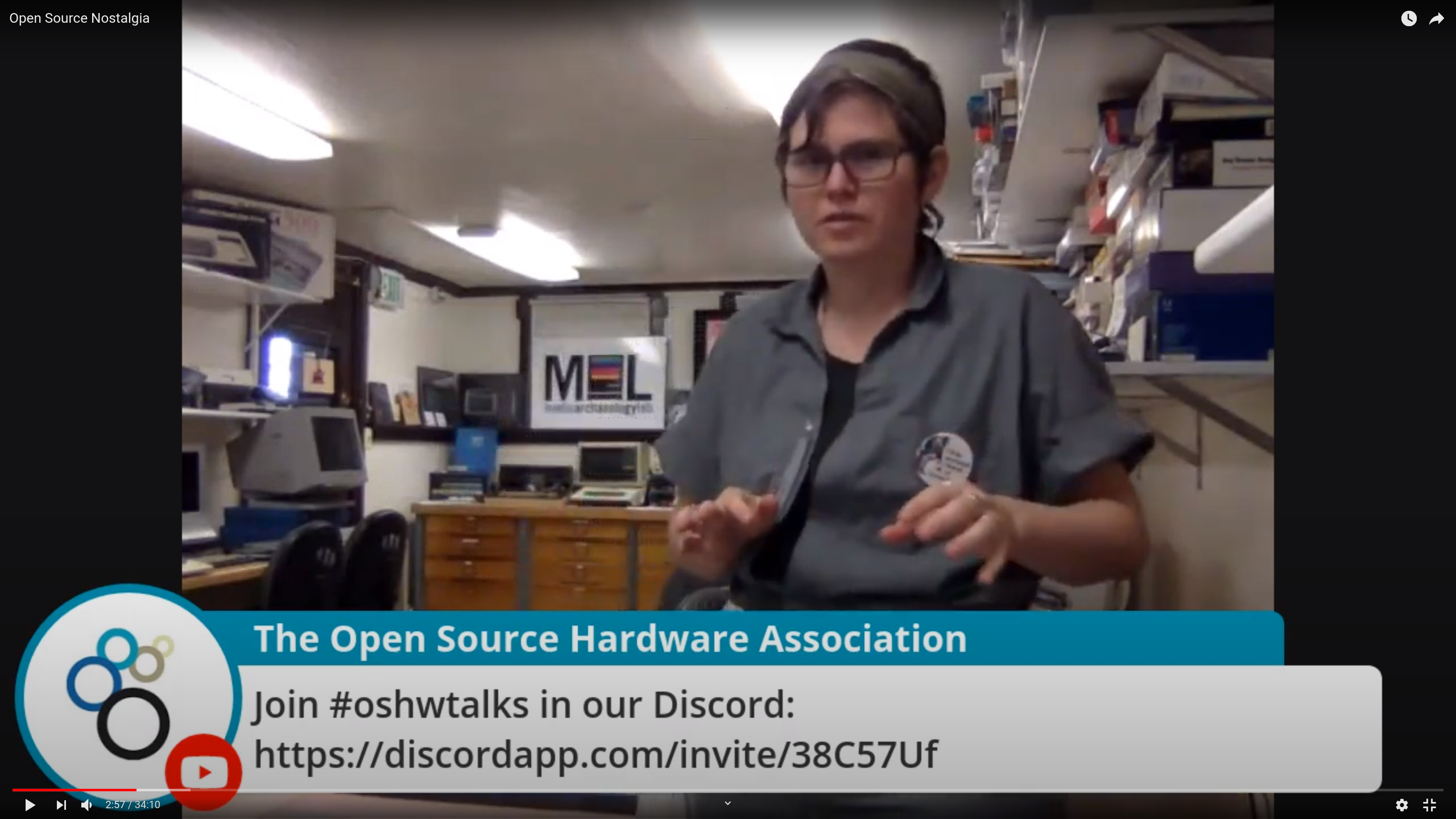
OSHWA virtual talk: Open Source Nostalgia with Libi Rose Striegl

Screenshot from 2020-04-22 21-53-47

Join OSHWA this Wednesday, April 22nd, for a live virtual talk:

Open Source Nostalgia

Speaker: Libi Rose Striegl

Using open source projects to enable modern use of retro-tech is a
foundational part of my art practice. Open source practices are a
central part of my teaching. This forms a base for art and teaching
around technology that is empowering and joyful while still coming
from a place of critical learning.

The talk will be streamed live on OSHWA’s YouTube channel.

To join the discussion, visit the #oshwtalks channel on the OSHWA Discord server.

OSHWA virtual talk: Open Source Nostalgia with Libi Rose Striegl