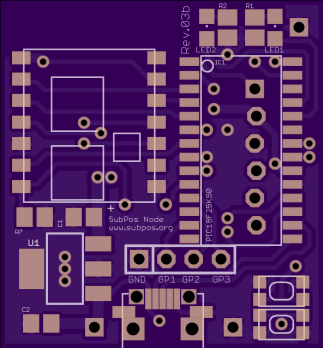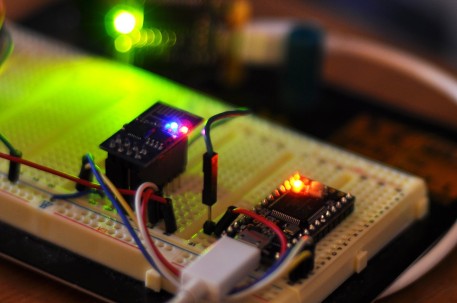
There are a ton of applications that we use that can benefit from keyboard shortcuts, and we use ’em religiously. Indeed, there are some tasks that we do so often that they warrant their own physical button. And the only thing cooler than custom keyboards are custom keyboards that you’ve made yourself. Which brings us…
Author: fustini
LED Strip Raspberry Pi Adapter
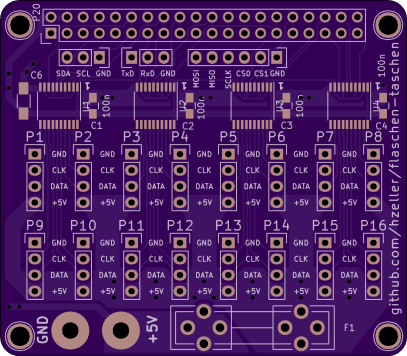
Henner Zeller created the Spixels project to control 16 LED strips at once from a Raspberry Pi:
Spixels
The Spixels library and PCB to control SPI-type LED strips was originally developed for the Noisebridge Flaschen-Taschen project, but broken out as separate project because it is independently useful for many other LED strip applications.
hzeller shared the board on OSH Park:
Spixels – 16 SPI LED Strip Raspberry Pi Adapter
Native Kicad uploads
Continuing with our goal to simplify Open Source Hardware fabrication, we’re very pleased announce that we’re finally able to accept direct uploads of KiCad PCB design files on OSH Park!
For designers, this means that you can place an order without going through the plot process, worrying about drill formats, or fiddling with CAM settings.
For the community, this means ordering files designed with KiCad got a lot easier. Now there’s no need to install KiCad to generate gerber files, or deal with a zip full of gerbers that might not be set up for us.
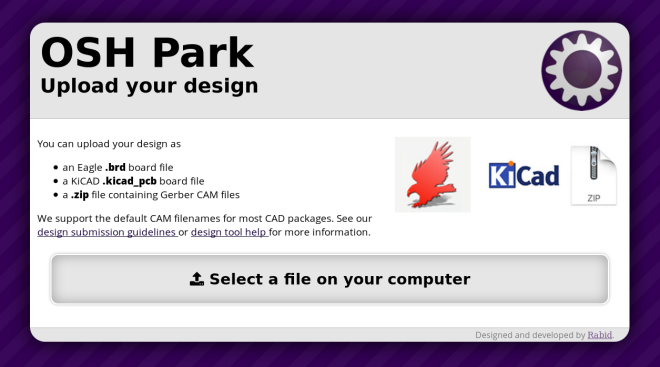
For users who still prefer to generate gerbers, we have good news for you too. We’ve improved our file detection, so there’s no need to rename the files on our behalf. Check out our Kicad docs for more information on generating gerbers if you run into trouble.
We’d also like to extend a word of gratitude to the developers for their continued efforts to improve KiCad. In the last few months, they’ve added too many features to count, including the scripting architecture. A special shoutout to Adam Wolf of Wayne and Layne in particular, for his support of these feautures!
Want to learn Kicad? Checkout Getting to Blinky with Kicad 4.0

Custom Cherry MX Keypad
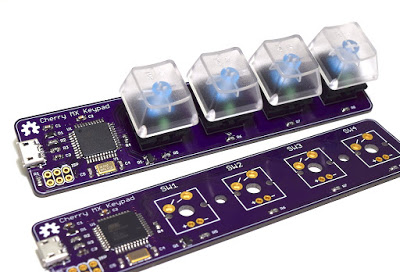
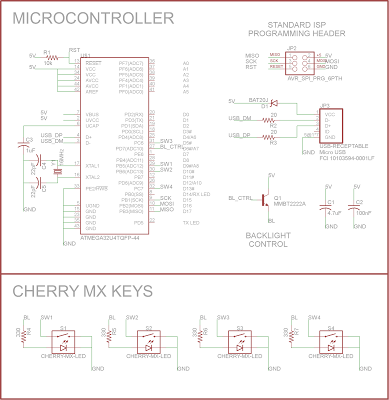
Dan Watson created an Arduino-compatible Cherry MX keypad with an Atmel ATmega32U4 microcontroller:
Custom Cherry MX Keypad
The design files and source code are shared on GitHub:
/CherryMX_Keypad
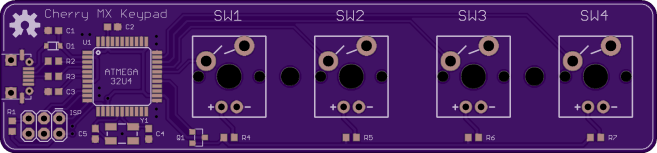
SyncChannelBlog has shared the board on OSH Park:
Cherry MX Keypad
1575 Bottle of Beer on the (LED) Wall — Hackaday
Say hello to my little friend, lovingly named Flaschen Taschen by the members of Noisebridge in San Francisco. It is a testament to their determination to drink Corona beer get more members involved in building big displays each year for the Bay Area Maker Faire. I pulled aside a couple of the builders for an interview…
FR4 Machine Shield Is A CNC Milling Machine From FR4 PCB — Hackaday
The people behind the PocketNC heard you like CNC PCB mills, so they milled you a PCB mill out of PCB. They announced their surprising new open source hardware product, a pocket sized 3-axis CNC machine entirely made out of FR4 PCB material, aptly named “FR4 Machine Shield”, at this year’s Bay Area Maker Faire. We know the concept…
via FR4 Machine Shield Is A CNC Milling Machine From FR4 PCB — Hackaday
It’s Time to Finally Figure Out How to Use KiCAD — Hackaday
KiCAD has been making leaps and bounds recently, especially since CERN is using it almost exclusively. However, while many things are the same, just enough of them are different from our regular CAD packages that it’s hard to get started in the new suite. [Chris Gammell] runs Contextual Electronics, an online apprenticeship program which goes from…
via It’s Time to Finally Figure Out How to Use KiCAD — Hackaday
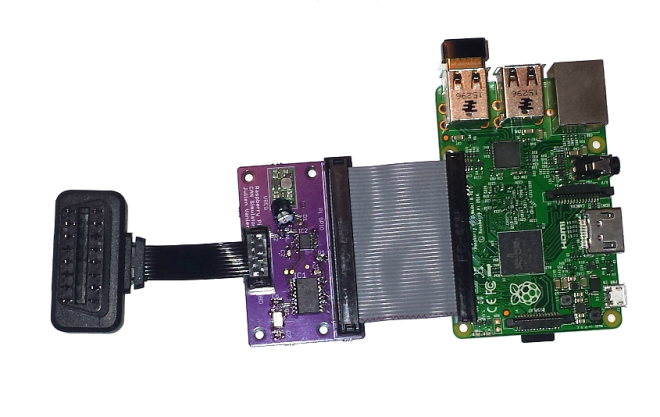
CAN bus simulator on the Rasperry Pi
CAN Simulator
used to transmit and receive messages simulating OBD-II communications and regular vehicle messages
The simulator consists of:
- MCP2515 standalone CAN controller connects to Raspberry Pi over the SPI bus
- TJA1049 CAN transceiver translate logic levels for high speed CAN
- 5V to 12V step up regulator to provide 12V on ODB connector
- Off-the-shelf OBD cable and connector
- Simulator program on the Raspberry Pi
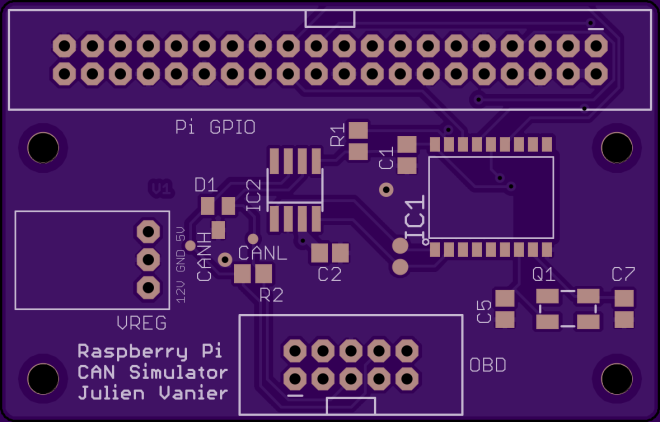
jvanier shared the board on OSH Park:
CAN-Simulator v1
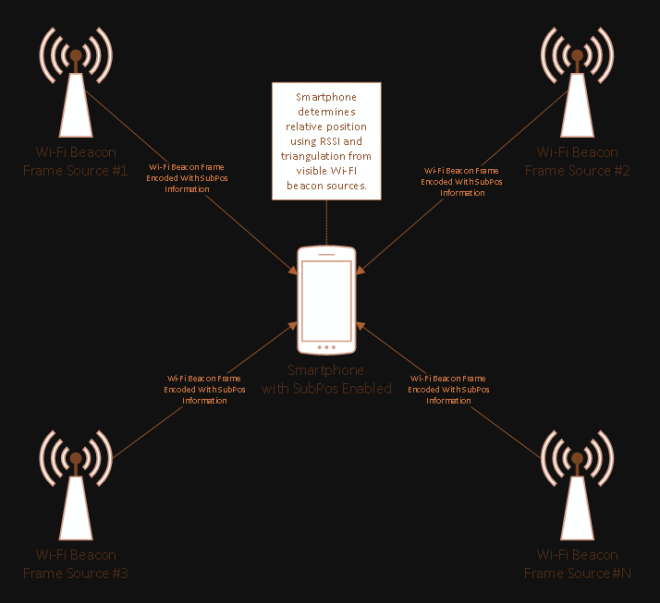
SubPos Positioning System
Retrotechtacular: Fog Over Portland — Hackaday
In the early days of broadcast television, national spectrum regulators struggled to reconcile the relatively huge bandwidth required by the new medium with the limited radio spectrum that could be allocated for it. In the USA during the years immediately following World War Two there was only a 12-channel VHF allocation, which due to the…