Sniffing Signals To Teach Old Speakers New Tricks

All Jay Tavares wanted was for his Bose Cinemate speakers to turn themselves on and off as needed. It seems like a reasonable enough request, and indeed, is exactly the point of HDMI’s Consumer Electronic Control (CEC) feature. But in this case, it would take a bit of custom hardware to get similar functionality.

Unfortunately, the speakers [Jay] has only support optical audio; so any interoperability with HDMI-CEC (hacked or otherwise) was immediately out the window. Still, he reasoned that he should be able to detect when the TOSLINK audio source is actually active or not, and give the speaker system the appropriate signal to either power on or shut down. You might think this would require some kind of separate stand-alone device, but as it turns out, all the necessary information was available by reverse engineering the connection between the receiver and the subwoofer.

After some investigation, [Jay] found that not only was the content of the TOSLINK audio source being sent over this DB9 cable, but so were the control signals required to turn the system on and off. So he designed a simple pass-through device with an ATtiny85 and a couple passives that latches onto the relevant lines in the cable.
Read more…

Sniffing Signals To Teach Old Speakers New Tricks

“Purr Module” Flex PCB for Companion Bots

From Alex Glow at Hackster:

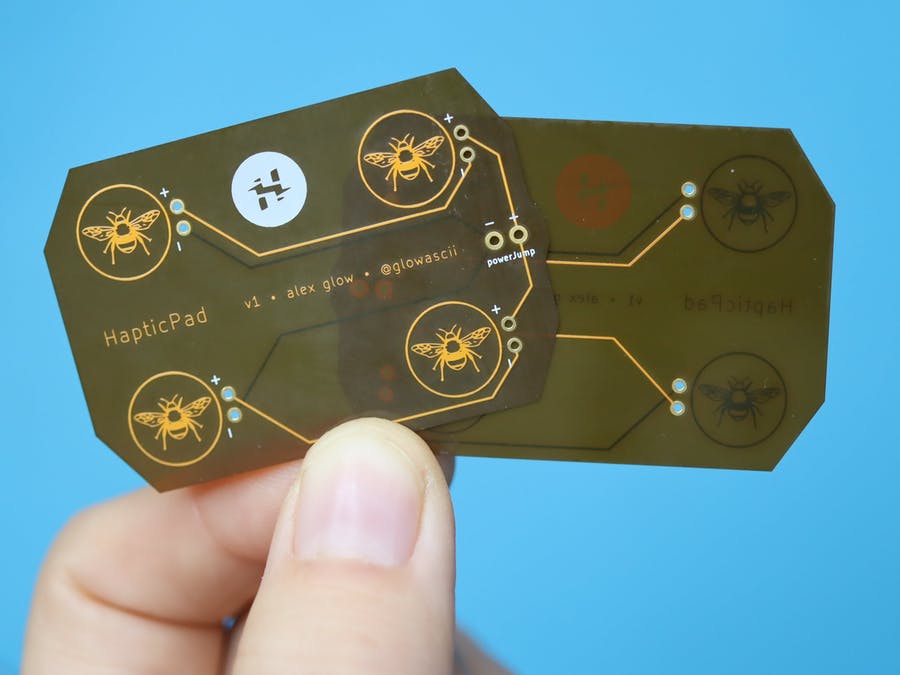
furry companion robot that can purr? For me, a roboticist who can’t have pets, my newest bot will make the winter months so much more cozy! I’ve designed this module in KiCad to provide a soothing purring interaction, complementing my Companion Core. It runs on 5V and can power two or four haptic vibration motors.

Plus, it has a neat bee design! Buzz buzz. 🐝

“Purr Module” Flex PCB for Companion Bots

Case study on Miniature Propulsion System

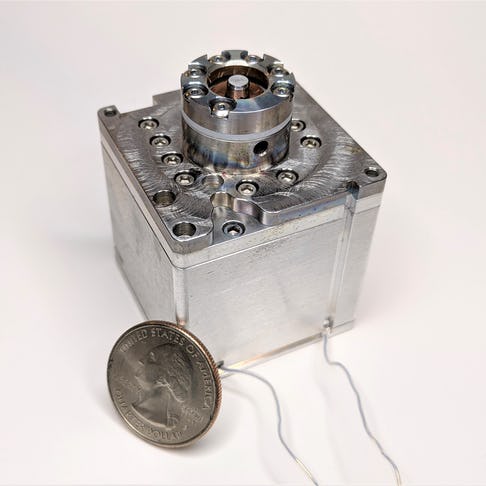
We enjoy following the journey of Applied Ion Systems to develop plasma and ion thruster systems for nanosatellites at a hobbyist-level budget. Xometry published a case study on AIS:

More than half a century later, at 5:30 pm EST on March 22 of 2021, Michael Bretti was sitting in his living room. He was eagerly watching a live stream of a satellite launch. The satellite, christened “Care Weather Hatchling Veery 1U Cubesat”, was equipped with an AIS-gPPT3-1C Micro Pulsed Plasma Thruster. This plasma thruster would help the satellite make very small maneuvers in orbit. Michael built that thruster through months of trial and error. And he did it in the basement of his New York home.

“It was unreal. What started as a hobby led me to build something that is now in orbit. I got to see the payload separate from the rocket. When you know something you built and touched is now floating in the atmosphere, it’s a cool feeling.”

Read more…

Case study on Miniature Propulsion System

The 555 Timer Contest Returns! — Hackaday

The Hackaday 555 Timer contest has returned:

The short of it is you just need to use a 555 timer and you qualify for this contest.

The longer story is that we want to see just about anything 555-related. In fact, projects that don’t use a 555 are fine as long as they are based on the idea. So, if the global chip shortage has you struggling to even find one of these, just build the parts of the internal circuit yourself and you’re golden. The real trick here is to explain what you’re doing and why.

Find out more…

The 555 Timer Contest Returns! — Hackaday

Watch Blender Plugin Make Animated PCB Traces

Donald Papp writes on Hackaday:

[Staacks]’s Blender plugin to animate growth is behind the sweet animation seen above. It’s an add-on that cleverly makes creating slick growth animations easier when using Blender. It isn’t limited to PCB images either, although they do happen to make an excellent example of the process.

The idea is that one begins with an image texture with a structure showing a bunch of paths (like a maze, or traces on a PCB), and that gets used as an input. The plugin then uses a path finding algorithm to determine how these paths could grow from an origin point, and stores the relevant data in the color channels of an output image. That output is further used within Blender as the parameters with which to generate the actual animation, resulting in the neat self-creating PCB seen above. That PCB isn’t just for show, by the way. It’s the PCB for [Staacks]’s smart doorbell project.

Read more…

Watch Blender Plugin Make Animated PCB Traces

ThunderScope, the Open Source Software-Defined Oscilloscope, Is Coming to Crowd Supply

James Lewis writes about the ThunderScope which features to 350 MHz analog bandwidth with 1 G/s sample rate streamed to a PC at 1 Gb/s:

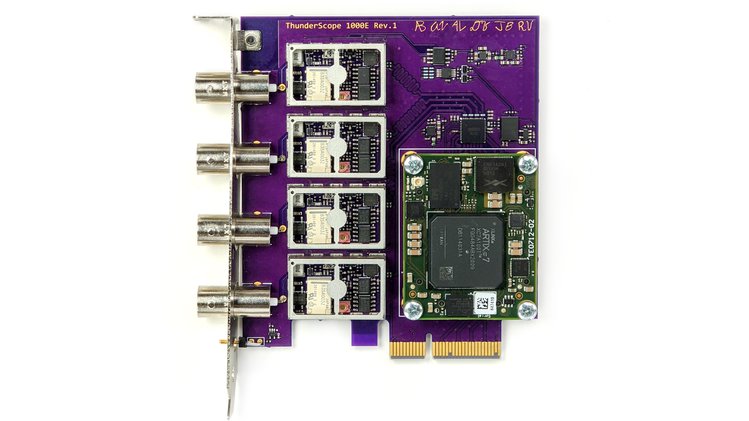
Oscilloscopes can be an electronics engineer’s best friend. These highly versatile tools are helpful, from basic debug to verification tests to compliance checks for standards. Not only are their measurements varied, but so are their form factors. Two common styles are “bench” scopes, which go on a bench, and PC-based oscilloscopes, which, until now, have primarily used USB. An Ontario-based EE graduate student, Aleska Bjelorlic, is launching a Crowd Supply campaign for an open source software-defined oscilloscope. The four-channel ThunderScope has up to 350 megahertz of bandwidth and can stream acquisition data to a PC at one gigasamples per second.

Since we last covered ThunderScope, Bjelorlic and friends have further developed the hardware to a near-final state and have continued extensive work on the software side.

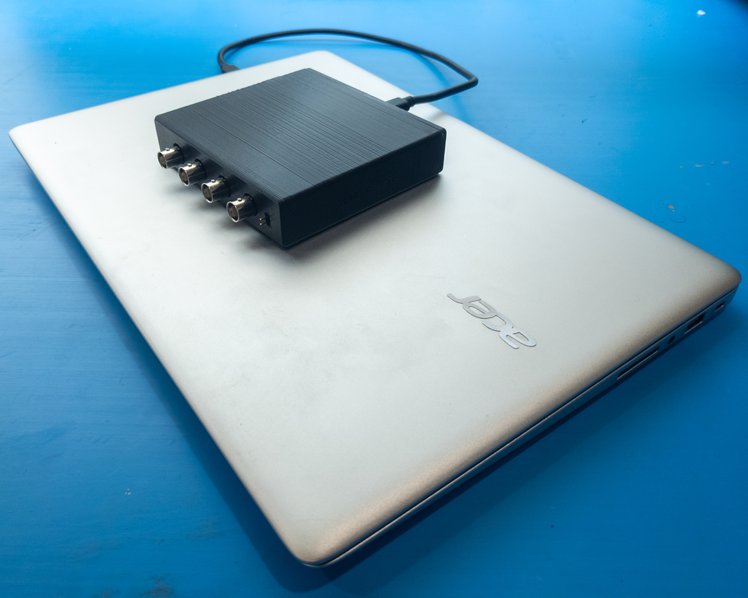
ThunderScope comes in an unassuming box that is just large enough to house 4 BNC connectors, a compensation output, four fully-functional front-end stages, an ADC, and an Artix-7 FPGA to capture the data and transfer it to the PC.

ThunderScope, the Open Source Software-Defined Oscilloscope, Is Coming to Crowd Supply

Spaceflight thrilled to launch OreSat0

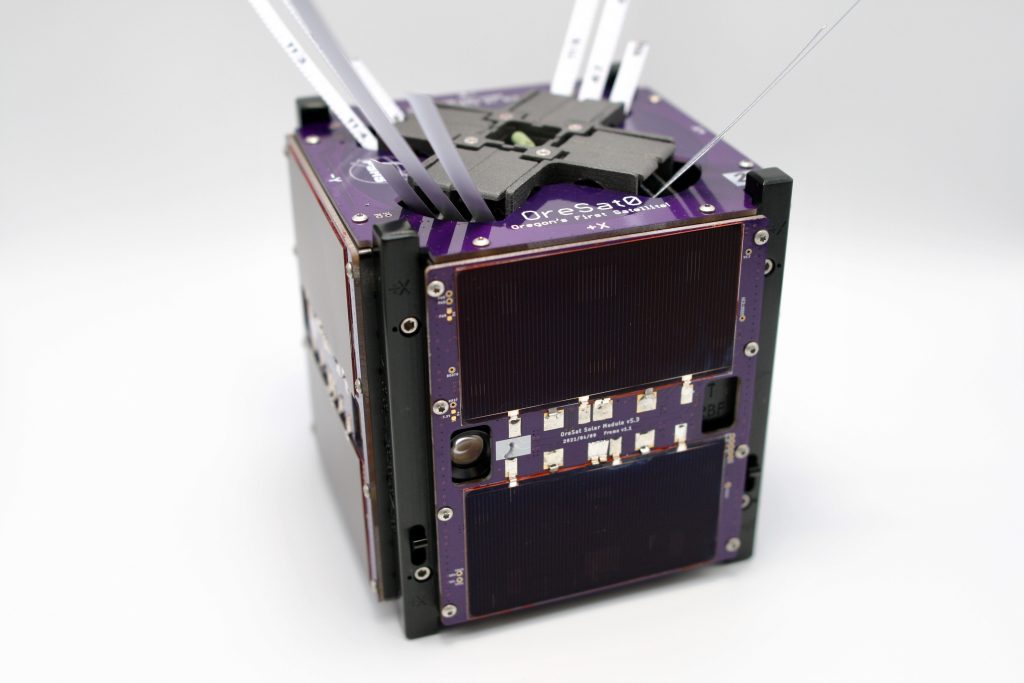
OreSat0 is a fully open source CubeSat satellite system built from scratch by the Portland State Aerospace Society, an interdisciplinary student group at Portland State University. Roughly the size of a tissue box, the tiny satellite includes everything larger satellites have — including solar panels, batteries, a color camera, and an amateur radio system. It’s scheduled to fly onboard our SXRS-6 mission no earlier than January 2022 on SpaceX’s Transporter-3 launch.

Slated to be Oregon’s first satellite, OreSat0 is the first of three satellites being built by the students. It’s mission is to test the modular, expandable, open source, and education-friendly OreSat CubeSat system. With this first flight under their belt, PSAS will build its next, larger satellite for the NASA CubeSat Launch Initiative (CSLI). This second CubeSat has a global climate science and STEM outreach mission: it will help refine global climate models  by measuring the global distribution of high altitude cirrus clouds.  

Read more…

Spaceflight thrilled to launch OreSat0

Cast-Away RP2040: ultra-compact feature-rich Pico alternative


Gareth Halfacree writes on Hackster:

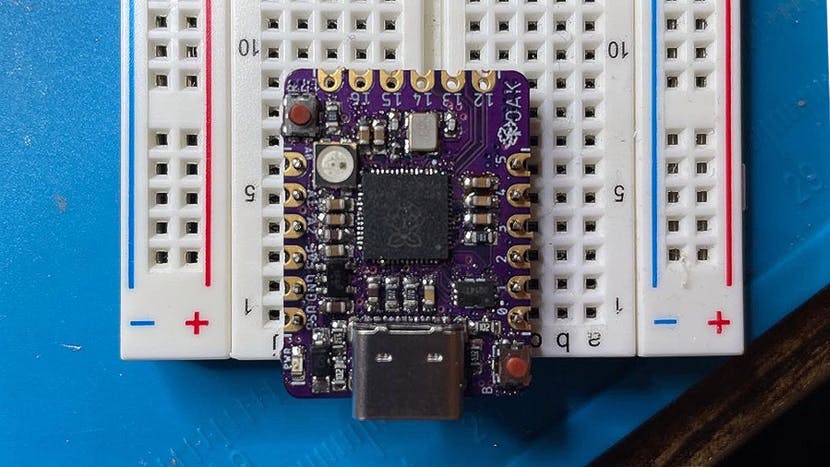
Oak Development Technologies has unveiled another board built around Raspberry Pi’s incredibly popular RP2040 microcontroller: the compact, castellated, surface-mountable Cast-Away RP2040.

“Cast your project fears away with the Cast-Away RP2040, a small and easy to use RP2040 dev board designed to take your project to the beach,” writes Oak’s Seth Kerr of his latest board design. “This board uses the popular Raspberry Pi RP2040, a dual-core Arm Cortex-M0+ microcontroller.”

Read more…

Cast-Away RP2040: ultra-compact feature-rich Pico alternative

Hackaday Remoticon: What’s Happening Right Now

Hackaday Remoticon is live now! Watch all of today’s talks on the live stream and interact with everyone by joining Discord.

All talk and schedule information is available on the conference webpage, but here are the things you don’t want to miss (all times are Pacific time zone):

  • 11:10 am | Keynote: Elicia White
  • 5:15 pm | Hacker Trivia: https://youtu.be/uRpUdQi31tg
  • 6:15pm | Bring-a-Hack: Remoticon ticket holders will receive an email on how to join, we’ll also share that info in the Discord
Hackaday Remoticon: What’s Happening Right Now

The Hackaday Remoticon 2 Badge: An Exercise In Your Own Ingenuity

Jenny List writes on Hackaday:

The twin challenges of the pandemic and now the semiconductor shortage have been particularly hard on the designers of event badges, as events have been cancelled and uncertain supply issues render their task impossible. When an event goes virtual, how do you even start to produce a badge for it? Make the badge and rely on enough stalwarts buying one? Or maybe produce a badge that’s a fancy take on a prototyping board?

For Hackaday Remoticon 2021, [Thomas Flummer] has produced a novel take on the second option by distributing a badge as a set of KiCAD files that can either be ordered from a PCB fab as a prototyping board or used as the canvas for a PCB to use whatever components are to hand. To demonstrate this, he’s produced an example badge that’s a MicroMod carrier.

So if you’d like to chase the full Remoticon experience with a badge there should still be enough time to order a set of boards, but to design your own electronics you’ll need to get a move on. What you might build upon it is up to you, but if you have an ESP32 module lying around you might wish to consider cloning the SHA2017 badge or its successors with the badge.team platform.

Read more…

The Hackaday Remoticon 2 Badge: An Exercise In Your Own Ingenuity