Watch the 2021 Open Hardware Summit LIVE!

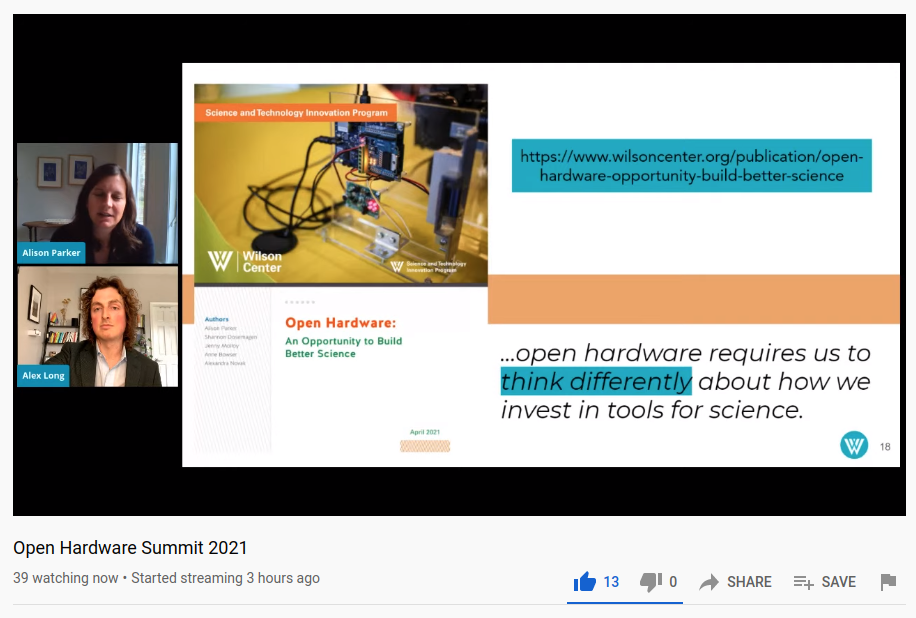
The 2021 Open Hardware Summit is streaming right now on YouTube:
Watch the 2021 Open Hardware Summit LIVE!

Open Hardware Summit is Friday, April 9th!

The 2021 Open Hardware Summit starts tomorrow, Friday, April 9th, at 10:00 EDT / 14:00 UTC

Tickets are still available starting at $20

Open Hardware Summit is Friday, April 9th!

Hackaday: Bring-A-Hack Is Back this Thursday!

As the pandemic edges further into its second year, the tedium of life under lockdown is taking its toll. We may be fighting the spread of infection by staying home and having our meetings over video conferencing software, but it’s hellishly boring! What we wouldn’t do for our hackerspaces to be open, and for the chance to hang out and chew the fat about our lockdown projects!

Here at Hackaday we can bring some needed relief in the form of the Hackaday Remote: Bring-A-Hack held via Zoom on Thursday, April 8th, at 1pm Pacific time. We know you’ve been working hard over the last year, and since you’ve been denied the chance to share those projects in person, we know you just can’t wait to sign up. Last year’s Remoticon showed us the value of community get-togethers online, with both the team soldering challenge rounds and the bring-a-hack being particular event highlights, so it’s time for a fresh dose to keep up our spirits.

It doesn’t matter how large or small your project is, if it interests you other readers will also want to see it. Be prepared to tell the world how you made it, what problems you solved, and a bit about yourself, and then step back, take a bow, and be showered with virtual roses from the adoring masses. There’s a sign-up link if you have a project to show off. Don’t hold back if you’re worried it’s not impressive enough, a certain Hackaday scribe has submitted an OpenSCAD library she’s working on.

Read more on Hackaday…

Hackaday: Bring-A-Hack Is Back this Thursday!

Speakers announced for 2021 Open Hardware Summit

The 2021 Open Hardware Summit is coming up on April 9th and several speakers have been announced:

Open Hardware Summit speakers

  • Meghan McCarthy, COVID 3D TRUST: a public-private collaboration to support manufacture of open source PPE and medical devices during the COVID-19 public health emergency
  • Julieta Arancio, reGOSH: appropriating technology in Latin America with open science hardware
  • Andre Maia Chagas, Open Hardware Makers mentorship program: making open hardware the default everywhere, one project at a time!
  • Rico Euripidou and Katie Gradowski, Mobilizing People to Act on Air Pollution with the Bucket Air Monitor – a Community Science Tool
  • Oluwatobi Oyinlola, Hardware innovation, an opensource way in Nigeria

and many more…

Speakers announced for 2021 Open Hardware Summit

Hackaday: Retro Recreations Hack Chat with Eric of Tube Time

Join Hackaday on Wednesday, March 17 at noon Pacific for the Retro Recreations Hack Chat with Eric of TubeTimeUS:

join-hack-chat

Nostalgia seems to be an inevitable consequence of progress. Advance any field far enough into the future, and eventually someone will look back with misty eyes and fond memories of the good old days and start the process of turning what would qualify as junk under normal conditions into highly desirable collectibles.

In some ways, those who have been bitten by the computer nostalgia bug are lucky, since the sheer number of artifacts produced during their period of interest is likely to be pretty high, making getting gear to lovingly restore relatively easy. But even products produced in their millions can eventually get difficult to find, especially once they get snapped up by eager collectors, leaving the rest to make do or do without.

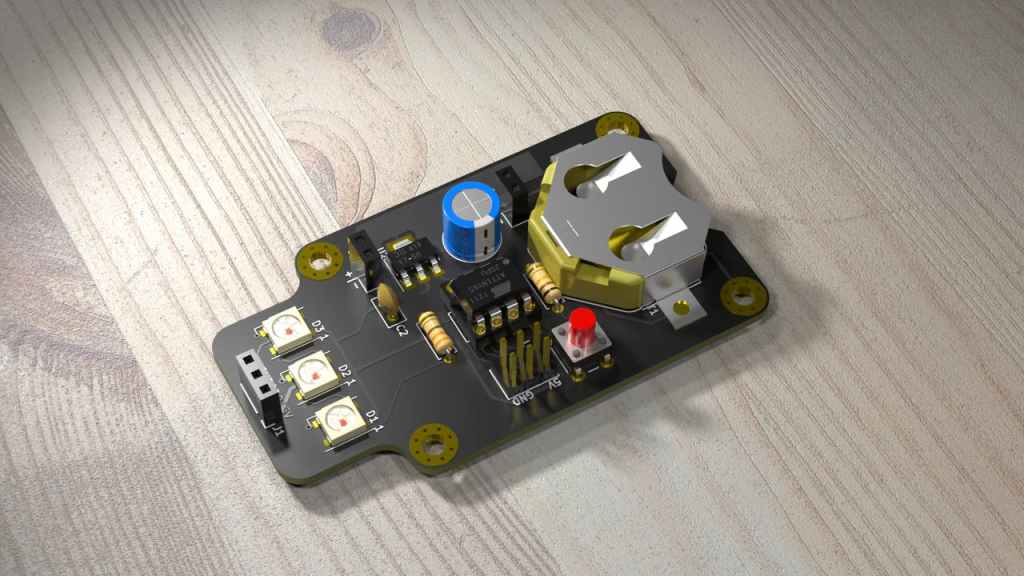
Of course, if you’re as resourceful as Tube Time is, there’s another alternative: build your own retro recreations. He has embarked on some pretty intense builds to recapture a little of what early computer enthusiasts went through trying to build useful machines. He has built replicas of early PC sound cards, like an ISA-bus AdLib card, its MCA equivalent, and the “Snark Barker”— or is it the “Snood Bloober”? — which bears an uncanny resemblance to the classic Sound Blaster card from the 1980s.

Tube Time will join us for the Hack Chat this week to answer questions about all his retro recreations, including his newest work on a retro video card. Be sure to bring your questions on retro rebuilds, reverse engineering, and general computer nostalgia to the chat.

Our Hack Chats are live community events in the Hackaday.io Hack Chat group messaging. This week we’ll be sitting down on Wednesday, March 17 at 12:00 PM Pacific time. If time zones have you tied up, we have a handy time zone converter.

Hackaday: Retro Recreations Hack Chat with Eric of Tube Time

Open Hardware Summit CFP

News from the Open Hardware Summit coming up in April:

Open Hardware Summit (Edition 11), Call for Proposals

Link to Apply: https://forms.gle/RNXUfWaZBpohdq5Y6

The Open Hardware Summit (OHS) invites talk proposals for the eleventh annual summit! This year’s summit is virtual and will be held online on Friday 2021-04-09, 9:00 AM – 5:30 PM EDT.

The Open Hardware Summit is for presenting, discussing, and learning about open hardware of all kinds. The summit examines open hardware applications, practices, and theory, ranging from environmental sensors to 3D printable medical devices to open hardware processors and beyond. We are interested in open hardware on its own as well as in relation to topics such as software, design, business, law, and education. Past talks have featured topics such as advances in space propulsion, humanitarian projects, right to repair legislation, open hardware in education, and open hardware marketing.

For our eleventh edition we are especially looking for speakers who can offer insights around the role of open hardware in the COVID-19 pandemic, open hardware medical devices, and related topics.

We invite talk proposals from individuals and groups. Submissions are due by Thursday 2021-02-11 at 11 PM EDT.

Open Hardware Summit CFP

Recap of Hackaday Remoticon

Ish Ot Jr. writes about their Hackaday Remoticon experience:

I Attended Two Dozen Hackaday Remoticon Sessions So You Don’t Have To! (And Why You Should Anyway!)

The Hackaday Superconference typically takes place in Pasadena, California around this time each year — but like so many events in 2020, COVID threw a decisively un-jolly wrench in that plan, forcing the event online under a new moniker: Hackaday Remoticon.

Things kicked off casually on Friday night with the Community Bring A Hack, hosted on the Remo Conference platform. The platform attempts to recreate networking spaces common to in-person conferences, with “tables” and “sofas” where participants can double-click to “sit” — which in this virtual world initiates audio and video communications with other “seated” parties. While the technology itself worked fairly well, it seemed as though many participants were either confused as to how it worked, or unwilling to interact — I successfully engaged in two conversations throughout the event, otherwise happening mostly upon attendees whose audio and video was not enabled. And much like real-life events, the popular folks were unobtainable (in this case due to a six-person table limit), so it was mostly a case of looking out for people you knew, or trying to be brave and make new friends (both of which I was lucky enough to be able to do!).

The 11:15 (Eastern) slot had three workshops to chose from, and since attending two simultaneously was already pretty extreme, I had to sit out Sebastian Oort’s Soldering, nothing to be afraid of! — which thankfully is not a phobia I find myself afflicted with.

One topic I did want to learn more about was Anool Mahidharia‘s KiCad to Blender > Photorealistic PCB renders. I’d attended Mahidharia’s KiCad course on HackadayU, and have such high respect for his skills that I’d gladly have attended a session called “Photorealistic paint drying” if he was teaching it! But I’d seen some of Mahidharia’s renders already, and was so comprehensively blown away by them that I wanted to learn how he’d made them, plus, like him, I’ve been putting off learning Blender, and thought this might motivate me to get on with it! While the video for this session is not available yet, Mahidharia has written up a handy cheat sheet, and the accompany GitHub repo is full of glorious renderings that will probably make you want to give it a try too!

Recap of Hackaday Remoticon

Alfred Jones Talks About the Challenges of Designing Fully Self-Driving Vehicles

Hackaday editor Mike Szczys writes about a recent Hackaday Remoticon talk:

Alfred Jones Talks About the Challenges of Designing Fully Self-Driving Vehicles

The leap to self-driving cars could be as game-changing as the one from horse power to engine power. If cars prove able to drive themselves better than humans do, the safety gains could be enormous: auto accidents were the #8 cause of death worldwide in 2016. And who doesn’t want to turn travel time into something either truly restful or alternatively productive?

But getting there is a big challenge, as Alfred Jones knows all too well. The Head of Mechanical Engineering at Lyft’s level-5 self-driving division, his team is building the roof racks and other gear that gives the vehicles their sensors and computational hardware. In his keynote talk at Hackaday Remoticon, Alfred Jones walks us through what each level of self-driving means, how the problem is being approached, and where the sticking points are found between what’s being tested now and a truly steering-wheel-free future.

Check out the video below, and take a deeper dive into the details of his talk.

Alfred Jones Talks About the Challenges of Designing Fully Self-Driving Vehicles