New Hackaday Contest: Data Loggin’

Hackaday has announced a new contest:

New Contest: Data Loggin’

What are we gonna’ do with all this data? Let’s make it something fun! That’s the point of the just-launched Data Loggin’ contest. Do something clever to automatically log a data set and display it in an interesting way. Three winners will each receive a $100 Tindie gift certificate for showing off an awesome project.

Data logging is often an afterthought when working on a project, but the way you collect and store data can have a big effect on the end project. Just ask Tesla who are looking at a multi-thousand-dollar repair process for failing eMMC from too much logging. Oops. Should you log to an SD card? Internet? Stone tablets? (Yes please, we actually really want to see that for this contest.) Make sure to share those details so your project can be a template for others to learn from in the future.

Next, consider Schrodinger’s dataset: if the data is never used does it actually exist? Grab some attention with how you use this data. That automatic donut slicer you built can be used to slice up a tasty pie-chart of the minutes you spent on the elliptical this week. Your energy consumption can be plotted if you connect that OpenCV meter reader up to your favorite cloud service to visualize the data or a NodeRED dashboard if you’d rather keep things local. You could also make some of that data permanent, like this blanket that encoded baby’s sleep patterns in the colors.

You probably already have something harvesting data. Here’s the excuse you need to do something silly (or serious) with that data. Tells us about it by publishing a project page on Hackaday.io and don’t forget to use that “Submit Project To” menu to add it to the Data Loggin’ contest.


New Hackaday Contest: Data Loggin’

New Hackaday Contest: Earth Day Challenge

The Earth Day Challenge is now under way! Spin up your take on an Earth-Day-themed electronics project and you’ll be in the running for one of the three $200 shopping sprees at Digi-Key, who are sponsoring this contest.

This is all about raising awareness for environmental projection. You might considered something as direct as measuring and plotting air quality data, or as abstract as weighing your home’s recycling bin and garbage bin and making a game out of generating less waste in general, and boosting your recycling-to-landfill ratio. Find an application that can be moved from grid-power to solar power, or build a carbon-savings counter that calculates the impact you have when choosing your bike over a car. The coolest projects are the ones that make us all think in new ways.

In addition to those $200 prizes for the top three projects, there are $50 Tindie gift cards for the twelve most artistically presented projects. Digi-Key is looking for great images to include in a wall calendar for 2022.

Read more…

New Hackaday Contest: Earth Day Challenge

CERN Open Hardware License approved by OSI

You may soon see the CERN Open Hardware License as a choice the next time you create a repo on GitHub:

A dedicated licence for open-source hardware: CERN OHL approved by OSI

The OSI (Open Source Intitiative) has approved version 2 of CERN’s Open Hardware License (OHL), meaning it conforms to its Open Source Definition and respects the ideals and ethos of the movement.

Geneva-based CERN (Conseil Européen pour la Recherche Nucléaire) says it has an open-source culture. “Our main mandate at CERN is to conduct basic research. But there is a lesser-known part of our mandate, which is to make things that we do available for the public… very often these are engineering things that we develop,” Javier Serrano, head of the hardware and timing section, Beam Controls Group, told The Register.

The desire to share hardware designs publicly led to the creation of the OHL, for which version 2.0 was released last year. But why not use existing licences like GPL, MIT or Apache 2.0?

“There were no adequate open-source licences that we could rely on to share our hardware designs,” said Serrano.

In hardware, working with commercial companies is a necessity, because “you need somebody who’s going to manufacture it, assemble it to test and sell it to you,” he said. “Companies don’t like the legal risk, so there was a need for a licence to bring clarity as to what the conditions would be.”

CERN ended up with three variants. There is a strong reciprocal licence (CERN-OHL-S), which is for designs that remain free along with all their derivatives, a copyleft principle similar to GPL.

There is a weak reciprocal licence where the design can be used as a component in other designs without the whole becoming open source, but if the design of the component is modified, that must be shared back (CERN-OHL-W). And there is a permissive licence, CERN-OHL-P, which lets users mix the design freely with proprietary designs provided it is acknowledged, similar to Apache 2.0 in the software world.

CERN Open Hardware License approved by OSI

New features coming in KiCad V6

This epic thread on the KiCad forum tracks new features that are in the upcoming V6 release:

Post-v5 new features and development news

I thought many would be interested in the development status and new features of pre-v6/post-v5 now when 5.1.0 has been released and version 6 development has begun. Add your favorite here if someone else hasn’t done it already.

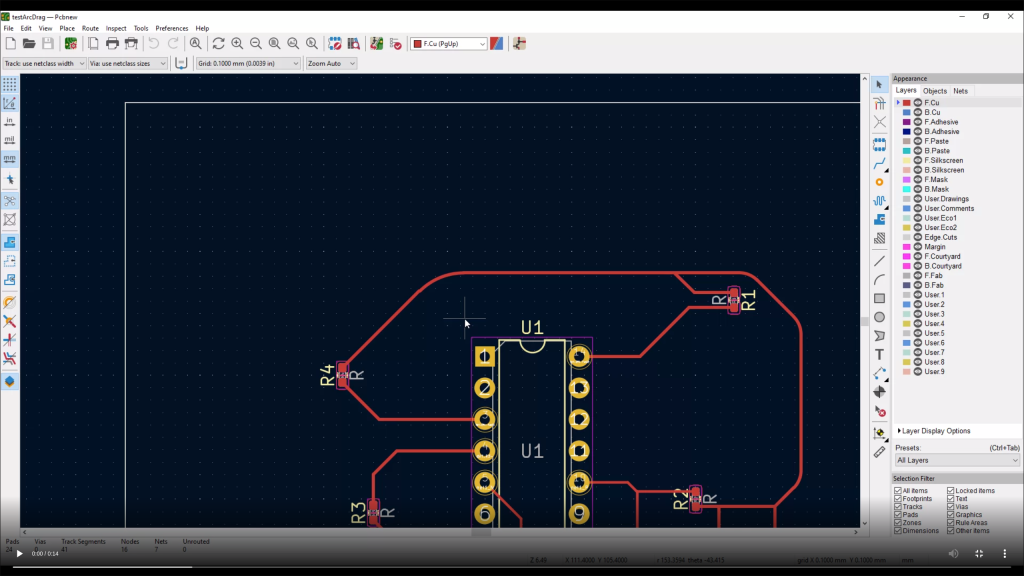
The most recent post describes curved tracks:

New features coming in KiCad V6

Open Hardware Summit CFP

News from the Open Hardware Summit coming up in April:

Open Hardware Summit (Edition 11), Call for Proposals

Link to Apply: https://forms.gle/RNXUfWaZBpohdq5Y6

The Open Hardware Summit (OHS) invites talk proposals for the eleventh annual summit! This year’s summit is virtual and will be held online on Friday 2021-04-09, 9:00 AM – 5:30 PM EDT.

The Open Hardware Summit is for presenting, discussing, and learning about open hardware of all kinds. The summit examines open hardware applications, practices, and theory, ranging from environmental sensors to 3D printable medical devices to open hardware processors and beyond. We are interested in open hardware on its own as well as in relation to topics such as software, design, business, law, and education. Past talks have featured topics such as advances in space propulsion, humanitarian projects, right to repair legislation, open hardware in education, and open hardware marketing.

For our eleventh edition we are especially looking for speakers who can offer insights around the role of open hardware in the COVID-19 pandemic, open hardware medical devices, and related topics.

We invite talk proposals from individuals and groups. Submissions are due by Thursday 2021-02-11 at 11 PM EDT.

Open Hardware Summit CFP

Normal schedule during Lunar New Year 2021

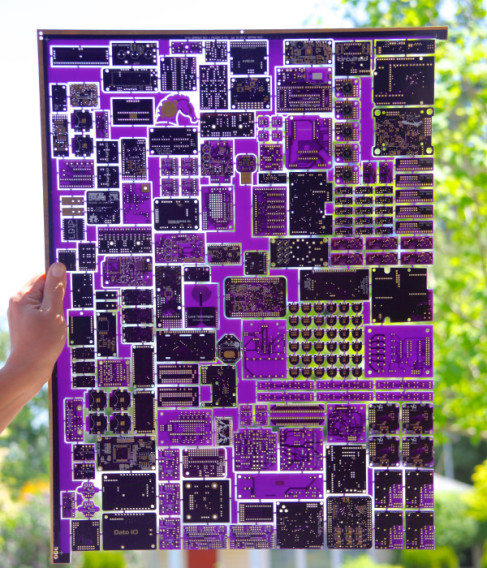
Happy Lunar New Year! We would like to let our customers know that all OSH Park boards are manufactured in the United States, and we will be operating on a normal schedule during Lunar New Year:

Shipping Information and Turnaround Times

There are two periods of time to think about when making your order:

  • Fabrication time between when you place your order and when we receive boards from the fab.
  • Shipping time between when we ship and when the post office delivers your order to you.

All PCBs ship from Lake Oswego, Oregon, and are fully manufactured in the United States.

Normal schedule during Lunar New Year 2021

Hackaday Remoticon: KiCad to Blender PCB Renders

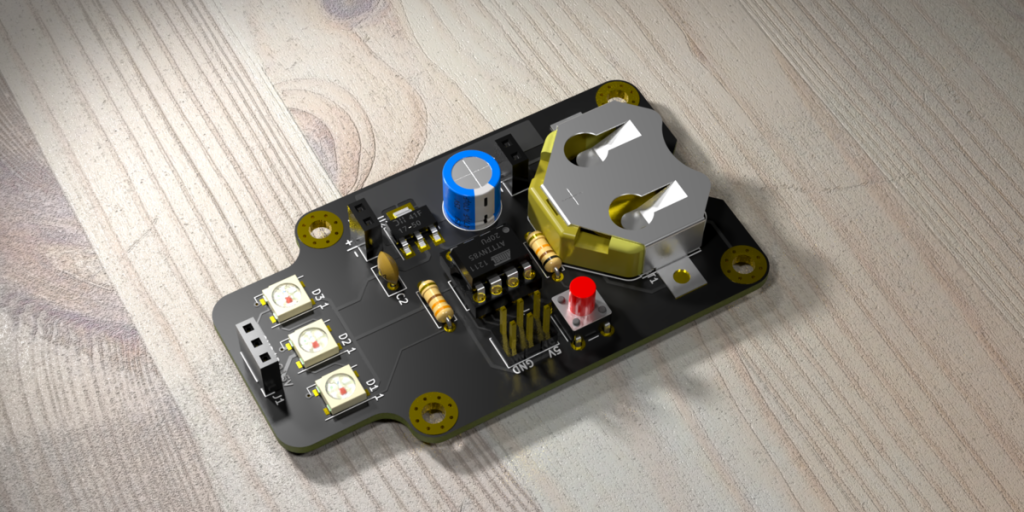
In this workshop, Anool Mahidharia takes the output of KiCad’s VRML export, gets it rendering in Blender, and then starts tweaking the result until you’re almost not sure if it’s the real thing or a 3D model. He starts off with a board in KiCad, included in the project’s GitHub repo, and you can follow along through the basic import, or go all the way to copying the graphics off the top of an ATtiny85 and making sure that the insides of the through-plated holes match the tops.

If you don’t know Blender, maybe you don’t know how comprehensive a 3D modelling and animation tool it is. And with the incredible power comes a notoriously steep learning curve up a high mountain. Anool doesn’t even try to turn you into a Blender expert, but focuses on the tweaks and tricks that you’ll need to make good looking PCB renders. You’ll find general purpose Blender tutorials everywhere on the net, but if you want something PCB-specific, you’ve come to the right place.

Read more…

Hackaday Remoticon: KiCad to Blender PCB Renders

Alfred Jones Talks About the Challenges of Designing Fully Self-Driving Vehicles

Hackaday editor Mike Szczys writes about a recent Hackaday Remoticon talk:

Alfred Jones Talks About the Challenges of Designing Fully Self-Driving Vehicles

The leap to self-driving cars could be as game-changing as the one from horse power to engine power. If cars prove able to drive themselves better than humans do, the safety gains could be enormous: auto accidents were the #8 cause of death worldwide in 2016. And who doesn’t want to turn travel time into something either truly restful or alternatively productive?

But getting there is a big challenge, as Alfred Jones knows all too well. The Head of Mechanical Engineering at Lyft’s level-5 self-driving division, his team is building the roof racks and other gear that gives the vehicles their sensors and computational hardware. In his keynote talk at Hackaday Remoticon, Alfred Jones walks us through what each level of self-driving means, how the problem is being approached, and where the sticking points are found between what’s being tested now and a truly steering-wheel-free future.

Check out the video below, and take a deeper dive into the details of his talk.

Alfred Jones Talks About the Challenges of Designing Fully Self-Driving Vehicles

Fairy Dust mini PCB pin for RC3

We are excited to see the wonderful Thomas Flummer in Copenhagen has designed a neat PCB pin for the virtual Chaos Communication Congress next month:

Fairy Dust mini PCB pin for RC3

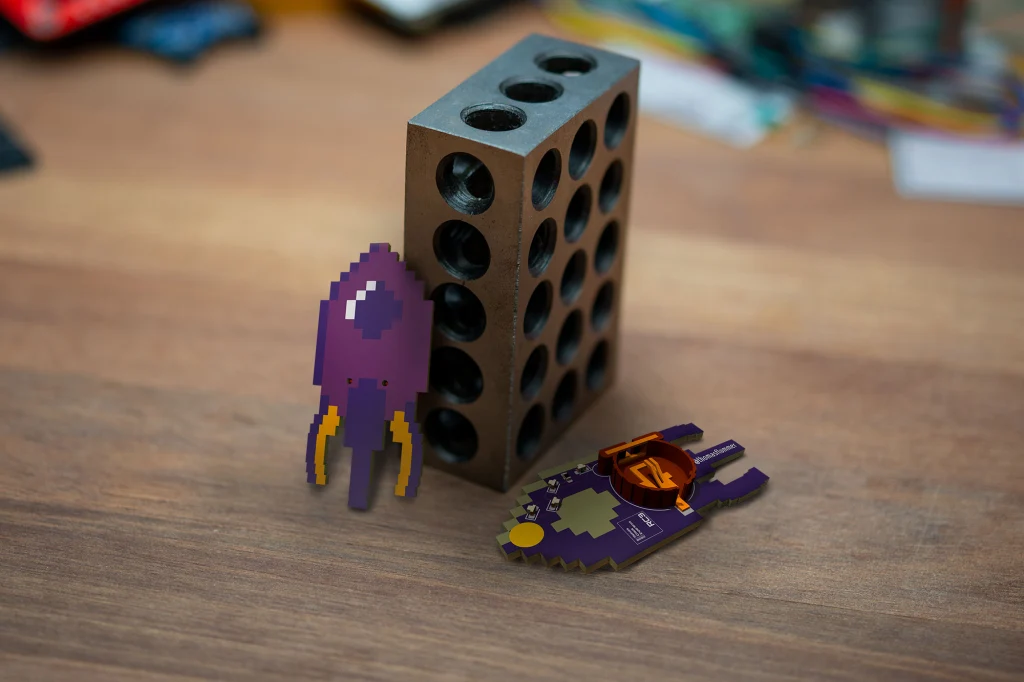
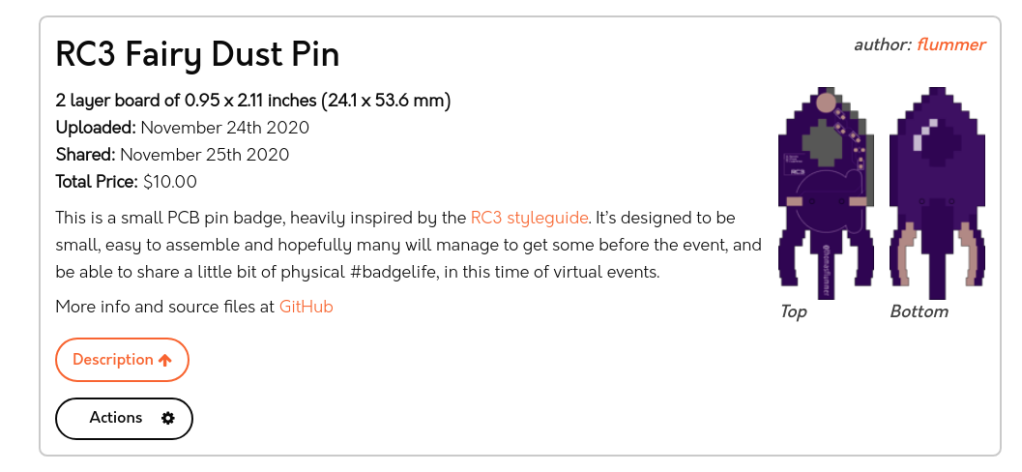
This is a small PCB pin badge, heavily inspired by the RC3 styleguide. It’s designed to be small, easy to assemble and hopefully many will manage to get some before the event, and be able to share a little bit of physical #badgelife, in this time of virtual events.

Making your own

If you want to make your own, I have included the gerbers, in case you don’t want to install the nightly version of KiCad.

There is also a shared projects at OSHPark, and this is designed for the standard purple PCBs. It’s designed to be exactly 2 square inches, so for USD 10 you get 3 pcs. shipped anywhere, though the standard shipping might take a bit to arrive.

The parts needed for this pin is simply 4 white 0603 LEDs, a series resistor, also 0603, to limit the current a bit (I’ll try with a 1K to begin with), a CR1220 coin cell holder (I’m planning on using a Q&J CR1220-2 from LCSC) and then a little round brooch clasp/tie tack pin (I got some on ebay, but a DIY/craft supply store might also have them).

Please share

If you decide to make this badge or a variant of it, please share images so we can all see it and get inspired. If sharing on social media, please use the #badgelife tag and please let me know, I would love to see what you have made!

Here is the shared project:

Fairy Dust mini PCB pin for RC3

Announcing the Open Source Hardware Certification API

News from the Open Source Hardware Association (OSHWA):

Announcing the Open Source Hardware Certification API

Today we are excited to announce the launch of a read/write API for our Open Source Hardware Certification program. This API will make it easier to apply for certification directly from where you already document your hardware, as well as empower research, visualizations, and explorations of currently certified hardware.

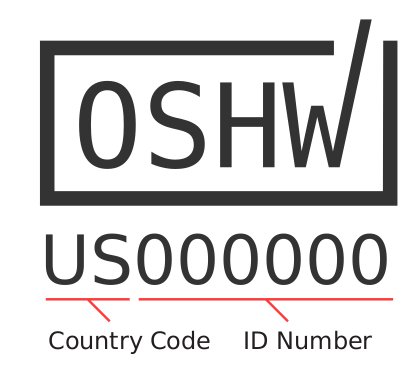
OSHWA’s Open Source Hardware Certification program has long been an easy way for creators and users alike to identify hardware that complies with the community definition of open source hardware.  Since its creation in 2016, this free program has certified hardware from over 45 countries on every continent except Antarctica.  Whenever you see the certification logo on hardware:

You know that it complies with the definition and that the documentation can be found using its unique identifier (UID).

What’s New?

The new API supports both read and write access to the certification process.  

Write access means that you can submit certification applications directly instead of using the application form.  If you already have all of the application information in a system, there is no need to retype them into a webform.

We hope that this will make it easier for entities that certify large amounts of hardware to build the certification process directly into their standard workflow.  We are also working with popular platforms to integrate a ‘certify’ button directly into their systems.  

Read access gives you access to information about hardware that has already been certified.  This will make it easier to explore the data for research, create compelling visualizations of certified hardware, and build customized lenses to understand what is happening in open source hardware.  

What Happens Now?

The first thing you can do is get a key and start exploring the API itself.  The team at Objectively has created detailed documentation, code snippets, and sandboxes that make it easy to test out all of the features.  

In the longer term, we hope that the community will build better ways to both submit applications for certification and present information about certified hardware.  OSHWA expects to maintain our application form and certification list for the foreseeable future.  That being said, we are also happy to share (and possibly cede) the stage to better ways to get information into and out of the system as they come along.  

For now, let us know what you do with the API!  You can tweet to us @OHSummit or send us an email at [email protected].

Announcing the Open Source Hardware Certification API