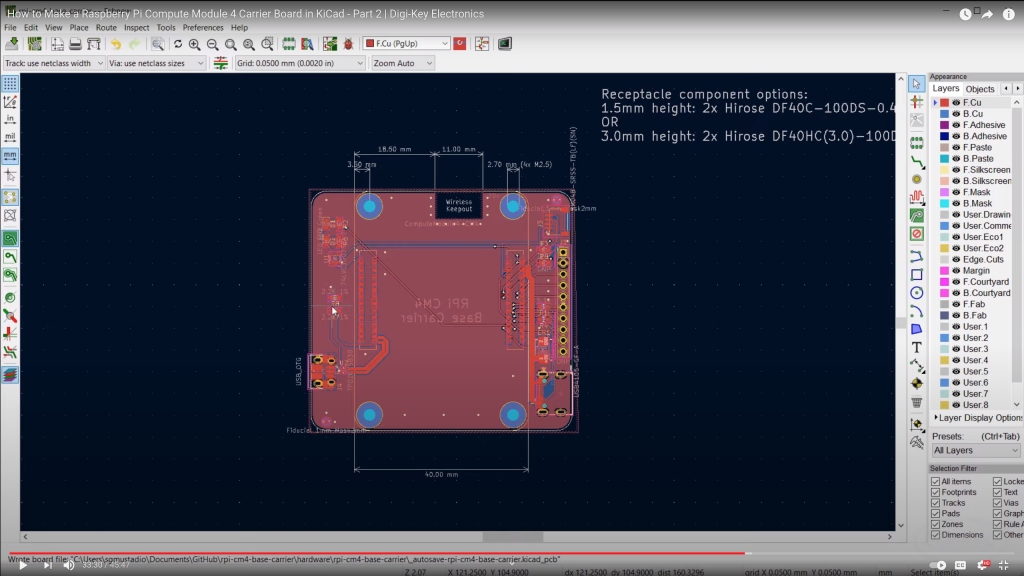
Raspberry Pi released the Compute Module 4 (CM4) in October, which is a single board computer with all of the processing power of the Raspberry Pi 4, but in a tiny form factor! It removes many of the connectors (USB, HDMI, etc.), as the intention is for you to add your own with a custom board and enclosure.
In this series, we’ll show you how to create your own, custom Raspberry Pi CM4 carrier board with KiCad!
With our new CP Sapling, there is a world of possibilities that you can explore with the SAMD21 microcontroller. And thanks to the hard work of Adafruit, there is a ton of great examples that can be used to explore microcontroller functionality and make a few cool projects to impress your family this holiday season!
As always before we get started, if you have never used a CircuitPython board like the QT PY, be sure to check out Adafruit’s learning site to quickly get started with your new board. –> Adafruit Learning Site: Getting Started With CircuitPython
We are pleased to announce the CfP for the Open Source Computer Aided Design and Modeling devroom at FOSDEM 2021, on Sunday, 7 February 2021.
We hope you’ll join us for a full day of talks, demos and interesting discussions on designing, modeling and testing hardware using Open Source tools. This year’s event will be fully virtual and will feature multiple channels for talks, Q&A as well as hallway discussions.
We welcome any talk proposals about the creation of physical objects.
Our 2020 year end fund drive has started! If KiCad has helped you this year, please consider donating to support development, documentation and community at http://go.kicad.org/donate Between now and Jan 15, @KiProEDA will match your donation dollar for dollar
Our 2020 year end fund drive has started! If KiCad has helped you this year, please consider donating to support development, documentation and community at https://t.co/sPQMBGXbB0
Between now and Jan 15, @KiProEDA will match your donation dollar for dollar.
The answer is yes, yes you can. As long as you have one made after about 2011, at least. In the video after the break, [Blitz City DIY] takes us briefly through the history of the venerable Easy-Bake Oven and into the future by reflow soldering a handful of small blinky boards with it.
Made For a Lab. Fits in a Pocket. Verifiable by Design.
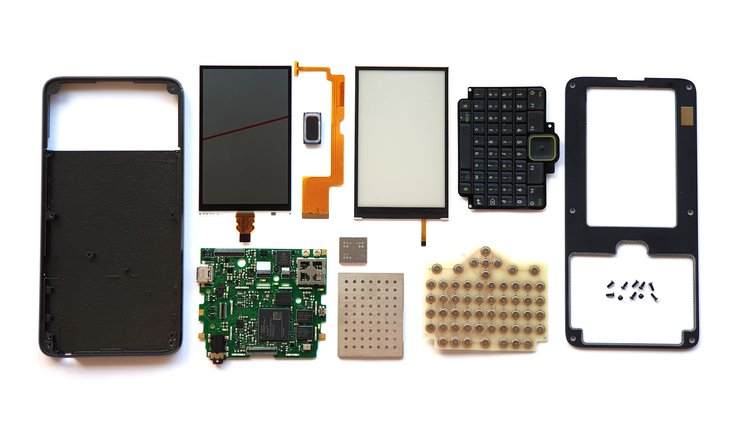
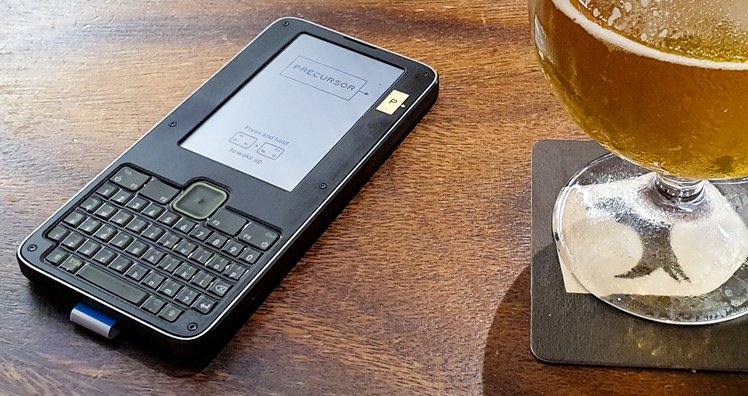
Precursor is an open hardware development platform for secure, mobile computation and communication. This pocket-sized device accommodates a built-in display, a physical keyboard, and an internal battery while remaining smaller and lighter than the average smartphone. Precursor was built for use on the road, but it compromises nothing as a development platform. Powered by an FPGA-hosted, soft-core System-on-Chip (SoC), it gives developers the freedom to inspect, verify, and customize nearly every aspect of its operation. Help us take those critical first steps toward a world in which silicon-level trustworthiness is attainable.
Trust It. Because You Can, Not Because You Have to.
We are accustomed to accepting the word of large corporations, like Apple and Google, that our gadgets are trustworthy. Without any hard evidence, we’ve long had to take in on faith that our privacy is being respected and that our personal data is not just one backdoor away from being stolen, exploited, or exposed. (We’ll go ahead and leave “monetized” off that list, since we all know that’s happening.) We’ve had to accept this reality in large part because we’ve had no other choice. Precursor changes the status quo by making evidence-based trust a core principle of its design. We have subjected every aspect of this platform to a level of scrutiny that will allow users to trust their devices. You, the user, will be able to trust Precursor based on scientific evidence that is observable without access to a million-dollar microscope.
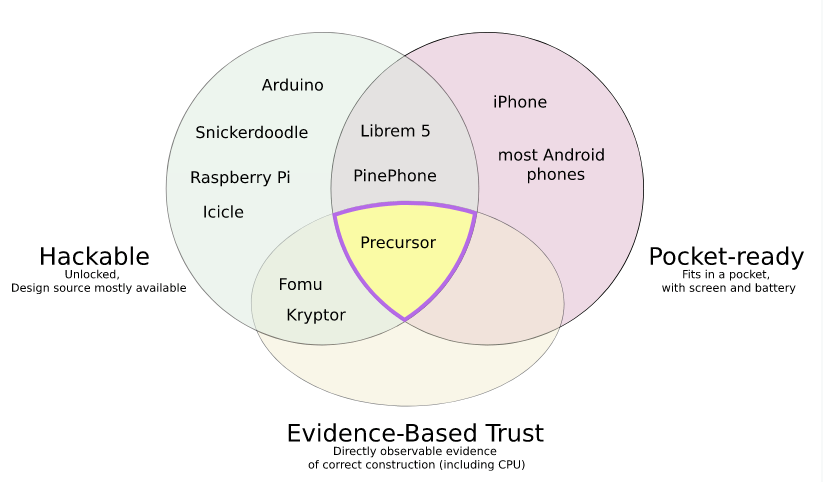
Situating Precursor Within the Device Ecosystem
We are the first to admit that Precursor isn’t for everyone. It’s a new class of development platform, made for security- and privacy-critical applications. We know it’s not going to replace your smartphone today. Rather, we see it as an indicator of good things to come from the open hardware ecosystem.
One of the first significant projects I was fortunate enough to be able to cover was that of the OSO Open Book, an Oddly Specific Object from Joey Castillo. This open source e-book reader looked to free many from the bindings of DRM, enforced by many commercial platforms.
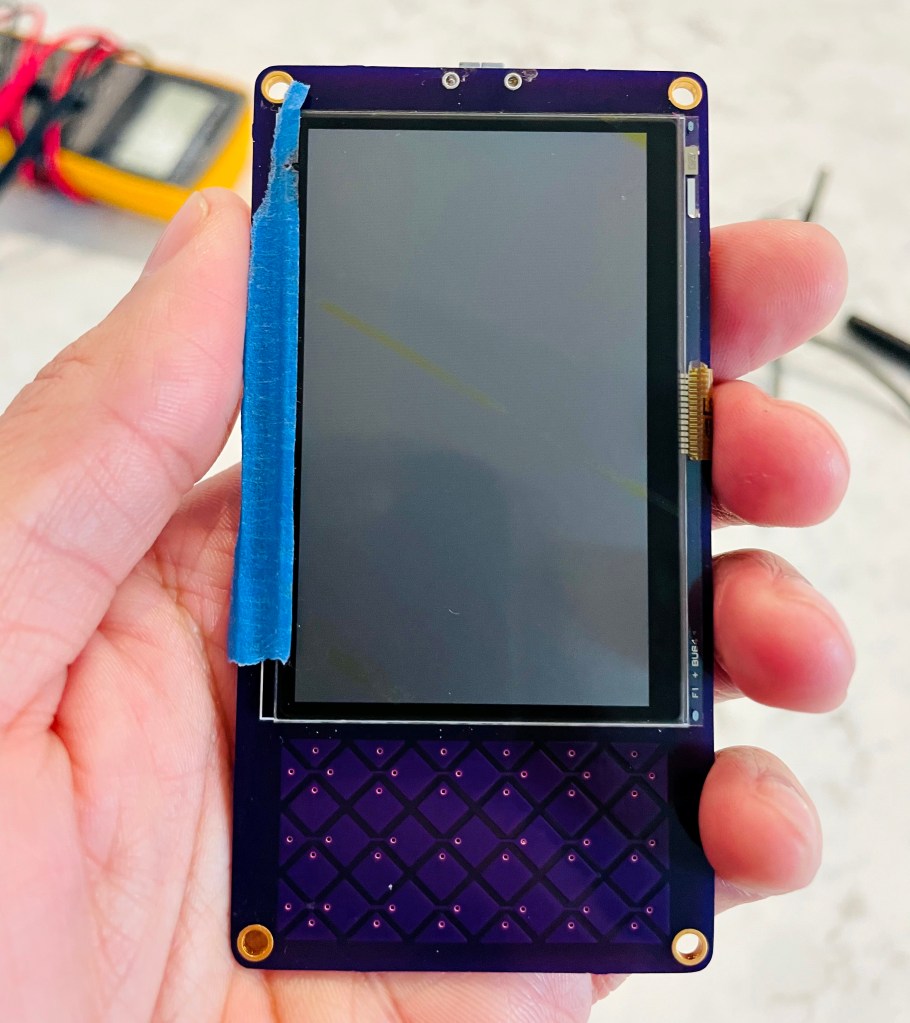
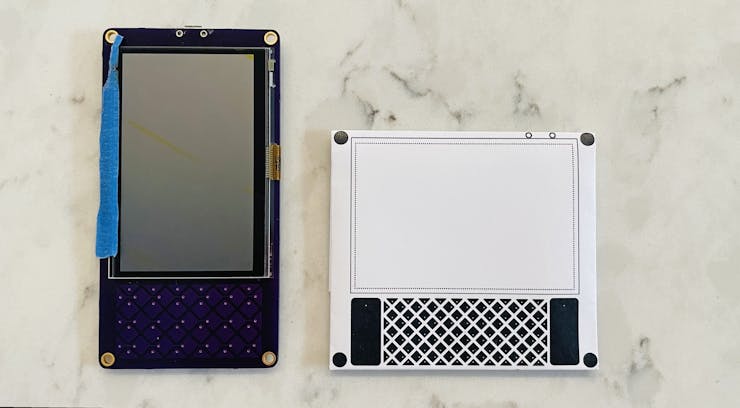
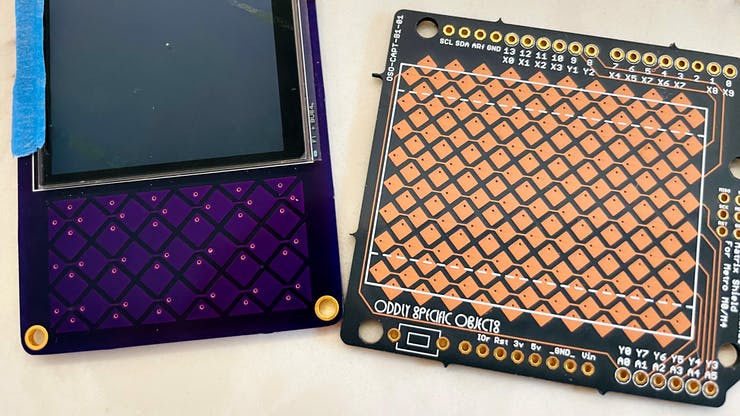
The latest pair of PCB designs to be derived from Castillo’s Twitter feed come in the format of this illustrious duo, affectionally named Bert and Ernie.
I think all I can say — without being sued — is that the resemblance to a certain well-known set of characters who may or many not resemble the duo heading up this article is, well, uncanny.
Right now, this platform looks set to perform as the prototype from which future works can spring forth, and as with a lot of what Castillo does, it’s all about testing out new technologies and ideas, and there are one or two features on these fresh new designs that are pretty damn funky — let’s check ’em out.
OK, it's time to answer the question emblazoned on this prototype's back: What Is This Thing? I know what it's for, I just don't know what to call it. The elevator pitch: it's a screen for interacting with gadgets, mainly sensors, attached to its many ports. (thread; 1/?) pic.twitter.com/yRy2hkshyj
can't do too much with this today because I have *actual* work, but, initial touch pad test! Some thoughts: 1, I need to respin this with a SAMD51. Chose the D21 for native touch, but my circuitpyui library won't fit on it, and this is a perfect circuitpyui device. (thread, 1/?) pic.twitter.com/C0YXGLxbpV
2020 can’t stop this holiday meetup! Join Hackaday and Tindie virtually for a fun community hangout in Remo.
Some of you may remember this platform from the community Bring-A-Hack at Remoticon last month. For those who have not used Remo, it’s a neat platform that allows participants to move around a virtual conference space and join different conversations. The holiday event will accommodate seating areas for up to eight people as well as smaller seating sections.




 OSH Park