Hackaday: Seeing the Skill is Better than Seeing the Project


From Hackaday editor Mike Szczys:

Seeing the Skill is Better than Seeing the Project

Pulling off a flashy project that gets the viral-media hug of widespread approval feels great. Getting there is no easy path to walk and often times the craft that went into a finished project doesn’t even take the back seat but gets no mention at all. Often I find I’m more impressed by — or a least my attention is more strongly captured by — the skills put on display as prominently as the finished build.

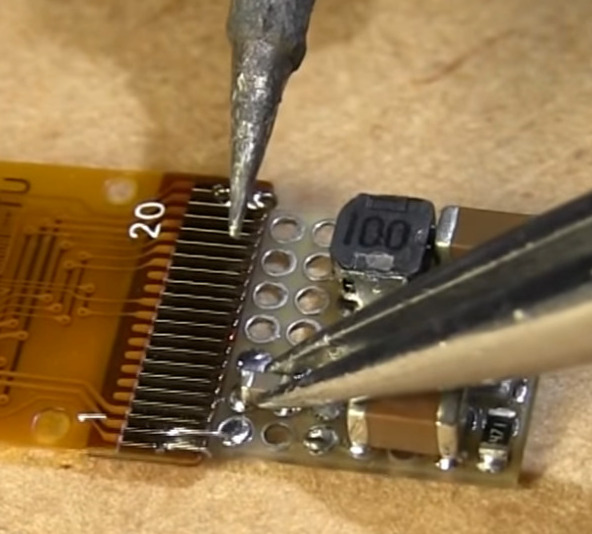
Case-in-point this week comes from the model railroad work of [Diorama111]. Seeing an OLED screen in the nose of an HO scale locomotive just like the real-life version is impressive, but how many people missed the one-off soldering masterpiece that went into this one? You’ll marvel at the SMD techniques used with through-hole protoboard on this one.
Occasionally we do get to look over the shoulder of the master as decades of skills are shared for the purpose of passing them on. So was the case back in May when we watched as [Leo] walked through his tips and tricks for prototyping at the electronics bench. This included a lot of non-obvious but clever stuff; tips on working with copper tape for solder buses, using Teflon tubing with bare wire instead of stripping PVC-insulated wire, and a deep dive into copper clad prototyping.

So remember all of us hardware geeks when you look to tell the story of your project. We want to know how it was done at least as much as what was done. There was a time when electronic designers were a separate work group from electronic technicians (and wow, those technicians were in a league of their own). These days we all have that technician hat hanging on our workbenches and I’m always interested in packing in yet another unlearnt skill. Throw us a bone!
Hackaday: Seeing the Skill is Better than Seeing the Project

Handheld Apple IIe emulator powered by Teensy

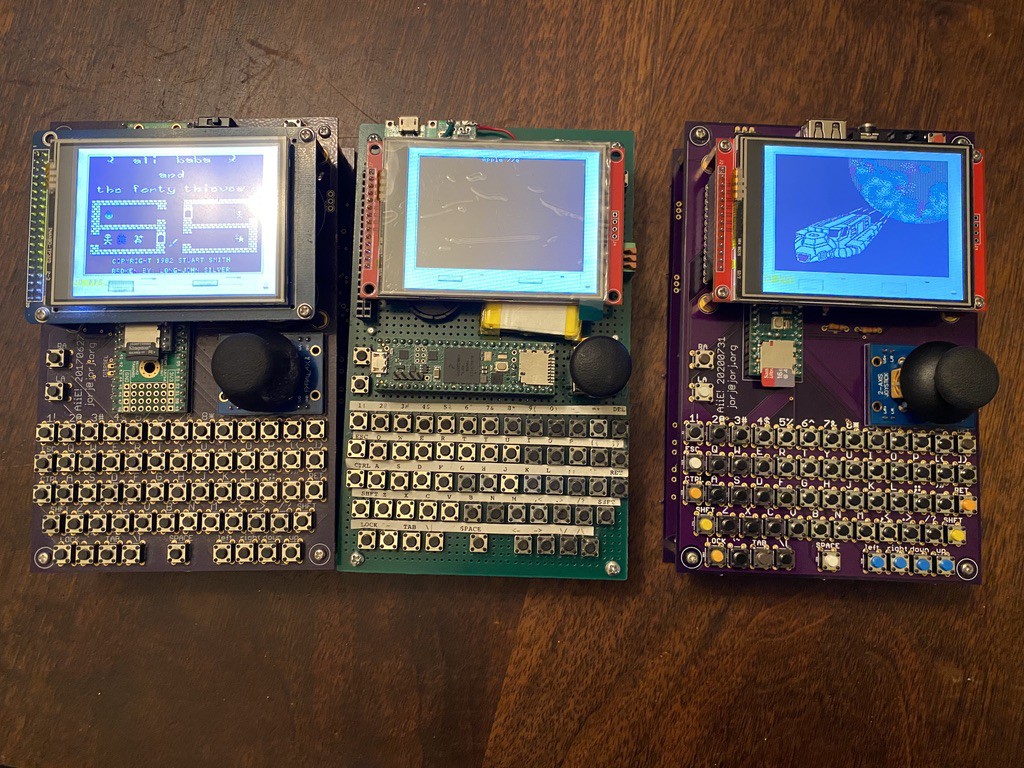
Jorj Bauer has created a handheld Apple IIe emulator with a Teensy:

Aiie! – an embedded Apple //e emulator

Teensy 4.1 (600 MHz arm Cortex M7) running a full-speed Apple //e emulator. Because everyone needs one of these, right?

The OSH Park boards arrived, and I spent some time Monday assembling! Here’s a time lapse of the build, which took me shy of 3 hours (mostly because I hadn’t organized any of the parts and had to hunt for several).

Handheld Apple IIe emulator powered by Teensy

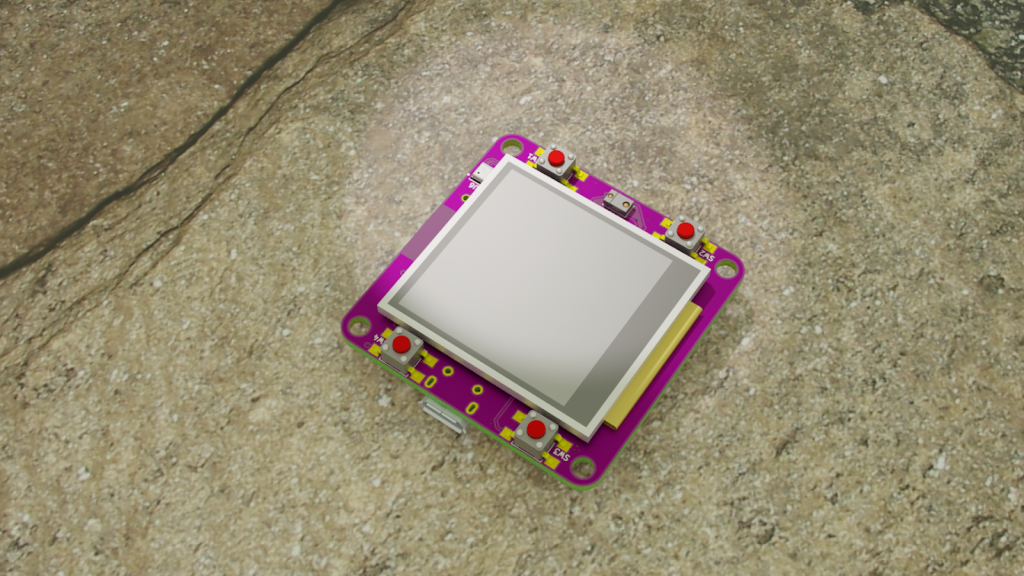
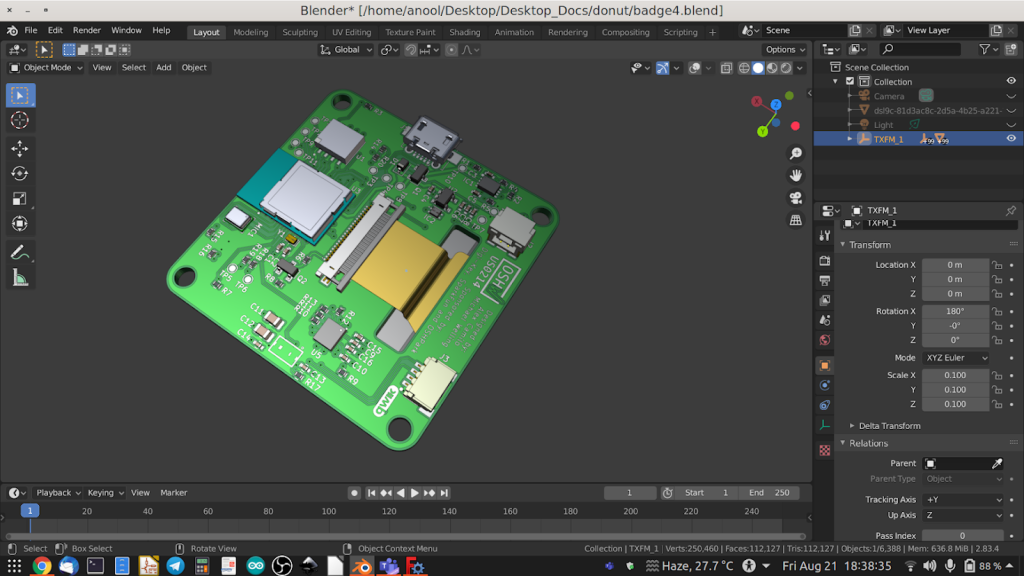
Experimenting PCB rendering using KiCad, FreeCAD and Blender

Anool from Wyolum has published an exciting blog post about 3D renders:

Experimenting PCB rendering using KiCad, FreeCAD and Blender

I’ve been putting off using Blender since over 5 years, being intimidated by the complex UI and workflow, until this month when I mustered courage to go through Andrew Price’s Doughnut tutorials. My aim was to learn how to do photo-realistic renders of KiCad boards.

Experimenting PCB rendering using KiCad, FreeCAD and Blender

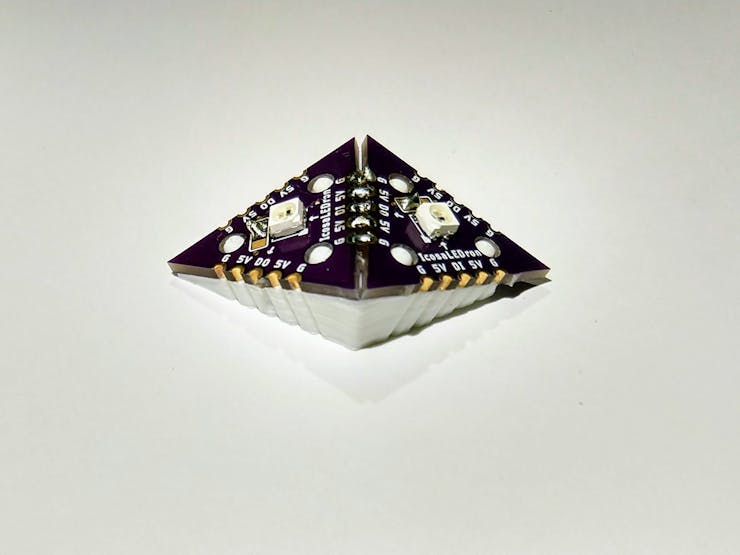
icosaLEDron: a 20-sided, LED-faceted creation by Jason Coon

Tom Fleet writes on Hackster about this awesome LED project:

The icosaLEDron Is an LED-Lit Regular Platonic Solid That Anyone Can Build!

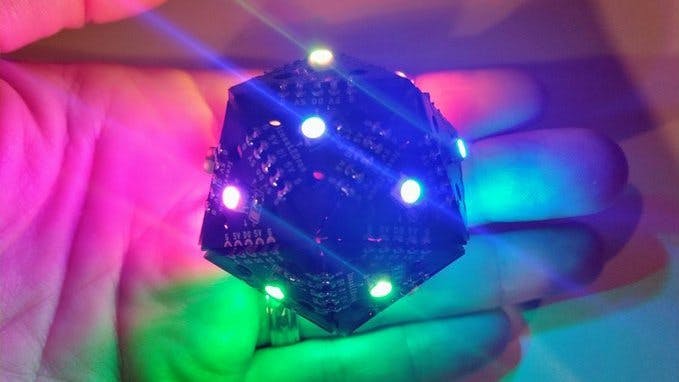
Jason Coon shows us what goes inside his amazing icosaLEDron — a 20-sided, LED-faceted fidget toy that is freakin’ awesome!

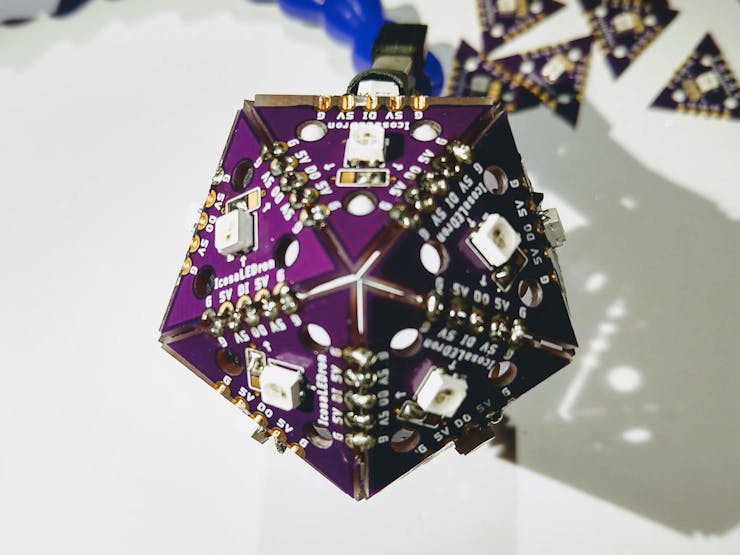
Boiling this design down to the bare minimum, the icosaLEDron is a 20-sided shape, with 20 LEDs — one per face. That meets the functional definition for such a name, and drops the complexity by several orders of magnitude — not only in terms of assembly, but in functional operation as well!

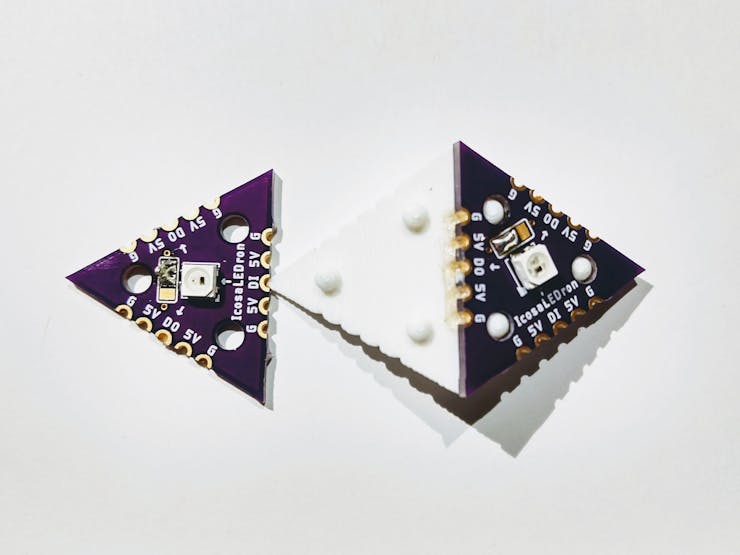
The initial version of Coon’s icosaLEDron, which can be seen seen spinning above, kept things as simple as they needed to be. 20 triangular boards, each featuring a single WS2812B-Mini 3535 addressable RGB LED.


These 3535 packaged parts are a nice halfway-house for makers looking for a digital serial LED solution that can be placed in layouts where the conventional 5050 package would take up too much board real estate. For such situations, a 1515 or 2020 LED case might be a tad too tiny for those without stencil and reflow capabilities — the 3535 packages can still be hand soldered!

More often than not now, we are pleased to see the inclusion of 3D printing jigging and support tooling within a build. Seen below, the idea to use a simple assembly fixture is a well thought out one.


It might look simple, but even the small features — such as the rounded mountain pegs, mean that the jig can easily be removed after the soldering operation, without the need to flex the soldered connections too much.


Speaking of soldered connections, now’s a pretty good time to touch on the fact that all of these boards are identical. That’s more interesting than it initially seems, because it indicates how much effort Coon has put into the thinking behind the signal routing within this icosaLEDron.

Those little solder jumpers sat above each LED are able to control the direction in which the LED serial data stream exits out of the board, left or right — meaning that Coon can snake a way for data to pass through the sculpture, without the need for custom wiring, etc. Clever!

Read more…

https://twitter.com/jasoncoon_/status/1294704396065013762


icosaLEDron: a 20-sided, LED-faceted creation by Jason Coon

Want to Support Hacker-friendly Hardware Design? Follow Valve’s Example

It’s been just over a year since Valve released Index, their flagship VR system, and it’s worth looking back at this GitHub repository as a fine example of how to provide supporting materials to a hacker-friendly hardware design. The image above shows off one of the hacker-friendly design elements: an empty space behind the visor, with a USB port off to the right, that exists for no reason other than to make it easier to mount and plug in whatever one might come up with. There’s more to it than that, however. If one wishes to provide supporting materials for a hardware design, one could certainly do worse than emulate Valve’s example.

Want to Support Hacker-friendly Hardware Design? Follow Valve’s Example — Hackaday
Want to Support Hacker-friendly Hardware Design? Follow Valve’s Example

Hackspace Magazine: Open Source Space

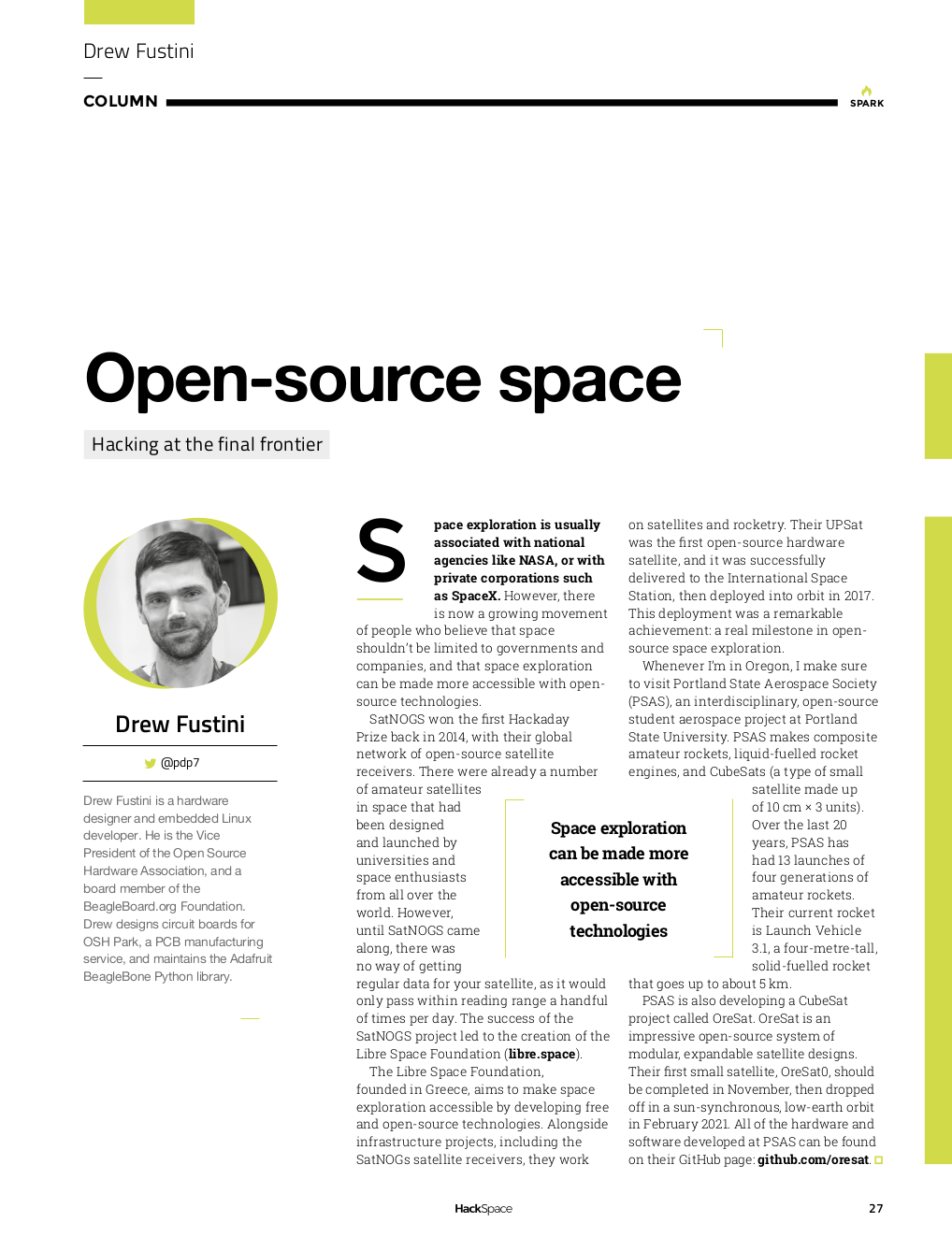
Drew’s column in the new HackSpace magazine is dedicated to open source space projects like PSAS, OreSat, SatNOGS and the Libre Space Foundation:

Open Source Space

Space exploration is usually associated with national agencies like NASA, or with private corporations such as SpaceX. However, there now is a growing movement of people who believe that space shouldn’t be limited to governments and companies, and that space exploration can be made more accessible with Open Source technologies.

SatNOGS won the first Hackaday Prize back in 2014 with their global network of Open Source satellite receivers. There were already a number of amateur satellites in space that had been designed and launched by universities and space enthusiasts from all over the world. However, until SatNOGS came along there was no way of getting regular data for your satellite, as it would only pass within reading range a handful of times per day. The success of the SatNOGS project led to the creation of the Libre Space Foundation.

The Libre Space Foundation, founded in Greece, aims to make space exploration accessible by developing free and Open Source technologies. Alongside infrastructure projects including the SatNOGs satellite receivers, they work on satellites and rocketry. Their UPSat was the first Open Source hardware satellite, and it was successfully delivered to the International Space Station then deployed into orbit in 2017. This deployment was a remarkable achievement: a real milestone in Open Source space exploration.

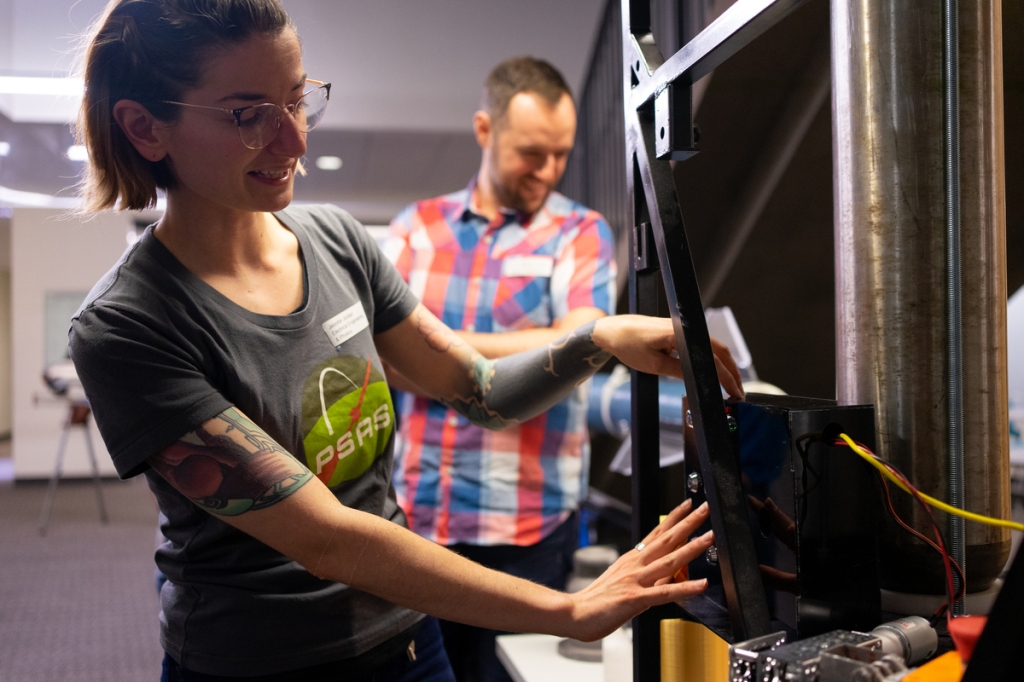
Whenever I’m in Oregon, I make sure to visit Portland State Aerospace Society (PSAS), an interdisciplinary, Open Source student aerospace project at Portland State University. PSAS makes composite amateur rockets, liquid fueled rocket engines, and CubeSats (a type of small satellite made up of 10cm3 units). Over the last 20 years PSAS have had 13 launches of four generations of amateur rockets. Their current rocket is Launch Vehicle No 3.1, a four meter tall solid fueled rocket that goes up to about 5km.

PSAS is also developing a CubeSat project called OreSat. OreSat is an impressive Open Source system of modular, expandable satellite designs. Their first small satellite, OreSat0, should be completed in November then dropped off in a sun synchronous low earth orbit in February 2021. All of the hardware and software developed at PSAS can be found on their GitHub page.

Hackspace Magazine: Open Source Space

Portland State Aerospace Society competes in collegiate space race

PSU Vanguard writes about our local aerospace team:

Portland State Aerospace Society competes in collegiate space race

Three current projects at Portland State Aerospace Society (PSAS) funnel into one ambitious goal: building a liquid fuel rocket capable of soaring to the edge of space—100 kilometers above Earth’s surface.

Tool boxes, red countdown timers, clocks set to different time zones, a workbench with satellite components and a wall of rockets surround an oval conference table. The PSAS room—located in the Maseeh College of Engineering and Computer Science building—is a cross between an engineer’s workshop and NASA control room. PSAS members utilize the space to work on a new carbon fiber airframe, a liquid fuel rocket engine and Oregon’s first satellite as they compete in Base 11—a collegiate space race where the first team to launch a liquid fuel rocket to the edge of space wins a million dollars.

Each PSAS rocket is called a launch vehicle (LV) and is given a numeric value for every new iteration. The current rocket is LV 3.1.

“LV0 was just an off the shelf rocket kit that Andrew [Greenberg]—our faculty advisor—and a couple other people started PSAS with,” said PSAS member Jean-Pierre Pillay. “After that it went to LV1 and then LV2, LV2.1, LV2.1.3 as small iterations are made.”

The final project of the three that are funneling into the liquid fuel rocket is OreSat—the first satellite built in Oregon.

“It’s a tiny cubesat, about 10-by-10-by-20 centimeters, which is what’s called a 2U cubesat,” said David Lay, electrical systems intern for OreSat and electrical engineering lead for PSAS. “’U’ is a standard unit that’s defined by the cubesat standard.”

The plan is for OreSat to be passed along from PSAS to NASA in January 2021 then flown up to the International Space Station (ISS) in April of the same year, where it will be ejected from one of the space station’s airlocks.

Andrew Greenberg, faculty advisor for PSAS, explained in an interview that “the electronic systems that [they] built for the rockets are very satellite-like” with batteries, processors and communications gears which led to the creation of OreSat.

A primary mission of OreSat is STEM outreach. High school students are able to build hand-held ground stations that can interact with the tiny satellite’s camera.

“What they do is point it up and when we do a fly by overhead with our satellite we turn the satellite towards them and we downlink a live video feed of them from space,” Lay explained. “So we call it the 400 kilometer selfie-stick.”

Portland State Aerospace Society competes in collegiate space race

New Hackaday Contest: Circuit Sculpture Challenge

We’re bringing back one of our most popular contests, the Hackaday Circuit Sculpture Challenge! Make your functional circuits go beyond utility by turning them into art! Solar-powered circuit sculpture by [Mohit Bhoite] which was featured last year.Wire and circuit boards are a fantastic media for creating beautiful projects, and for this one we want both…

We’re bringing back one of our most popular contests, the Hackaday Circuit Sculpture Challenge! Make your functional circuits go beyond utility by turning them into art!

Read more New Contest: Circuit Sculpture Challenge — Hackaday

New Hackaday Contest: Circuit Sculpture Challenge

New features coming to KiCad

KiCad developer craftyjon recently posted videos about upcoming features.

This is a preview of the new per-type object opacity and visibility controls coming in KiCad 6
This is a preview of the new net and netclass appearance control panel coming in KiCad 6


New features coming to KiCad

USB controlled RGB LED

bikerglen has a new project on their blog:

The Single USB RGB LED

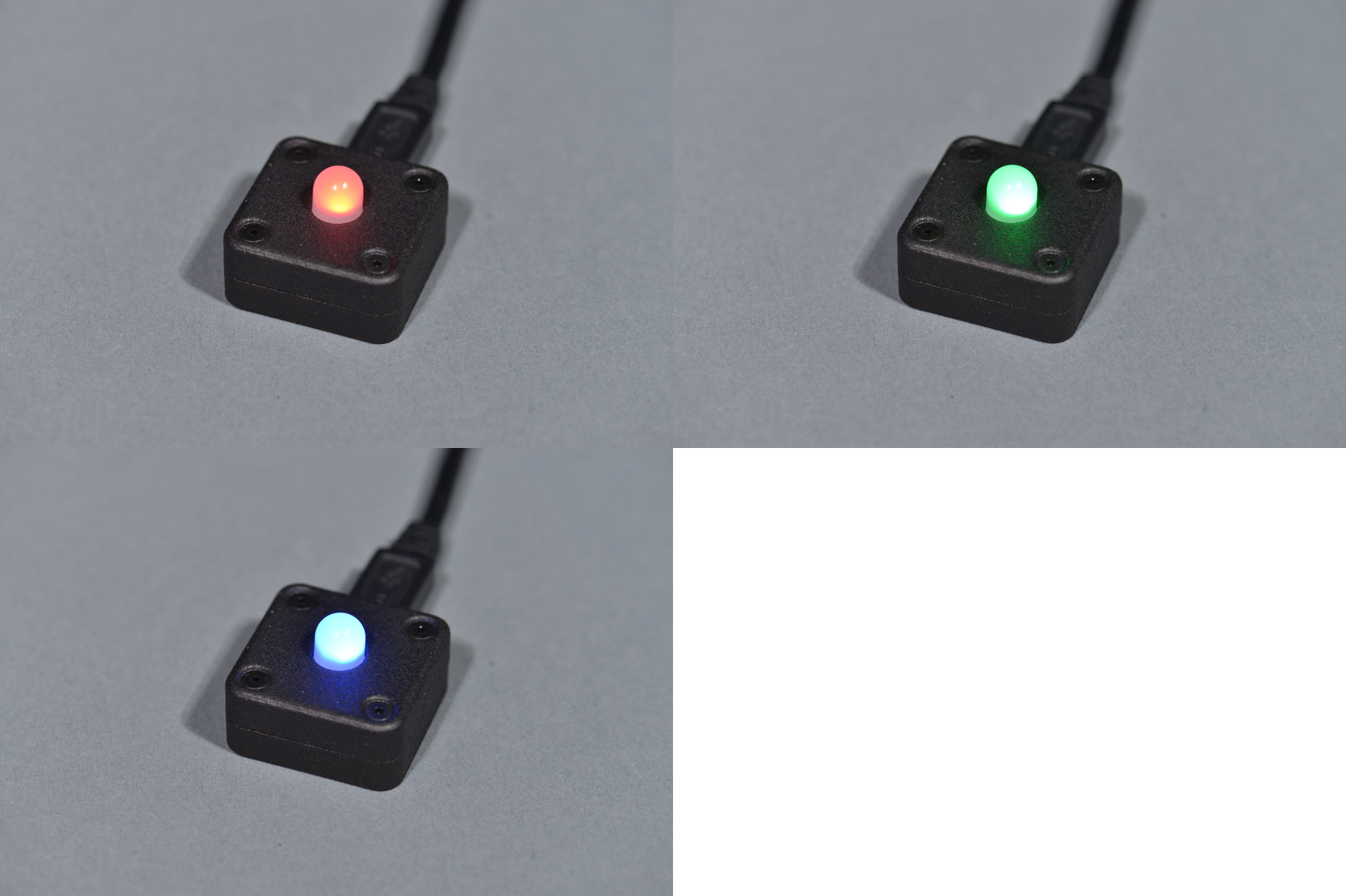
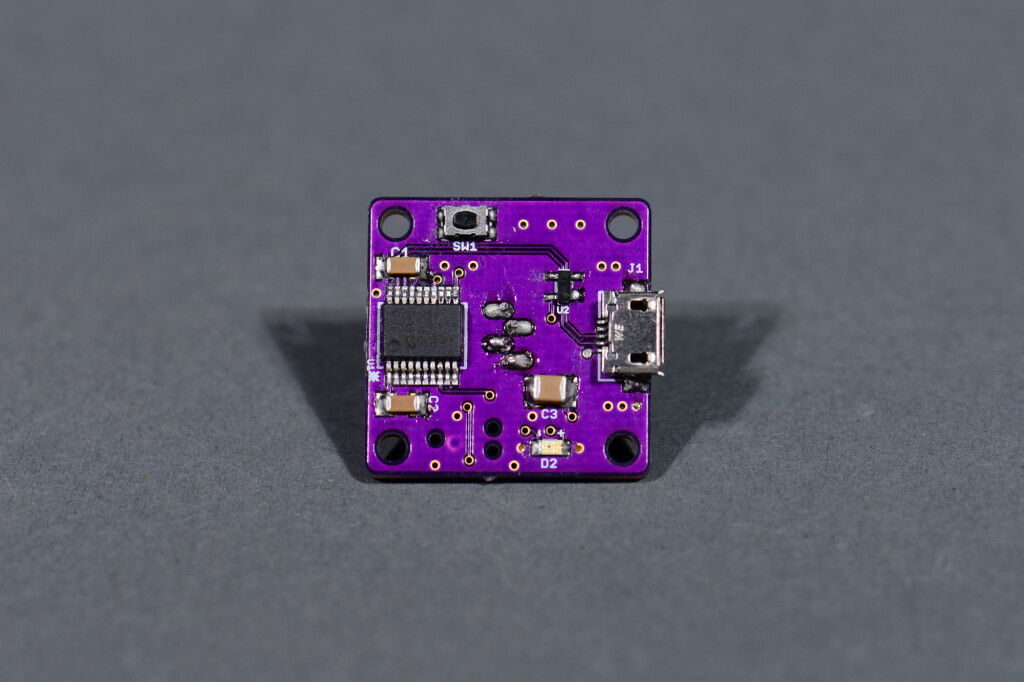
This project is a single RGB LED that is controlled over USB using a command line interface from a serial terminal window. A PIC16F1459 microcontroller implements the USB communications device class (CDC), processes the commands received from the user, and controls a single APA106-F8 8mm round RGB LED.

The USB CDC causes the PIC to appear as a serial port to the host computer. At this point, any terminal emulator software can be opened to access the CLI, and send commands to control the color and brightness of the LED. The APA106 addressable LED protocol is identical to the Neopixel / WS2812b protocol.

The software, board, and enclosure design files for this project are located in my single-usb-rgb-led repository on Github.

USB controlled RGB LED