
From the world of #badgelife, the talented Mr. Twinkle Twinkie has a new version of the OSHCat badge add-on for 2021:

Liz (@BlitzCityDIY) has great photos and a video of OSHCat making friends:
The design is shared on OSH Park:

From the world of #badgelife, the talented Mr. Twinkle Twinkie has a new version of the OSHCat badge add-on for 2021:
Liz (@BlitzCityDIY) has great photos and a video of OSHCat making friends:
The design is shared on OSH Park:
From Peter Hizalev on Tindie:
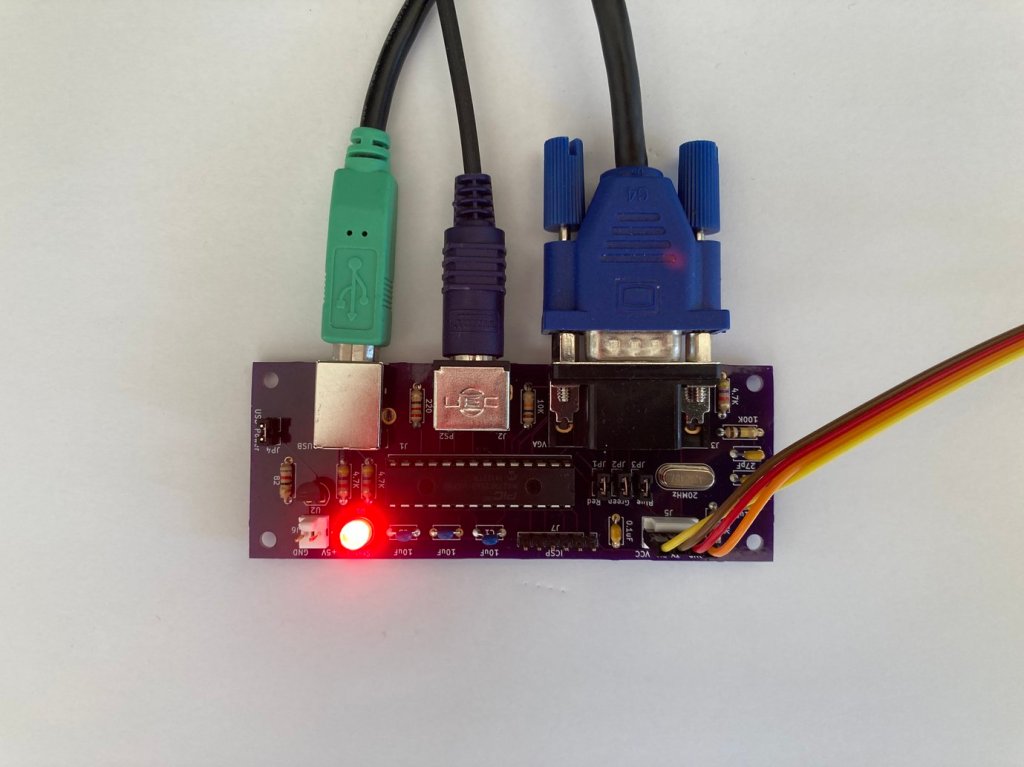
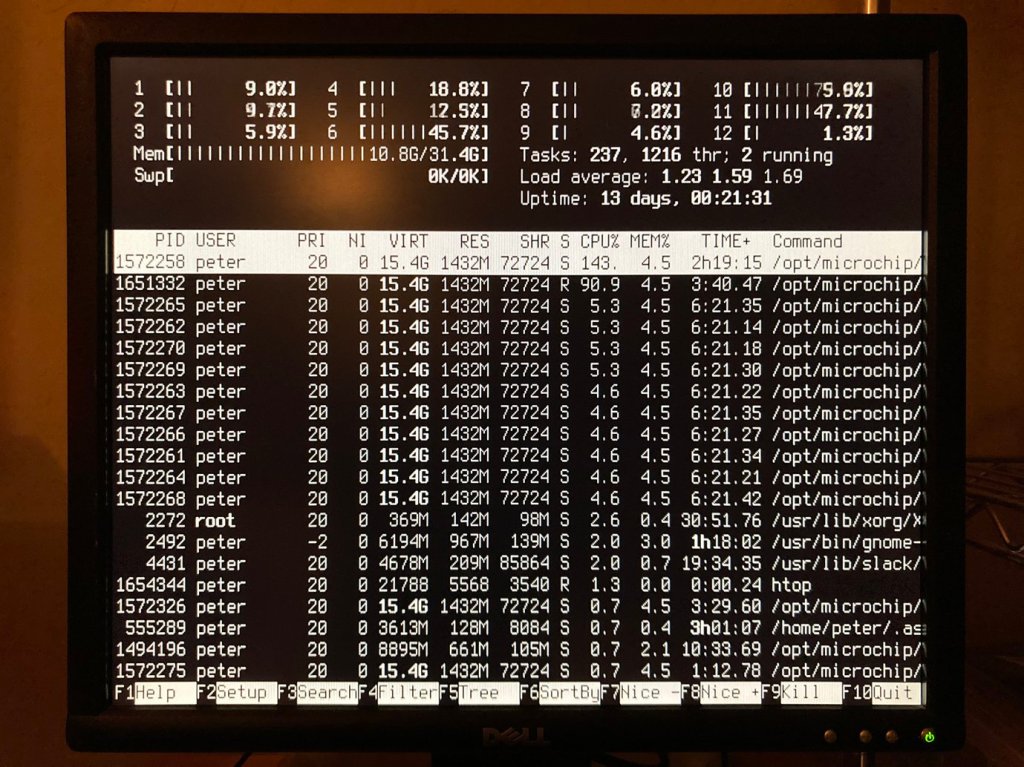
This is VT-100 and XTerm compatible video terminal implemented on the PIC32 microcontroller. It has a serial interface with TTL or RS-232 signal levels, input from a standard PS/2 keyboard, and output to a VGA monitor. There is also a USB interface that supports serial over USB and acts as a USB-to-serial converter.
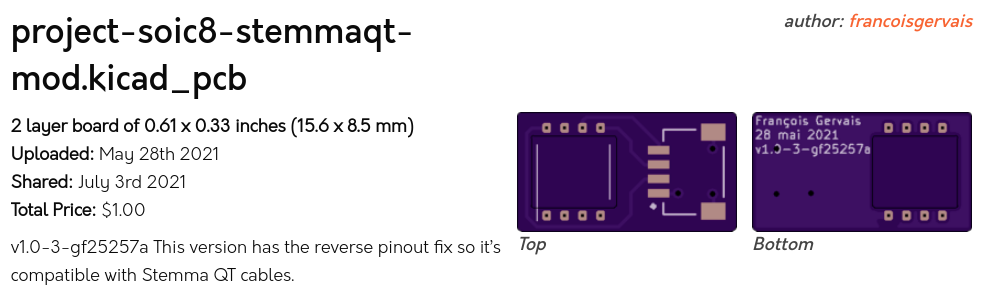
Francois Gervais designed this clever flexible PCB:
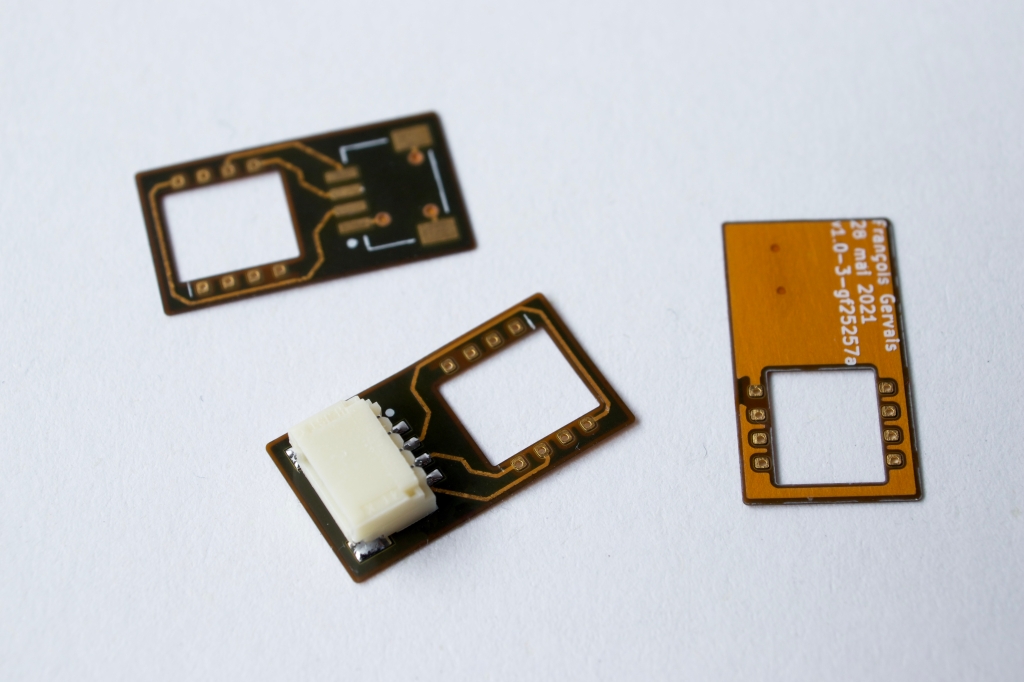
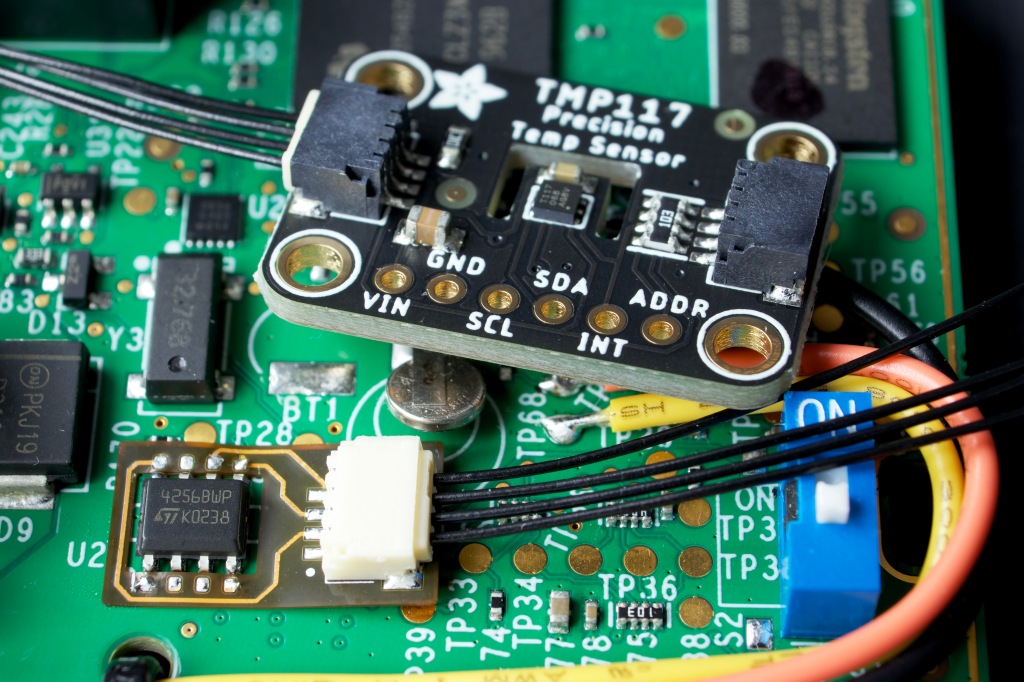
The design is available as a shared project:
Great set of talks from Javier Serrano of CERN, Rick O’Conner of OpenHW Group, Calista Redmore of RISC-V International, and more:
One of the most advanced areas in Open Hardware is open chips, a critical dependency for the European Union. Open chips have the potential to be beneficial in terms of their adaptability, speed and potential for increasing digital sovereignty in several sectors, including automotive industry, edge computing, data storage solutions, aerospace, energy or health.
By drawing lessons from Open Source Software, Europe can realise vast value from Open Hardware for its economy and citizens. There is a need for more debate on opportunities and challenges of Open Hardware, its potential for scaling up and supporting more collaborative and open infrastructure underlying all other layers of the digital ecosystem we know.
Salman Faris of OSHWA write about the latest ceritied Open Source Hardware in Make:

Open Source Hardware Certifications for May 2021
In May 2021 the Open Source Hardware Association (OSHWA) certified a wide variety of hardware as open source. we will have a certified variety collection of Open Source Hardwares, Let’s take a look! (And remember, certification is a free and easy way to show that your hardware complies with the open source hardware definition.)
First, many makers are interested in space and astronomy. The Astrohat is a Raspberry Pi 4 compatible hat for all your astronomy equipment. It comes with six 12V controllable outputs @3A each with current monitoring (2 PWM controllable for dew heaters), a temperature, humidity and pressure sensor port (external module), one adjustable 6-12 V output, and one port for serial communication and power to external device like a GPS. It’s the 5th piece of certified hardware from Greece. You can find the details here.
Wonder how Open Electronics can help scientist to make lab life easier, help institutions to reduce costs and aid science to become more reproducible, innovative, and collaborative?
Find out in this paper:
Harnessing the Benefits of Open Electronics in Science

Freely and openly shared low-cost electronic applications, known as open electronics, have sparked a new open-source movement, with much un-tapped potential to advance scientific research. Initially designed to appeal to electronic hobbyists, open electronics have formed a global community of “makers” and inventors and are increasingly used in science and industry. Here, we review the current benefits of open electronics for scientific research and guide academics to enter this emerging field. We discuss how electronic applications, from the experimental to the theoretical sciences, can help (I) individual researchers by increasing the customization, efficiency, and scalability of experiments, while improving data quantity and quality; (II) scientific institutions by improving access and maintenance of high-end technologies, visibility and interdisciplinary collaboration potential; and (III) the scientific community by improving transparency and reproducibility, helping decouple research capacity from funding, increasing innovation, and improving collaboration potential among researchers and the public. Open electronics are powerful tools to increase creativity, democratization, and reproducibility of research and thus offer practical solutions to overcome significant barriers in science.

It wasn’t that long ago that if you had an optical microscope in your electronics shop, you had a very well-supplied shop indeed. Today, though, a microscope is almost a necessity since parts have shrunk to flyspeck-size. [Maker Mashup] recently picked up an AD409 and posted a video review of the device that you can see below.
The microscope in question has a 10-inch screen so it is a step up from the usual cheap microscope we’ve seen on a lot of benches. Of course, that size comes at a price. The going rate for a new on is about $400.
If the 10 inch screen isn’t enough, you can connect the microscope to an external monitor. That does disable the onboard monitor, though. The microscope offers plenty of space to solder under and has a removable lens and filter so you can add filters or even put on a wide-angle lens.
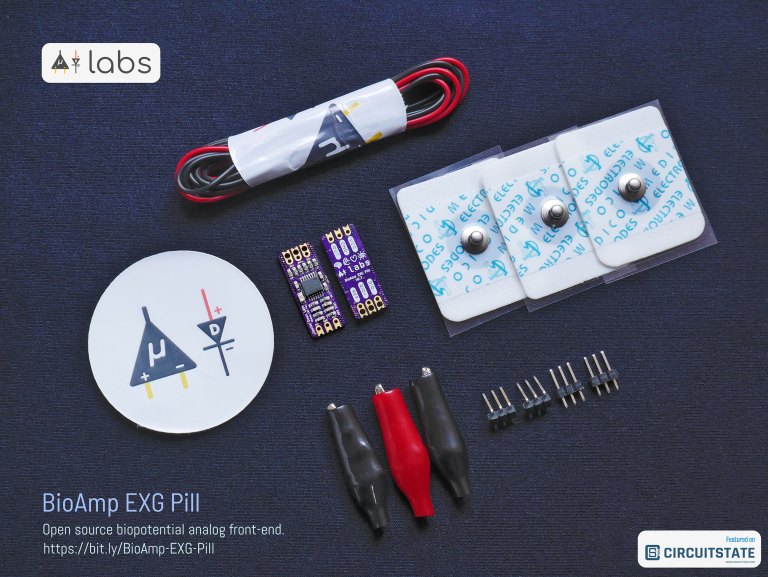
BioAmp EXG Pill is an open source biopotential analog front-end (AFE) module from Upside Down Labs. Based on TL074 quad low-noise JFET-input operational amplifier, the EXG Pill works as a single channel biopotential amplifier that can amplify low magnitude electrical signals produced by our body. The EXG in the name is a placeholder. Replace the “X”, and you get EEG, ECG, EMG and EOG. And yes, the EXG Pill can measure all these signals if you configure it appropriately and use the right firmware. BioAmp EXG Pill can be interfaced to any 5V microcontrollers. The analog output from the module can be sampled by internal ADCs of microcontrollers or external ones.
The project is completely open source, allowing you to get a copy of all the source files, and modify and redistribute them as you wish. BioAmp EXG Pill v1.0 will be soon launched at Crowd Supply. If you want to get your hands on one, be quick to subscribe to the project page at Crowd Supply. Once the project is active, you can pre-order the modules.
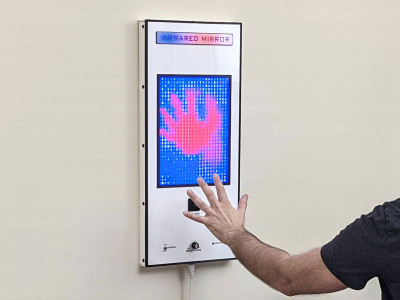
We asked you to rethink what displays can look like and you didn’t disappoint. From almost 150 entries the judges have winnowed the list down to ten projects which are awarded a $500 prize and will go on to the final round of the 2021 Hackaday Prize in October
In a world where there’s an HD (or better) display in every pocket, it is the oddball ideas that tend to turn heads. High on that list is a volumentric display that levitates a tiny foam ball on ultrasonic transducers to draw 3D color patterns before your eyes, or the volumetric display shown above that works with a sheet of film and motors. Or how about a take on a laser projected display that uses a phosphorescent screen so that the path of the laser persists, fading in time for the next infrequent update.
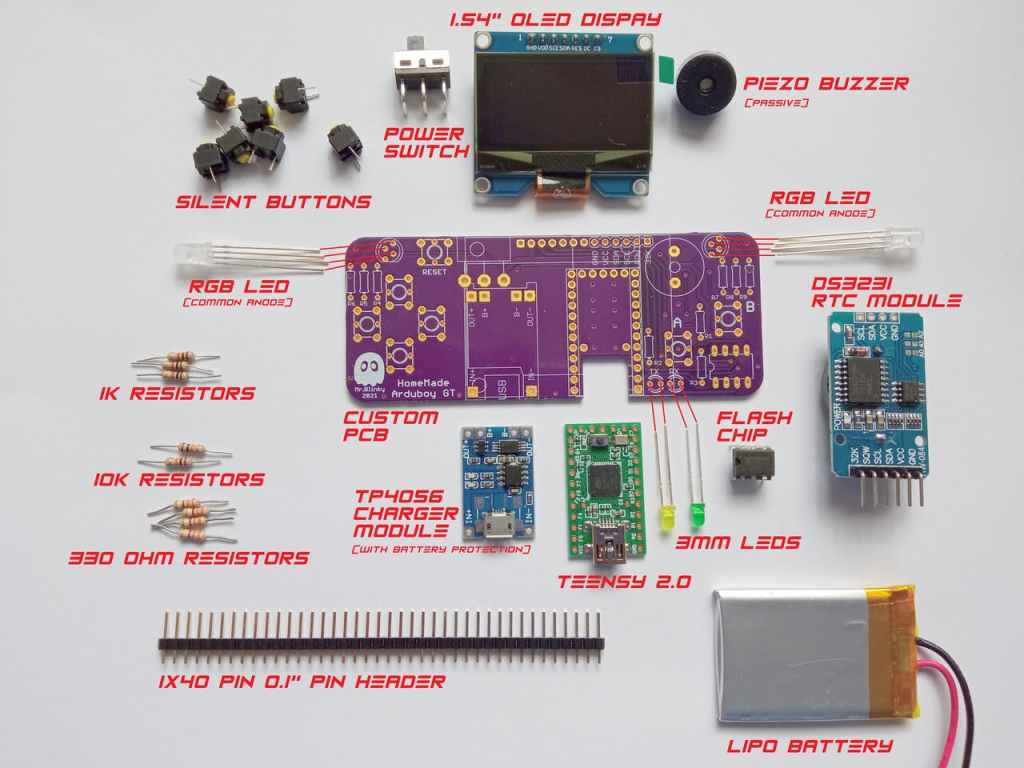
Mr. Blinky created this homemade Arduboy using custom PCB, modules and all through hole parts:
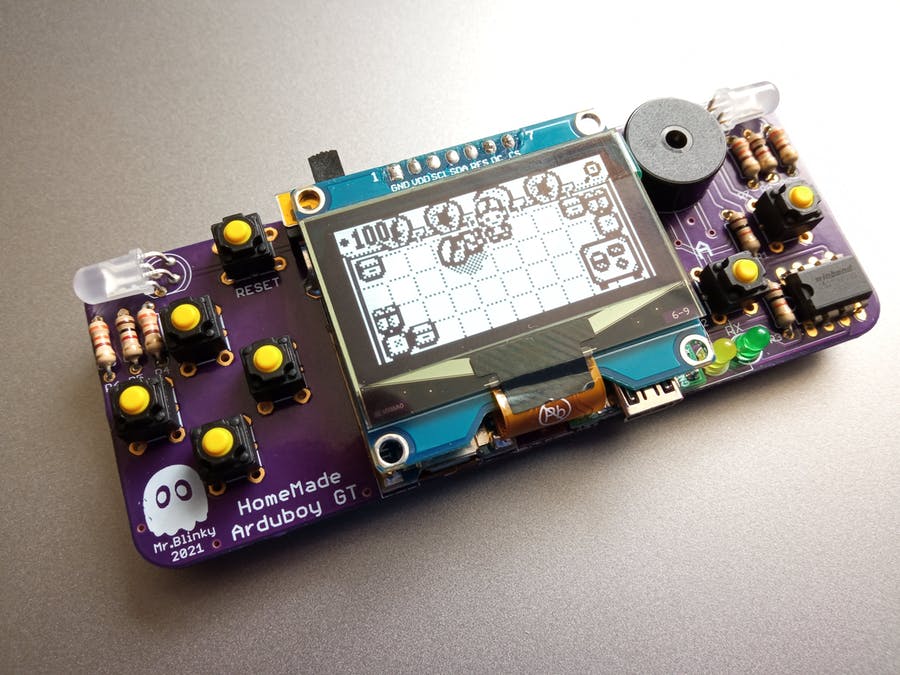
For the Arduboy contest I took the opportunity to design a custom PCB for a homemade Arduboy that uses only through hole parts and easy to obtain modules. In addition to that I wanted to make it stand out from other Homemade Arduboys by using some other then usual parts.It uses a Teensy 2.0 as core, a 1.54″ OLED display, 2 x RGB LEDs, a 16MB flash chip for games, a Real Time Clock and has support for two kind of buttons. Below an image that shows all the parts used.
 OSH Park