CERN Open Hardware License approved by OSI

You may soon see the CERN Open Hardware License as a choice the next time you create a repo on GitHub:

A dedicated licence for open-source hardware: CERN OHL approved by OSI

The OSI (Open Source Intitiative) has approved version 2 of CERN’s Open Hardware License (OHL), meaning it conforms to its Open Source Definition and respects the ideals and ethos of the movement.

Geneva-based CERN (Conseil Européen pour la Recherche Nucléaire) says it has an open-source culture. “Our main mandate at CERN is to conduct basic research. But there is a lesser-known part of our mandate, which is to make things that we do available for the public… very often these are engineering things that we develop,” Javier Serrano, head of the hardware and timing section, Beam Controls Group, told The Register.

The desire to share hardware designs publicly led to the creation of the OHL, for which version 2.0 was released last year. But why not use existing licences like GPL, MIT or Apache 2.0?

“There were no adequate open-source licences that we could rely on to share our hardware designs,” said Serrano.

In hardware, working with commercial companies is a necessity, because “you need somebody who’s going to manufacture it, assemble it to test and sell it to you,” he said. “Companies don’t like the legal risk, so there was a need for a licence to bring clarity as to what the conditions would be.”

CERN ended up with three variants. There is a strong reciprocal licence (CERN-OHL-S), which is for designs that remain free along with all their derivatives, a copyleft principle similar to GPL.

There is a weak reciprocal licence where the design can be used as a component in other designs without the whole becoming open source, but if the design of the component is modified, that must be shared back (CERN-OHL-W). And there is a permissive licence, CERN-OHL-P, which lets users mix the design freely with proprietary designs provided it is acknowledged, similar to Apache 2.0 in the software world.
CERN Open Hardware License approved by OSI

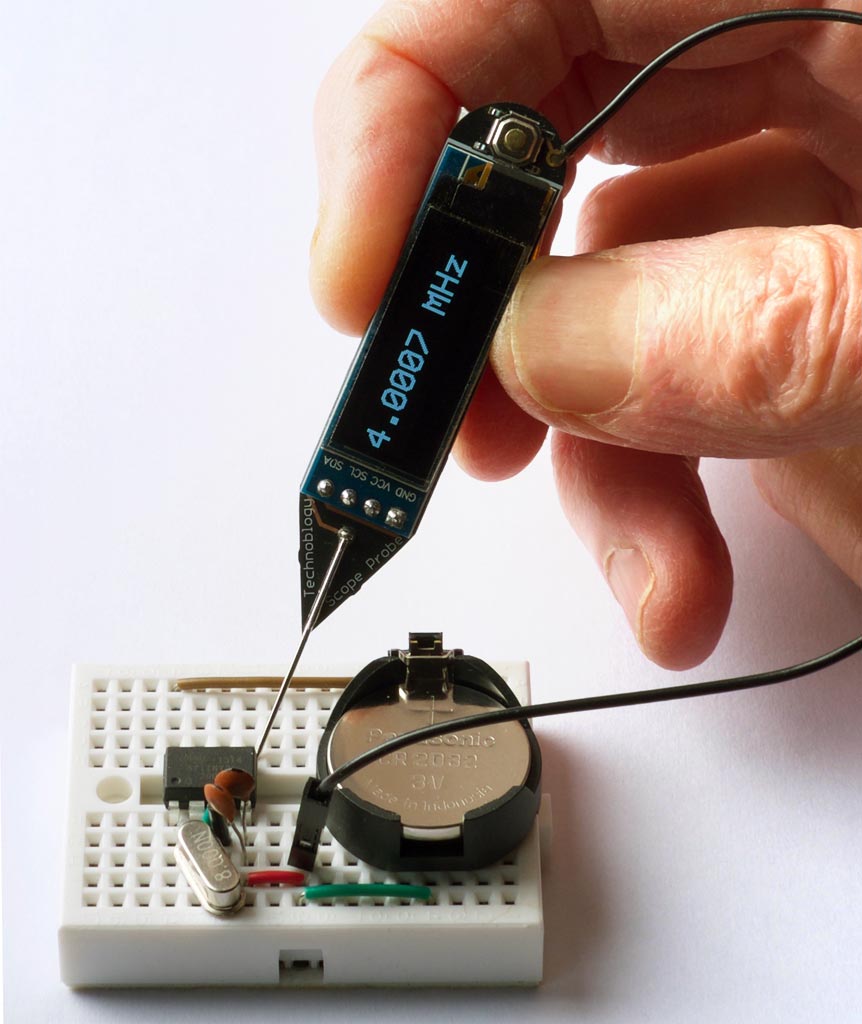
Adorably small frequency probe

Awesome project from the Technoblogy blog:

Frequency Probe

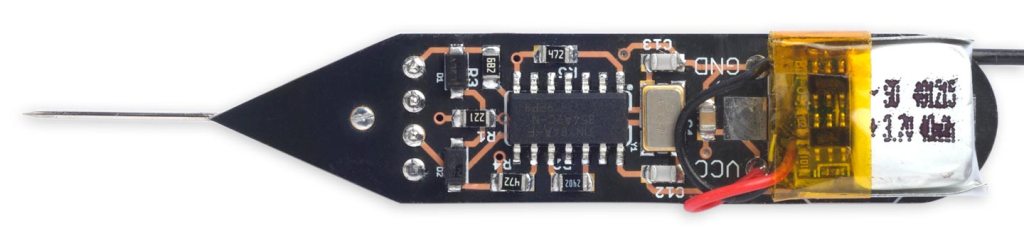
The Frequency Probe is a handheld tool designed to help you debug your circuits by giving a visual indication of the frequency or voltage at the probe. For a periodic waveform it gives a digital readout of the frequency, with a range of about 1Hz to 5MHz and an accuracy of better than 0.3%. For a voltage level it gives a readout of the voltage:

The obvious way to implement a frequency meter is to count the number of pulses within one second; this then directly gives the frequency. I refer to this as Frequency Mode. The disadvantage of this method is that a long sample time is needed to measure low frequencies accurately.

The other way is to measure the interval between two pulses of the input signal; the reciprocal of this then gives the frequency. I call this Interval Mode. For example, if the interval between pulses is one second the frequency is 1Hz. The disadvantage of this method is that for high frequencies you need to measure the interval very accurately.

The ideal solution is to use Frequency Mode for high frequencies, and Interval Mode for low frequencies, which is the approach I’ve adopted with the Frequency Probe. I explain below how to calculate the best point at which to switch between modes.

I originally started work on this project a couple of years ago, but it turned out to be a lot trickier than I anticipated, and so decided to put it to one side. I revisited it earlier this year, and fortunately managed to solve all the issues.

Adorably small frequency probe

Enabling American Science through Open Source Hardware

New post from OSHWA executive director Alicia Gibb in the Journal of OpenHW:

Enabling American Science through Open Source Hardware

The US is primed and ready for open source hardware to accelerate scientific breakthroughs, but open source hardware needs a cemented place on the intellectual property landscape within the sciences enabling a faster, more efficient acceleration. If we can cement science using open source hardware, we’ve got a path to expanding American manufacturing. Many businesses profit from open source hardware, demonstrating that it is a lucrative business model. The field of science needs equipment for all sorts of experiments and lab work. Let’s apply the groundwork already laid in the United States for open source hardware to be the default for science.

Read more…

Enabling American Science through Open Source Hardware

Open Hardware Authenticator Powered by ESP32


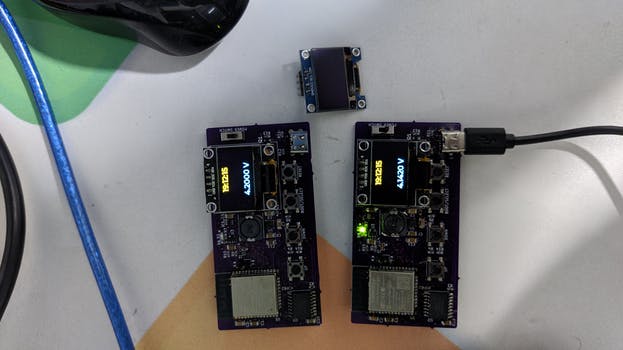
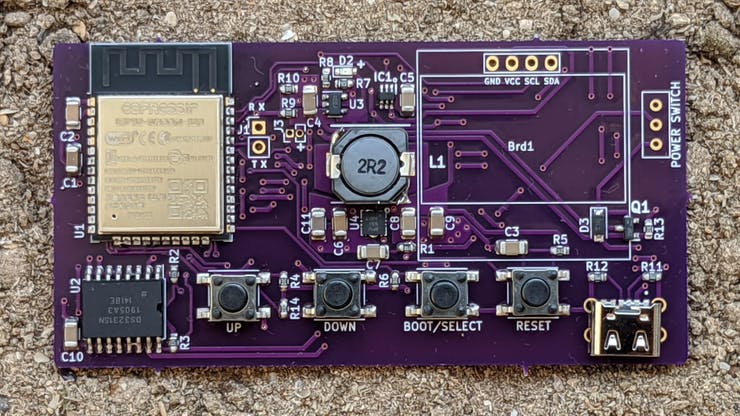
Cabe Atwell writes on Hackster about Open Authenticator by Vedant Parajape which uses an ESP32 to secure data and features an OLED display, 300mAh LiPo battery, and a USB Type-C port for charging:

TOTP-Based Open Hardware Authenticator Powered by an ESP32 Microcontroller_

“I fired up google and tried to search about it, and surprisingly it used a pretty amazing concept. It had a shared key with the server, and then it did some computation on the shared key and current UTC time to get a 6-digit number. So, the remote device just had to be accurate at timekeeping,” Parajape noted in his project log. He then took that information and designed his initial Open Authenticator prototype using a development kit he had on hand and an ESP32 module. It worked well enough, but he wanted a more streamlined platform, similar to RSA’s SecureID Key FOB.

Some people like to use hardware authenticators or security keys when working with public or company computers to keep their data private, certainly so when hackers can easily steal unprotected information. There are many great authenticators on the market that can be had for cheap, but others such as developer Vedant Parajape have designed their own platforms using readily-available hardware. Parajape became interested in authenticators after seeing his dad’s security keys and wondered how they could generate code without being connected to a network.

Open Hardware Authenticator Powered by ESP32

What Makes A Good Antenna?

From Jenny List on Hackaday:

What Makes A Good Antenna?

It sometimes seems as though antennas and RF design are portrayed as something of a Black Art, the exclusive preserve of an initiated group of RF mystics and beyond the reach of mere mortals. In fact though they have their difficult moments it’s possible to gain an understanding of the topic, and making that start is the subject of a video from [Andreas Spiess]. Entitled “How To Build A Good Antenna”, it uses the design and set-up of a simple quarter-wave groundplane antenna as a handle to introduce the viewer to the key topics.

What Makes A Good Antenna?

New features coming in KiCad V6

This epic thread on the KiCad forum tracks new features that are in the upcoming V6 release:

Post-v5 new features and development news

I thought many would be interested in the development status and new features of pre-v6/post-v5 now when 5.1.0 has been released and version 6 development has begun. Add your favorite here if someone else hasn’t done it already.

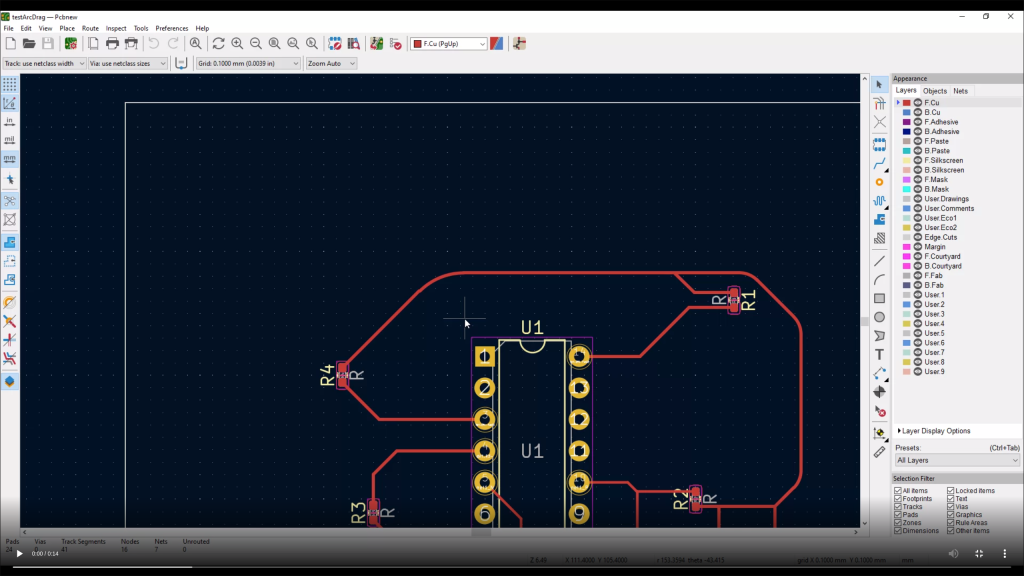
The most recent post describes curved tracks:

New features coming in KiCad V6

Feather Flipper

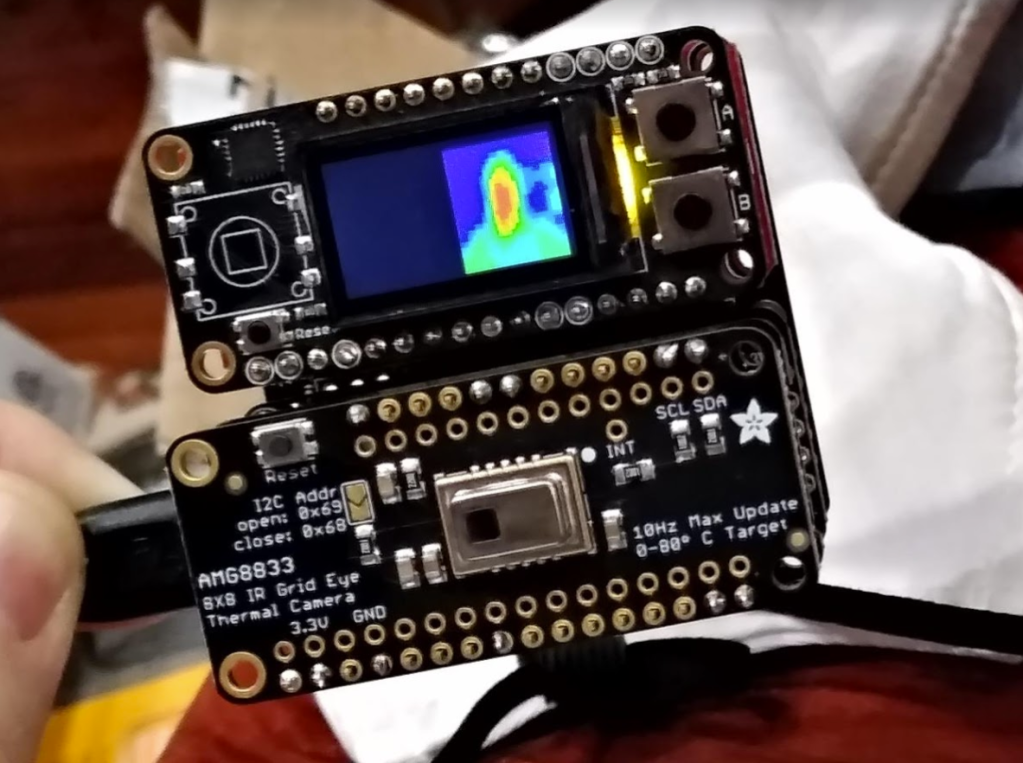
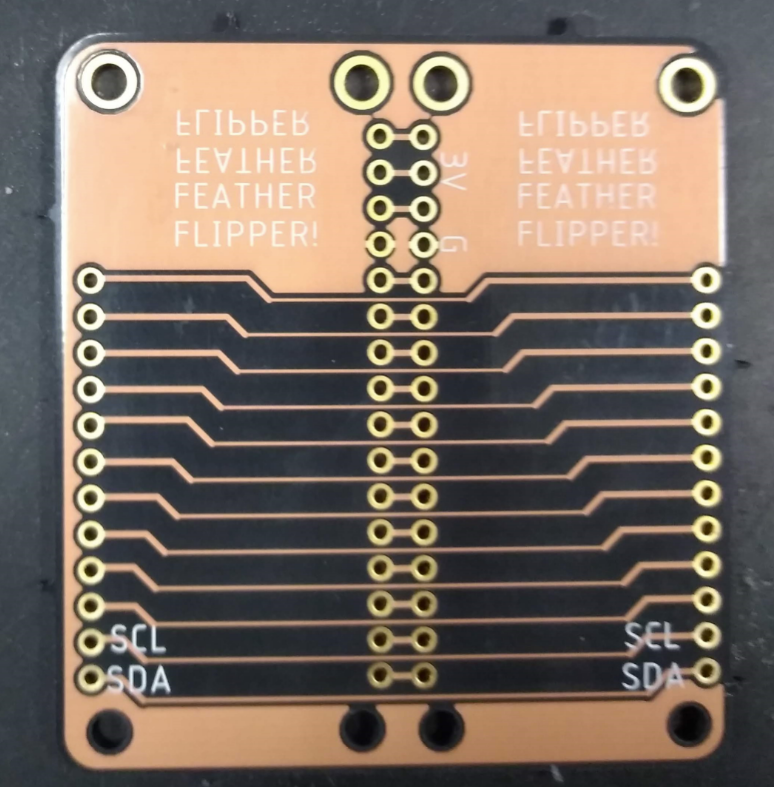
Lex Kravitz designed a small PCB for flipping the orientation of a feather board that is useful for flipping the orientation of a camera or screen wing:

Feather Flipper

I wanted to use an Adafruit AMG8833 thermal camera feather wing with the mini color TFT feather wing.  Stacking them together with a Feather doubler board works fine (and the AMG8833 data looks very nice on the tiny screen!) but the problem is that the thermal camera is looking in the same direction as the screen.  When you look at the screen all you see is…. you!

Feather Flipper

A Few Of My Favorite Things: Amateur Radio

From Jenny List on Hackaday:

A Few Of My Favorite Things: Amateur Radio

Hackaday has among its staff a significant number of writers who also hold amateur radio licenses. We’re hardware folks at heart, so we like our radios homebrew, and we’re never happier than when we’re working at high frequencies.

Amateur radio is a multi-faceted hobby, there’s just so much that’s incredibly interesting about it. It’s a shame then that as a community we sometimes get bogged down with negativity when debating the minutia. So today let’s talk about a few of my favourite things about the hobby of amateur radio. I hope that you’ll find them interesting and entertaining, and in turn share your own favorite things in the comments below.

A Few Of My Favorite Things: Amateur Radio

DSLR Camera Interface for Raspberry Pi

From Jo Hinchliffe on the Tindie blog:

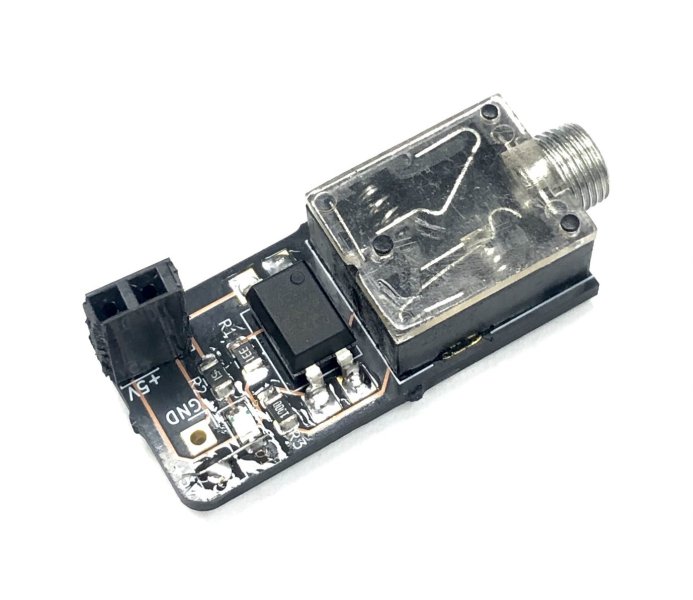
Many DSLR camera’s have the ability to have their shutters triggered remotely, this is often useful for keeping the camera perfectly still, but if you can automate the triggering it’s perfect for time lapse photography. This interface sits between a Raspberry Pi and a range of DSLR cameras creating lots of time lapse possibilities.

It’s compatible with Octoprint Octolapse plugin which means that you can use a high end DSLR to create beautiful time lapses of 3D prints magically growing out of your printer bed. Also on the product page there are example python scripts that enable quick setup for high quality time lapse. We note that although it’s sold as a Raspberry Pi interface, this device is happy with a 3.3V or 5V input and that it could be triggered by most micro controllers. If you have a Sony, Canon or Nikon DSLR then this should work out of the box, for other DSLR you might need an audio adaptor to get up and running.

Looking around the marketplace there are other options for remote triggering cameras, this search for camera trigger reveals a plethora of interesting solutions. Sound triggers, lightning sensor triggers, stand alone intervalometer boards and more. We’ve also blogged on similar products previously, for example check out this camera interface kit that sets your camera up to be triggered by a laser pointer.

DSLR Camera Interface for Raspberry Pi

Listen to Star Simpson “On The Metal”

On The Metal is a great podcast for people that enjoy tales of computer engineering and the latest guest is the wonderful Star Simpson!

On the Metal: Star Simpson

Welcome back to the second of our three part bonus season of On the Metal: episodes that we recorded after the end of Season 1 but before the onset of the pandemic.

On this episode of On the Metal, we interview Star Simpson, autonomous aviation visionary, insatiably curious engineer, and relentless optimizer. Join us as we learn how a pirated C++ compiler at an impressionable age pushed Star towards electronics, how a friend jockeying for Hacker News karma landed her work on late-night TV — and why you definitely didn’t want to be test pilot on the Piasecki PA-97. And if you find yourself hankering for a good read, you’re in luck: this episode ends with a flurry of book recommendations sure to sate your inner aviation buff.

Listen to Star Simpson “On The Metal”