Live streaming events open to the public will begin on Saturday at 10:00 PST with open remarks and Kipp Bradford’s keynote talk. Workshops and the SMD Challenge will live-stream all day. And Alfred Jones will present his keynote at 18:30 PST followed by the Hackaday Prize Ceremony. Follow our media channels to be notified of all live streams:
Hackaday Remoticon kicks off today, Friday, November 6th, and is “a weekend packed with workshops about hardware creation, held virtually for all to enjoy”⚡️🛠️💻
There’s just one week left until Hackaday Remoticon, our online gathering in place of our traditional in-person conference during this time of social distancing. Joining the more than 20 hands-on workshops that make up the bulk of Remoticon, we’re excited to announce the two keynote speakers who will be taking the virtual stage: Alfred Jones and Kipp Bradford.
Tickets to see these keynote talks, to watch the SMD Challenge, to see hardware demos, and to take part in the show and tell are free, so get yours today!
Meet #MicroMod: a new ecosystem of interchangeable processor and carrier boards. Using the M.2 standard, you can now easily swap out microcontroller processor boards to various peripherals and functionalities for rapid #prototyping and project changes. https://t.co/lKYEQOvH3Jpic.twitter.com/mApft6cK5K
James Lewis writes on Hackster about how this new initiative from SparkFun will allow people to mix and match multiple 32-bit microcontrollers with a vast array of peripherals:
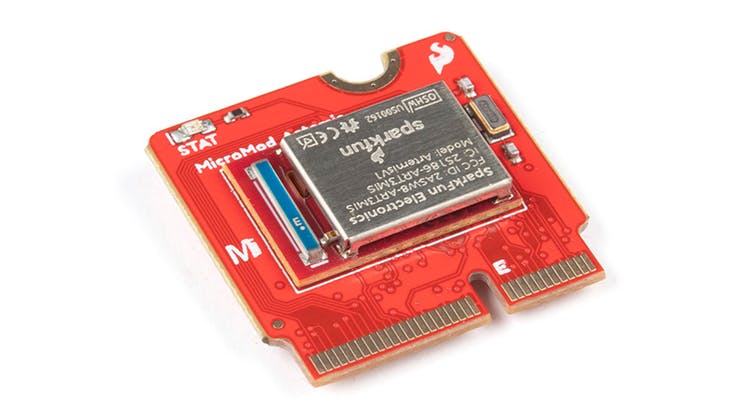
SparkFun has just announced a new modular ecosystem called MicroMod. Targeting rapid embedded development, MicroMod consists of two pieces: a microcontroller board and a carrier board. The interconnect between the two is the PC industry’s M.2 connector.
Look at any embedded device’s block diagram, and you’ll see a microcontroller in the middle with a bunch of stuff surrounding it. That model is probably why the processor gets picked early in development. But, what happens when the design needs a microprocessor with a different architecture? Or unexpected capability, like WiFi, crept into the requirements? In the past, it would take significant effort to change either the processor or, worst case, the rest of the embedded system. With MicroMod’s approach, the hardware change is as simple as swapping modules.
“The processor you start with is not always the one you end with … MicroMod makes exploring different microcontrollers easy.” — Nathan Seidle, SparkFun Founder
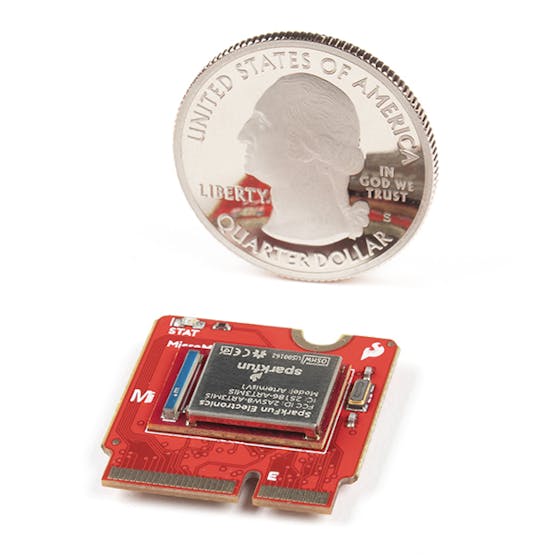
Artemis processor MicroMod next to a US quarter dollar.
The most striking physical feature of MicroMod’s processor modules is the size. Their widths are similar to M.2 devices, but their lengths are much shorter. Each processor board contains very few components. For example, the ESP32 board has the SoC, an antenna, a flash memory, and the USB-to-serial chip. That is it! The carrier board contains extra things like a reset switch, voltage regulator, USB connector, and in-circuit programming header. With so much pushed to the carrier boards, it is no wonder SparkFun opted for a high-density, high-pin count, high-speed connector like M.2!
To be clear, while mechanically compatible with the M.2, MicroMod is not electrically compatible. Fortunately, SparkFun has open-sourced the pinout. That step makes it easy to use the pre-made modules or to design your own.
With today’s launch, there are three processor boards and four carrier boards available.
Remoticon is a fully virtual hardware conference with 20+ workshops, 2 keynote talks, and 8 different demos. Join the weekend fun from wherever you are. Remoticon will have instructors teaching workshops from all across the globe, from Australia to India, from North America to the Netherlands.
Meeting virtually provides the perfect platform for more space, more people, and more options. Attend demos about Design Methodology, Robots, Zero to ASIC, Edge-Based Voice AI, and other awesome topics. Join workshops covering topics such as Reverse Engineering, Tiny ML, How to Hack a Car, Glowy Origami, and so many more.
In need of some creative inspiration and socialization with fellow hackers? Come hang out Friday night for a community Bring-A-Hack! There’s even a virtual Hackaday SMD Challenge for those who want to learn and those who want to put their skills to the test.
You’ll never guess the best part. I’m sure you’re thinking, “how could this get any better?” Remoticon Main Track tickets are free! You can also donate with a pay-as-you-wish ticket. Donations will go to charities that feed, house, or educate people.
Attendees only pay $10 to join a workshop. Some workshops do require hardware, which may include things you already have sitting on your workbench.
So the real question is what workshops and demos are you going to pack into your schedule the weekend of November 6-8th? We can’t wait to see you all there!
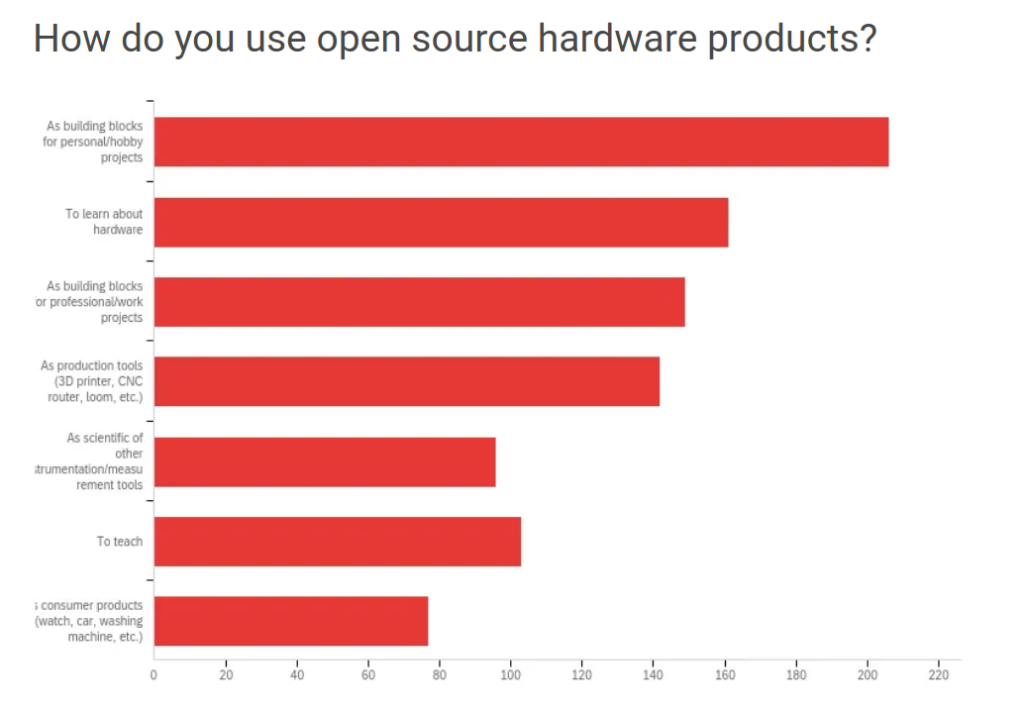
In 2020 we conducted the third OSHW Community Survey (see 2012 and 2013), which collected 441 responses. All questions were optional, so you may notice response counts do not always add up to 441. In particular, a number of individuals didn’t feel comfortable with the demographic questions. We ask these questions as part of our efforts to promote diversity in the community, but these too were optional and anonymous.
A few highlights from this year’s survey compared to the 2013 survey:
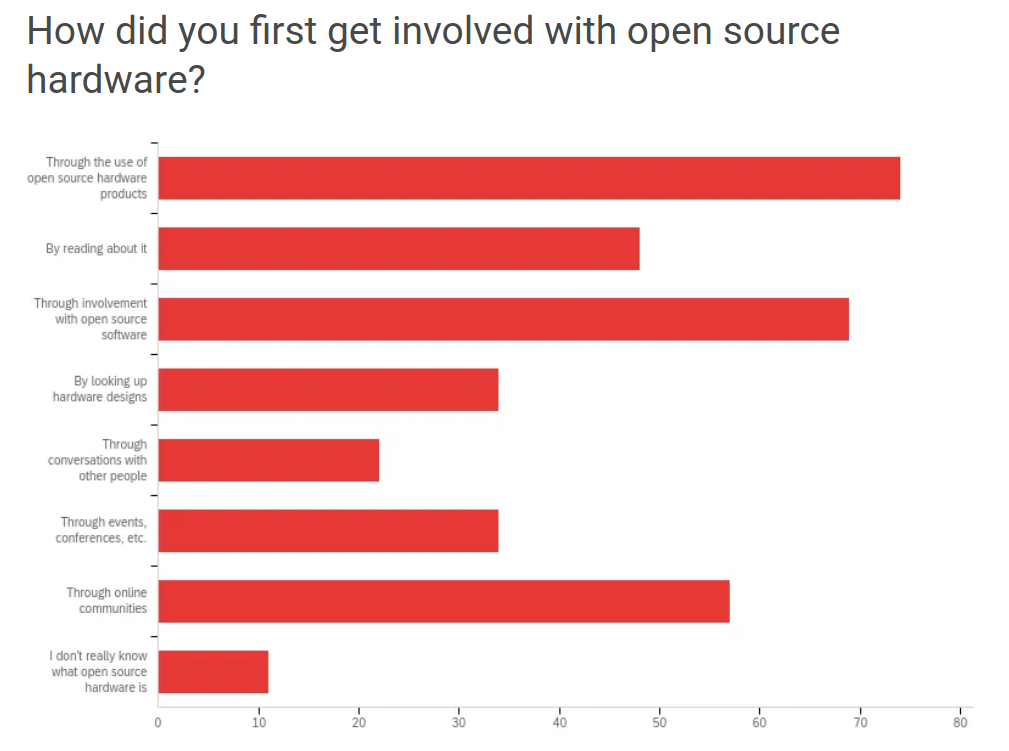
The portion of people coming to open source hardware from open source software increased from 14.6% to 23.9%
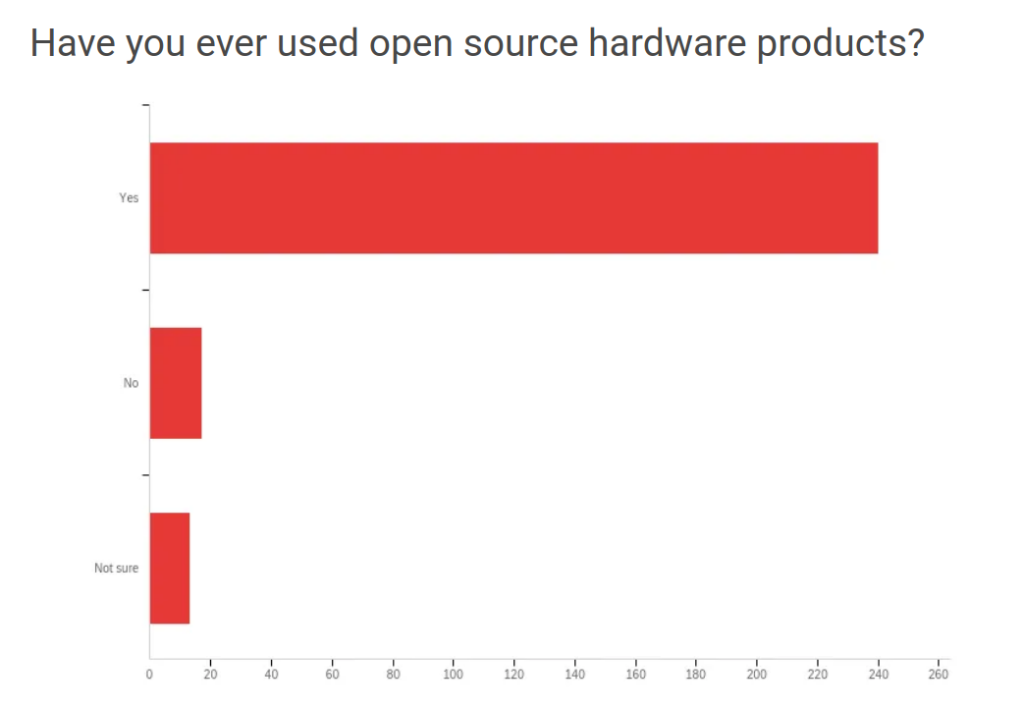
In 2013, 42.8% of respondents indicated they have worked on or contributed to an open hardware project. This jumped to 85.6% in 2020.
While 2013 showed a plurality of people using blogs to publish design files, this year’s survey shows public repositories as the most popular option. The increase in people with open source software experience and improvement in repository collaboration offerings may be contributing factors.
This year’s survey shows a large increase in attendees for the 2020 Open Hardware Summit. This is likely due to 2020 being the first virtual summit. Although it was moved online due to unfortunate circumstances, the virtual platform offered the upside of greatly expanding the audience.
A small gain in the community’s gender diversity was seen, with those identifying as either female or other making up 18% of respondents, compared to 7% in 2013.
Interested in more granular results for any of these questions? Reach out to us at [email protected].
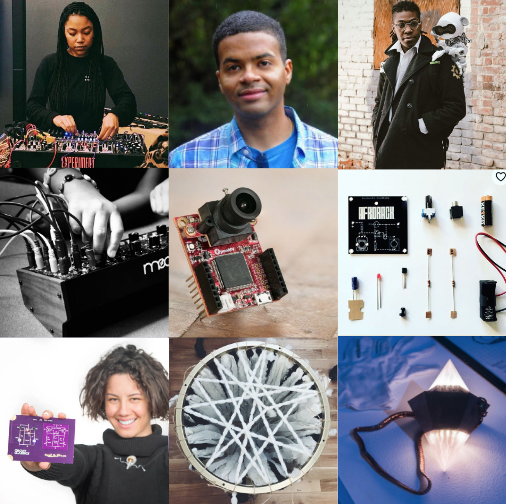
As part of my role on the @ohsummit board, I’ve been compiling works by Black creators in maker/DIY/open hardware/art whom I admire. If you’ve helped contribute to this list, thank you! Pls add or retweet! And I plan to post more soon. Happy Open Hardware Month! ❤️🔥 pic.twitter.com/83GJzmESfp
I spent a relatively small fraction of my life making @CircuitClassics (a focused few-month burst) and it’s unbelievably gratifying that the project has its own legs, and continues to bring people joy. https://t.co/Fw8NGA6QbG
Got RTSP Working with the OpenMV Cam H7 Plus, our WiFi shield, and the OV5640. Can stream 1920×1080 images over WiFi at 10 FPS to VLC. pic.twitter.com/XOqUejFii1
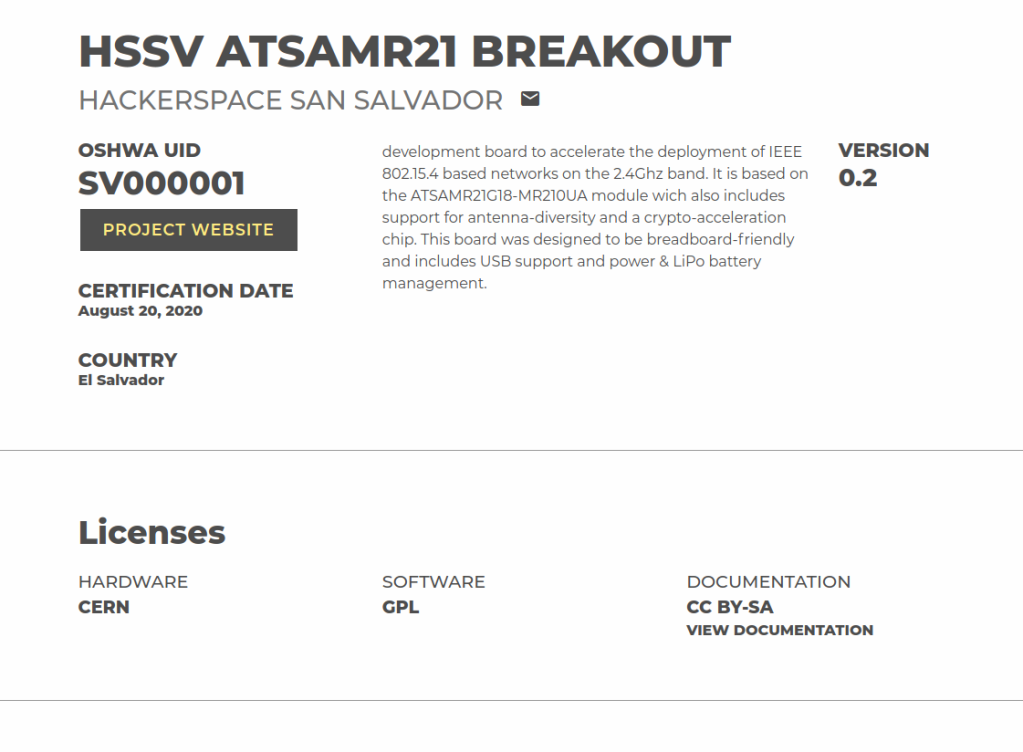
Hello Makers, In the month of August we had 14 newly certified open-source hardware. Today I will introduce each of them to you. I hope it may help you in the next project or product.
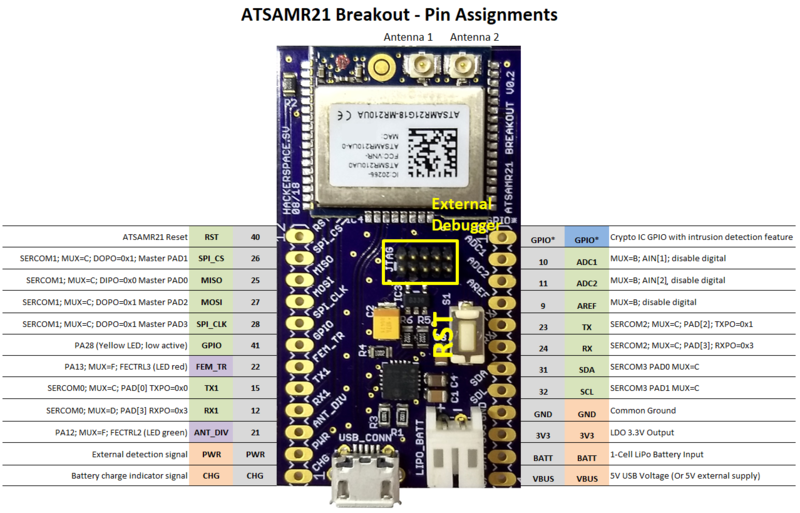
HSSV ATSAMR21 Breakout is a development board to accelerate the deployment of IEEE 802.15.4 based networks on the 2.4Ghz band. It is based on the ATSAMR21G18-MR210UA module which also includes support for antenna-diversity and a crypto-acceleration chip. This board was designed to be breadboard-friendly and includes USB support and power & LiPo battery management.
The Boards are pre-loaded with the bossa bootloader (used by Arduino) with the command line tool bosses and they have a small development batch. If you are interested in collaborating on the development please contact them. This is the first certified open-source hardware from El Salvador.
The weekend will be packed with virtual activities, and most of them are hands-on workshops that you can participate in from the comfort of your home, lab, garage, basement, lair, or other socially distanced location of your choosing.
The news today is that everyone should register for Remoticon right now, and that we’re opening up registration for about half of the total workshops. More details on the remaining workshops, demos, and some special events will be available in a future article.



 OSH Park