Board Braces: Hold Any PCB Securely

From  Jo Hinchliffe on the Tindie blog:

Board Braces: Hold Any PCB Securely

We’ve all been there, poking a hot soldering iron at a component on a PCB and then the PCB shifts and components fall as your set up of tape and binder clips slide across the desk! Whilst PCB vice ideas are common, these Board Braces take a slightly different but very inventive approach.

The idea is pretty straightforward; each post is a large standoff with a screw clamp arrangement at the top of the post to hold your PCB in a groove. It’s a good approach as it adapts well to a range of PCB thicknesses and sizes. The base of the posts contain a strong magnet, so you have to work on a ferrous metal work surface (not supplied) and we like that that means the posts can accommodate PCB of many shapes and dimensions.

Read more…

Board Braces: Hold Any PCB Securely

Today’s Challenge is All About Work-From-Home Life

Mike Szczys writes about the Refresh Work-From-Home Life challenge for the 2021 Hackaday Prize:

Today’s Challenge is All About Work-From-Home Life

If the global pandemic caused you to find yourself working from home, I’m sure it’s been quite a ride. Maybe you learned what your spine feels like after hunching over a MacBook in bed for 40 hours. Others discovered that the commute had been silently serving as a power-down sequence for your “work brain” — without it you never stopped thinking about, or more likely worrying about, work. And without that change in venue, it’s far too easy to feel like you were now living at work. So let’s invent the things that can make us productive from home while maintaining physical health and preserving our sanity.

You sure do learn a lot when life suddenly makes it impossible to go into the office and asks that you instead do the same work remotely. Sure, there are the obvious challenges like needing a device to do the work on and an internet connection that’s not going to melt down when family or roommates are trying to Zoom at the same time as you one-on-one with the boss. But there’s way more to it. The Refresh Work-From-Home Life challenge takes this on as the next phase of the Hackaday Prize gets under way this morning.

Ten entries in this challenge will be awarded with $500 and ushered into the final round where the grand prize of $25,000 and four other top prizes await. What kind of things are we looking for? The best ideas are the ones we haven’t had yet, but I can spitball a bit to get things rolling.

Today’s Challenge is All About Work-From-Home Life

A Massive Modular Smartwatch To Match Your Sci-Fi Fantasies

Modern smart watches have some incredible features, but they still don’t stack up to what science fiction promised us, both in size and capabilities. Fortunately, [Zack Freedman] has set out to change that with the Singularitron, a modular wearable computer that is less Apple Watch and more Pip-Boy.

The most striking features of this monstrosity is its size and the out-of-production four-line VFD display. The inputs consist of a row of large RGB-illuminated buttons and a rotary encoder mounted at an angle to curve around the wearers arm. On the inside are a pair of PCBs with an integrated Teensy 3.2, BLE module, motion processing module, haptic driver and power circuitry drawing from a removable 18650 battery. The armband is from a commercial wrist mounted barcode scanner which attaches to the Singularitron with a quick-detach mount.

Read more on Hackaday…

A Massive Modular Smartwatch To Match Your Sci-Fi Fantasies

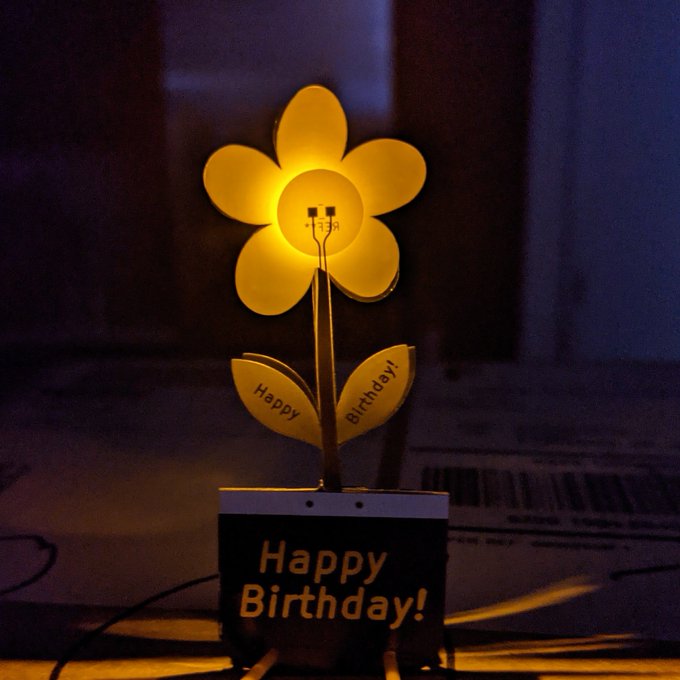
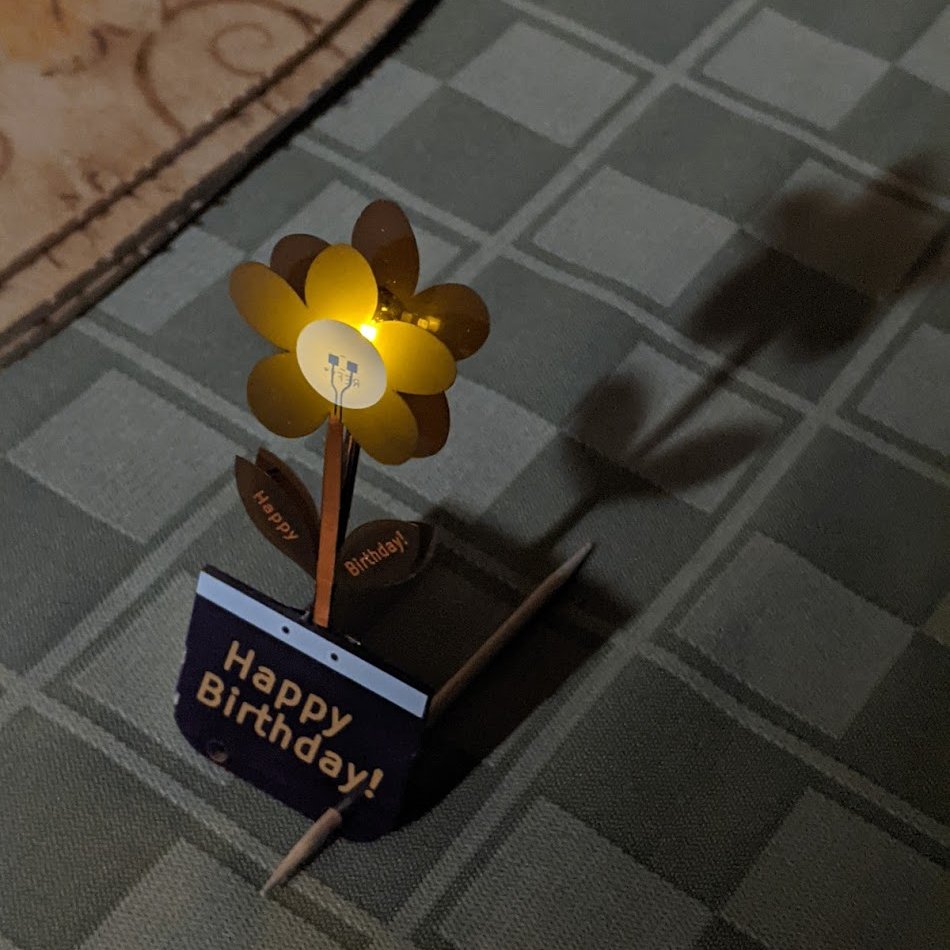
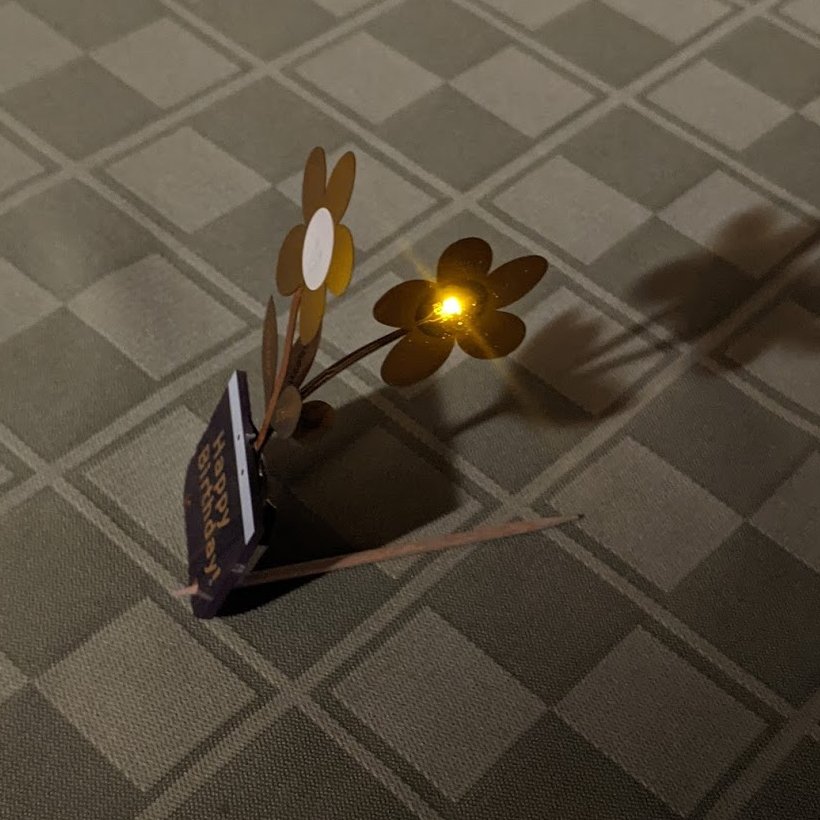
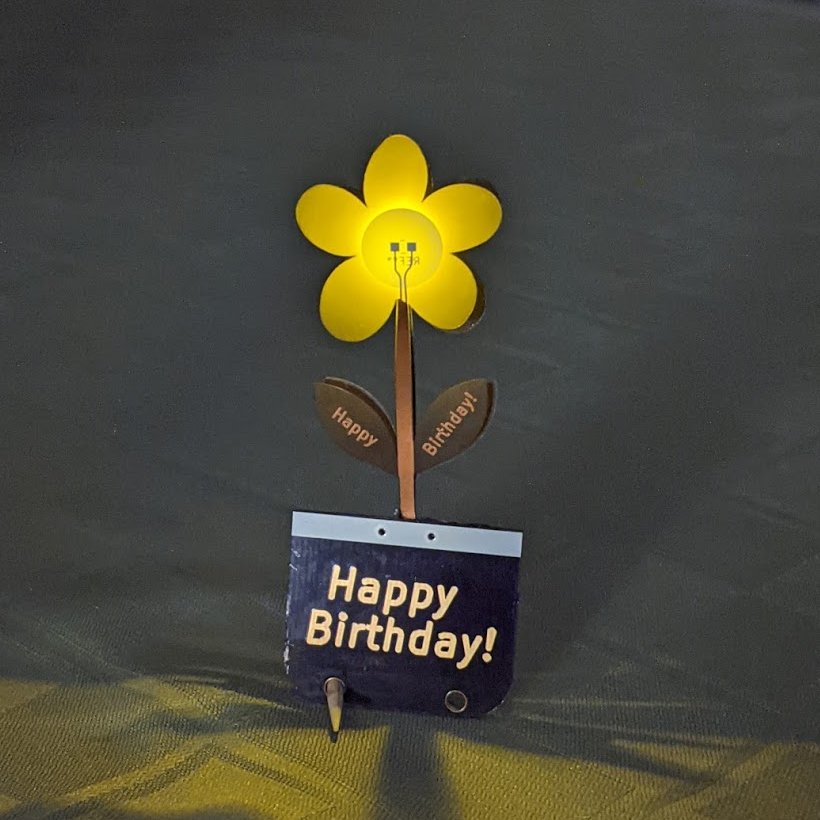
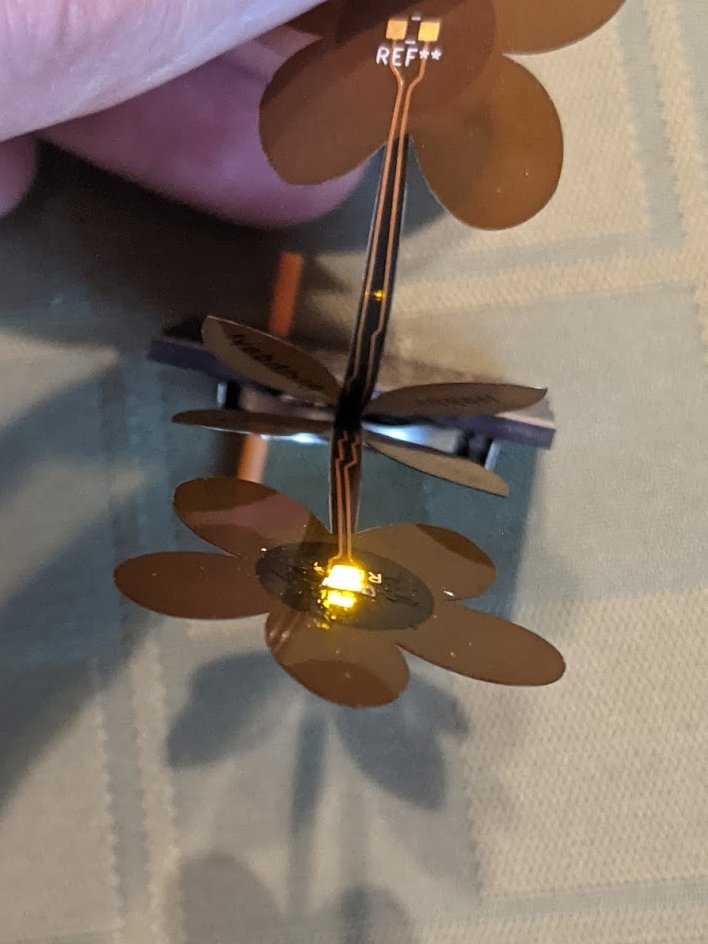
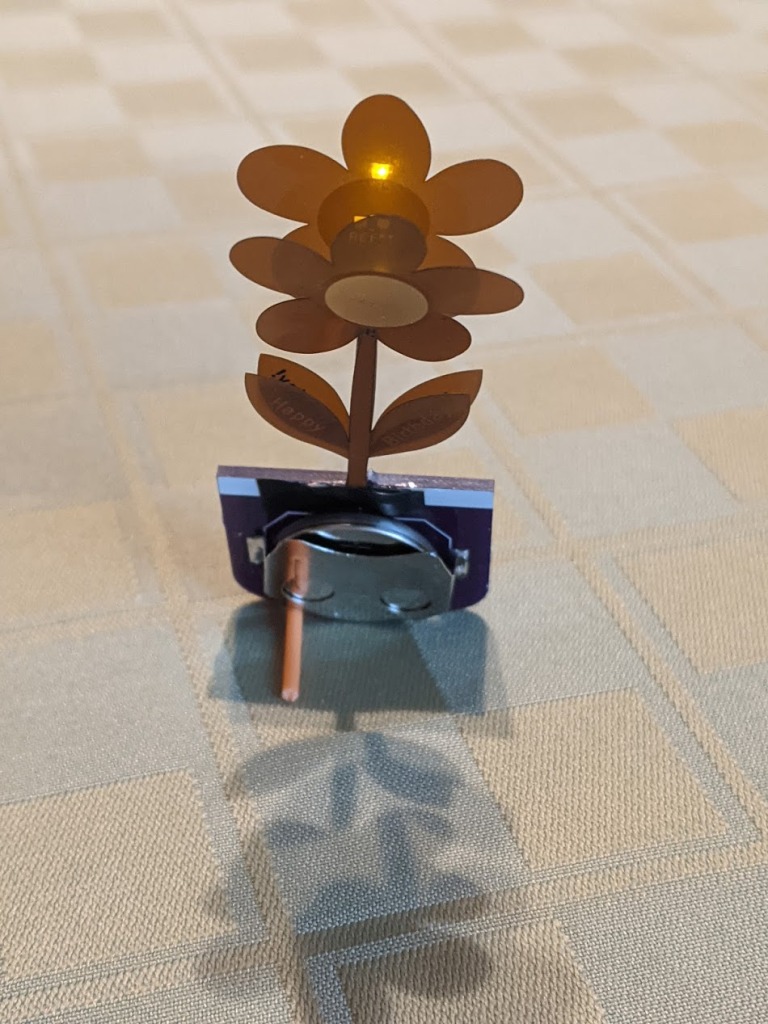
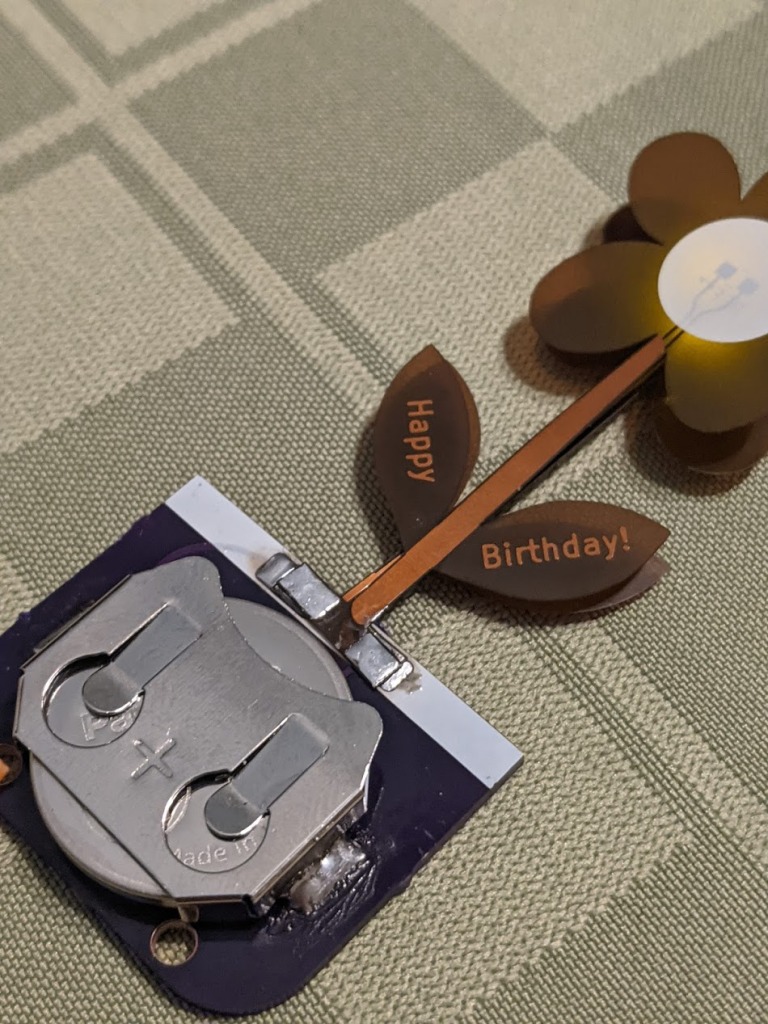
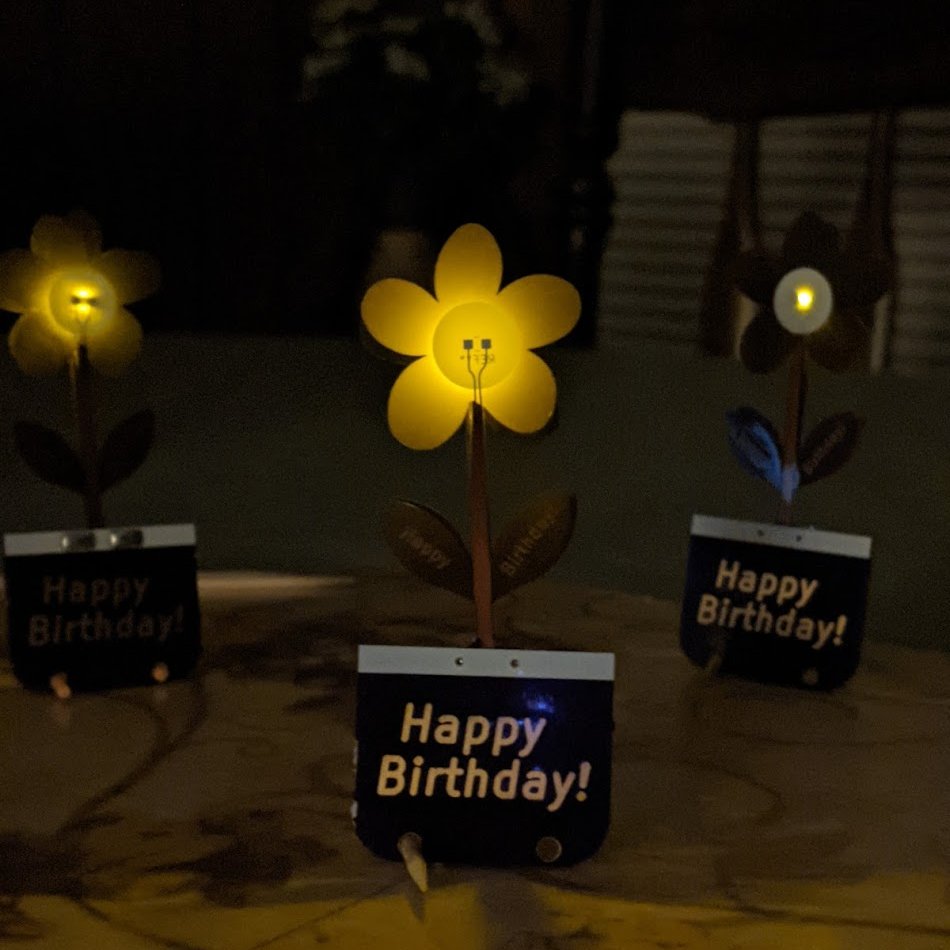
Flexible PCB flower đźŚĽâś¨

In this PCB art project, a surface mount LED is mounted on a flexible PCB “flower” connected to rigid PCB “pot” with a coincell battery:

Both PCBs were designed in KiCad PCB:

Using a second flexible PCB flower to diffuse the LED produced the best results

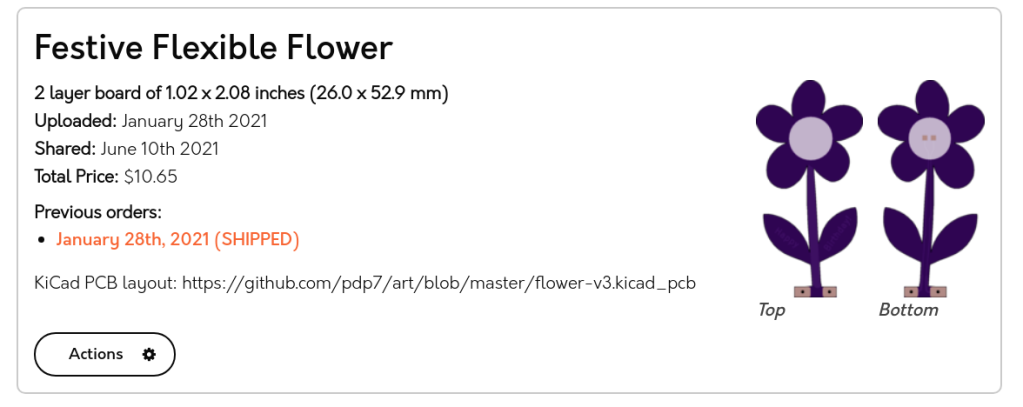
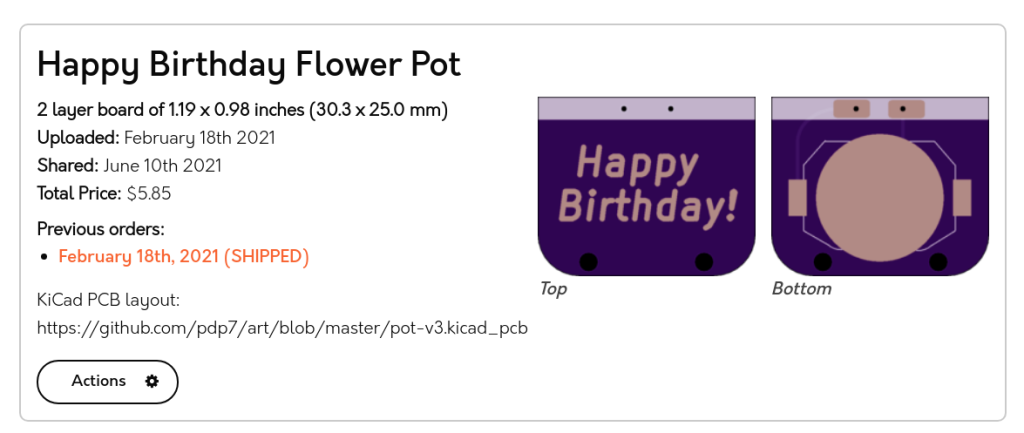
The PCBs are available as shared projects:

Festive Flexible Flower

Happy Birthday Flower Pot

Flexible PCB flower đźŚĽâś¨

Get a goodie bag when you join OSHWA

From the Open Source Hardware Association:

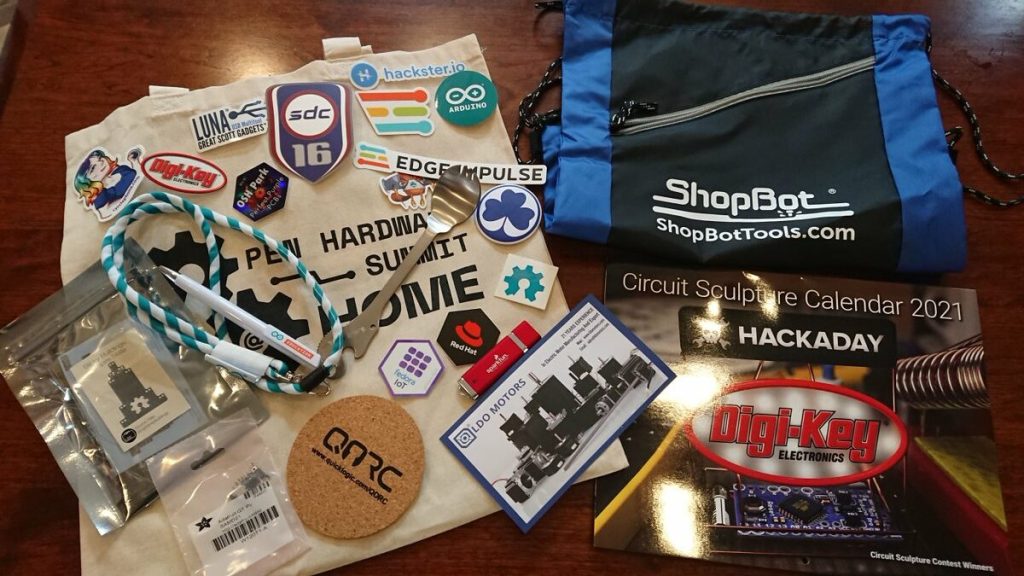
While supplies last, sign up as a new OSHWA member at the General Membership level or higher and get a 2021 goodie bag! We have 15 partial bags left over from the summit that contain about 90% of the items. You must have an address in the U.S. for shipping and customs. See our membership level options and enter your shipping address at checkout.

Get a goodie bag when you join OSHWA

Final Weekend for Display Challenge of the Hackaday Prize

This is the final weekend to enter your display-related project in the 2021 Hackaday Prize. The good news is, pretty much anything that has a display on it fits the bill here.

The goal of the “Rethink Displays” challenge is to envision interesting ways to visualize data. How many times an hour do you reach for an unlock a smartphone just to get a small bit of data — current temperature, upcoming appointment, the next street to turn on, or how much time is left on your soufflé. There must be another way!

That’s where you come in! Show off us a clever way to convey meaning by choosing a display that makes sense for the type of data and power budget available. Maybe it’s an ePaper display that camouflages itself as wall art, a set of analog meters for the current weather, or a way to upcycle old displays to live on after their portable lives have ended.

This doesn’t need to be a final product. Ten entries will be selected to receive a $500 prize and move on to the final round at the end of October. So if you spend this weekend pulling together a proof of concept, and do a superb job of telling the story of what you’re building, you’ll be firmly in the running! Finalists will have plenty of time to work on completing the designs.

Read more on Hackaday…

Final Weekend for Display Challenge of the Hackaday Prize

Old DSLR Lens Becomes Useful Soldering Magnifier

Soldering tiny stuff is hard, if not impossible, without some optical assistance. [Ad_w00000] was having just this problem, so built himself a soldering magnifier to help.

The magnifier uses a variety of components [Ad_w00000] had lying around. For the optical side of things, an old Canon DSLR zoom lens was pressed into service as the main magnifying element. The lens was then fitted with an old laptop webcam, which was glued into an old lens extender to avoid modifying the main lens itself. The webcam is hooked up to an Asus Tinkerboard fitted with a touchscreen display to show the images. The whole lens assembly is then fitted onto an old TV stand to enable it to sit far enough above the work surface to focus properly.

The build is a great example of building something useful out of whatever you have on hand. Sometimes, that’s cheaper and quicker than spending money and waiting for something to ship. It also has the bonus that you’ll learn useful skills along the way.

Read more on Hackaday…

Old DSLR Lens Becomes Useful Soldering Magnifier

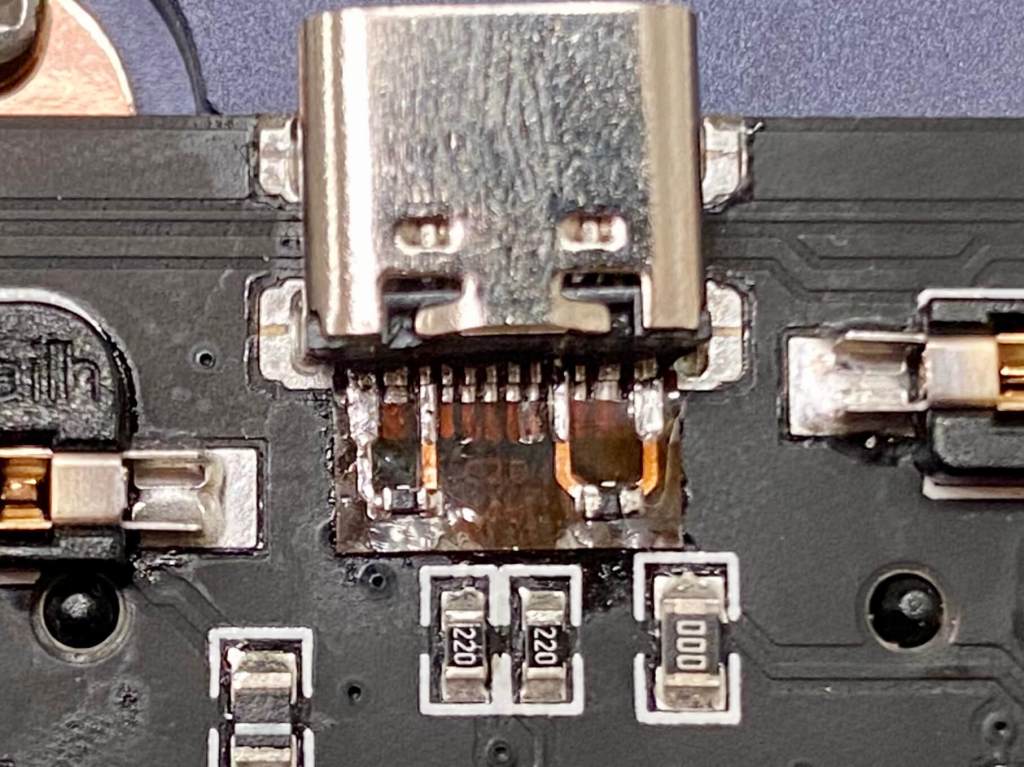
Flex PCB mod for USB Type C

Great use of a flexible PCB in this project by James Ide:

USB-C-to-C Power Mod Flex PCB

Many devices have a USB-C connector to charge or power them. This is very convenient given the popularity of USB-C, its reversible cable design, and sturdy, compact design.

However, some devices will not draw power when using a USB-C-to-C cable connected to a spec-compliant charger, but will when using a USB-A-to-C cable. The USB-C specification requires upstream facing ports (UFPs), the port of the device receiving power, to connect pull-down resistors to the configuration channel (CC) pins. These missing pull-down resistors are a common reason why devices can draw power with A-to-C cables but not C-to-C ones.

Wouldn’t it be great to be able to add these resistors and enable USB-C-to-C power? This mod does just that. It is a small flex PCB with pads for two 5.1kohm pull-down resistors between CC1 and CC2, respectively, and GND.

Flex PCB mod for USB Type C

LED Matrix Hack Chat with Garrett Mace

Join Hackaday on Wednesday, June 9 at 12pm PDT for the LED Matrix Hack Chat with Garrett Mace!

It’s pretty amazing how quickly light-emitting diodes went from physics lab curiosity to a mainstream commodity product made in the millions, if not billions. Everything about LEDs has gotten better, smaller, and cheaper over the years, going from an “any color you want as long as it’s red” phase to all the colors of the rainbow and beyond in a relatively short time. LEDs have worked their way into applications that just didn’t seem likely not that long ago, like architectural lighting, automotive applications, and even immense displays covering billboards, buildings, and sporting venues with multicolor, high-resolution displays.

Read more: LED Matrix Hack Chat

LED Matrix Hack Chat with Garrett Mace

Buried treasures and map files

Elecia White of the fantastic Embedded.fm podcast gave a talk at the Embedded Online Conference 2021 about how to use memory map files:

Buried treasures and map files

Slides

Memory Map Land Image

Also at Inkarnate where I put it together

And at Society6 which is rumored to produce good prints

Hello.map and Hello.cmd linker file (TI processor)

Map file for the BLE and Zigbee application (TI processor)

Map file for Circuit Python on the SEEDunio via GCC

Buried treasures and map files