Pulse Generator Does The Job With An STM8

Lewin Day writes on Hackaday about a DIY pulse generator:

Pulse Generator Does The Job With An STM8

When working with hardware, whether a repair or a fresh build, it’s often necessary to test something. Depending on what you’re working with, this can be easy or a total pain if you can’t get the right signal to the right place. To eliminate this frustrating problem, [WilkoL] built a useful pulse generator for use in the lab.

[WilkoL] notes that historically, the job of generating pulses of varying length and frequency would be achieved with a smattering of 555 timers. While this is a perfectly cromulent way to do so, it was desired to take a different approach for the added flexibility modern hardware can offer. The pulse generator is instead built around an STM8 microcontroller; an unusual choice in this era, to be sure. [WilkoL] specified the part for its incredibly low cost, and highly capable timer hardware – perfect for the job.

Combined with an ST7735 TFT LCD screen, and programmed in bare metal for efficiency’s sake, the final project is installed in a project box with controls for frequency and pulse length – no more, no less. Capable of pulse lengths from 250 ns to 90 s, and frequencies from 10 mHz to 2 MHz, it’s a tool that should be comfortable testing everything from servos to mechanical counters.

Of course, if you need to get down to picosecond timescales, an avalanche pulse generator might be more your speed. Video after the break.

Pulse Generator Does The Job With An STM8

OSHWA 2020-2022 Board Nominations Open!

Now is the time to nominate yourself for the Open Source Hardware Associtaion (OSHWA) board of directors:

OSHWA 2020-2022 Board Nominations Open!

OSHWA is looking for 5 new faces to join the board of directors for the Open Source Hardware Association.

The nominee form is, as always, for self-nominations only. Please fill out the nominee form (deactivated 11:59PM ET on Oct. 10th) to become a nominee or forward the link to someone you want to nominate. Do not fill out the form for someone else. The purpose of this form is to tell voting members why you want to serve on the OSHWA board. We will be publish the nominees and their answers on Oct 12th. Board members hold a 2-year position. Once board members have been chosen by the community, the board will appoint a President, VP, and Secretary. Board responsibilities include fundraising, advising on goals and direction, and carry out compliance with the organizations purposes and bylaws. See the board member agreement to get a sense of the responsibilities. Board members are expected to adhere to the board attendance policy and come prepared having read the board packet. Board members are expected to spend 5-10 hours of time per month on OSHWA. Nominees can submit questions to [email protected]. Nominations will be open until Oct. 10th.

OSHWA 2020-2022 Board Nominations Open!

Ask KiCad developer about V6

Watch live right now on YouTube!

Find out more about the KiCon 2020 Developers Q&A:

For participating and streaming, see the event page for more info.

Ask KiCad developer about V6

Ask the KiCad developers tomorrow, Saturday, October 3rd

KiCon 2020 could not take place at CERN as planned due to the pandemic so a virtual session will happen instead this Saturday, October 3rd:

KiCon 2020: A Virtual Conference, in two parts

After a successful first year of KiCon in 2019, we decided to change venues. We were very excited to hold the conference at CERN, a major contributor to the KiCad project. However, Coronavirus / COVID-19 changed a lot of plans, including ours. KiCon 2020 is completely remote, so that community members can still connect with the developers and each other. We will have a Developer component (coming up on Oct 3rd), and a Community component. Read on to hear more about each element, and sign up on the mailing list below so you keep up with the latest talks and speakers.

KiCon 2020 Developer Q&A

Since we will be all-remote this year, we’re kicking things off with a 2 hour discussion with the KiCad developers! You can hear about upcoming features for KiCad V6, get an update on the project, and ask your questions directly to the developers.

The Q&A will take place on October 3rd, starting at 14:00 UTC / 10:00 EST / 07:00 PST. Find your local meeting time here.

Ask the KiCad developers tomorrow, Saturday, October 3rd

Lil’ Lights, Adventures in PCB’s, FLIR and high power LED’s

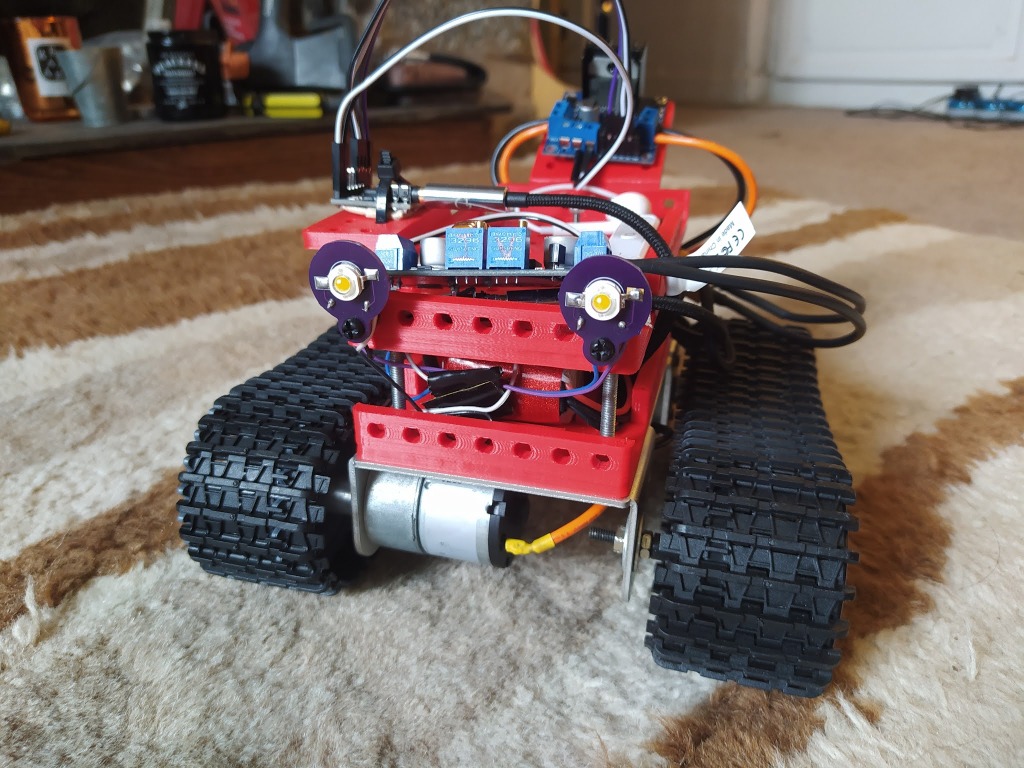
Jo Hincliffe shares their latest robotics adventure:

Lil’ Lights, Adventures in PCB’s, FLIR and high power LED’s

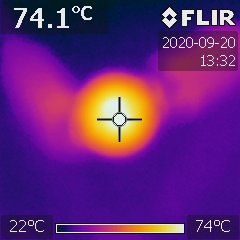
After designing the MTV robot I’ve been slowly tinkering with numerous add ons. I wanted to add some high power LED lights and so I bought some 1 watt white LED’s in an SMD package. They offered a lot of light and I’d read that the 1 watt LED didn’t need heatsinks to keep the running temperature within the datasheet operational temperature range. 

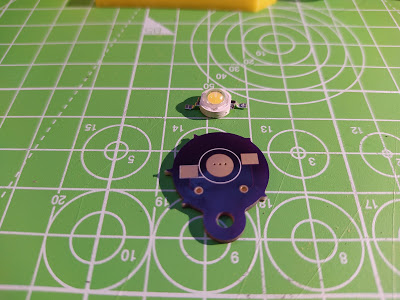
Testing them on the bench they get hot enough to be uncomfortable on the fingers so I decided that a PCB breakout that enabled them to be easily mounted but also acted as a slight heatsink was desirable. I quickly whipped up a design using the fabulous inkscape plugin SVG2Shenzhen and finished the design off in KiCAD . The PCB has a large pad that interfaces with the LED “slug” and in the PCB pad there are some via’s connecting that pad to the large copper flood on the back of the PCB. This flood is under the mask so heat doesn’t dissipate massively but I wanted it to just slightly reduce the temperature of the LED. When soldering on the LED I’ve added a small spot of thermal grease between the LED slug and the PCB pad. Finally I made sure that the M3 mount hole (3.2mm diameter for clearance) wasn’t copper plated so that hopefully the heat in the LED and PCB wouldn’t wick into mounting bolts etc. 

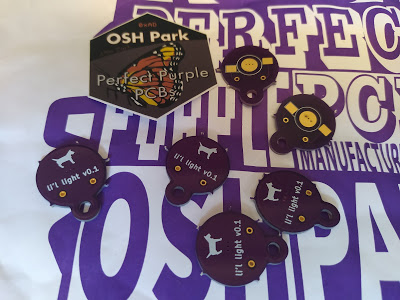
I got some of the PCB made by the fantastic OSHpark  and mounted up some LED. Driving them at 1 watt is made simpler by using one of the cheap constant current capable DC-DC buck driver boards that are readily available now. They certainly are bright! 

Lil’ Lights, Adventures in PCB’s, FLIR and high power LED’s

Surface Mount Soldering Challenge at Hackaday Remoticon

All The Workshops, And The SMD Challenge Happening At Hackaday Remoticon

Last week we announced the first fifteen workshops happening at Hackaday Remoticon, November 6-8, 2020. The weekend really is packed full of these hands-on events, and you’re invited to participate from anywhere in the world. Today we’re excited to announce the rest of the workshops, all of which are currently open for registration.

Can we get a few hundred people to show off their soldering skills (or amusing lack of skills) from their own workbench during the event? We think we can, so we’re running the SMD Challenge virtually this year. All of this, plus keynote talks, demos, a show-and-tell, and more make for one wild weekend. Read on!

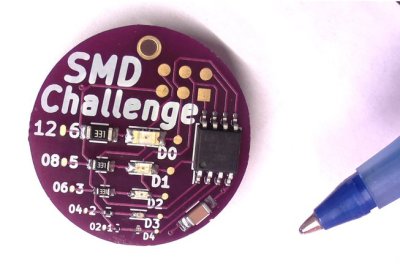
Surface mount components are not really meant to be hand soldered, it’s a hack. So let’s hack together and do it on camera! For the past two years we’ve used the excellent SMD Challenge board designed by MakersBox as the target of a head-to-head challenge at live events. At Remoticon, you can take the challenge from your own workbench.

Your $5 SMD challenge ticket covers the cost of the kit — you just need to pay for shipping. The bargain is that you must commit to soldering the kit live on camera sometime during the weekend of Remoticon. This is an exhibition challenge… we’re not looking for the best, we’re looking for the most fun. So failing to complete all the parts is perfectly fine, at least you tried and that’s the point. Please limit yourself to one ticket.

To help amp up the fun, we’ve invited several hardware badge teams from conferences all over the world to compete as well. More on that later, but all of this should make the SMD Challenge room a hot place to hang out all weekend.

Surface Mount Soldering Challenge at Hackaday Remoticon

Replace 7400-Series Logic with FPGA board

Gareth Halfacree writes on Hackster about a work-in-progress by Scott Shawcroft to let people play with glue logic in STEMMA QT projects:

Scott Shawcroft Aims to Replace 7400-Series Logic with a STEMMA QT FPGA Board Design

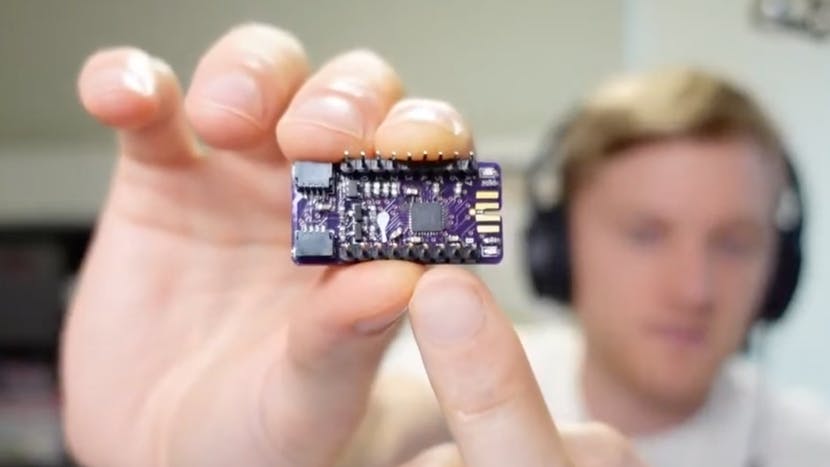
Scott Shawcroft has shown off a new board for the STEMMA QT I2C ecosystem, designed to house a Lattice MachXO2 32QFN field-programmable gate array (FPGA) and replace 7400-series logic chips with a programmable glue logic system.

“This is a STEMMA QT board. So, it’s got the two-in and -out there, and then it’s got logic level shifters and a regulator in case it’s five volts, and then this is a MachXO2 FPGA,” Shawcroft explains of the design during an Adafruit Show and Tell session. “I was thinking what i would do is add software so that it would act like a 7400-series logic chip.”

Replace 7400-Series Logic with FPGA board

KiCon 2020: Q&A with KiCad developers on Saturday October 3rd

KiCon 2020 could not take place at CERN as planned due to the pandemic so a virtual session will happen instead this Saturday, October 3rd:

KiCon 2020: A Virtual Conference, in two parts

After a successful first year of KiCon in 2019, we decided to change venues. We were very excited to hold the conference at CERN, a major contributor to the KiCad project. However, Coronavirus / COVID-19 changed a lot of plans, including ours. KiCon 2020 is completely remote, so that community members can still connect with the developers and each other. We will have a Developer component (coming up on Oct 3rd), and a Community component. Read on to hear more about each element, and sign up on the mailing list below so you keep up with the latest talks and speakers.

KiCon 2020 Developer Q&A

Since we will be all-remote this year, we’re kicking things off with a 2 hour discussion with the KiCad developers! You can hear about upcoming features for KiCad V6, get an update on the project, and ask your questions directly to the developers.

The Q&A will take place on October 3rd, starting at 14:00 UTC / 10:00 EST / 07:00 PST. Find your local meeting time here.

KiCon 2020 Community Talks

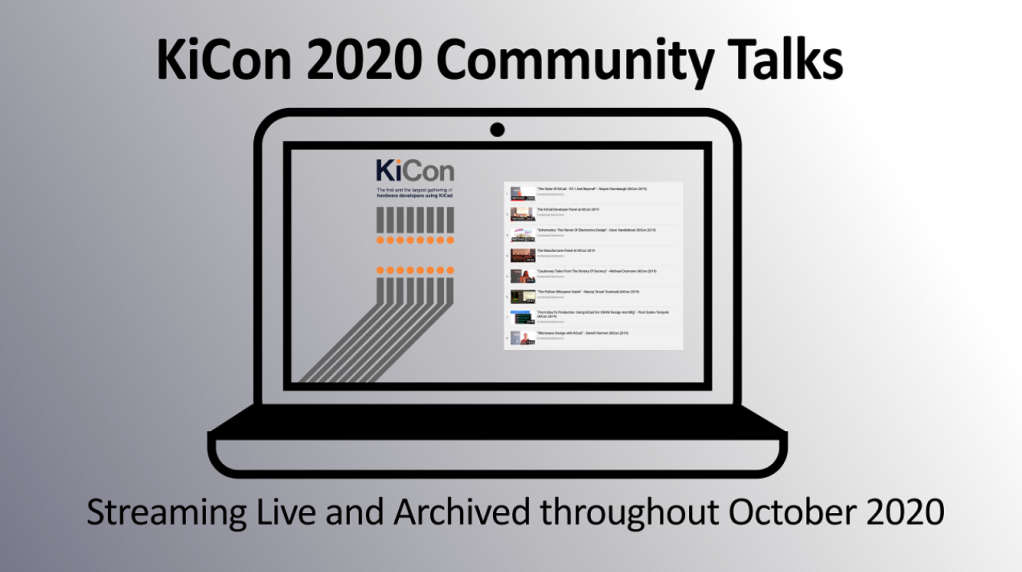
We will be hosting community talks at various times throughout the month of October. These will be streamed live and/or released directly as videos. The KiCon team will help to promote these events and facilitate discussion around the topic. Click below to learn more.

KiCon 2020: Q&A with KiCad developers on Saturday October 3rd

Hackspace Magazine: Propelled by community

My column in the new issue of HackSpace magazine focuses on open source rocketry and space projects. Download the PDF and turn to page 25:

We are always excited to see what Applied Ion is making on Twitter:

Hackspace Magazine: Propelled by community

Hackaday: The Phenomenal Instrument You Probably Don’t Recognize For What It Is

If we had to make a guess at the single piece of electronic bench equipment owned by the highest proportion of Hackaday readers, it would not be a budget oscilloscope from Rigol, nor would it be a popular portable soldering iron like the TS100. Instead we’re guessing that it’s a multimeter, and not even the most accomplished one.

The DT830 is a genericised Chinese-manufactured 3.5 digit digital multimeter that can be had for an astonishingly low price. Less than a decent hamburger gets you an instantly recognisable plastic case with a chunky rotary range selector switch, and maybe a socket for some kind of transistor or component tester. Make sure that there is a 9 volt battery installed, plug in the pair of test leads, and you’re in business for almost any day-to-day electrical or electronic measurement. They’ve been available in one form or another for decades and have been the subject of innumerable give-aways and loss-leader offers, so it’s a reasonsble guess that you’ll have one somewhere. I have three as far as I know, they make great on-the-go instruments and have proved themselves surprisingly reliable for what they are.

Read more on Hackaday…

Hackaday: The Phenomenal Instrument You Probably Don’t Recognize For What It Is