Snekboard: Python microcontroller for LEGO

Keith Packard has designed an open-hardware python microcontroller for LEGO:
Screenshot from 2020-01-21 20-15-24 - 1

Snekboard

Learn, Teach, Experiment, and Play with Robots

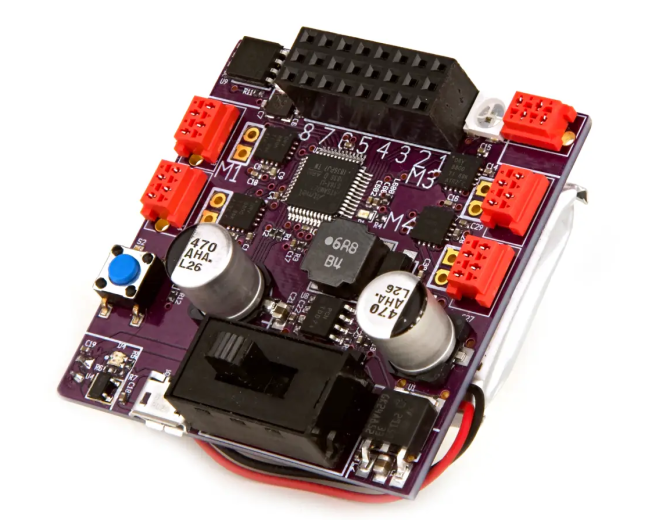
Snekboard is an open hardware development board that’s designed to let you hook up to LEGO Power Functionsmotors and switches so you can build robots out of LEGO and control them with CircuitPython or the simpler Snek programming language.

Snekboard is 48 x 48 mm – the same size as 6 x 6 LEGO studs – so you can easily build a LEGO enclosure for the board and attach it to your creation. It is powered by a 3.7 V, 900 mAh single-cell Lithium Polymer (LiPo) battery that fits under the board and charges over USB while Snekboard is being programmed from the host.
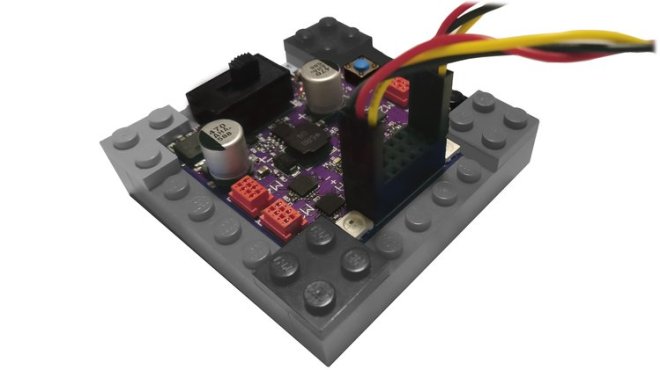
base-plate-and-gpio-cable-02-edited_png_project-body

Python and LEGO Together at Last

Python is widely regarded as a great first programming languageLEGO products are used in many settings for teaching about robotics. It’s time to bring these amazing learning tools together. Snekboard bridges the two worlds by offering a hardware platform capable of running Python while directly controlling LEGO Power Functions Motors.

Snekboard: Python microcontroller for LEGO

Hackaday Belgrade Early Bird Tickets On Sale Right Now

Tickets for Hackaday Belgrade 2020 just went on sale. If you’re quick you can grab an Early Bird ticket at half the price of general admission!

Hackaday’s premiere European hardware conference returns for the third time on May 9th, 2020, bringing together talks, workshops, hardware hacking, food and drink, entertainment, and of course the best gathering of hardware geeks you’ll find anywhere. It’s awesome, because you’re awesome — and I do mean you. Whether you’re submitting a talk proposal or just grabbing a ticket to make this the first conference you’ve ever been to, we can’t do it without you.

via Hackaday Belgrade Early Bird Tickets On Sale Right Now — Hackaday

Quote

Intro to RISC-V in Hackspace Mag

My column in the latest Hackspace Magazine is an introduction to RISC-V and how it is enabling open source chip design:

Open-source chips:
Breaking free of chip design monopolies with RISC-V

When we think about what open source hardware means, we usually think about the board design being freely available. But what about the processor? Is there a way to make hardware that is truly open source? This month’s column is dedicated to an exciting — and surprisingly political — development in chip design.

When you write a program in the Arduino IDE, it is compiled into instructions for the microcontroller to execute. How does the compiler know what instructions the chip understands? This is defined by the Instruction Set Architecture. The ISA is a standard, a set of rules that define the tasks the processor can perform.

Chances are that both your laptop and the datacenter streaming your favorite movie are using an ISA owned by Intel or AMD. The processor in your smartphone is almost certainly using a proprietary ISA licensed from ARM. This is dangerous: proprietary standards can be over-priced, prevent innovation or even disappear altogether when companies change strategy.

Enter RISC-V, a free and open ISA created by researchers at UC Berkeley led by Krste Asanović and David Patterson. “We were always jealous that you could get industrial-strength software that was open,” Patterson explained to VentureBeat at the RISC-V Summit back in December. “But when it came to hardware, it was proprietary. Now, with RISC-V, we get the same kind of benefit. It helps education, and it helps competition.”

To read the rest of the column, download the free PDF or order to the print edition.

To learn more, watch this excellent keynote by Megan Wachs at Hackaday Supercon:
Intro to RISC-V in Hackspace Mag

Open Laptop Soon to be Open For Business

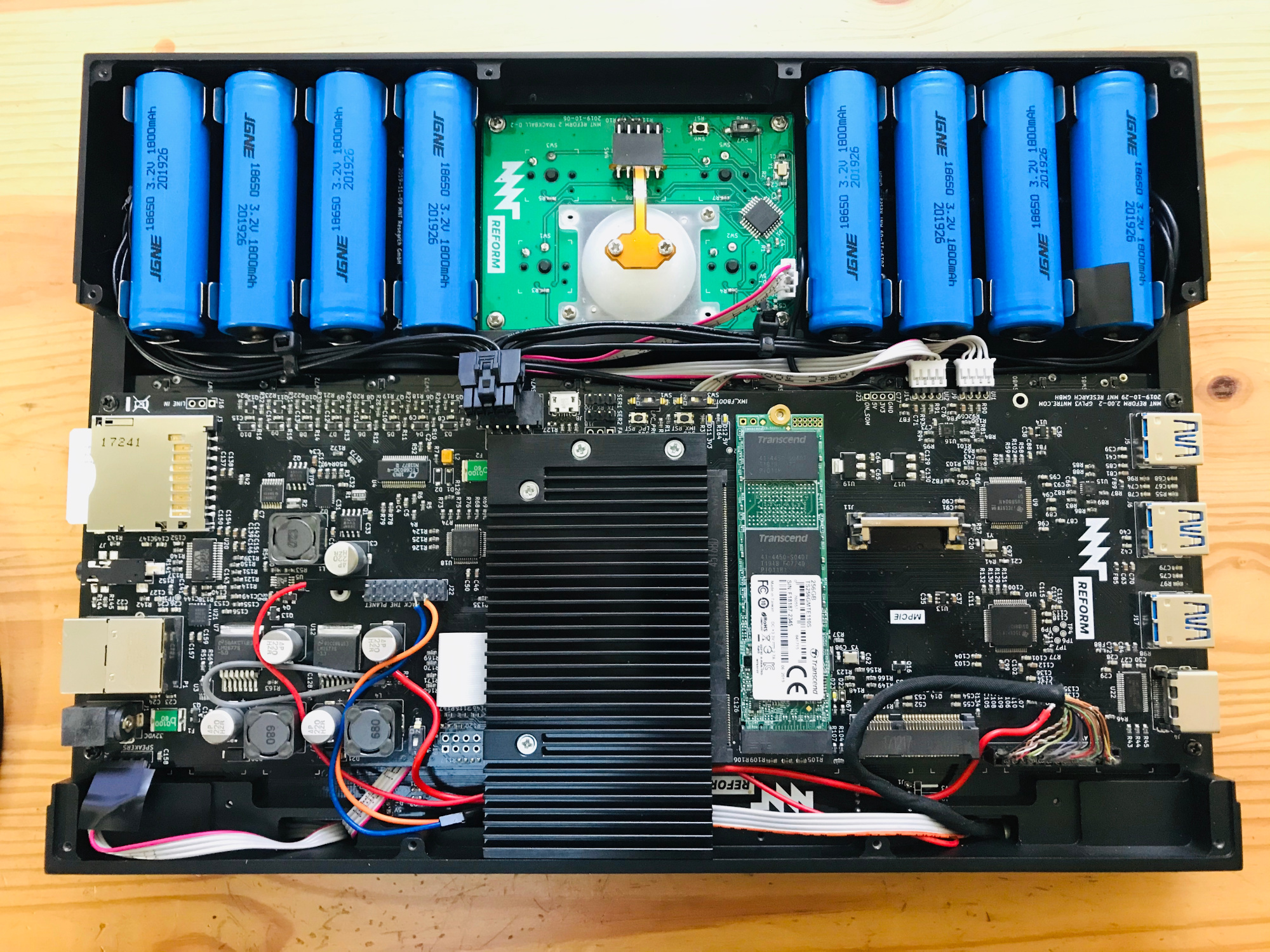
How better to work on Open Source projects than to use a Libre computing device? But that’s a hard goal to accomplish. If you’re using a desktop computer, Libre software is easily achievable, though keeping your entire software stack free of closed source binary blobs might require a little extra work. But if you want a laptop, your options are few indeed. Lucky for us, there may be another device in the mix soon, because [Lukas Hartmann] has just about finalized the MNT Reform.

Since we started eagerly watching the Reform a couple years ago the hardware world has kept turning, and the Reform has improved accordingly. The i.MX6 series CPU is looking a little peaky now that it’s approaching end of life, and the device has switched to a considerably more capable – but no less free – i.MX8M paired with 4 GB of DDR4 on a SODIMM-shaped System-On-Module. This particular SOM is notable because the manufacturer freely provides the module schematics, making it easy to upgrade or replace in the future. The screen has been bumped up to a 12.5″ 1080p panel and steps have been taken to make sure it can be driven without blobs in the graphics pipeline.
via Open Laptop Soon to be Open For Business — Hackaday

Quote

RISC-V and FPGAs: Open Source Hardware Hacking

This excellent Hackaday Supercon keynote by Megan Wachs of SiFive gives a great introduction to two exciting topics:

“RISC-V and FPGAs: Open Source Hardware Hacking”

The software world has fully embraced open source as a way to move forward together, faster. The hardware world is rapidly catching up, but until recently, one building block was still proprietary: the CPU’s Instruction Set Architecture, or ISA. The ISA is the language that the computer speaks, and aligning on a common language enables both open hardware implementations and collaboration on software tools. RISC-V is a free and open ISA which is revolutionizing both academic research and the semiconductor industry. In my talk I will give an intro to RISC-V and explain how it is enabling a new level of hardware hacking, on FPGAs and beyond.


RISC-V and FPGAs: Open Source Hardware Hacking

The Open Book by Oddly Specific Objects

Joey Castillo is an open-hardware device for reading books in all the languages of the world:

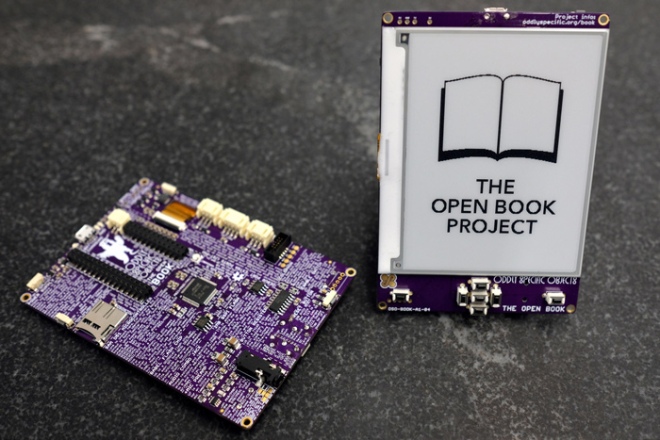
openbook_m4

The Open Book

It includes a large screen and buttons for navigation, as well as audio options for accessibility and ports to extend its functionality. Its detailed silkscreen, with the all the manic energy and quixotic ambition of a Dr. Bronner’s bottle, aims to demystify the Open Book’s own design, breaking down for the curious reader both how the book works, and how they can build one for themselves.

For more detailed technical specifications, check out the Hackaday.io project page.

Purchase

The Open Book is not yet available for purchase, but you can order the board from OSH Park, and the BOM is available at the project’s GitHub page. Instructions for assembly are printed on the front of the PCB.

Contribute

Have some info to add for this board? Edit the source for this page here.

The Open Book by Oddly Specific Objects

Why Do Resistors Have a Color Code?

One of the first things you learn in electronics is how to identify a resistor’s value. Through-hole resistors have color codes, and that’s generally where beginners begin. But why are they marked like this? Like red stop signs and yellow lines down the middle of the road, it just seems like it has always been that way when, in fact, it hasn’t.

Before the 1920s, components were marked any old way the manufacturer felt like marking them. Then in 1924, 50 radio manufacturers in Chicago formed a trade group. The idea was to share patents among the members. Almost immediately the name changed from “Associated Radio Manufacturers” to the “Radio Manufacturer’s Association” or RMA.  There would be several more name changes over the years until finally, it became the EIA or the Electronic Industries Alliance. The EIA doesn’t actually exist anymore. It exploded into several specific divisions, but that’s another story.

This is the tale of how color bands made their way onto every through-hole resistor from every manufacturer in the world.

via Why Do Resistors Have a Color Code? — Hackaday

Quote

Crazy Circuits: Lego-compatible circuit kits and modules

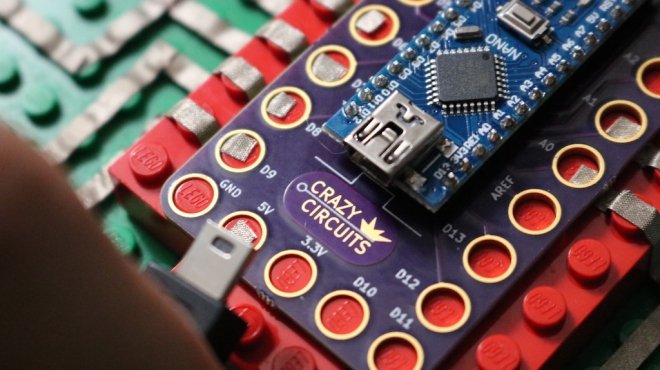
Crazy Circuits Arduino

Crazy Circuits is a project to create Lego-compatible circuit kits and modules by Brown Dog Gadgets, now with breakout boards for Particle Photon and NodeMCU:

Check out the designs on GitHub:

BrownDogGadgets/CrazyCircuits

Crazy Circuits: Lego-compatible circuit kits and modules

Handmade Electronic Music with Nicolas Collins

Back in December, I visited Nicolas Collins at the School of the Art Institute in Chicago and got to see one of the latest creations that he is using in class. The beautiful traces wind their way into the classic LM386 audio amp for an expressive overdriven effect:

https://twitter.com/oshpark/status/1206711384223997958

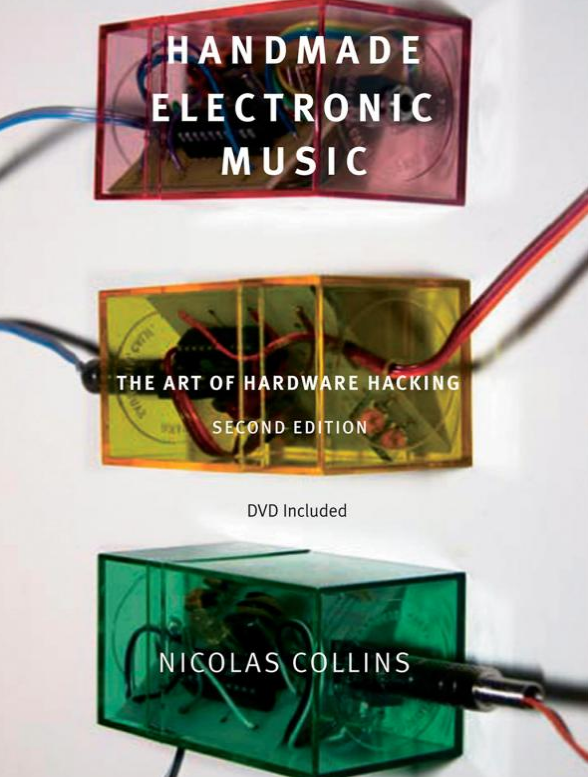
Nicolas Collins is well known for having written Handmade Electronic Music: The Art of Hardware Hacking:

Screenshot from 2020-01-15 11-38-09.png

provides a long-needed, practical, and engaging introduction to the craft of making – as well as creatively cannibalizing – electronic circuits for artistic purposes. With a sense of adventure and no prior knowledge, the reader can subvert the intentions designed into devices such as radios and toys to discover a new sonic world. At a time when computers dominate music production, this book offers a rare glimpse into the core technology of early live electronic music, as well as more recent developments at the hands of emerging artists. In addition to advice on hacking found electronics, the reader learns how to make contact microphones, pickups for electromagnetic fields, oscillators, distortion boxes, and unusual signal processors cheaply and quickly.

Handmade Electronic Music with Nicolas Collins

LC Oscillators, Animated

e wish that all the beautiful animations that are available today to understand math and electronics had been around when we were in school. Nonetheless, they are there for today’s students and [Learn Engineering] has another gorgeous one covering LC oscillation. Check it out, below.

If you are thoroughly grounded — no pun intended — in LC circuits, you probably won’t learn anything new. However, the animations are worth watching, just to admire them, if nothing else.

We were amused by his statement: “… looks as if the capacitor is saying: ‘you take the energy’ and the inductor then says, ‘no, you take my energy.’” Then we were further amused by [Seraph’s] comment which added, “Resistance in the circuit: ‘Alright, I’ll take the energy, then.’”

Of course, there are other ways to think of an LC circuit. The math isn’t that hard. Most of us learned that the circuit’s mechanical analog is a mass on a spring or a pendulum. The mass’s potential energy stretches out the spring until the spring then pulls it back until the potential energy of the mass pulls it back down.

If you want to experiment virtually, try the Falstad simulator. Just remember that if you think the sine wave isn’t dampening to look at the scale. As the sine wave dampens, the simulator will adjust the scale so you keep seeing approximately the same size sine wave.

We never get tired of watching the Fourier series explained graphically. Or anything from [3Blue1Brown].

via LC Oscillators, Animated — Hackaday

Quote