SKiDL: Script Your Circuits in Python

skidl_featured (1).png

SKiDL: Script Your Circuits in Python

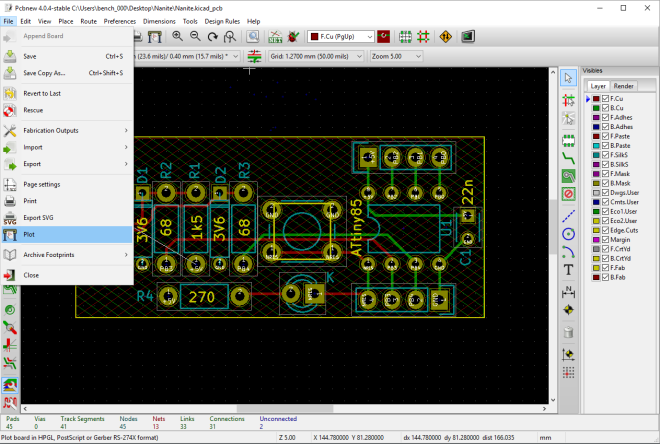
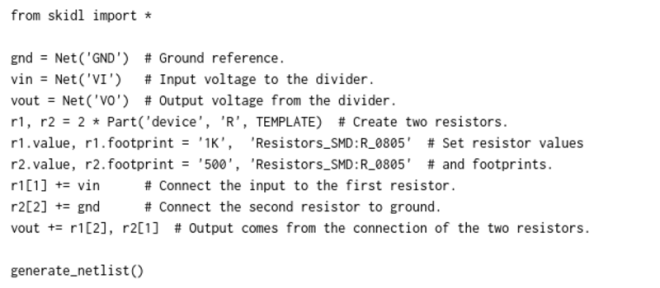
SKiDL is very, very cool. It’s a bit of Python code that outputs a circuit netlist for KiCAD. Why is this cool? If you design a PCB in KiCAD, you go through three steps: draw the schematic, assign footprints to the symbolic parts, and then place them. The netlist ties all of these phases together […]

The source code is available on GitHub:

images11 xesscorp/skidl

SKiDL: Script Your Circuits in Python

Friday Hack Chat: KiCad with Wayne Stambaugh

KiCad is the premiere open source electronics design automation suite. It’s used by professionals and amateurs alike to design circuits and layout out printed circuit boards. In recent years we’ve seen some incredible features added to KiCad like an improved 3D viewer and push-and-shove routing. This Friday at 10 am PST, join in a Hack…

via Friday Hack Chat: KiCad EDA Suite with Wayne Stambaugh — Hackaday

Friday Hack Chat: KiCad with Wayne Stambaugh

Friday Hack Chat: Eagle PCB Design with Matt Berggren

Eagle is a household name for all Hackaday regulars. Here’s your chance to learn about upcoming features, get your ‘how do I do this in Eagle?’ questions answered, and get your wishlist items heard. Join us on Friday at 12:00 PST for a live Hack Chat about the Eagle PCB Design software. Hosting this week’s…

via Friday Hack Chat: Eagle PCB Design with Matt Berggren — Hackaday

Friday Hack Chat: Eagle PCB Design with Matt Berggren

Making VR Controllers From The Ground Up

VR is going to be the next big thing in five to seven years, and with that comes the problem of what the controllers will look like. The Vive and PS Move are probably close to what the first successful consumer VR setup will look like, but there’s plenty of room for experimentation. [ShinyQuagsire] decided to…

via Making VR Controllers From The Ground Up — Hackaday

Making VR Controllers From The Ground Up

Taking It To Another Level: Making 3.3V Speak with 5V

Taking It To Another Level: Making 3.3V Speak with 5V — Hackaday

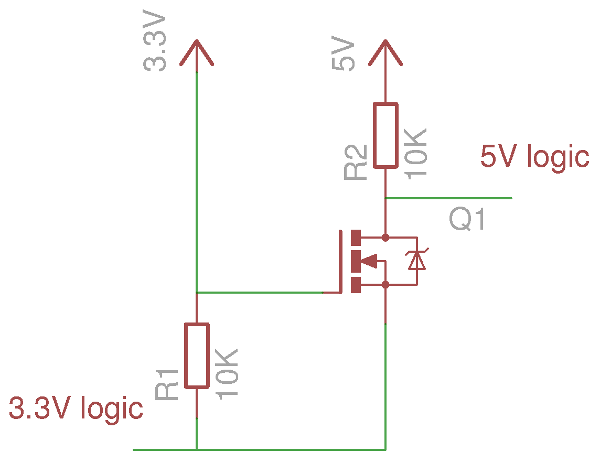
If your introduction to digital electronics came more years ago than you’d care to mention, the chances are you did so with 5V TTL logic. Above 2V but usually pretty close to 5V is a logic 1, below 0.8V is a logic 0. If you were a keen reader of electronic text books you might have…

bidirectonal-mosfet-level-shifter.png

Taking It To Another Level: Making 3.3V Speak with 5V

Creating A PCB In Everything: KiCad, Part 3

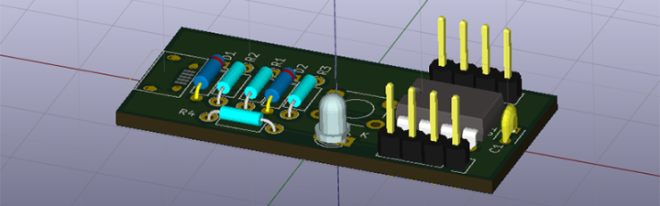
kicadvrml.png

of Hackaday continues his series of posts about KiCad:

Creating A PCB In Everything: KiCad, Part 3

This is the third and final installment of a series of posts on how to create a PCB in KiCad, and part of an overarching series where I make the same schematic and board in dozens of different software tools

https://youtube.com/watch?v=CCG4daPvuVI%3Fversion%3D3%26rel%3D1%26fs%3D1%26autohide%3D2%26showsearch%3D0%26showinfo%3D1%26iv_load_policy%3D1%26wmode%3Dtransparent

Creating A PCB In Everything: KiCad, Part 3

Building Beautiful Boards With Star Simpson

circitclassics.png

Star Simpson, creator of Circuit Classics, gave this excellent talk at Hackaday Supercon:

Building Beautiful Boards With Star Simpson

Over the last decade or so, the cost to produce a handful of custom PCBs has dropped through the floor. Now, you don’t have to use software tied to one fab house – all you have to do is drop an Eagle or KiCad file onto an order form and hit ‘submit’.

https://youtube.com/watch?v=eost2IbQ6mg%3Fversion%3D3%26rel%3D1%26fs%3D1%26autohide%3D2%26showsearch%3D0%26showinfo%3D1%26iv_load_policy%3D1%26wmode%3Dtransparent

Building Beautiful Boards With Star Simpson

Alan Yates on Making Valve’s VR Work

alan_yates_featured.png

Alan Yates of Valve talked at Hackaday Supercon about the research and development of the hardware in the HTC Vive virtual reality system:

Hackaday: Why Valve’s Lighthouse Can’t Work

[Alan Yates] is a hacker’s engineer. His job at Valve has been to help them figure out the hardware that makes virtual reality (VR) a real reality. And he invented a device that’s clever enough that it really should work, but difficult enough that it wasn’t straightforward how to make it work

https://youtube.com/watch?v=75ZytcYANTA%3Fversion%3D3%26rel%3D1%26fs%3D1%26autohide%3D2%26showsearch%3D0%26showinfo%3D1%26iv_load_policy%3D1%26wmode%3Dtransparent

Alan Yates on Making Valve’s VR Work