
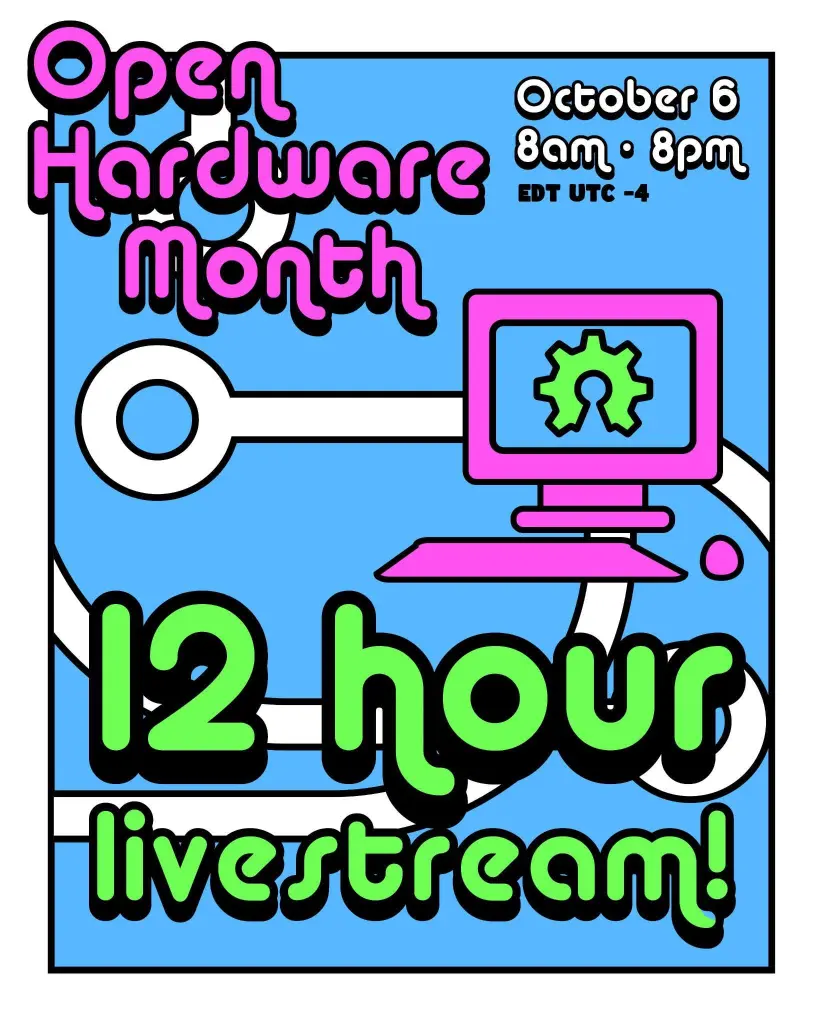
Join OSHWA for 12 full hours of exciting and fascinating open source hardware with creators from all over joining us to show off their work!
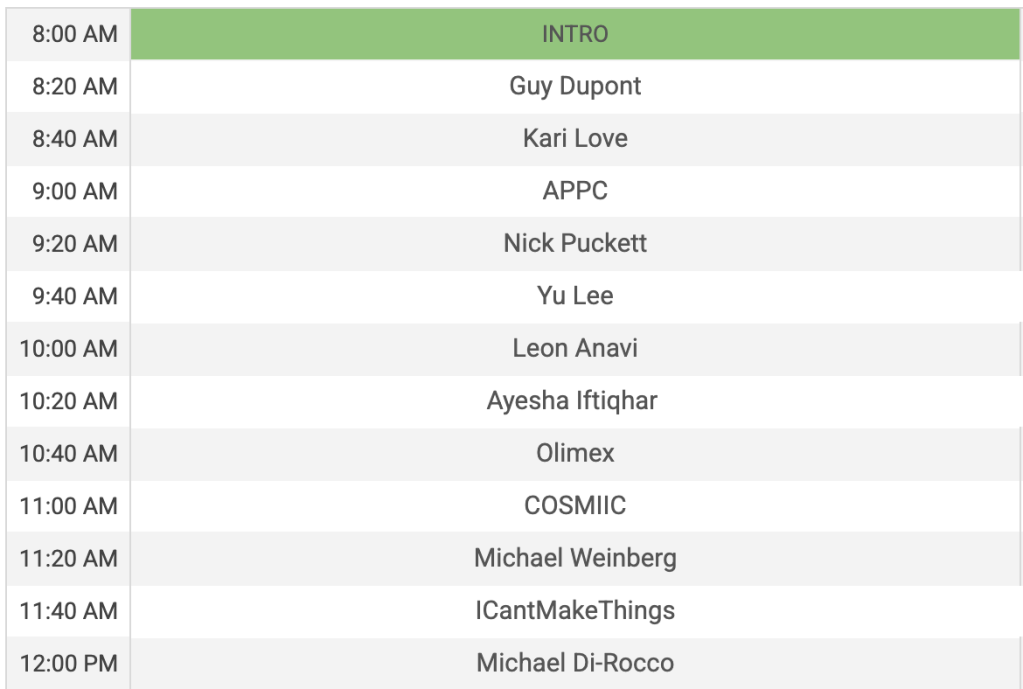
Find out more on the OSHWA blog…
Join OSHWA for 12 full hours of exciting and fascinating open source hardware with creators from all over joining us to show off their work!
Find out more on the OSHWA blog…

After three years of online publications, HardwareX may have solidified itself as an academic journal for open-source hardware. We originally wrote about HardwareX back in 2016. At the time, HardwareX hadn’t even published its first issue and only begun soliciting manuscripts. Now after three years of publishing, six issues as of October 2019 (with the seventh scheduled for April 2020), and an impact factor of 4.33, it’s fair to say that Elsevier’s push into open-access publications is on a path to success.
To give you a bit of background, HardwareX aims to promote the reproducibility of scientific work by giving researchers an avenue to publish all the hardware and software hacks that often get buried in traditional manuscripts. The format of HardwareX articles is a bit different than most academic journals. HardwareX articles look more like project pages similar to Hackaday.io. (Maybe we inspired them a bit? Who knows.)
It’s a bold attempt on Elsevier’s part because although open-access is held as an ideal scenario for scientific work, such efforts often come under quite a bit of scrutiny in the academic community. Don’t ask us. We can’t relate.
Either way, we genuinely wish Elsevier all the best and will keep our eyes on HardwareX. Maybe some of our readers should consider publishing their projects in HardwareX.
via Three years of HardwareX: Where are they now? — Hackaday
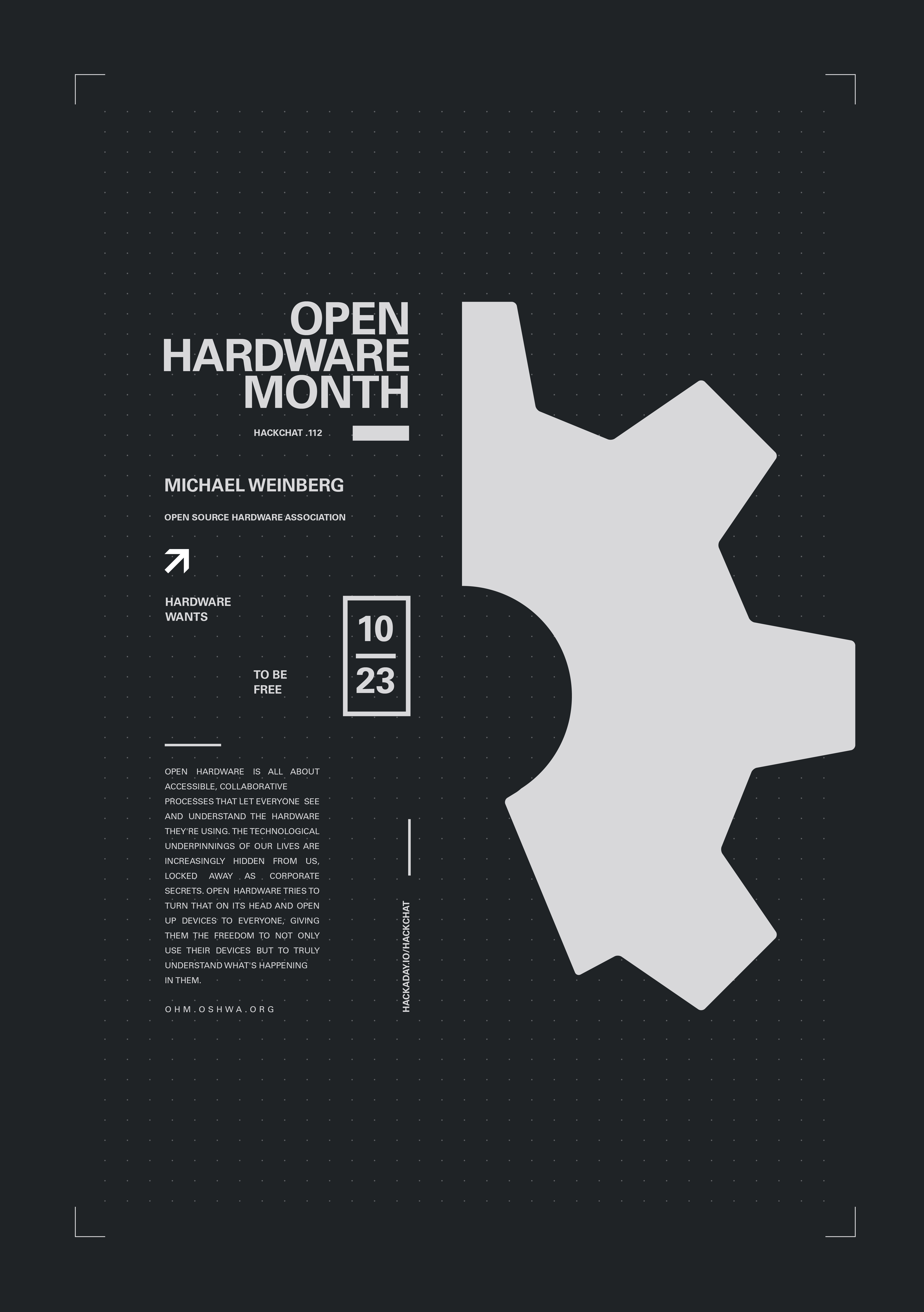
Join Hackaday on Wednesday, October 23 at 12:00PM US Pacific time for the Open Hardware Month Hack Chat with Michael Weinberg!
It seems like everything and everyone has a special day set aside on the calendar. You know the drill – aheadline declaring it National Grilled Cheese Day (sorry, you missed it – April 12) or National Bundt Pan Day (not even kidding, November 15). It seems only fair with all these silly recognition days floating around that we in the hacking community should have a day of our own, too, or even a whole month. That’s why the Open Source Hardware Association declared the entire month of October to be Open Hardware Month.
Open hardware is all about accessible, collaborative processes that let everyone see and understand the hardware they’re using. The technological underpinnings of our lives are increasingly hidden from us, locked away as corporate secrets. Open hardware tries to turn that on its head and open up devices to everyone, giving them the freedom to not only use their devices but to truly understand what’s happening in them, and perhaps repair, extend, and even modify them to do something new and useful. Celebrating that and getting the message out to the general public is certainly something worth doing.
Michael Weinberg is a board member at OSHWA, and he’ll be joining the Hack Chat on October 23 (National Boston Cream Pie Day) to discuss Open Hardware Month and open-source hardware in general. We’ll learn about some of the events planned for Open Hardware Month, how open hardware is perceived beyond the hacker community, and what’s on tap for the 10th anniversary Open Hardware Summit in 2020.
Our Hack Chats are live community events in the Hackaday.io Hack Chat group messaging. This week we’ll be sitting down on Wednesday, October 23 at 12:00 PM Pacific time. If time zones have got you down, we have a handy time zone converter.
Click that speech bubble to the right, and you’ll be taken directly to the Hack Chat group on Hackaday.io. You don’t have to wait until Wednesday; join whenever you want and you can see what the community is talking about.
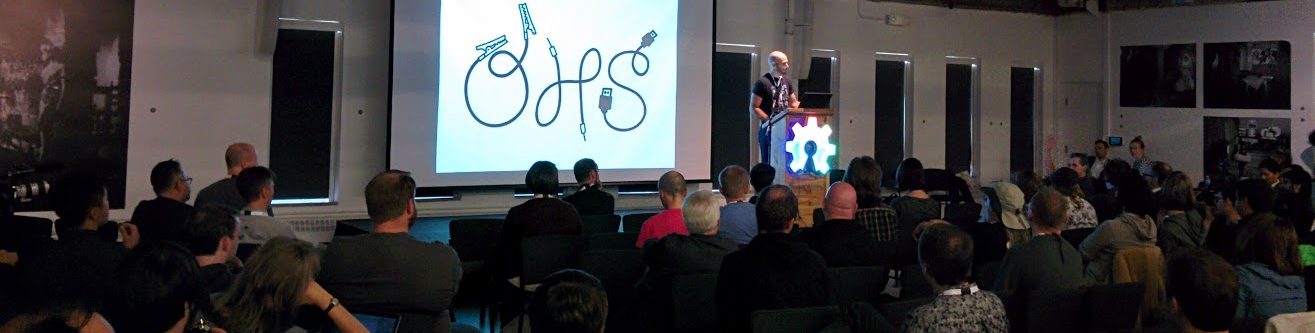
The annual Open Hardware Summit took place on September 27th at MIT, and all the exciting and insightful presentation were live streamed to YouTube!
The live stream is broken into morning session and afternoon session.
| 9:00 AM | Door Open! |
| 10:00 | Opening Remarks: Michael Weinberg, OSHWA President |
| 10:15 | Eric Von Hippel: Economics of Open Hardware |
| 10:45 AM | Surya Mattu: Approaching adversarial research |
| 11:00 | Oluwatobi Oyinlola: Hyperloop: The rLoop Journey |
| 11:20 | Sara Chipps: C++ API for Kids |
| 11:35 | Robin Getz: Open Source Software Defined Radio |
| 11:55 | Evan Raskob: Livecoding 3D printing: experiments in live computational sculpting |
| 12:10 | Adam Benzion: How to build a huge open source community (without being a total sellout).
Mario Gómez : Building Resilience With Public Institutions and Open Hardware |
| 1:45 PM | Neil Gershenfeld: How To Make (almost) Anything |
| 2:20 PM | Joseph Apuzzo: MicroPython on ESP32 and LoBo |
| 2:45 PM | Jodi Clark: OpenCosplay, Teaching the Next Generation |
| 3:00 PM | SURPRISE SPEAKER YA’ALL |
| 3:45 PM | Tarek Loubani: Gaza tourniquet: Making lifesaving medical devices under fire |
| 4:00 PM | Stephanie Valencia: Creating a more accessible future with OSH |
| 4:15 PM | Amitabh Shrivastava: Programmable-Air |
| 4:30 PM | Ted Hayes: How to Put A Neural Network on an Arduino and Why |
| 4:45 PM | Closing Remarks: Alicia Gibb, OSHWA Director |
If you enjoyed these talks, please consider joining the Open Source Hardware Association (OSWHA)!
And follow Open Hardware Summit on Twitter for update on 2019 – we’ll be in China!
From Steven Abadie:
Git has become the predominant version control software in Free and Open Source Software projects and communities. Git is excellent for tracking and managing changes to computer files and is especially powerful in managing source code. Although not as common, Git is also a worthy tool for managing the source of your hardware projects. It provides a clear time line of changes, log of contributors, and a system of synchronous development.
An additional advantage of using Git for Open Hardware are the available hosting options. All basic Git hosting services and software will provide a remote centralized git repository for your team or collaborators to sync to. Other common features you will find are issue tracking, project documentation, and team permission management. The three most common Git hosting services are Github, GitLab, and Bitbucket. If you prefer a self-hosted FOSS Git host, Gitea and Phabricator are great options.
We are proud to sponsor the 2017 Open Hardware Summit next Thursday, October 5th, in Denver at the McNichols Civic Center!
There is an exciting schedule of speakers! Big thanks to the OHS17 team for all their hard work. Drew, Kelly and Laen are excited to be there (in purple of course).
Please note that this event follows the Summit on Thursday:
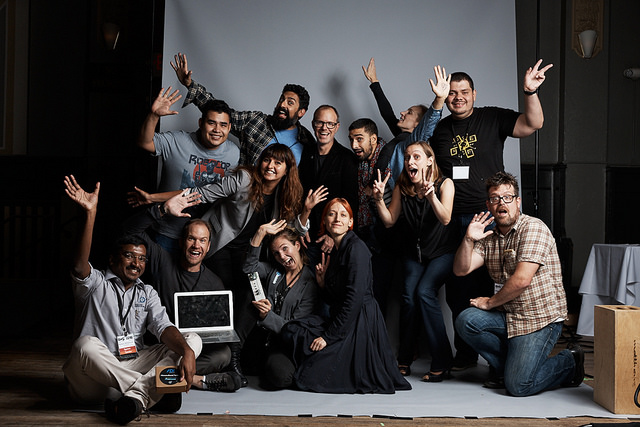
Women Who Hack Dinner and Drinks: open to woman id-ing members of the community, must RSVP by Sept 28th. Hosted by Sophi Kravitz of HackaDay and OHS Chair Addie Wagenknecht.
Can’t wait for OHS17? Check out these recordings from OHS16 in Portland:
We are excited for the 2017 Open Hardware Summit this Fall in Denver, and we’re pleased to see the Ada Lovelace Fellowship is now open for applications:
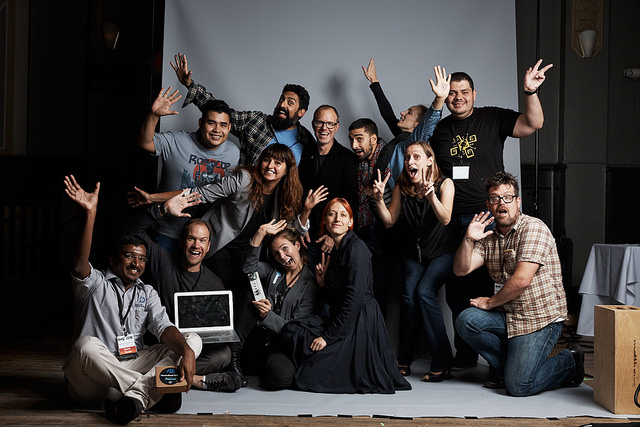
The Ada Lovelace Fellowship encourages women, LGBTA+, and/or other minorities in the open technology movement to both participate and nurture an incredible, diverse community within open source.
For the fifth year running, we are ecstatic to offer TEN (10) Open Hardware Fellowships to members of the community. This includes travel assistance and entrance to the 2017 open Hardware Summit!
We are at an exciting point in time for open source and hope to encourage everyone, no matter their walk in life, to embrace and participate in this incredible movement!

Please join us tomorrow night on Open Hardware Summit eve for a delightful mix of #BringAHack and open house!
Refreshments will be served. No problem if you won’t be able to bring a “hack”. There will still be plenty of interesting things to experience!



 OSH Park