ThinkPad modded with Black Magic Probe

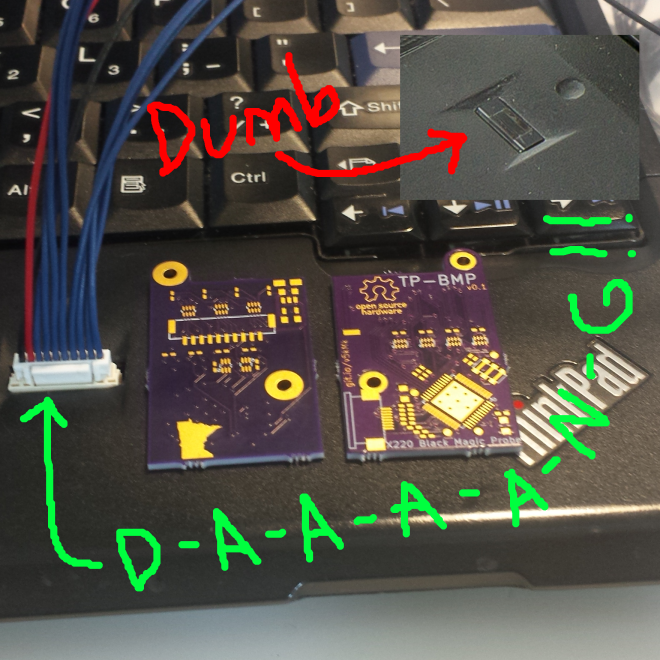
Zach Fredin of NeuroTinker designed this derivative of the Black Magic Probe to replace the fingerprint reader on his ThinkPad X220 laptop:

7739161505336901338.png

TP-BMP

A PCB-layout-only remix of 1BitSquared/Black Sphere Technologies’ excellent Black Magic Probe v2.1. Designed to replace the fingerprint reader in the palm rest on some Thinkpads, because when have you _not_ needed an ARM debugger with a built-in UART port?

Runs stock firmware and grabs USB from the fingerprint reader’s FFC connector (well… +5VDC from the touchpad). Not tested on anything other than my X220 (but it seems to work!). Cable harnesses get stuffed in the o’l ExpressCard slot for storage.

ThinkPad modded with Black Magic Probe

A Smaller, Cheaper RISC V Board

Early this year, the world of electronics saw something amazing. The RISC-V, the first Open Source microcontroller was implemented in silicon, and we got an Arduino-derived dev board in the form of the HiFive 1. The HiFive 1 is just a bit shy of mindblowing; it’s a very fast microcontroller that’s right up there with…

via A Smaller, Cheaper RISC V Board — Hackaday

A Smaller, Cheaper RISC V Board

Hackaday NYC Meetup on Thursday

This is a busy, busy week for Tindie and Hackaday. We’re going to New York, and we have a ton of events planned. First up is the monthly Hackaday meetup. This time, we’re teaming up with Kickstarter for a pre-Maker Faire Meetup. We’ll be hosting this at Kickstarter’s HQ, and already we have an impressive…

via A Slew Of NYC Meetups With Tindie And Hackaday This Week — Hackaday

https://www.meetup.com/MakeIt-NYC/events/242653432/

(Drew Fustini will be there, too)

Hackaday NYC Meetup on Thursday

LiPo Added to LEGO Power Functions Power Brick

LEGO’s Power Functions elements mostly consist of DC motors and the hardware to be driven by those motors like gears and wheels. They also include battery packs, usually a bunch of AA cells in a plastic box. One of the challenges of the system — for hackers, anyway — is interfacing with the product line’s…

via LiPo Added to LEGO Power Functions Power Brick — Hackaday

LiPo Added to LEGO Power Functions Power Brick

It’s Time For Anything Goes In The Hackaday Prize

We’re challenging you to make the best whatever. It’s time for the Anything Goes round of the Hackaday Prize. This is your final chance to enter and we’re looking for just about anything! Twenty entries from Anything Goes will receive a $1,000 cash prize and a chance at the $50,000 grand prize and four other top prizes. Over the…

via It’s Time For Anything Goes In The Hackaday Prize — Hackaday

It’s Time For Anything Goes In The Hackaday Prize

These Twenty Assistive Technologies Projects Won $1000 In The Hackaday Prize

Today, we’re excited to announce the winners of the Assistive Technologies portion of The Hackaday Prize. In this round, we’re looking for projects that will help ensure a better quality of life for the disabled. Whether this is something that enhances learning, working, or daily living. These are the projects that turn ‘disability’ into ‘this ability’.…

via These Twenty Assistive Technologies Projects Won $1000 In The Hackaday Prize — Hackaday

These Twenty Assistive Technologies Projects Won $1000 In The Hackaday Prize

How To Select Just About Any Electronic Part

Sometimes you see an excellent post somewhere else on the web, and then discover that it is one of a series of similarly good posts that you completely missed when they were published. If you are a Hackaday scribe you are left wondering how you managed to pass them by, and then why on earth…

via How To Select Just About Any Electronic Part — Hackaday

How To Select Just About Any Electronic Part

Raspberry Pi CAN-bus HAT for the Omzlo IoT platform

From Omzlo Electronics:

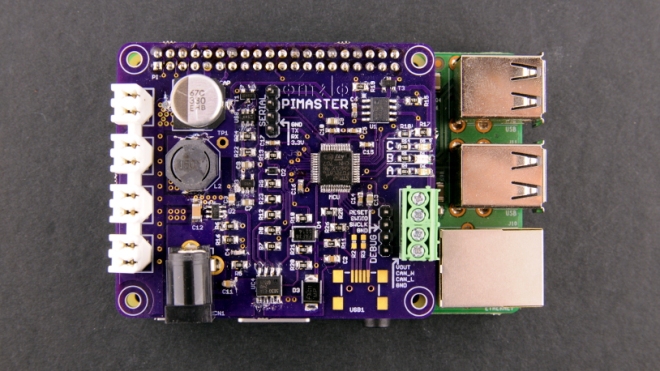
omzlo-pi-master-rpi.jpg

A Raspberry Pi CAN-bus HAT for the Omzlo IoT platform

In a previous blog post, we described “SKWARE” our revised Arduino-compatible IoT modules. These nodes are designed to be connected together in a daisy-chain fashion with a single cable that brings both DC power and CAN-bus networking. The voltage transported in the cables is not 5V (or 3.3V) but rather 12V or 24V to work more comfortably over long distances, potentially reaching 300 meters (1000 feet). You can think of it as a poor-man’s PoE.
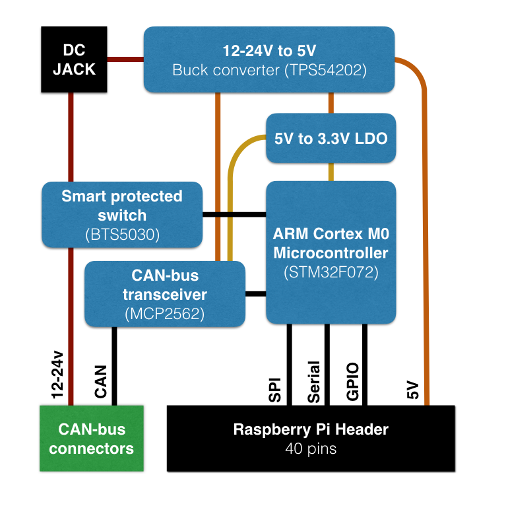
omzlo-pi-master-diagram

This network of connected nodes is designed to be monitored and controlled by a “master node”, which injects the necessary 12V/24V DC, provides node management services and a web interface for network administration. While the IoT nodes are based on an Arduino-style microcontroller, the “master node” requires a bit more power. In this context, the ubiquitous Raspberry Pi with its GPIO header seems like an ideal candidate for that role and we decided to see if we could build a “master node” by augmenting a Raspberry Pi with an appropriate add-on board. These add-on boards are called “HATs” (for “Hardware Attached on Top”) and we called our first prototype the “Pi Master HAT”.
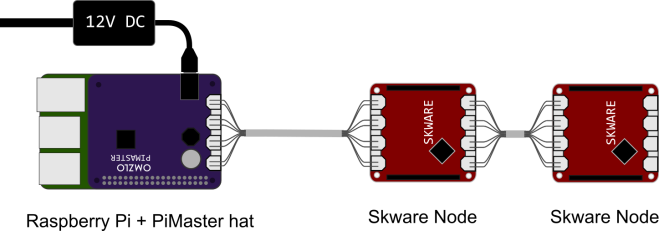
omzlo-pi-master-network

The drawing below illustrates the general structure of our network. A Raspberry Pi equipped with our “Pi Master HAT” controls a network of 2 (or more) daisy-chained nodes, like the SKWARE.
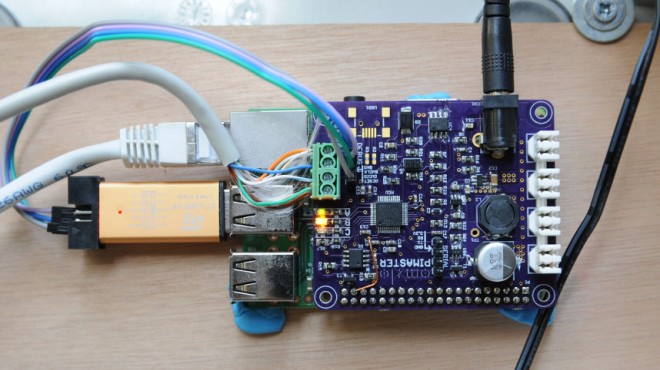
omzlo-pi-master-debug

Raspberry Pi CAN-bus HAT for the Omzlo IoT platform

LoFive RISC-V board now on GroupGets

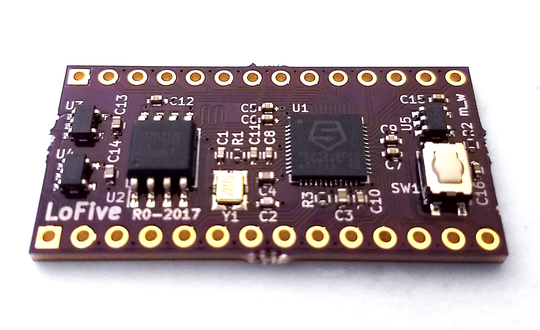
LoFive RISC-V dev board designed by Michael Welling with KiCad is now on GroupGets:

8abaa9b3ce3ab723089fdb42a00d1b5a008dad5b

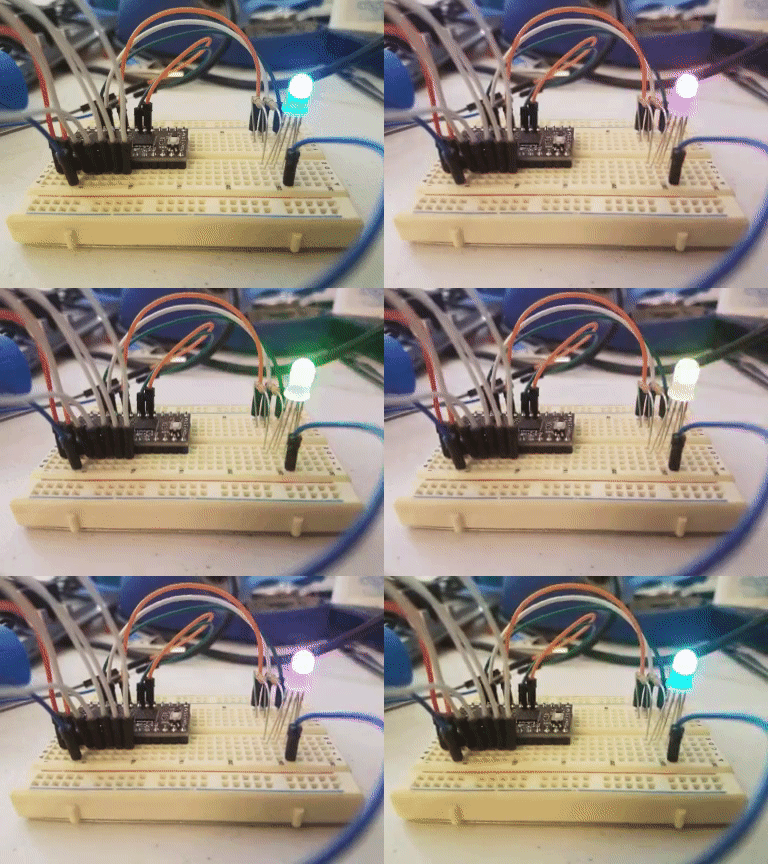
LoFive is a small board based on the SiFive Freedom E310 open source SoC

LoFive_LED

Specifications

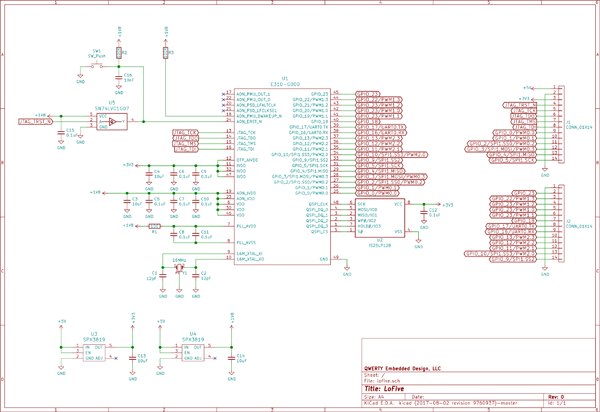
  • MCU – SiFive Freedom E310 (FE310) 32-bit RV32IMAC processor @ up to 320+ MHz (1.61 DMIPS/MHz)
  • Storage – 128-Mbit SPI flash (ISSI IS25LP128)
  • Expansion – 2x 14-pin headers with JTAG, GPIO, PWM, SPI, UART, 5V, 3.3V and GND
  • Misc – 1x reset button, 16 MHz crystal
  • Power Supply – 5V via pin 1 on header; Operating Voltage: 3.3 V and 1.8 V
  • Dimensions – 38 x 18 mm (estimated)
  • License – CERN Open Hardware Licence v1.2

LoFive-Schematics-600px

The design files are available on GitHub:

mwelling/lofive

LoFive RISC-V board now on GroupGets