Still time to join the BadgeLove contest!

Hackster is running the “the Blinkiest Badge Challenge on Earth” and you still have until February 28th to submit your badge design!
Screenshot from 2019-01-03 11-48-38.png

BadgeLove!

#BadgeLife is the new electronic graffiti. This form of art is in a league of its own, first popularized by DEFCON hackers, now boasts serious technical sophistication, a wicked artistic flair, peppered with political, cryptography, social, cultural and comical narratives, flashing LEDs and screens with add-ons galore.

Screenshot from 2019-01-03 11-49-55

You are invited to join our first, and certainly not last, BadgeLove challenge, sponsored by OSH ParkAutodesk EAGLE & Fusion 360, and Hackster.

Share your unique design with 700,000+ Hacksters and we will reward badge fanatics for their beautiful, weird, cool contributions.

Ready to Badge It?

  • Share any badge, new or old with full instructions
  • Provide design documentation. For example, PCB layout (native or Gerber plots), artwork, bill-of-materials, schematics, source code/firmware, and anything else you’d like to share!
  • Written explanation describing your badge’s capabilities
  • Optional video explaining what the badge does
  • Want to score extra points? Celebrate our partner Autodesk and build with Autodesk EAGLE files and Fusion 360 CAD (check out the Autodesk prize)
  • Don’t want to share your complete Gerbers? Need to protect your invention? We totally understand. Share only what you feel comfortable with
  • Got add-ons? Let’s see them!
  • Selling your badges? Share your links, we want to buy some!
  • Need fab help? It’s all about the one and only OSH Park!
  • Using Altium, KiCad, other? You’re good!
Still time to join the BadgeLove contest!

Designing Tiny Motors Right Into The Robot’s Circuit Board

From  on the Hackaday blog:

Designing Tiny Motors Right Into The Robot’s Circuit Board


Motors are not overly complex, but this one is downright simple. Carl Bujega has been working on a motor design that heavily relies on the capabilities of the printed circuit board (PCB) fabrication processes. His talk at the 2018 Hackaday Superconference covers how he built a brushless DC motor and speed controller into a PCB. You can watch the newly published video after the break.

The genesis of this idea came from Carl’s interest in drone design, in fact, he jumped right into a drone startup immediately after finishing his EE. The company didn’t last, but his thirst for interesting designs is ongoing. When looking at reducing the total parts necessary to build a quadcopter he happened on the idea of PCB-based coils and he’s followed it to this motor design, and beyond to some very interesting flexible-PCB robot design work which you can check out on his Hackaday.io page, YouTube, and Twitter.

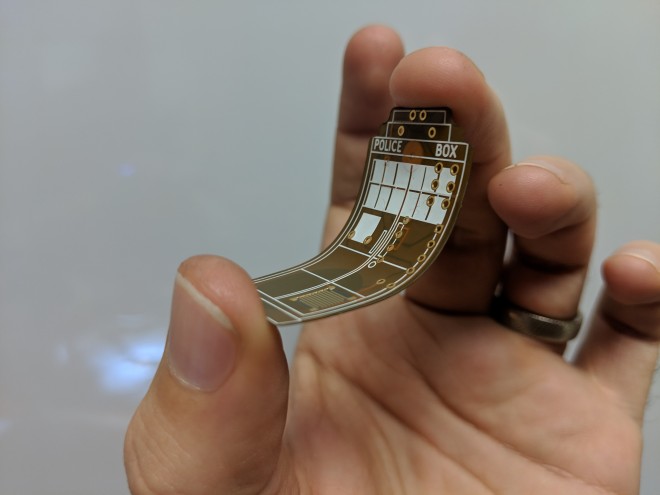
OSH Park now offers 2 layer Flex PCBs for $15 per square inch including 3 copies of your design. Orders will be sent to fabrication weekly and ship within 21 calendar days of ordering. Find out more on our Flex documentation page.

Quote

Designing a PCB Ornament

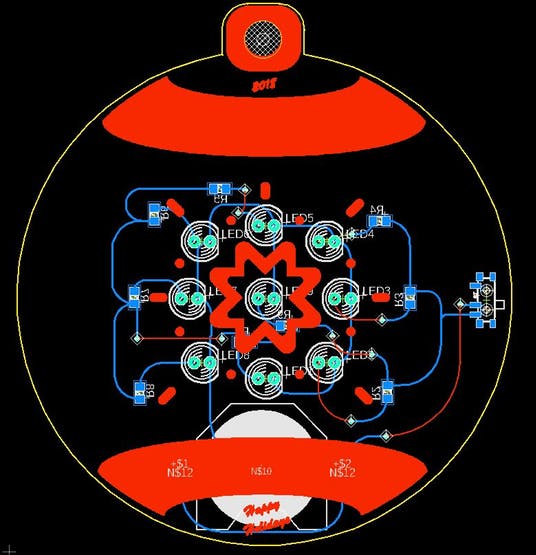
Liz from Blitz City DIY wrote about the process of designing a PCB ornament:

edited_p1070247_euwtkNp04o

Designing a PCB Ornament

As the holidays approached this year, I felt a need to create a DIY gift for my family and friends. I struggled at first to find a medium. Should I 3D print something? Should I knit? But then it hit me: everyone loves blinky LEDs and I want to keep getting better at PCB design. I’ll do a PCB ornament!

orbornamentlayout_g9hVPwjRbg

If you don’t have a traditional electronics background PCB design can seem scary, overwhelming and something that’s meant for more experienced people that have “real skills”. If you start simple and slowly add-in new methods and design features to your boards you’ll soon realize it isn’t so scary and that much like everything else in life it just takes practice and patience to learn. And once you have your first project on a custom PCB instead of a piece of perf board you’ll be hooked.

Designing a PCB Ornament

How a Microcontroller Hiding in a USB Port Became an FPGA Hiding in the Same


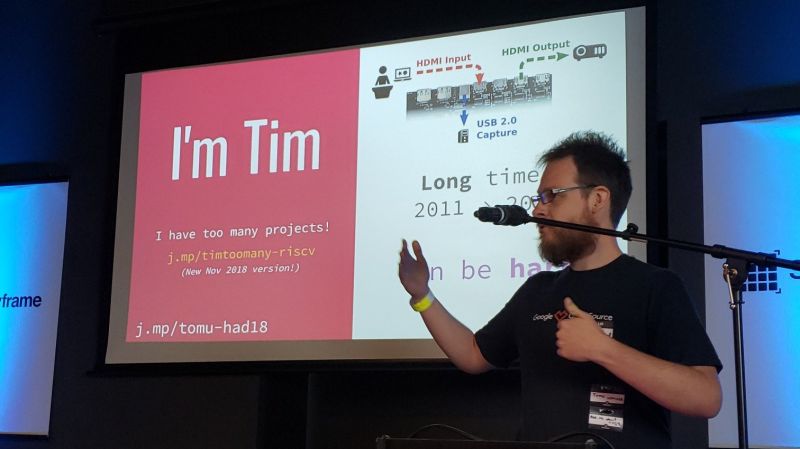
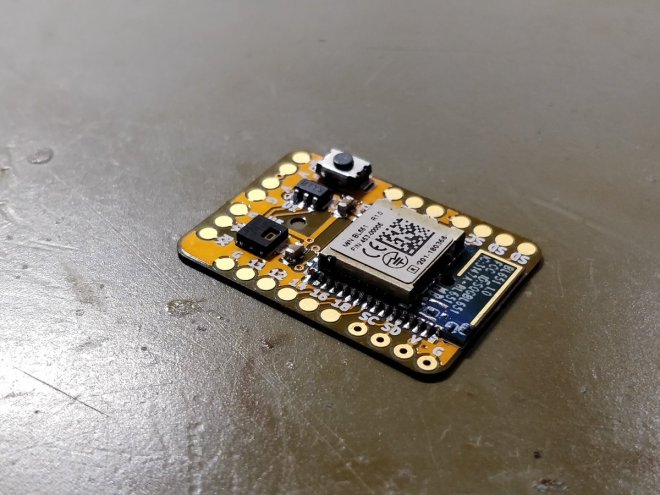
Now Tim’s onto the next big thing. He’s adaped the Tomu form factor to an FPGA board called Fomu with an active crowd funding campaign right now. The board will ship with a RISC-V core already loaded that can be programmed using DFU (or possibly mass storage). This is a popular move right now since a lot of people want to play with RISC-V or FPGA and here’s a way to do both without actually having to haul around extra equipment with you.

Some might think: what can you do with an FPGA where it’s kind of hard to connect external circuits? You could practice adding peripherals to RISC-V and other cores, but maybe what you should be thinking is: what could I do with my laptop if I had some dedicated parallel processing available? The board carries a Lattice iCE40UP5K, 1 MB of flash, 128 kB of RAM, runs at 48 MHz, and is compatible with the open source IceStorm toolchain.

via How a Microcontroller Hiding in a USB Port Became an FPGA Hiding in the Same — Hackaday

Quote

Hackaday: Oh the Lessons You’ll Learn by Building a Robot Familiar

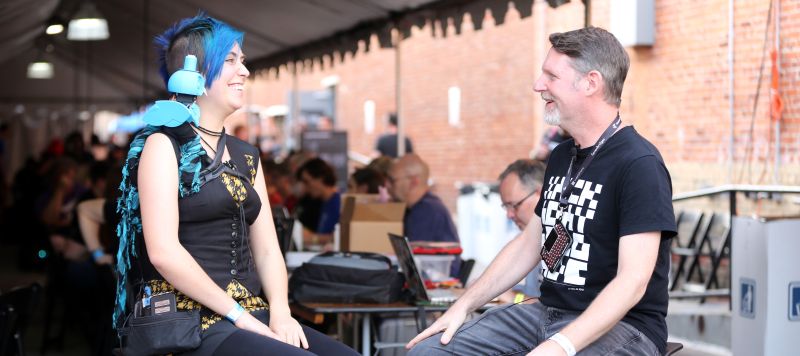
A familiar spirit, or just a familiar, is a creature rumored to help people in the practice of magic. The moniker is perfect for Archimedes, the robot owl built by Alex Glow, which wields the Amazon Google AIY kit to react when it detects faces. A series of very interesting design choices a what really gives the creature life. Not all of those choices were on purpose, which is the core of her talk at the 2018 Hackaday Superconference.

via Oh the Lessons You’ll Learn by Building a Robot Familiar — Hackaday

Quote

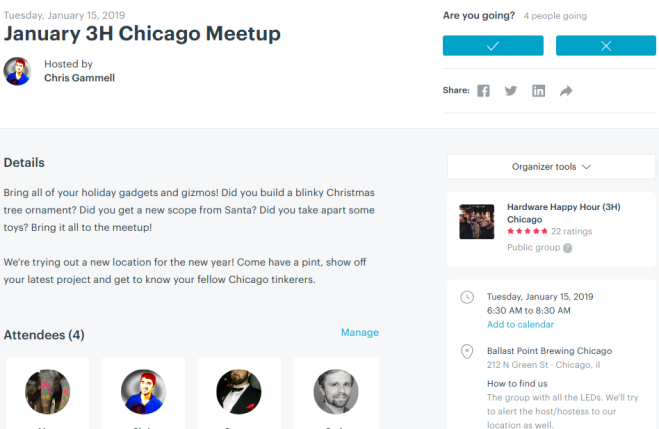
Hardware Happy Hour (3H) Chicago for January 2019

Screenshot from 2018-12-24 09-50-52

The next Hardware Happy Hour (3H) Chicago is Tuesday, January 15:

January 3H Chicago Meetup

Bring all of your holiday gadgets and gizmos! Did you build a blinky Christmas tree ornament? Did you get a new scope from Santa? Did you take apart some toys? Bring it all to the meetup!

We’re trying out a new location for the new year! Come have a pint, show off your latest project and get to know your fellow Chicago tinkerers.

https://www.meetup.com/Hardware-Happy-Hour-3H-Chicago/events/257467548/


Hardware Happy Hour (3H) Chicago for January 2019

Clever Wedges That Will Increase Your PCB Assembly Yield

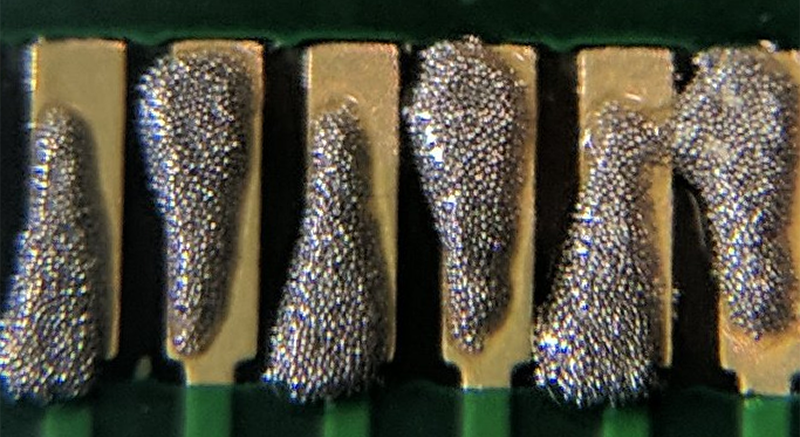
If there’s one thing that will bring down the yield of your PCB assembly, it’s your solder paste. Put too much on, and you’ll get bridged leads. If you don’t put enough on, that pad might not make good contact. [ScalarElectric] has an amazing trick that’s sure to astonish and astound. Just use wedges and you’ll get better yield with fine-pitched components.

The trick here is to define the cream/solder paste layer of each package as a wedge on each pad instead of the usual rectangle. This gives a few benefits, the largest being the increased gap between paste shapes. You’re also getting a reduction in the total amount of paste applied, and a subsequent improvement in yield. (Reportedly, we’d love to see some data on this.)

via Clever Wedges That Will Increase Your PCB Assembly Yield — Hackaday

Quote

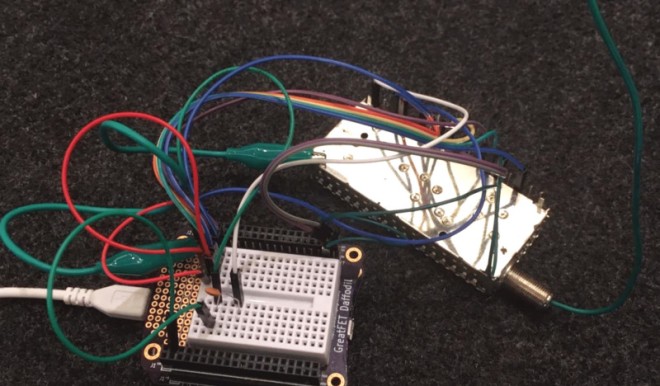
Dominic Spill: Radio Gets Ridiculous

greatFET-connected-to-VCR-RF-frontend-1.jpg

Dominic Spill of Great Scott Gadgets gave an exciting talk at Hackaday SuperCon last month:

There were plenty of great talks at this year’s Supercon, but we really liked the title of Dominic Spill’s talk: Ridiculous Radios. Let’s face it, it is one thing to make a radio or a computer or a drone the way you are supposed to. It is another thing altogether to make one out of things you shouldn’t be using.

That’s [Dominic’s] approach. In a quick 30 minutes, he shows you two receivers and two transmitters. What makes them ridiculous? Consider one of the receivers. It is a software designed radio (SDR). How many bits should an SDR have? How about one bit? Ridiculous? Then you are getting the idea.

Dominic is pretty adept at taking a normal microcontroller and bending it to do strange RF things and the results are really entertaining. The breadboard SDR, for example, is a microcontroller with three components: an antenna, a diode, and a resistor. That’s it. If you missed the talk at Supercon, you can see the newly published video below, along with more highlights from Dominic’s talk.

via Radio Gets Ridiculous — Hackaday

Quote