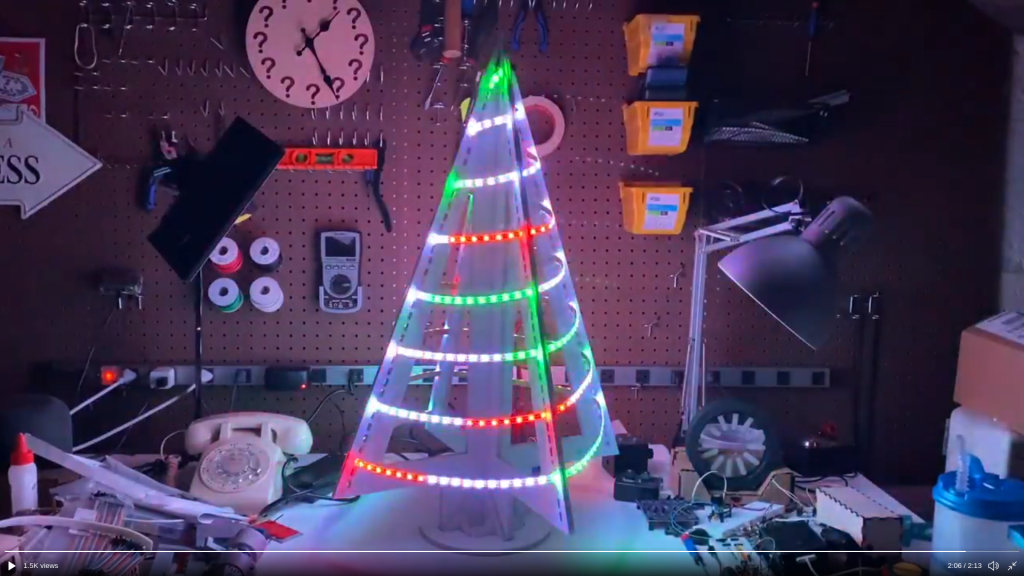
It’s time to celebrate the New Year! There are a ton of great kits and products available on Tindie to get 2021 started on the right foot.
Why not celebrate New Year’s Eve with an awesome and overly sized LED! This novelty Giant LED is ten times the scale model of a regular LED.
If you can’t wait until the clock strikes midnight on New Year’s Eve, why not create a clock so you’ll know exactly when to celebrate! This IV11 VFD Tube Clock DIY Soldering KIT can be purchased as a kit or preassembled and can be used to display the time, date, or Lunar date.
Happy New Year from all of us here at Tindie! We hope the next year is filled with good times and all the projects you could ever want to create!
syzygy-epc901 SYZYGY breakout with an EPC901 CCD + 50MSps ADC
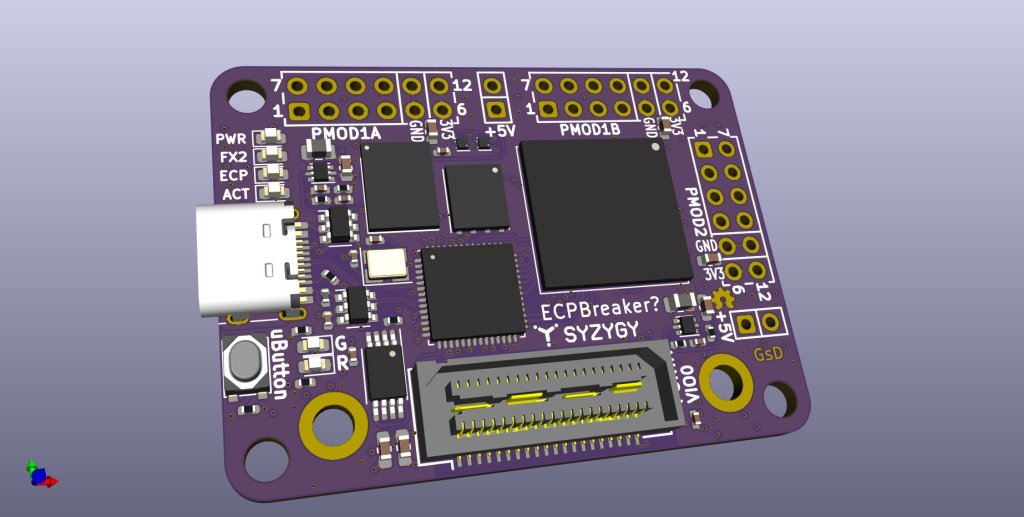
Day 28: ECPBreaker? I'm still not sure about the name.
Another variant of the icebreaker, but with an ECP5, this time it uses an FX2 USB controller, and includes HyperRAM and a SYZYGY connector with adjustable VCCIO.https://t.co/oDLDTol9OLpic.twitter.com/I23INgpPXd
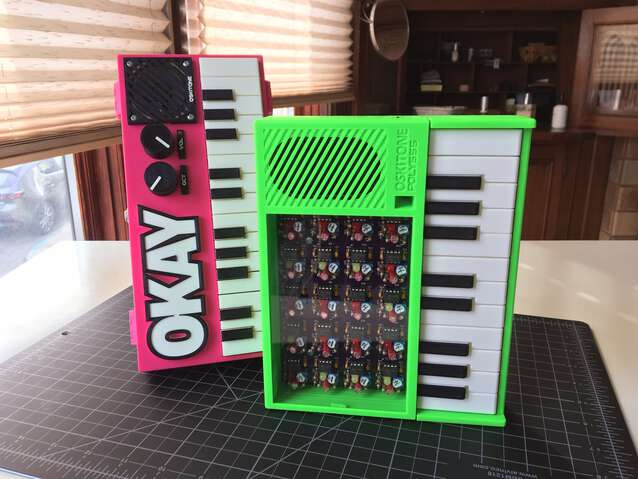
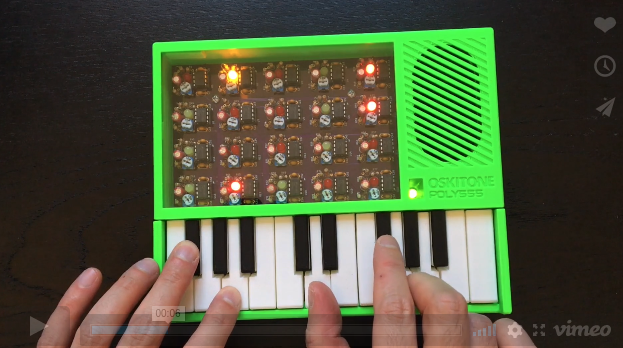
It’s an analog, 20 note polyphonic, square wave synthesizer based on the 555 timer chip. The enclosure and keys are 3D-printed, its models were programmed in OpenSCAD, and its PCB was designed in Kicad.
Designing your own integrated circuits as a one-person operation from your home workshop sounds like science fiction. But 20 years ago, so did rolling your own circuit boards to host a 600 MHz microcontroller with firmware you wrote yourself. Turns out silicon design isn’t nearly as out of reach as it used to be and…
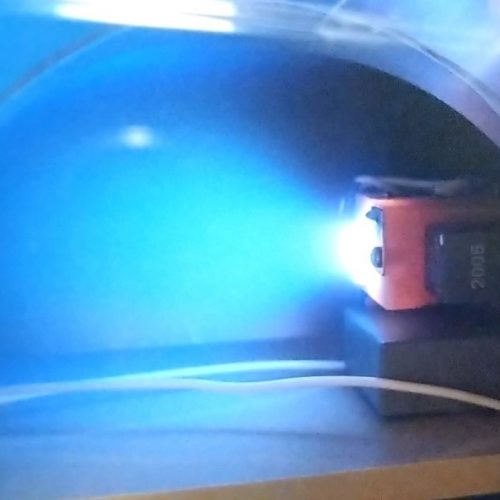
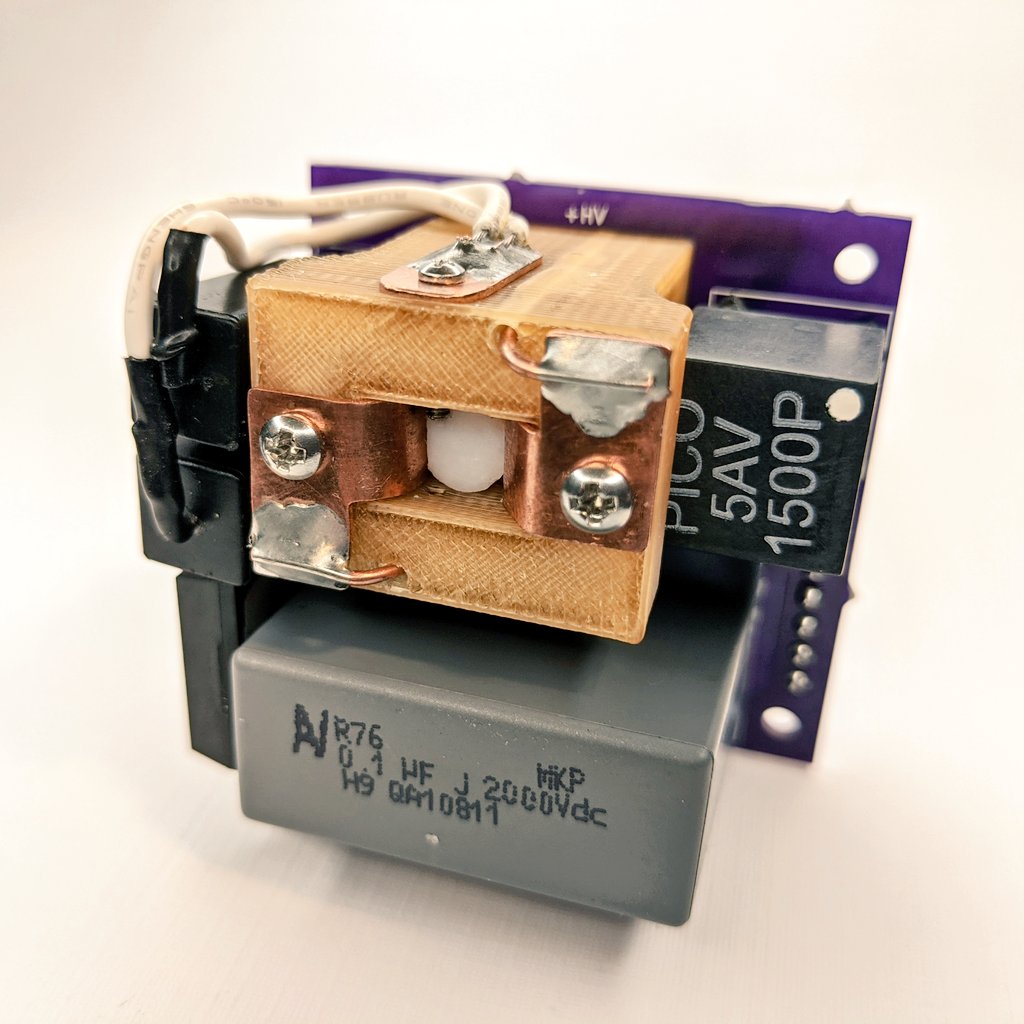
The AIS-EPPT1 Pulsed Plasma Thruster an experimental pulsed plasma thruster design aimed at low-cost, easy to manufacture, and simplified propulsion for Cubesats and PocketQubes. This system takes lessons learned from the original AIS-gPPT3-1C Integrated Propulsion Module and further expands its capabilities to attempt to increase fuel capacity, improve ignition, performance, and ultimately lower PPT cost and simplify manufacturing. The highly compact thruster is small enough for integration with PocketQubes, and can be implemented as a single thruster, cluster, or attitude control for Cubesats.
Applied Ion Systems Patreon is now officially LIVE! Are you a space enthusiast who would like to contribute directly to development of advanced EP from the only official open source electric propulsion program out there? Let's pioneer the field together! https://t.co/Nh9mqkSA4M
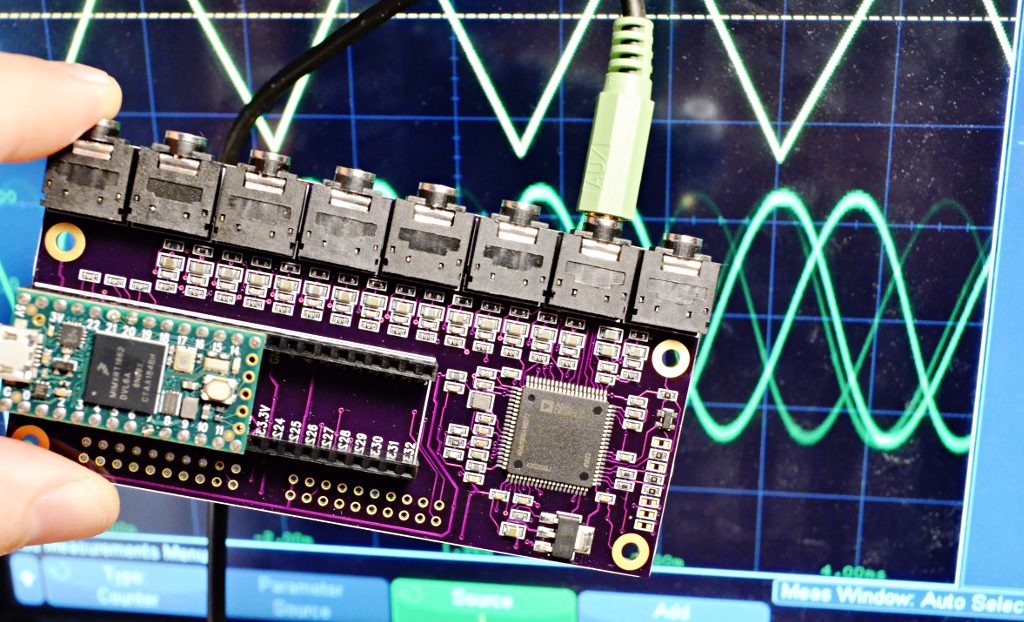
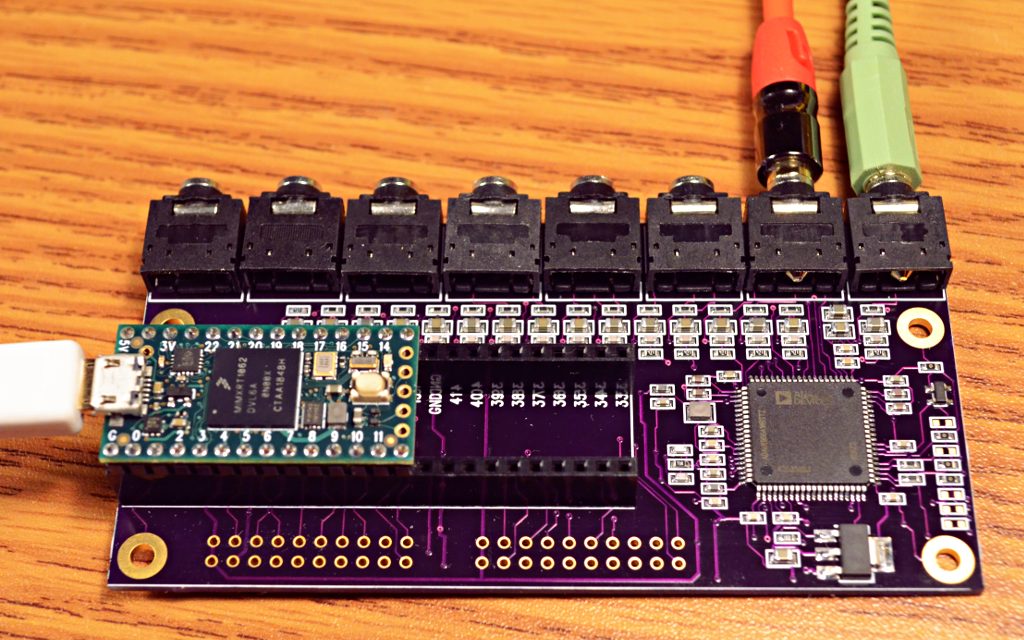
Today I dusted off a 16 channel DAC PCB I had designed on a whim back in March. Fiddled ’til I found settings to make the ADAU1966A spring to life. It’s generating 16 distinct waveforms!
So far this PCB has only been tested with the code below. It does produce 16 different waveforms output with the correct frequencies and waveform shapes. The board seems to work, but no other testing has yet been done (or perhaps by the time you’re reading this, maybe this page is old info….)
This board uses the ADAU1966A chip from Analog Devices. Analog Devices also made an older version of this chip, ADAU1966 without the “A”. It is listed as not recommended for new designs. If you search and find the old chip, don’t worry. Just make sure you’re searching for ADAU1966A with the “A”.
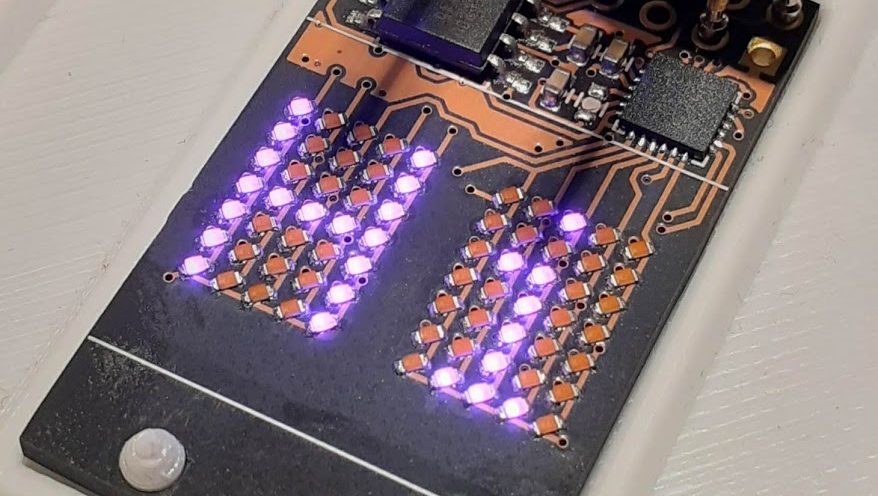
Few things excite a Hackaday staff member more than a glowing LED, so it should be no surprise that combining them together into a matrix really gets us going. Make that matrix tiny, addressable, and chainable and you know it’ll be a hit at the virtual water cooler. We’ve seen [tinyledmatrix]’s work before but he’s back with the COPXIE, a pair of tiny addressable displays on one PCBA.
The sample boards seen at top are a particularly eye catching combination of OSH Park After Dark PCB and mysterious purple SMT LEDs that really explain the entire premise. Each PCBA holds two groups of discrete LEDs each arranged into a 5×7 display. There’s enough density here for a full Latin character set and simple icons and graphics, so there should be enough flexibility for all the NTP-synced desk clocks and train timetables a temporally obsessed hacker could want.
But a display is only as good as it’s SDK, right? The COPXIE is actually designed to be a drop in replacement for a different series of tiny LED matrices, the PIXIE by [Lixie Labs]. To complete the effect the COPXIE runs the same firmware and so has the same feature set. Each module (with two displays) can be controlled with just two pins (data and clock), and chains of more than 12 modules (24 displays) can be strung together. Plus there is a convenient Arduino friendly library which makes control a snap.
To build a COPXIE of your own, check out the schematic linked on the Hackaday.io page, and the layout at the OSH Park share link. Note that it seems like [tinyledmatrix] may not have completely validated these boards, but given there are plenty of photos of them working they seem like a safe bet.
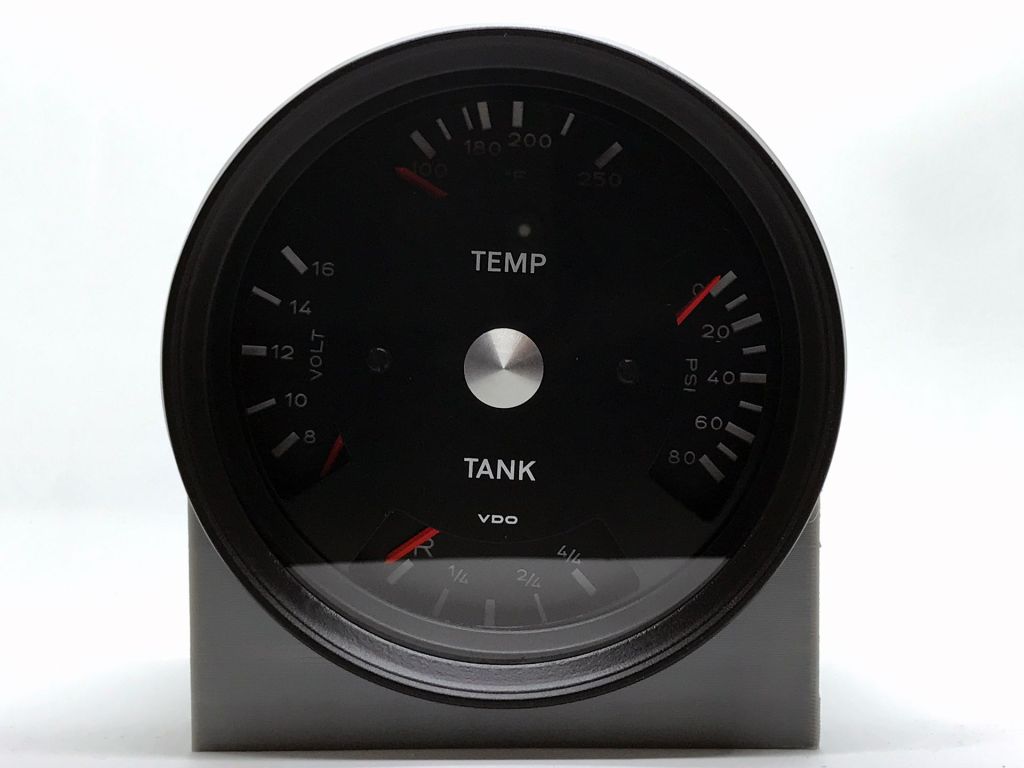
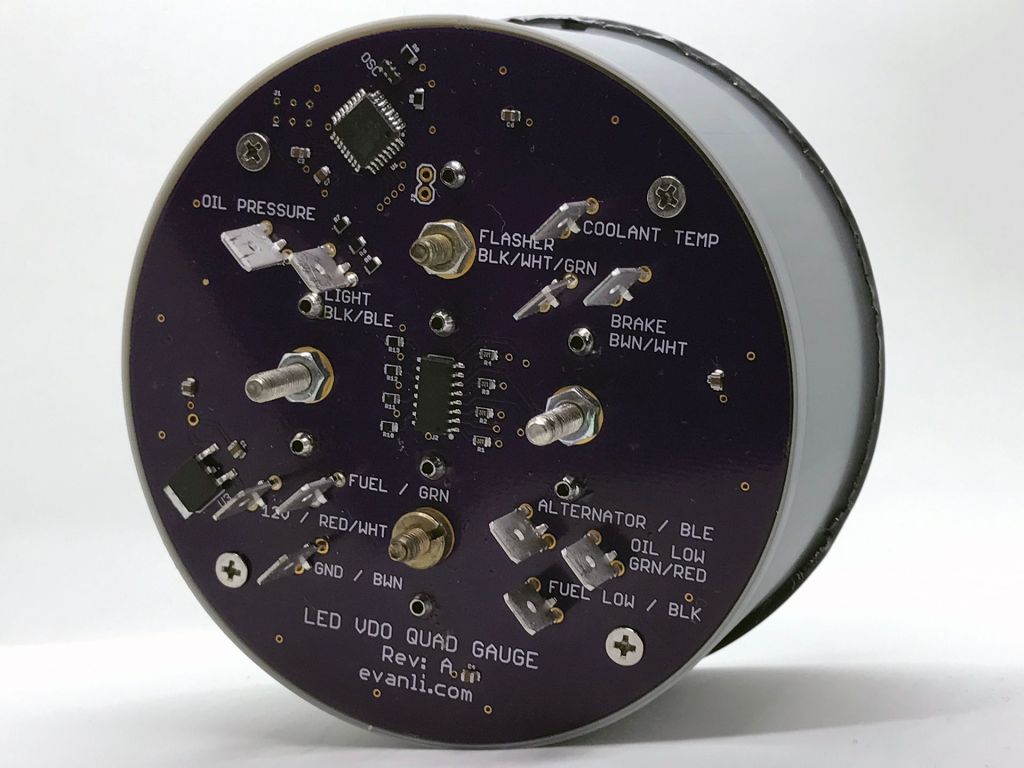
I’ve recently become the co-owner of a 1972 Porsche 914 with a 5.7L LS1 swap. As a result of the shift from air cooled to water cooled, the car required the addition of a gauge for coolant temperature. An oil pressure gauge was also added and the two gauges sat together, mounted on the floor near the shifter. It didn’t look great
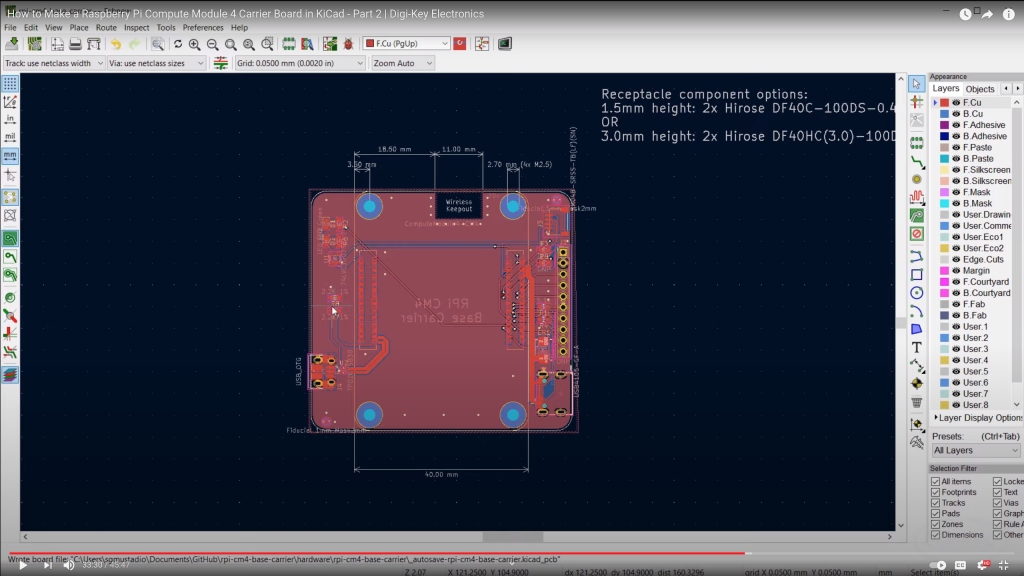
Raspberry Pi released the Compute Module 4 (CM4) in October, which is a single board computer with all of the processing power of the Raspberry Pi 4, but in a tiny form factor! It removes many of the connectors (USB, HDMI, etc.), as the intention is for you to add your own with a custom board and enclosure.
In this series, we’ll show you how to create your own, custom Raspberry Pi CM4 carrier board with KiCad!






 OSH Park