Kicad: Designing With Complex Shapes

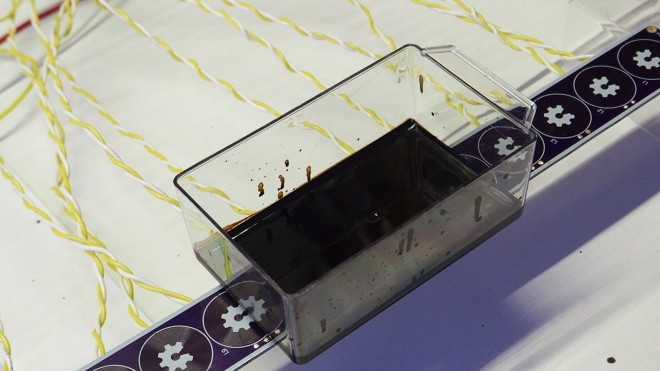
Screenshot from 2018-07-10 11-57-36.png

KiCad presentation by Andrew Sowa at Teardown 2018:

Kicad: Designing With Complex Shapes

While most PCBs can be simple rectangles, sometimes the design requires more complex geometry. EDA tools don’t always make this simple, so we will go over a few KiCad tips to make it easier. In this talk you will learn how to import unique board shapes from Fusion 360, create arbitrary fill zones using images, and embed high-frequency RF filters. We will use multiple software packages to enhance KiCad’s performance beyond its obvious use.

Kicad: Designing With Complex Shapes

Open Source DIY Printers are Alive and Well: What We Saw At ERRF 2018

If you follow the desktop 3D printer market, it probably won’t surprise you to hear that nearly every 3D printer on display at the inaugural East Coast RepRap Festival (ERRF) was made in China. Even Printrbot CEO Brook Drumm had to admit that this was the year his company may finally bite the bullet and begin selling a branded and customized printer built overseas.

When you can get a decent (but let’s be clear, not great) 3D printer for $200 USD, it’s no surprise that American and European manufacturers are having a hard time staying competitive. But not everyone is seduced by low-cost printers. They know they could buy a decent printer for a couple hundred bucks, but for them that’s not the point. Some hackers are just as (if not more) interested in designing and building the machines than they are churning out little plastic boats with the finished product.

Luckily for us, these are also the type of folks who document their builds and make all their collected information and design files available for others under an open source license. Such builders exemplify the true spirit of the RepRap movement, and we’re happy to report that in a sea of imported printers, there were several interesting home built open source printers.

Whether you want to build your own copy of one of these machines, or simply get inspired by some of the ideas their creators had, these machines are physical proof that just because you can order a cheap 3D printer on eBay right now doesn’t mean you have to.

via Open Source DIY Printers are Alive and Well: What We Saw At ERRF 18 — Hackaday

Quote

Hackaday Journal Completes First Review Process, Seeks More Submissions

Congratulations and thank you go to Theodore Yapo for authoring the first paper to complete the peer review process for the Hackaday Journal. You can read the standalone paper here; it will be included in the first volume of the Hackaday Journal officially released later this year. The Hackaday Journal is an open access, peer…

via Hackaday Journal Completes First Review Process, Seeks More Submissions — Hackaday

Quote

Story of a SparkFun AVC Rover

Multi-year adventure of building JRover from scratch, as told by its creator, Jesse Brockmann, on the SparkFun blog:

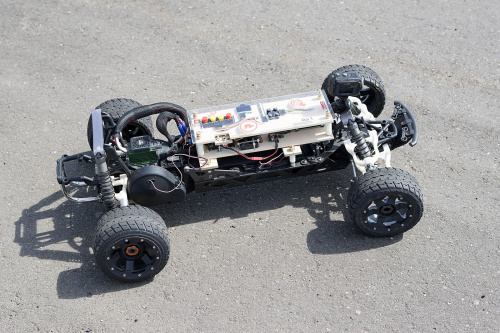
jrover_maxx

Story of a SparkFun AVC Rover

I first started working on my SparkFun AVC rover back in 2011, but I didn’t have a finished rover until 2014. I first heard about the competition on the SparkFun site and thought AVC would be a great challenge – even then I thought self-driving cars would become mainstream. I hope I can provide some useful information for those of you working on or considering making a rover.

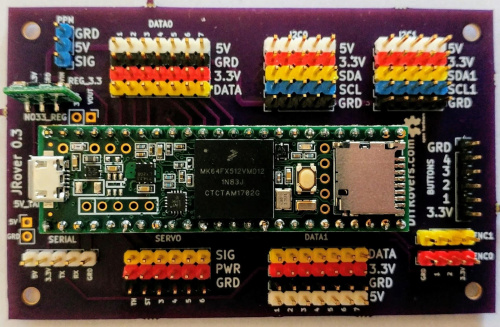
AF1QipM9b33wb7ExsWFRY37hRWSyGgxgLtMqj0JYn48Y_w2048-h1341.jpg

My latest rover uses the following components:

  • Traxxas Slash 4×4 Platinum LCG Truck
  • Anaconda street tires
  • Traxxas RPM sensor
  • RC4WD 35-turn brushed motor
  • Castle ESC
  • 3S 5400mah LiPo
  • Teensy 3.5
  • 2GB+ micro SD card
  • BNO-055 IMU
  • Headers
  • Various jumper wires
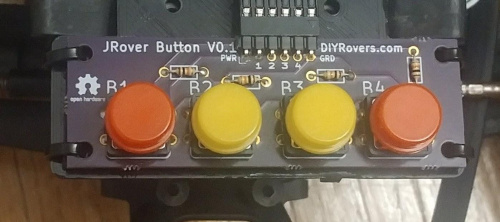
  • Tactile Buttons
  • Custom JRover Baseboard and Button Board
  • Digole 2” LCD display
  • Airplane RC transmitter and receiver with PPM output
  • USB battery bank

AF1QipMML0RihRjOkCh5yyc9Ch2gdjUm6gL86g4yYcWw_w1397-h623

Story of a SparkFun AVC Rover

Video Quick-Bit: The Things That Move Robots

Magenta Strongheart returns for a look at some of the coolest robotic entries from this year’s Hackaday Prize. Each of these answered the challenge for modular designs that will help supercharge new robot projects. We think that cheap and abundant motor designs are poised to revolutionize robotics and several of the entries thought along those…

via Video Quick-Bit: The Things That Move Robots — Hackaday

Quote