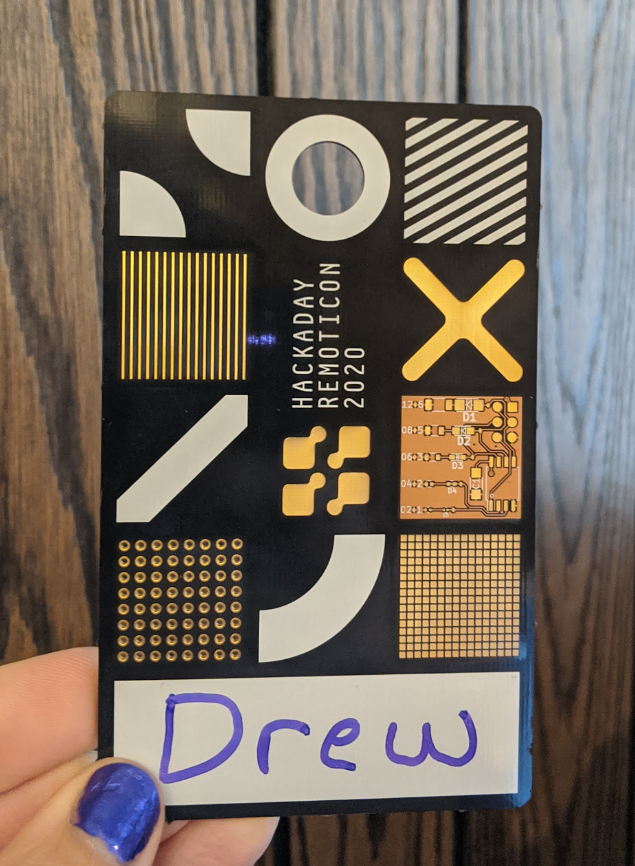
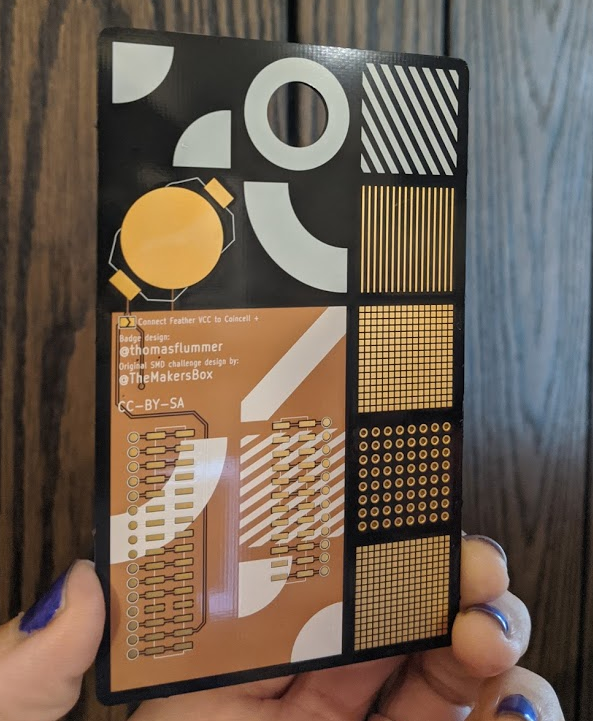
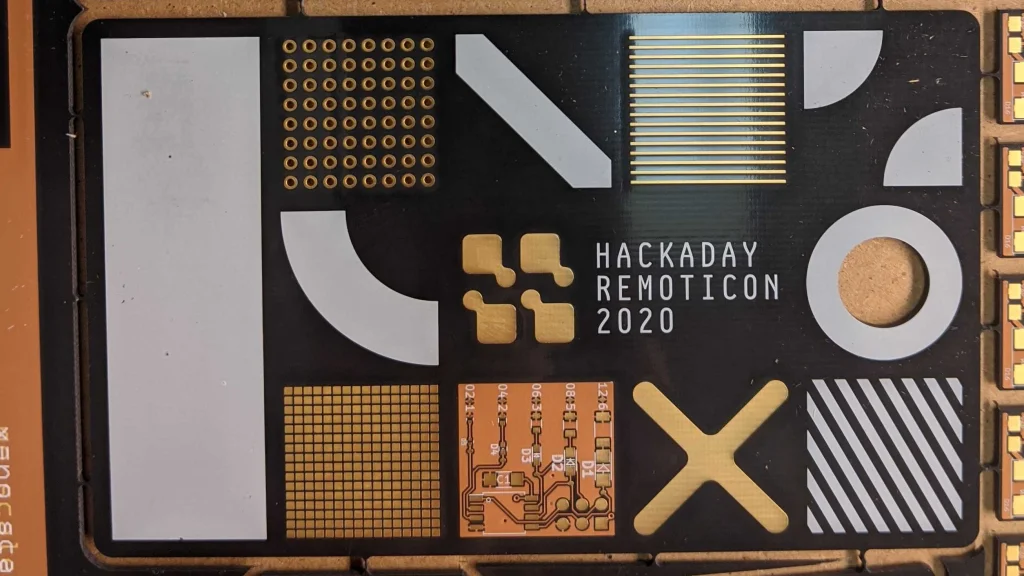
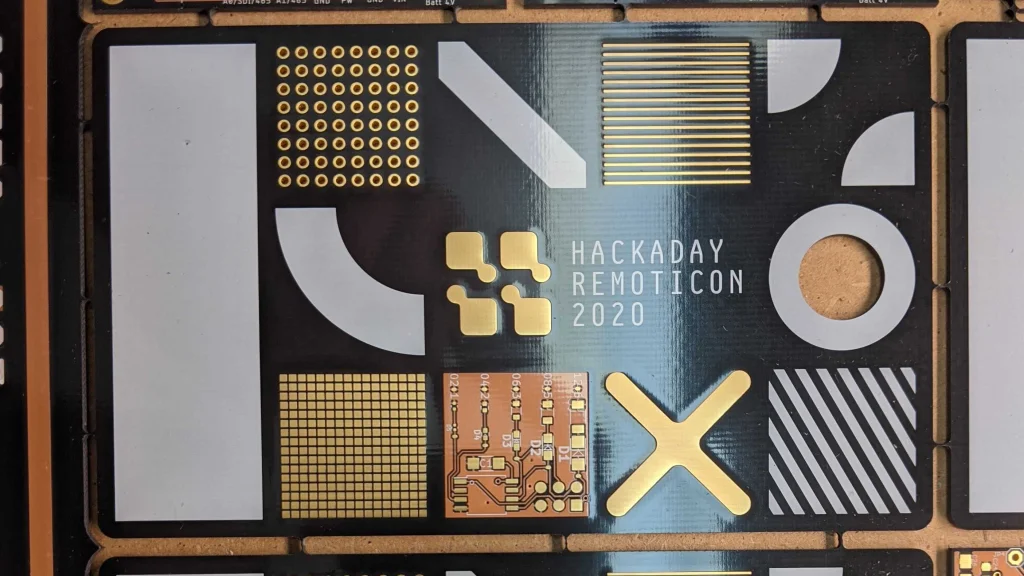
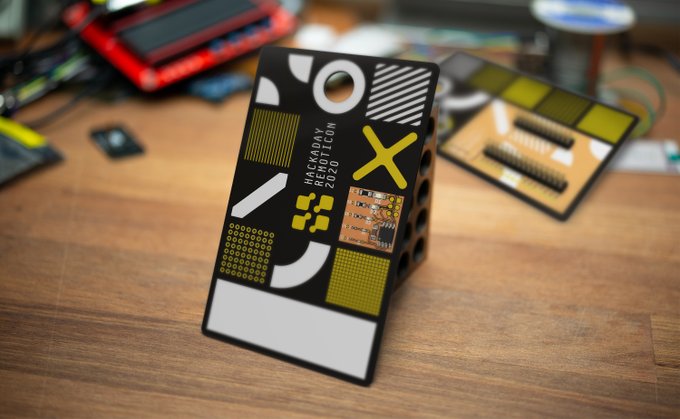
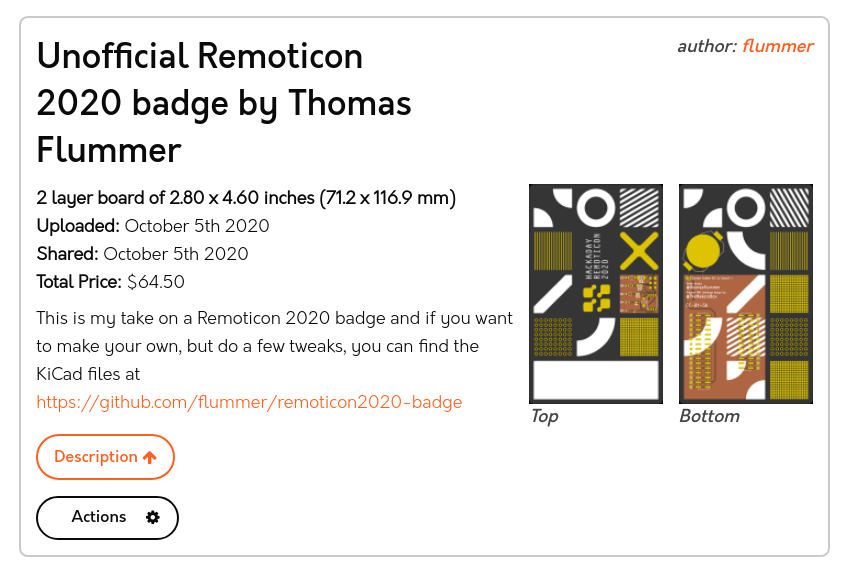
The annual Hackaday Supercon is taking place as Remoticon this year on November 6th to 8th. The talented Thomas Flummer has design a PCB badge based on the SMD challenge that can be further customized in KiCad.
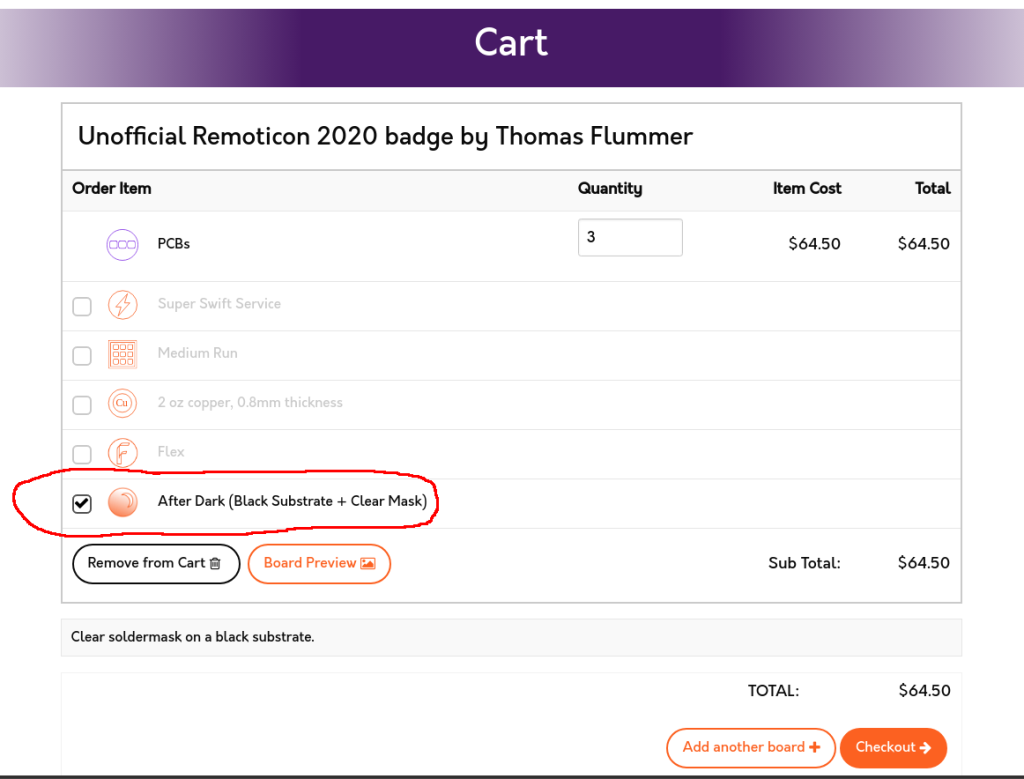
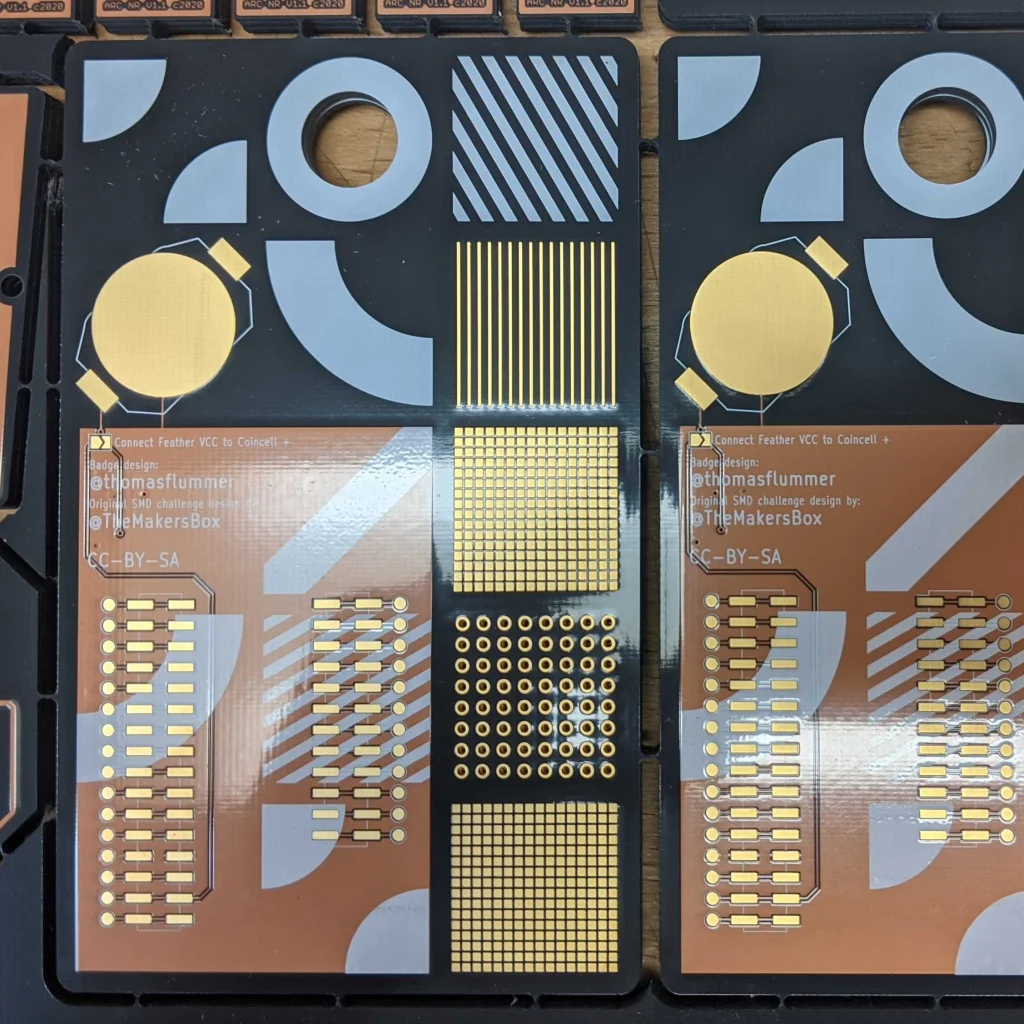
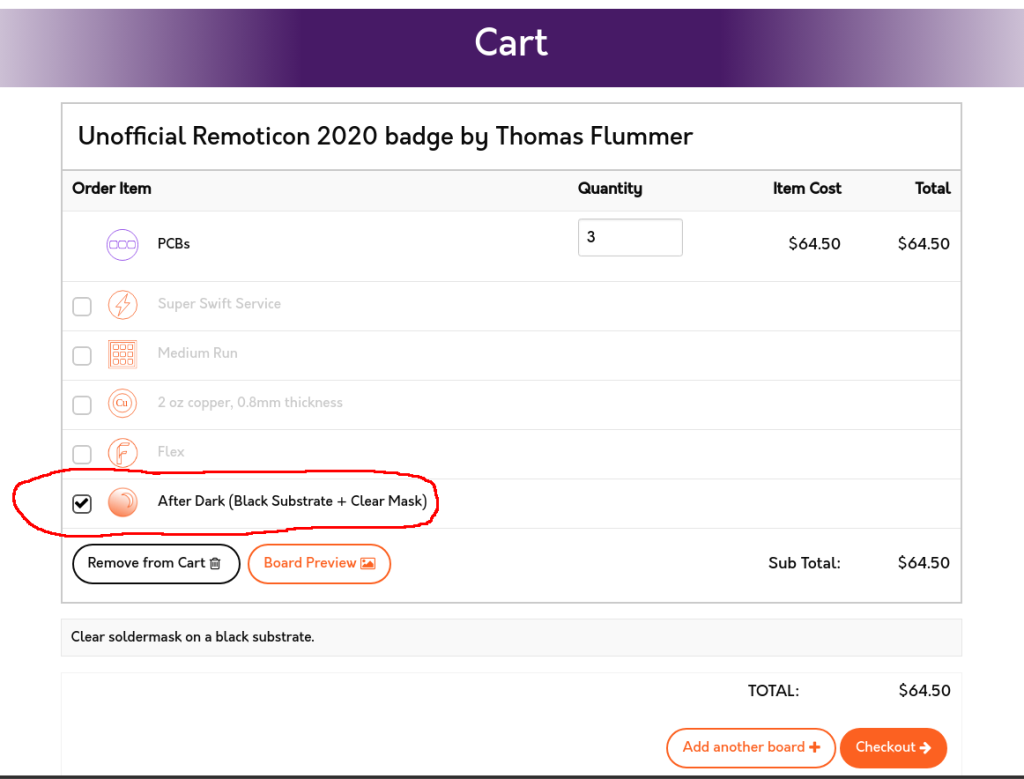
The PCBs are in from @OSHPark with very sharp silkscreen, that aligns really nice with the copper. I also got parts from @DigiKey for the soldering challenge on the front and I will try that tomorrow. Or is that cheating? #badgelifepic.twitter.com/mGDZmK0TYx
Remoticon is a fully virtual hardware conference with 20+ workshops, 2 keynote talks, and 8 different demos. Join the weekend fun from wherever you are. Remoticon will have instructors teaching workshops from all across the globe, from Australia to India, from North America to the Netherlands.
Meeting virtually provides the perfect platform for more space, more people, and more options. Attend demos about Design Methodology, Robots, Zero to ASIC, Edge-Based Voice AI, and other awesome topics. Join workshops covering topics such as Reverse Engineering, Tiny ML, How to Hack a Car, Glowy Origami, and so many more.
In need of some creative inspiration and socialization with fellow hackers? Come hang out Friday night for a community Bring-A-Hack! There’s even a virtual Hackaday SMD Challenge for those who want to learn and those who want to put their skills to the test.
You’ll never guess the best part. I’m sure you’re thinking, “how could this get any better?” Remoticon Main Track tickets are free! You can also donate with a pay-as-you-wish ticket. Donations will go to charities that feed, house, or educate people.
Attendees only pay $10 to join a workshop. Some workshops do require hardware, which may include things you already have sitting on your workbench.
So the real question is what workshops and demos are you going to pack into your schedule the weekend of November 6-8th? We can’t wait to see you all there!
The annual Hackaday Supercon is taking place as Remoticon this year and the talented Thomas Flummer has design a PCB badge based on the SMD challenge that can be further customized in KiCad!
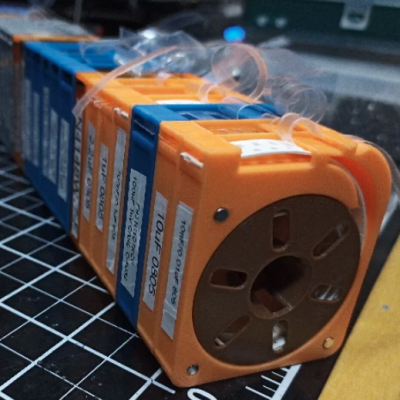
[Kadah]’s solution for storing short tapes of SMT parts is as attractive as it is clever. The small 3D-printed “tape reels” can double as dispensers, and stack nicely onto each other thanks to the sockets for magnets. The units come in a few different sizes, but are designed to stack in a consistent way.
We love the little touches such as recessed areas for labels, and the fact that the parts can print without supports (there are a couple of unsupported bridges, but they should work out fine.) Also, the outer dimensions of the units are not an accident. They have been specifically chosen to nestle snugly into the kind of part drawers that are a nearly ubiquitous feature of every hardware hacker’s work bench.
STLs are provided for handy download but [Kadah] also provides the original Fusion 360 design file, with all sizes defined as easily-customized parameters. In addition, [Kadah] thoughtfully provided each model in STEP format as well, making it easy to import and modify in almost any 3D CAD program.
If we had to make a guess at the single piece of electronic bench equipment owned by the highest proportion of Hackaday readers, it would not be a budget oscilloscope from Rigol, nor would it be a popular portable soldering iron like the TS100. Instead we’re guessing that it’s a multimeter, and not even the most accomplished one.
The DT830 is a genericised Chinese-manufactured 3.5 digit digital multimeter that can be had for an astonishingly low price. Less than a decent hamburger gets you an instantly recognisable plastic case with a chunky rotary range selector switch, and maybe a socket for some kind of transistor or component tester. Make sure that there is a 9 volt battery installed, plug in the pair of test leads, and you’re in business for almost any day-to-day electrical or electronic measurement. They’ve been available in one form or another for decades and have been the subject of innumerable give-aways and loss-leader offers, so it’s a reasonsble guess that you’ll have one somewhere. I have three as far as I know, they make great on-the-go instruments and have proved themselves surprisingly reliable for what they are.
The weekend will be packed with virtual activities, and most of them are hands-on workshops that you can participate in from the comfort of your home, lab, garage, basement, lair, or other socially distanced location of your choosing.
The news today is that everyone should register for Remoticon right now, and that we’re opening up registration for about half of the total workshops. More details on the remaining workshops, demos, and some special events will be available in a future article.
You wake up in the morning, and check Hackaday over breakfast. Then it’s off to work or school, where you’ve already had to explain the Jolly Wrencher to your shoulder-surfing colleagues. And then to a hackspace or back to your home lab, stopping by the skull-and-cross-wrenches while commuting, naturally. You don’t bleed red, but rather #F3BF10. It’s time we talked.
The Hackaday writing crew goes to great lengths to cover all that is interesting to engineers and enthusiasts. We find ourselves stretched a bit thin and it’s time to ask for help. Want to lend a hand while making some extra dough to plow back into your projects? We’re looking for contributors to write a few articles per week and keep the Hackaday flame burning.
Contributors are hired as private contractors and paid for each article. You should have the technical expertise to understand the projects you write about, and a passion for the wide range of topics we feature. You’ll have access to the Hackaday Tips Line, and we count on your judgement to help us find the juicy nuggets that you’d want to share with your hacker friends.
One example article written in the voice of Hackaday. Include a banner image, at least 150 words, the link to the project, and any in-links to related and relevant Hackaday features. We need to know that you can write.
Details about your background (education, employment, interests) that make you a valuable addition to the team. What do you like, and what do you do?
Links to your blog/project posts/etc. that have been published on the Internet, if any.
Remoticon is Hackaday’s November con (Nov 6 – 8), and it’s all about hardware, workshops, Hackaday Prize, and a difficult soldering challenge. We’re putting together a Hackaday Community video for the Remoticon opener and you should definitely be in it.
Turn your phone to landscape view, go to a quiet place that’s outside, and tell us your name, where you are in the world, and what you’re working or procrastinating on. Your video should be 30 seconds or less. Then send your video to [email protected].
We can’t wait to see you on the small screen – we miss all of your faces.
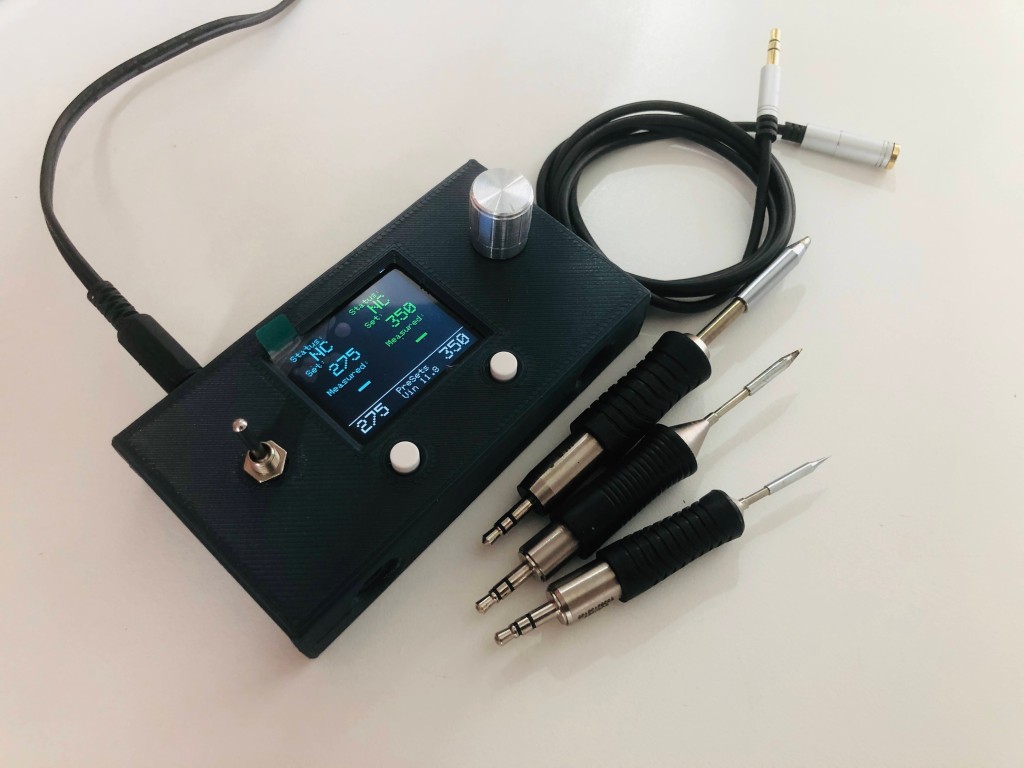
Soldering irons are a personal tool. Some folks need them on the cool side, and some like it hot. Getting it right takes some practice and experience, but when you find a tip and temp that works, you stick with it. [Riccardo Pittini] landed somewhere in the middle with his open-source soldering station, Soldering RT1. When you start it up, it asks what temperature you want, and it heats up. Easy-peasy. When you are ready to get fancy, you can plug in a second iron, run off a car battery, record preset temperatures, limit your duty-cycle, and open a serial connection.
The controller has an Arduino bootloader on a 32u4 processor, so it looks like a ProMicro to your computer. The system works with the RT series of Weller tips, which have a comprehensive lineup. [Riccardo] also recreated SMD tweezers, and you can find everything at his Tindie store.
Soldering has a way of bringing out opinions from novices to masters. If we could interview our younger selves, we’d have a few nuggets of wisdom for those know-it-alls. If ergonomics are your priority, check out TS100 3D-printed cases, which is an excellent iron, in our opinion.
Back in April we challenged hackers to make the best of a tough situation by spending their time in isolation building with what they had laying around the shop. The pandemic might have forced us to stay in our homes and brought global shipping to a near standstill, but judging by the nearly 300 projects that were ultimately entered into the Making Tech At Home Contest, it certainly didn’t stifle the creativity of the incredible Hackaday community.
While it’s never easy selecting the winners, we think you’ll agree that the Inverse Thermal Camera is really something special. Combining a surplus thermal printer, STM32F103 Blue Pill, and OV7670 camera module inside an enclosure made from scraps of copper clad PCB, the gadget prints out the captured images on a roll of receipt paper like some kind of post-apocalyptic lo-fi Polaroid.









 OSH Park