October is right around the corner, which means it’s time to get ready for Open Hardware Month! This year with the theme is Label and Certify to the spotlight on two ways to help the world know your hardware is Open Source:
Inspired by our Executive Director Alicia Gibb, and created by board member Jeffrey Yoo Warren, the Open Hardware Facts Generator helps you declare the licenses used in your project using a format similar to the US Nutrition Facts Label. Listing your licenses in one prominent place (such as the README of your repository) helps users immediately know what they can and can’t do with your source, rather than having to browse through individual files.
The OSHWA Certification continues to grow, with almost 1,000 projects from over 40 countries! If you’re not yet familiar, the certification program provides a way for consumers to immediately recognize hardware whose meaning of “Open” conforms to the OSHW Definition. It also provides a directory for OSHW creators, which stands as evidence that your product is in compliance with the OSHW Definition.
Hosting and Joining OHM Events
We invite individuals and companies alike to host events relating to the theme, or supporting Open Hardware more generally. Unlike previous years, we expect most events to be virtual due to COVID-19. Thankfully, both labeling and certifying can be done from home! If you choose to host an in-person event, we expect you to follow all local health guidelines to help keep our community safe. Find what you need to plan an OHM event at the OHM website.
Looking for an OHM event to join? As events are submitted and approved, they’ll be listed on the OHM website as well. For virtual events, we’ll also list the online platform being used and the event’s time zone.
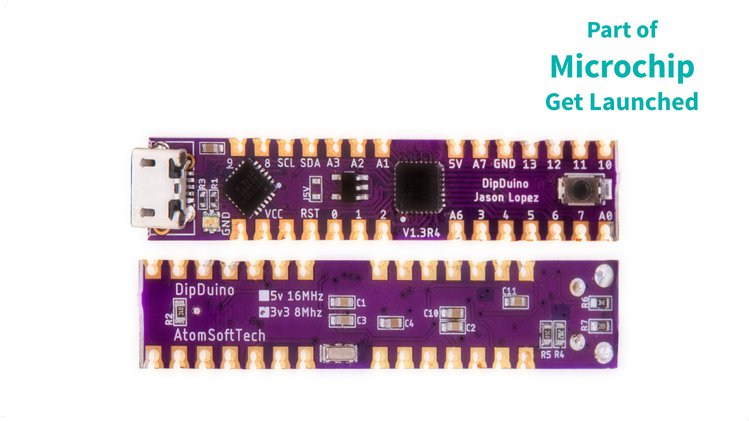
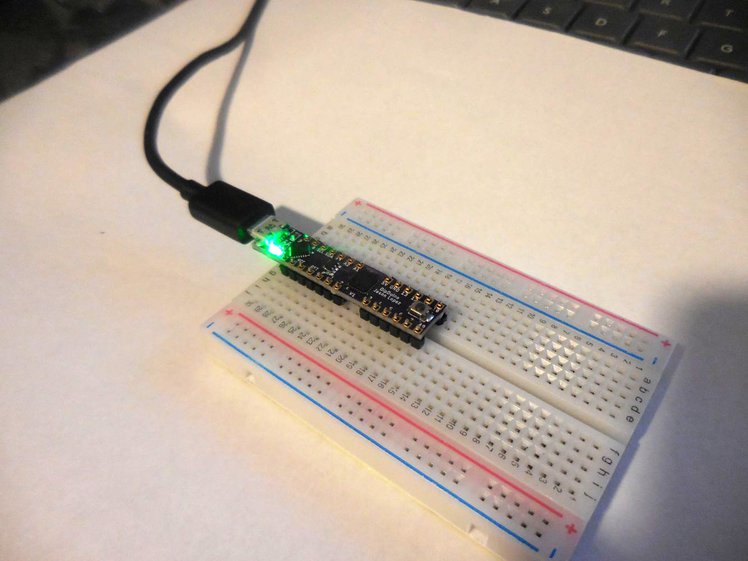
DipDuino is an Arduino clone that’s really small, even simpler to use, and designed for clean use with breadboards. It solves the problem of needing to jump wires from an external board to a breadboard, as well as the need to fit a PCB in a tight spot. Having the entire Arduino on a breadboard (including programmer) allows for easier transport and less chance of something being pulled off. Being so small allows it to fit inside a range of enclosures and odd places.
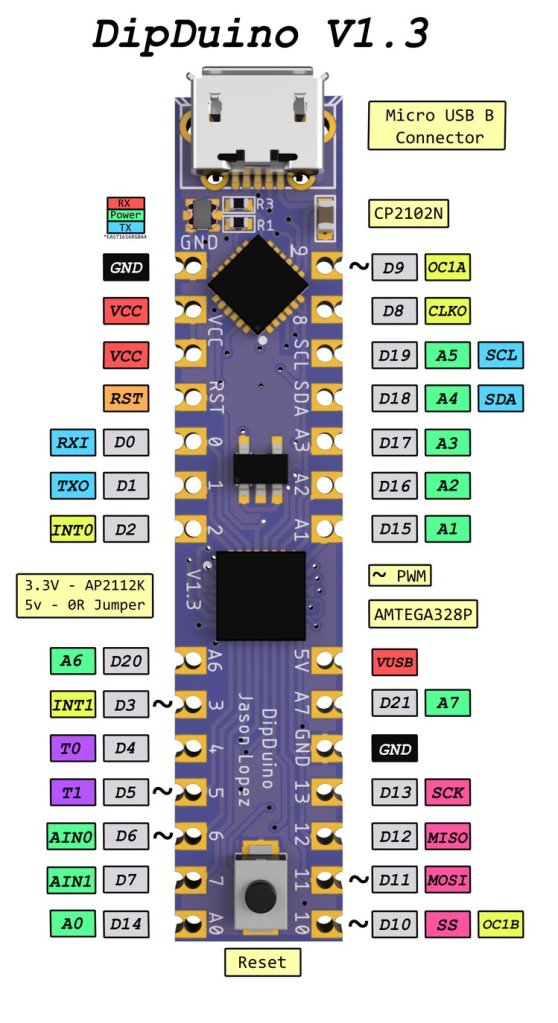
Just like the Arduino Pro Mini, you get access to all the pins possible; but DipDuino is presented in an easier-to-use package and with a built-in programmer. Not only is the package smaller, but the castellated holes allow you to use it a surface mount type of PCB as well.
21 GPIO broken out to standard breadboard-pitch holes as well as castellated holes for surface-mounting
USB for programming and USB-to-UART applications
EAST1616RGBA4 RGB LED for power/UART
Supports Arduino IDE:
Board set as Arduino Pro or Pro Mini
Free Up More Space on Your Breadboard
It’s annoying to always have jump wires from an Arduino to a breadboard for testing. Existing alternatives, like the Arduino Mini and Pro do not have built-in programmers and they do not fit nicely on a breadboard. Just about all Arduino clones that were breadboard-able are huge and take up way too many rows of the breadboard itself.
In general, the cost of electronic components and the tools used to fiddle with them have been dropping steadily over the last decade or so. But there will always be bargain-hunting hackers who are looking to get things even cheaper. Case in point, hot air rework stations. You can pick up one of the common 858D stations for as little as $40 USD, but that didn’t keep [MakerBR] from creating an Arduino controller that can be used with its spare handles.
Now to be fair, it doesn’t sound like price was the only factor here. After all, a spare 858D handle costs about half as much as the whole station, so there’s not a lot of room for improvement cost-wise. Rather, [MakerBR] says the Arduino version is designed to be more efficient and reliable than the stock hardware.
The seven wires in the handle connector have already been mapped out by previous efforts, though [MakerBR] does go over the need to verify everything matches the provided circuit diagrams as some vendors might have fiddled with the pinout. All the real magic happens in the handle itself, the controller just needs to keep an eye on the various sensors and provide the fan and heating element with appropriate control signals. An Arduino Pro Mini is more than up to the task, and a custom PCB makes for a fairly neat installation.
Availability: Depending on availability, this product might take longer than usual to ship. (Up to three weeks).
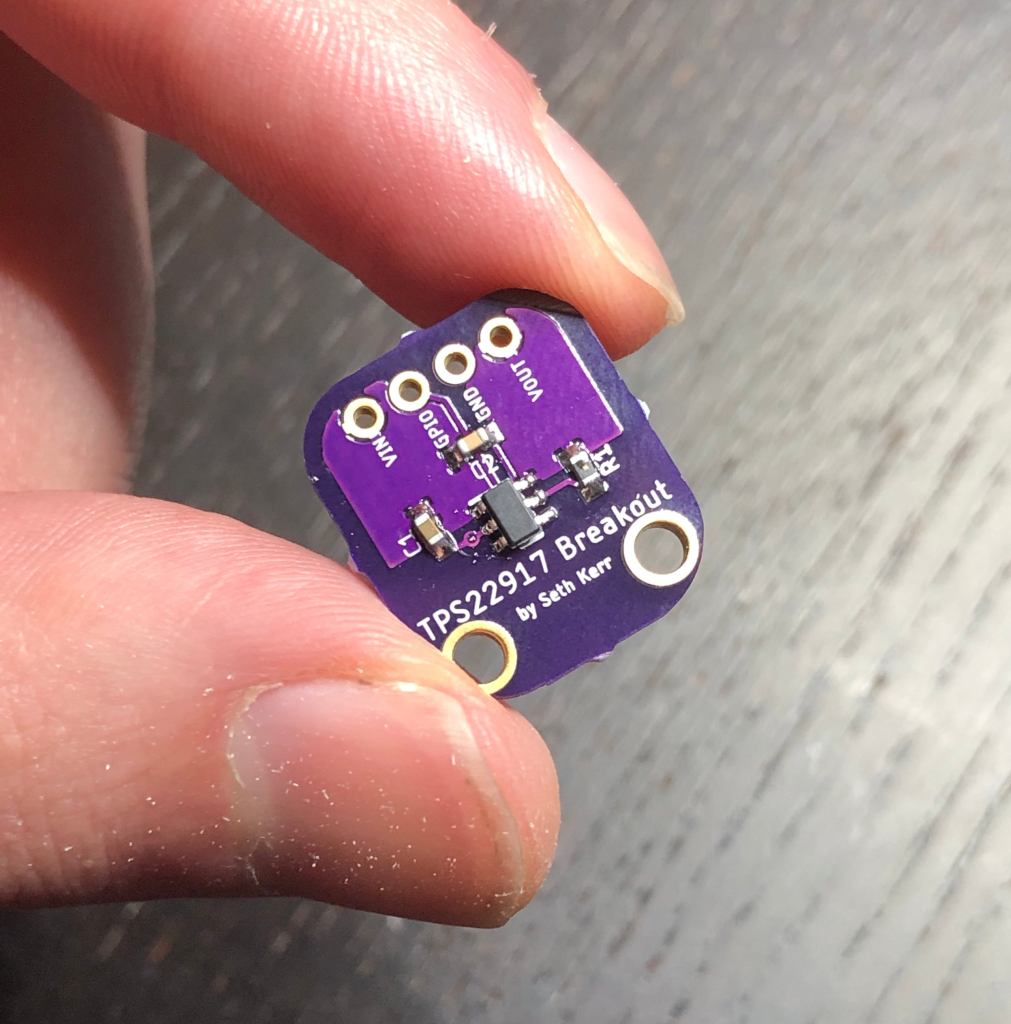
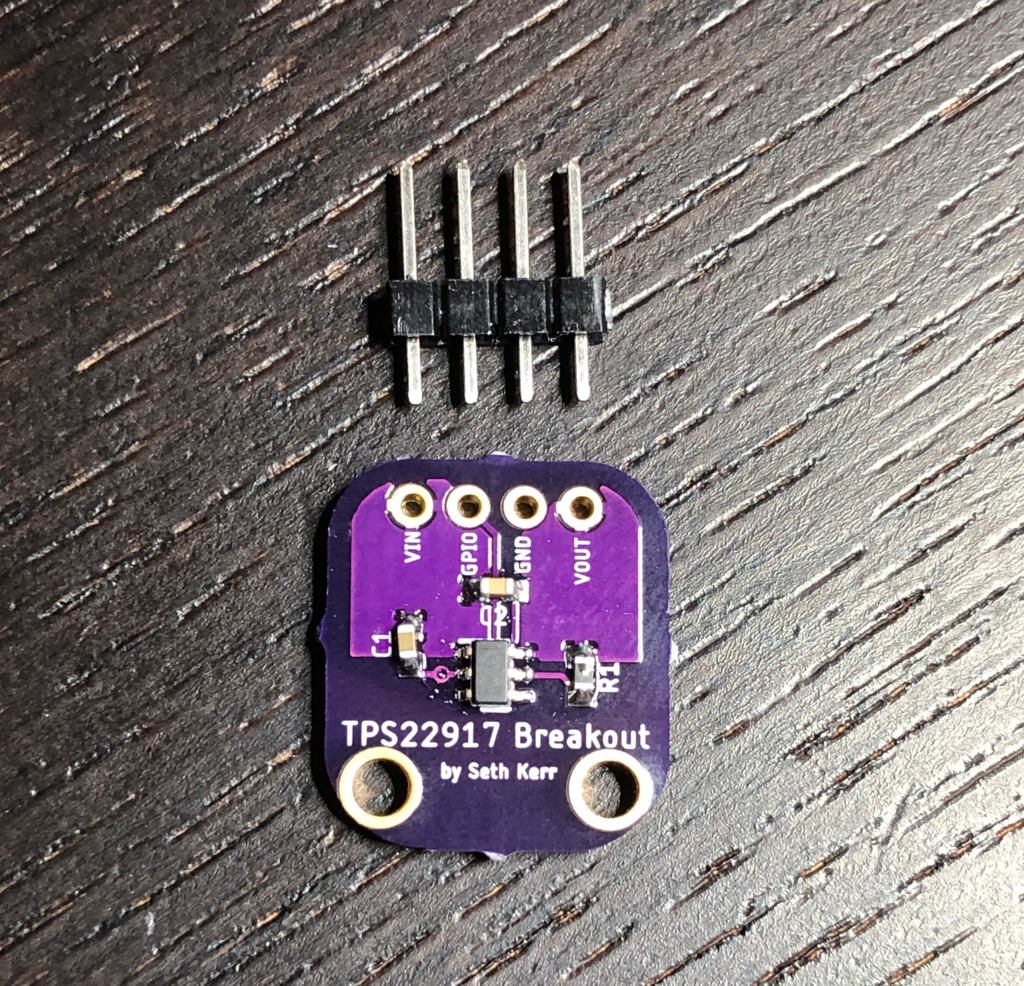
Easily turn your project into a lower power system with the TPS22917 power switch and load driver from Texas Instruments, delivered on an easy to use breakout.
This breakout enables you to easily create a GPIO controlled load switch to ensure you power components when you need them.
After a successful first year of KiCon in 2019, we decided to change venues. We were very excited to hold the conference at CERN, a major contributor to the KiCad project. However, Coronavirus / COVID-19 changed a lot of plans, including ours.
We will be hosting a short program on October 3rd. The key focus will be a developer session, where members of the community can hear about the changes to the upcoming version 6 software, and ask questions directly to the developers. Further planning details to follow.
On October 3, join @Chris_Gammell, the KiCad lead developers, packagers and librarians for a live discussion of KiCad version 6. We'll take your questions at hashtag #AskKiCadV6, and demo some new features.
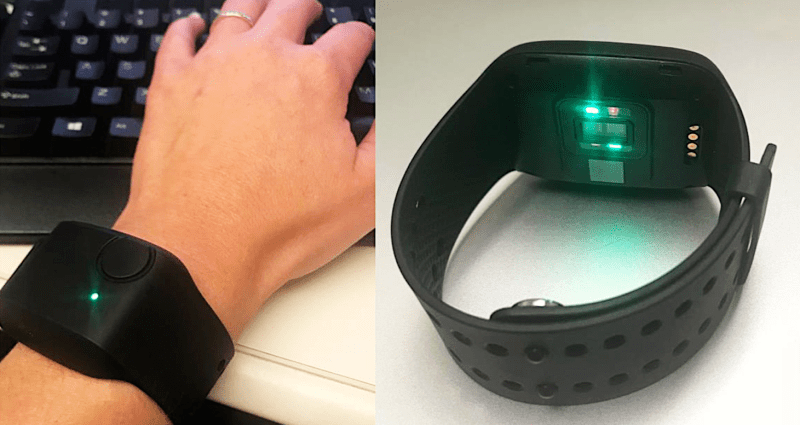
With wearables still trying to solidify themselves in the consumer health space, there are a number of factors to consider to improve the reliability of such devices in monitoring biometrics. One of the most critical such parameters is the sampling rate. By careful selection of this figure, developers can minimize errors in the measurement, preserve power, and reduce costs spent on data storage. For this reason, [Brinnae Bent] and [Dr. Jessilyn Dunn] wanted to determine the optimal sampling rate for wrist-worn optical heart rate monitors. We’ve shared their earlier paper on analyzing the accuracy of consumer health devices, so they’ve done a lot of work in this space.
The results of their paper probably don’t surprise anyone. The lower the sampling rate, the lower the accuracy of the measurement, and the higher the sampling rate the more accurate the measurement when compared to the gold standard electrocardiogram. They also found that metrics such as root mean square of successive differences (RMSSD), used for calculating heart rate variability, requires sampling rates greater than 64 Hz, the nominal sampling rate of the wearable they were investigating and of other similar devices. That might suggest why your wearable is a bit iffy when monitoring your sleeping habits. They even released the source code for their heart rate variability analysis, so there’s a nice afternoon read if you were looking for one.
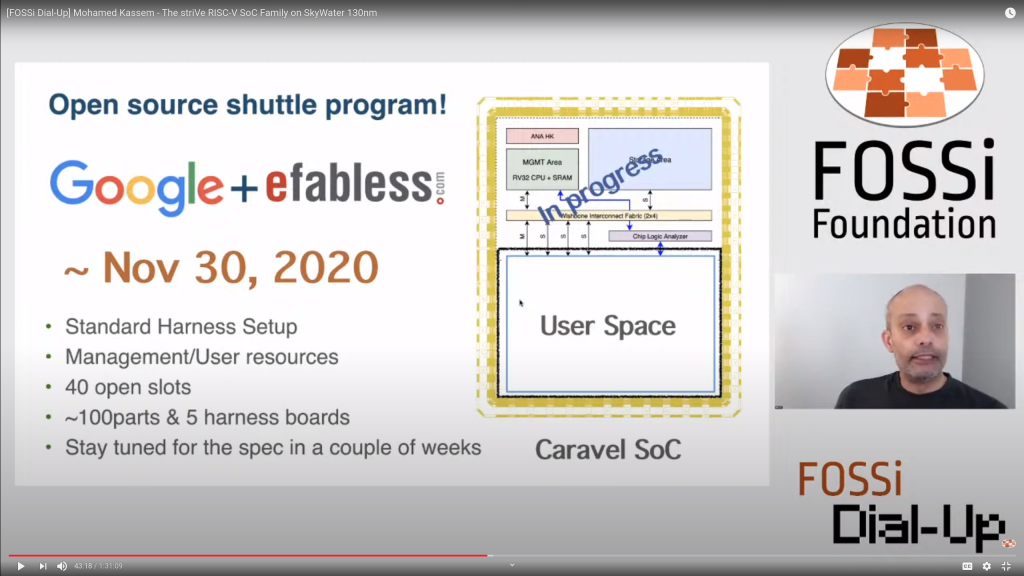
For the first time in the history of the semiconductor industry it is possible to design, verify, manufacture Systems-on-Chip (SoC)’s that have been completely developed using an open source process technology, open source IP and open source design automation environment.
In a collaborative effort with Google and SkyWater, efabless’ team has designed and implemented the striVe SoC family using SkyWater’s SKY130 130nm process, efabless’ OpenLANE RTL2GDS no-human-in-the-loop SoC compiler and several key FOSS components including standard cell and IO libraries from SkyWater and OSU, Dual port SRAM created using OpenRAM, PicoRV32 RISC-V CPU and future versions that will include open source eFPGA blocks – all of them are available under the Apache 2.0 license.
Mohamed will present the striVe open source SoC family with its 6 configurations which will be publicly released to the design community as concrete designs currently on their way to manufacturing. Being truly FOSS and foundry-enabled, the striVe SoC family will serve as physical demonstrators and be the seed for countless community-defined and designed SoC’s stretching the limits of innovation and to serve select commercial markets.SHOW LESS
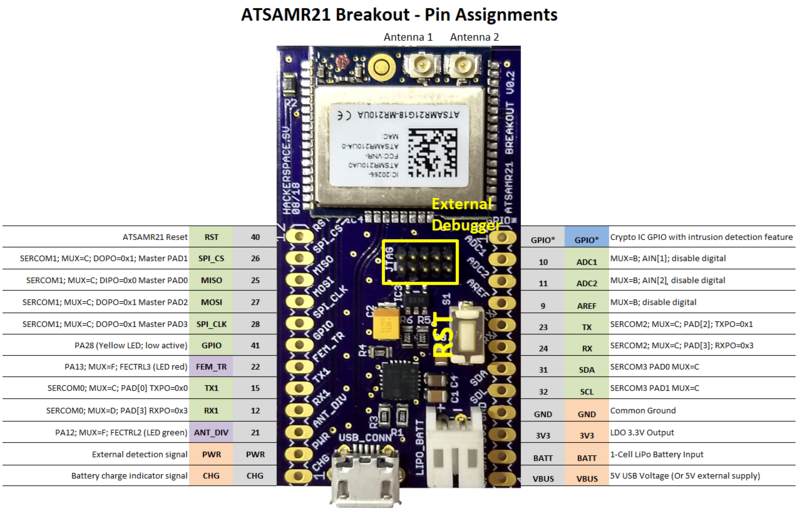
The HSSV ATSAMR21 Breakout is an open source, RIOT OS-compatible board designed to accelerate the deployment of IEEE 802.15.4-based networks on the 2.4GHz band: https://t.co/6WXG3LpAlxpic.twitter.com/hN8AxZHO2K
I’ve been playing a lot of animal crossing and as anyone that’s played it its quite rare to get a meteor shower, to wish upon a star you need to press A when you see one without anything in your hand. This got me thinking about setting up a servo to physically press the button but then I had a better idea. Join me below to see what is was





 OSH Park