As you dive deeper into the world of electronics, a good oscilloscope quickly is an indispensable tool. However, for many use cases where you’re debugging low voltage, low speed circuits, that expensive oscilloscope is using only a fraction of its capabilities. As a minimalist alternative for these use cases [fhdm-dev] created Scoppy, a combination of firmware for the Raspberry Pi Pico and an Android app to create a functional oscilloscope.
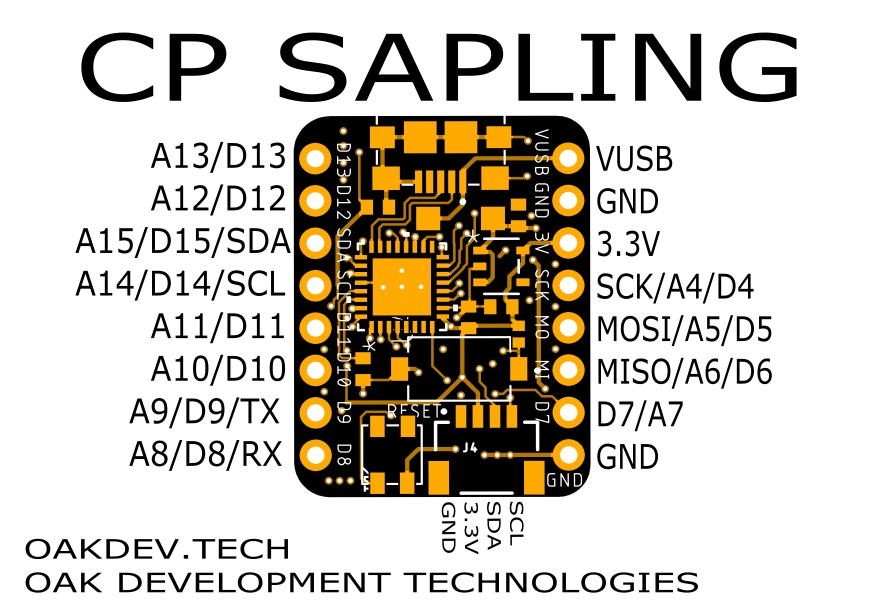
Bring your small projects to life with this SAMD21 dev board that is perfect for running CircuitPython:
A small but powerful SAMD21E18A powered micro dev board designed to be easy to use with direct support for Circuit Python! Get started with i2c projects using the onboard STEMMA/QWIIC connector or easy access to SPI pins and more.
The 5V power in is protected by a Schottky diode allowing up to 500mA of current, as well as a 3.3V pin which can sink up to 500mA between the microcontroller and connected devices.
This board also features a comfortable and easy to press reset button with smooth tactile action.
[Kerry Wong] isn’t afraid to get his hands dirty, and is always more than willing to open things up and see what makes them tick. This time, he reviews and tears down the Topshak LW-3010EC programmable DC power supply, first putting the unit through its paces, then opens it up to see how it looks on the inside.
The Topshak LW-3010EC is in a family of reasonably economical power supplies made by a wide variety of manufacturers, which all share many of the same internals and basic construction. This one is both programmable as well as nice and compact, and [Kerry] compares and contrasts it with other power supplies in the same range as he tests the functions and checks over the internals.
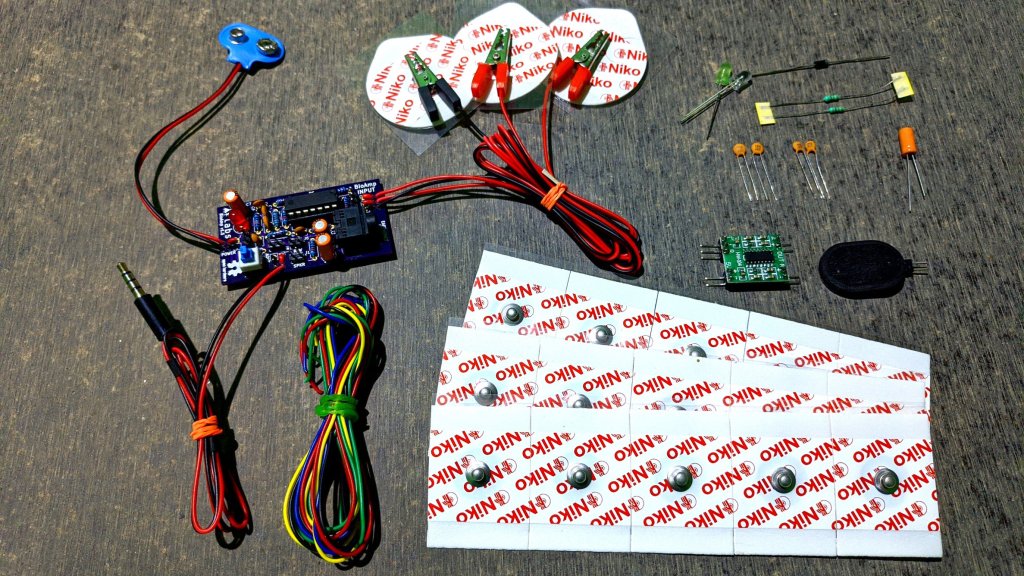
BioAmp v1.5 is a single chip Bio-potential amplifier for recording any Bio-potential signal non-invasively. It’s compatible with Backyard Brains Spike Recorder, which you can use to record and visualize all the Bio-potential signals.
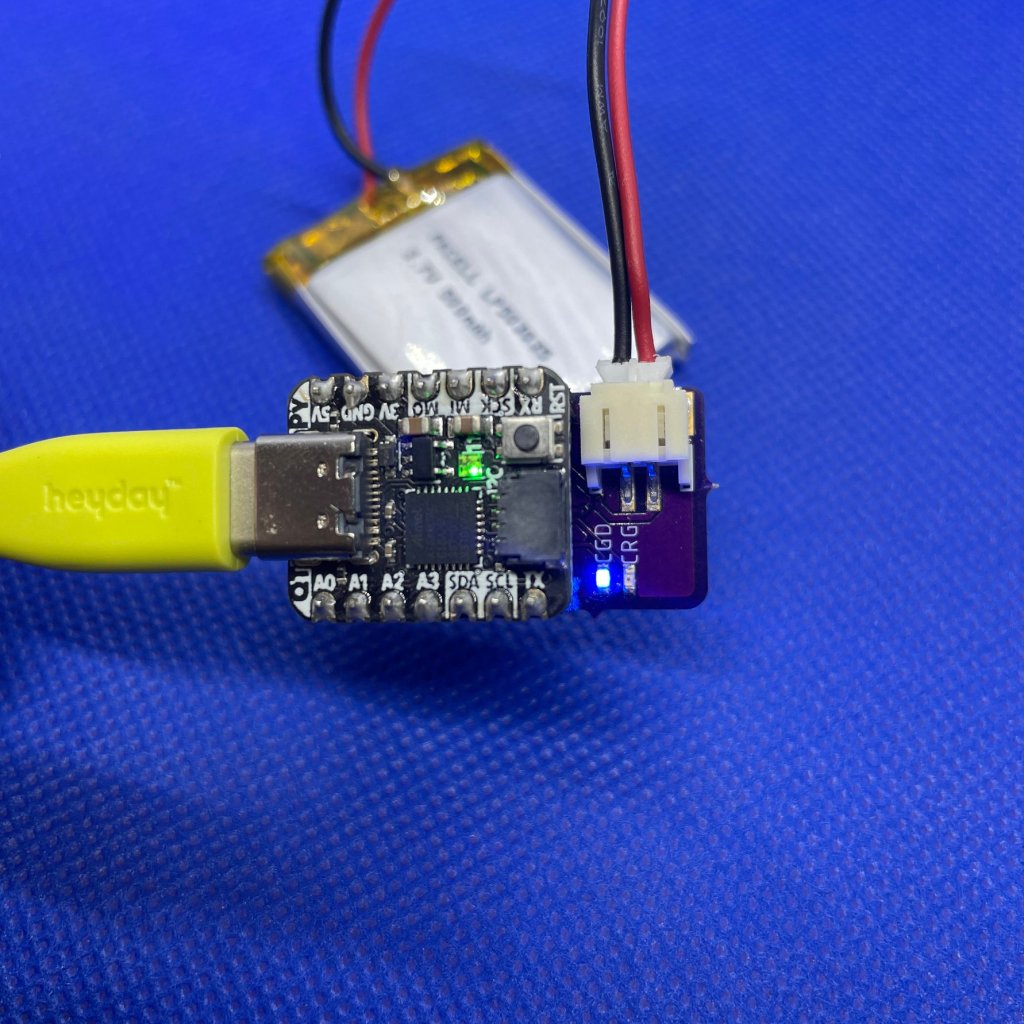
Oak Dev Tech designed this stackable LiPo battery backpack for the Adafruit QtPy:
What is it?
A LiPo Battery Backpack specifically designed to work with the Adafruit Qt Py and board with similar 5V, GND, and 3.3V pin configurations.
This little backpack not only brings LiPo Battery power to your Qt Py, but also battery charging so you can easily recharge your project
Why did you make it?
The QT Py was wildly popular and many were asking how to use a LiPo with the board. With that question the LiPo Power Pack was born.
What makes it special?
It’s designed specifically to work with the footprint of the Adafruit Qt Py (all variants) and the seeed studio Xiao making it an obvious choice for maintaining the smaller footprint while still bringing LiPo battery capabilities to these devices.
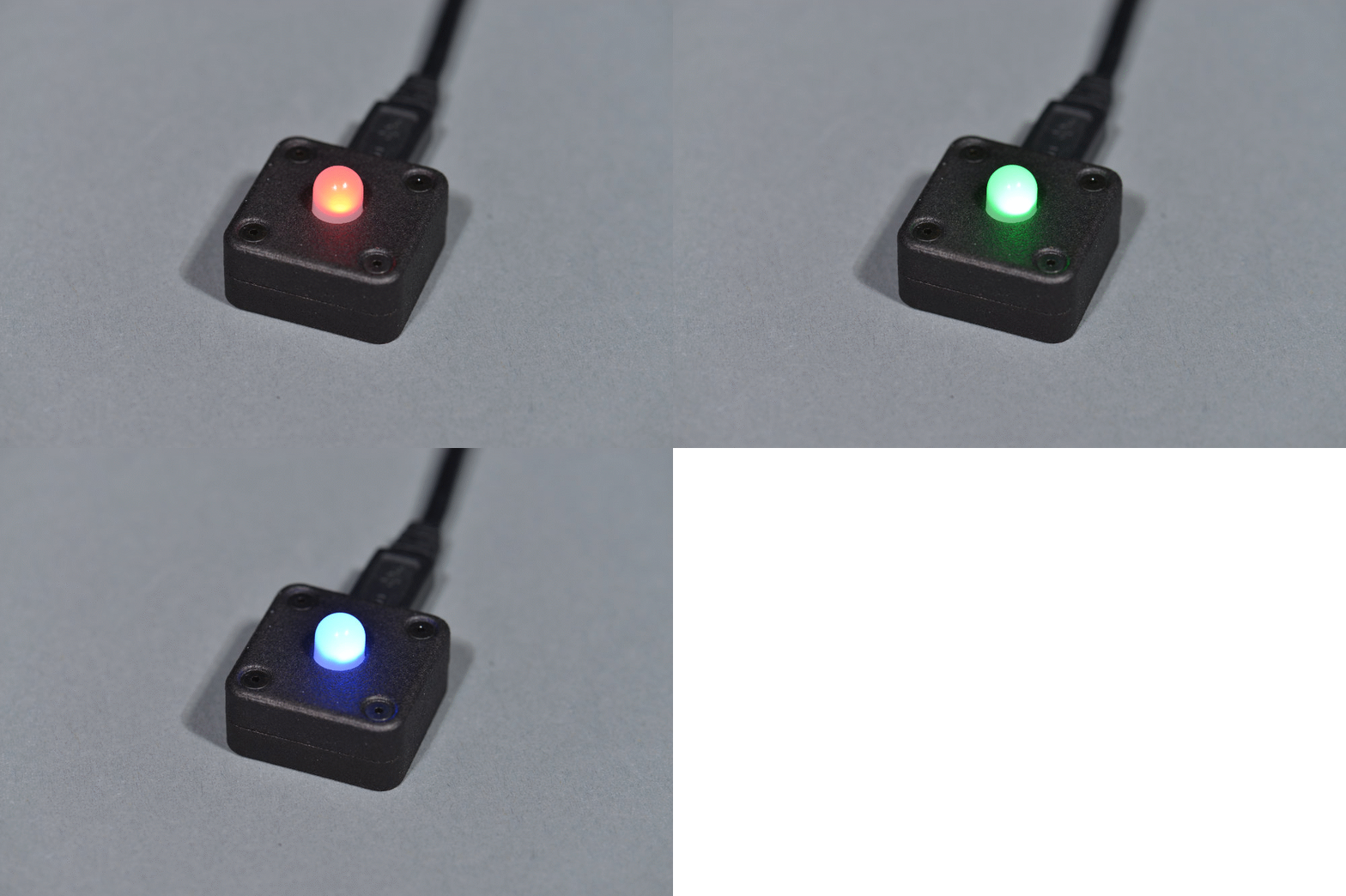
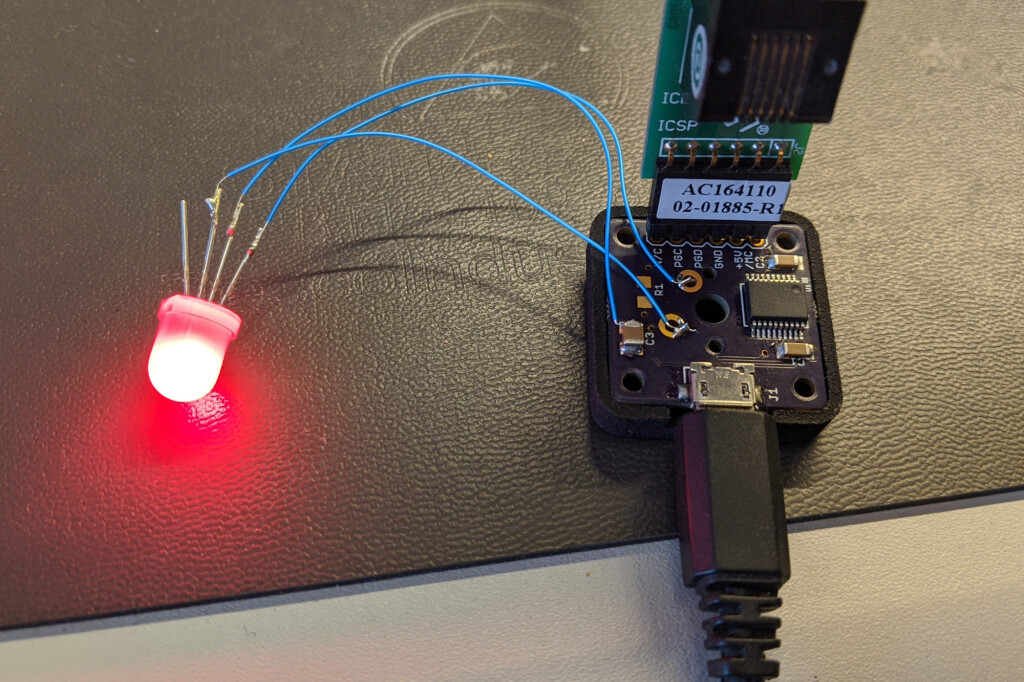
This project is a single RGB LED that is controlled over USB using a command line interface from a serial terminal window. A PIC16F1459 microcontroller implements the USB communications device class (CDC), processes the commands received from the user, and controls a single APA106-F8 8mm round RGB LED.
The USB CDC causes the PIC to appear as a serial port to the host computer. At this point, any terminal emulator software can be opened to access the CLI, and send commands to control the color and brightness of the LED. The APA106 addressable LED protocol is identical to the Neopixel / WS2812b protocol.
With so many hackerspaces in the world, it can be difficult to keep up with them all. It must certainly be a headache for the maintainers of hackerspace directories, with new arrivals as well as spaces sadly closing meaning that a directory can only be as current as its last update. For those of us who follow the world of hackerspaces professionally it’s a struggle to keep on top of them all, and we know there will always be that amazing project posted on a hackerspace website that will pass us by.
Here’s where SpaceAPI can help: by providing a standard JSON interface to the space properties. This holds not only all the static details such as location and contact details, but also the address of the space’s project repository, and most interestingly an indication of whether or not the space is open. The JSON can be a static file, but in many spaces it’s generated by the space itself depending on whether or not there is someone in it.
OSHWA recently sent a response to the 5G Challenge Notice of Inquiry published by the National Telecommunications and Information Administration (NTIA) in the US. The Notice of Inquiry focuses on the development of an open-source software stack for 5G wireless communication. In our response we highlighted the role that Field-Programmable Gate Arrays (FPGAs) can play in the path from the radio receiver to the 5G software stack and conversely from the software stack to the radio transmitter. FPGAs can cope with very high data rates, for which pure software solutions can be suboptimal.
It is therefore important that FPGA designs are made part of the challenge, and also that these designs be open-source for the same reasons that it makes sense to open-source the software stack. FPGA design is typically done using Hardware Description Languages (HDLs). HDL code is fed to synthesis, place & route and bitstream generation tools. The bitstream file then configures the FPGA, so its logic gates and flip-flops implement the circuit specified in the design. HDL code is sometimes called “gateware” (a reference to the logic gates it targets) to distinguish it from software.
If researchers and developers are going to collaborate on common open-source gateware and software, they would ideally do so using an open hardware platform. This would democratize access, enlarging the talent pool which can contribute to the effort. It would also protect the development against vendor lock-in and save time and effort on porting to different imperfectly-compatible platforms.
Finally, this could be an opportunity to improve the Free and Open Source Software tools for gateware design. There are thriving communities of open-source software-defined radio and FPGA tool developers, and we believe including them in this challenge and having hardware and gateware in the picture will result in a better 5G for everyone.
A few weeks ago I was given the opportunity to sign up for the Zero to ASIC course offered by Matthew Venn. This is a really exciting prospect as it is not every day that you get to design your own custom silicon! I had always though of chip design as one of those things that only big corporations filled with academics could do, which is the same way that I though of designing and building computers until a few years ago. Looking through the syllabus for the course, though, it certainly looks like it is within reach for mere mortals like myself. At the end of it I can submit my design, and if I am lucky, I will end up with a few pieces of silicon with my own circuit on it.
I will be updating this blog as I make my way through the course, highlighting anything of interest, or bits I struggle with, or giving some details about some of the choices I make. There will also be a series of interviews on YouTube after each section of the course where we discuss how things are going, what I’ve learned and maybe other stuff. The first episode is available on YouTube now;
It’s true to say that we are spoilt for choice when it comes to wonderful LED badge designs on Tindie. However, the luxuriously-coloured Nautilus Blue from n°Garage stood out to us and we wanted to show it off!
It’s a lovely design that’s sold fully assembled. It doesn’t have the usual badge pin or clip but rather has a small mount hole at the edge of the PCB and as such lends itself to being worn as a key chain or perhaps a pendant. There’s seven cool blue LED’s around the design, driven by a logic inverter IC and powered by a coin cell in a holder on the reverse. We also notice on the reverse there is another LED that we can see casts a little back lighting glow through some of the via’s on the PCB.
It’s the perfect accompaniment for a night out or a fancy dress outfit in need of illuminaton and perfect for oceanic, aquatic, or seaside-themed get togethers!
Definitely take the time to have a look around the n°Garage store as they have created and curated a gorgeous range of badges. They use a real variety of techniques to get wonderful and very wearable effects.







 OSH Park