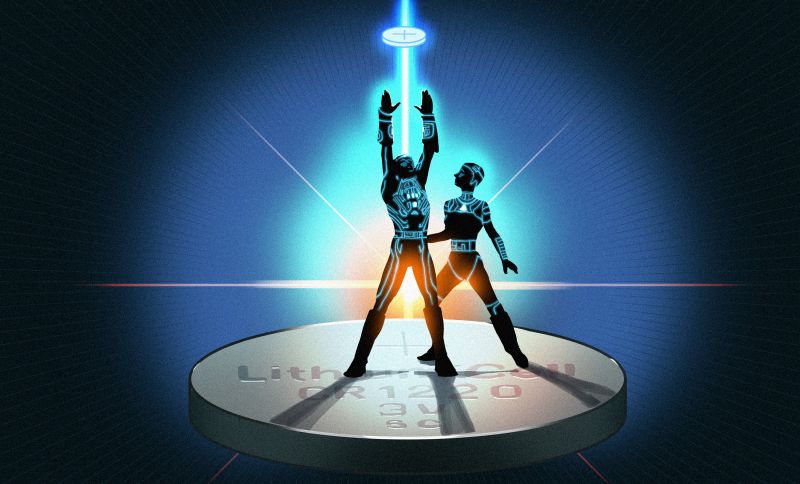
This is it. This is the last weekend you’ll have to work on the most explosive battery-powered contest in recent memory. This is the Coin Cell Challenge, and it’s all ending this Monday. You have less than 48 hours to create the most amazing thing powered by a coin cell battery. Joseph Primmer slapped a coin…
Tuesday, December 12, 2017 6:00 PM to 9:00 PM 8000 Edgewater Dr, Oakland, CA
The Bay Area’s hardware meetups are banding together for one last epic bash of 2017. Join us for this special holiday merging of all your favorite hardware people, projects, and topics.
The Future of Hardware from Autodesk meetup, the SF Hardware Startup Meetup, East Bay’s Hardware Massive, Mid-Peninsula’s Product Realization Group, Kickstarter, Dorkbot, and more will be gathering the community together at Circuit Launch in Oakland.
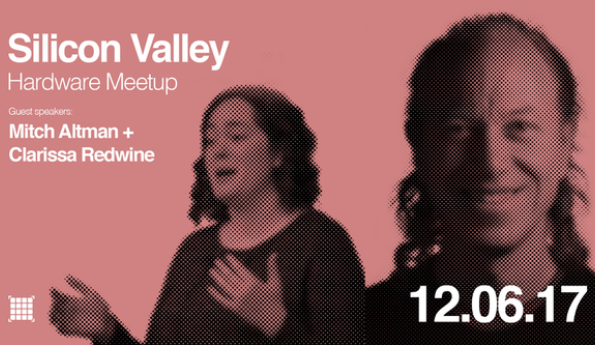
The first meetup will be the Silicon Valley Hardware Meetup at the Evil Mad Scientist shop in Sunnyvale. It’s going down Wednesday, December 6th, from 6:30 until 9:30. At least some of the Hackaday/Tindie/Supplyframe crew will be there, and the night will be filled with lightning talks, demos, and the cool hardware people you know and love.
Speakers for this meetup will include [Mitch Altman], hacker extraordinaire and owner of far, far too many TV remotes. He’ll be talking about hardware successes and failures in his own businesses. Also headlining the event will be [Clarissa Redwine] from Kickstarter. She’ll be talking about crowdfunding hardware, and the fact that making a thousand of something is a million times harder than making one of something.
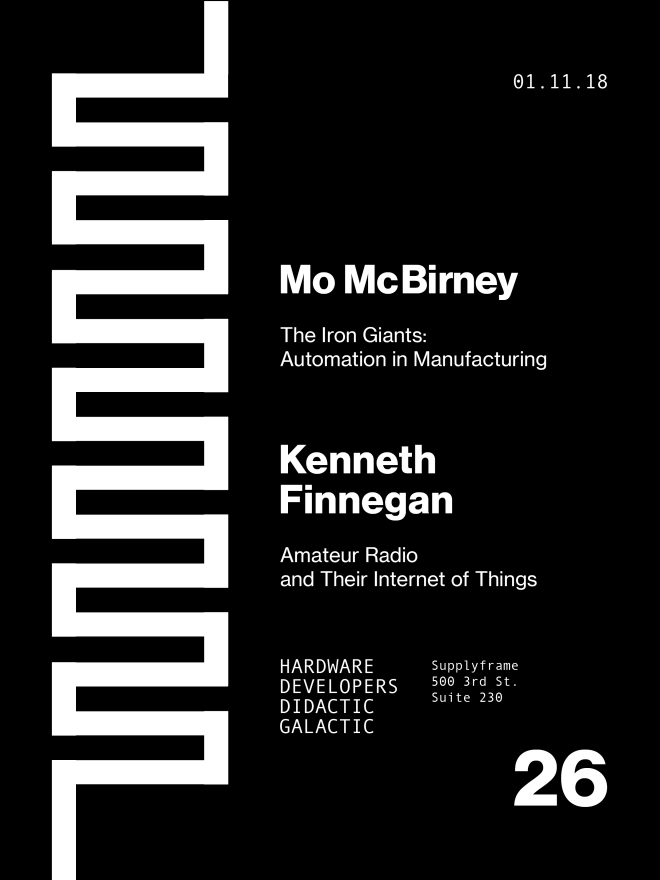
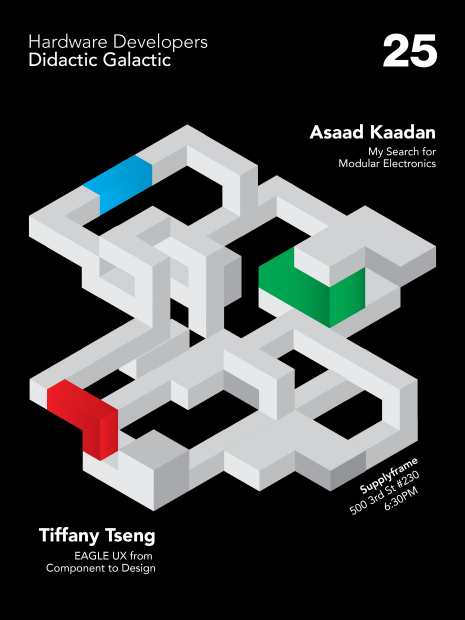
The day after, on December 7th, we’re also going to be opening the doors at the San Francisco Supplyframe office to host the Hardware Developers Didactic Galactic. These Didactics are fun and popular, and you don’t need to go to the South Bay. Food and drink will be served, and there’s a sweet Rick and Morty mural in the alley across the street.
On deck for this month’s Didactic is [Tiffany Tseng], lead UX designer at Autodesk. Her work involves creating and implementing the design decisions that go into Eagle CAD. If you’re wondering why the icons changed a few years ago, she is not the person to talk to; that happened before the Autodesk mothership bought Eagle. If you’re wondering how the awesome push and shove routing actually works, [Tiffany] is the person to talk to.
Also at the Didactic will be [Asaad Kaadan]. He’s a robotics engineer working on cinematic tools for his day job and is currently exploring a very, very cool modular electronics project called Hexabitz. He’ll be talking about Hexabitz and designing for modular electronics.
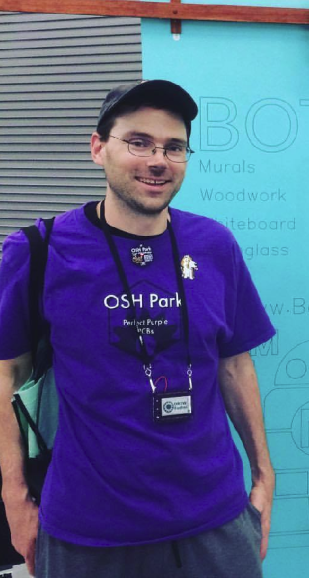
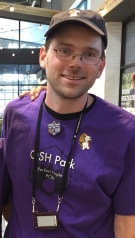
Look for Drew Fustini in purple at both of these events!
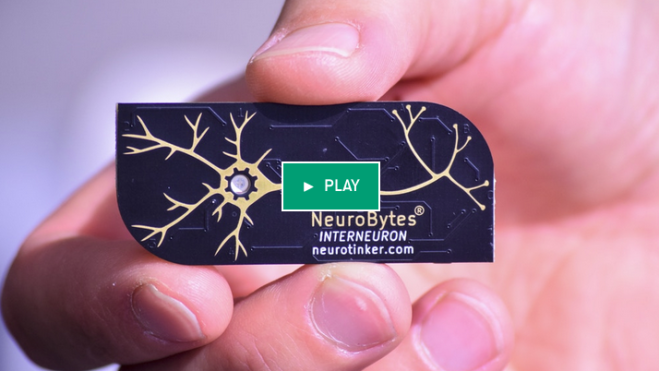
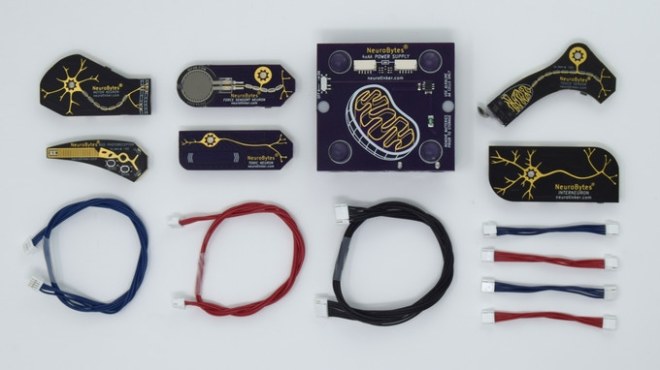
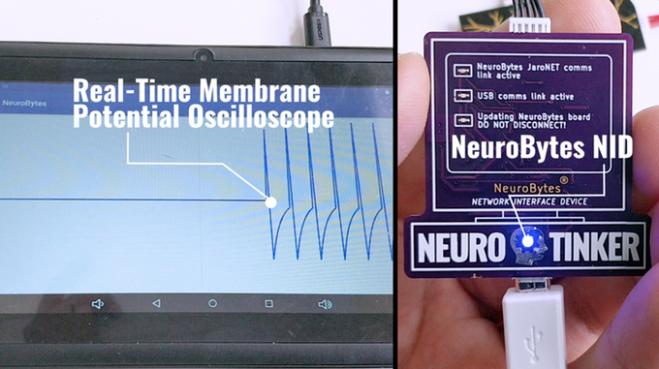
NeruroBytes is not a strange platform for neural nets. It’s physical neurons, rendered in PCBs and Molex connectors. Now, finally, it’s a Kickstarter project, and one of the more exciting educational electronic projects we’ve ever seen.
Since then, the team behind NeuroBytes have received an NHS grant, they’re certified Open Source Hardware through OSHWA, and there are now enough NeuroBytes to recreate the connectome of a flatworm. It’s doubtful the team actually has enough patience to recreate the brain of even the simplest organism, but is already an impressive feat.
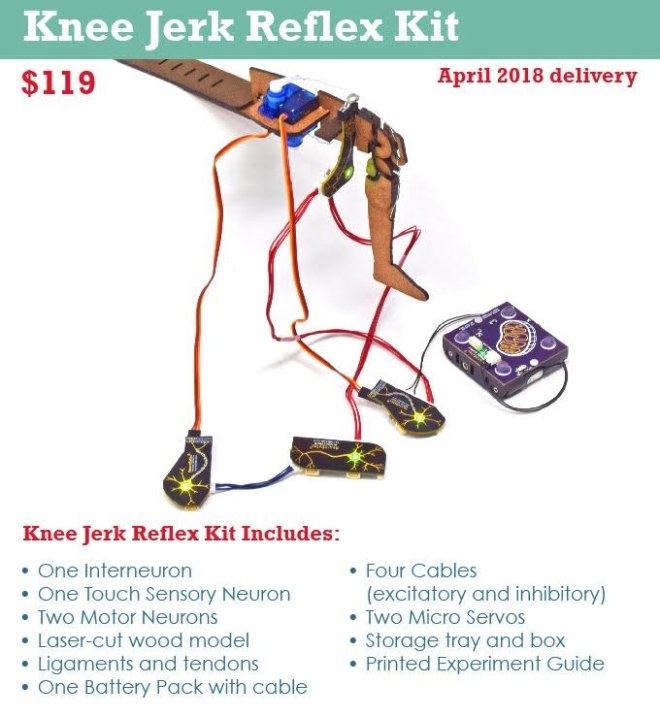
The highlights of the NeuroBytes Kickstarter include seven different types of neurons for different sensory systems, kits to test the patellar reflex, and what is probably most interesting to the Hackaday crowd, a Braitenberg Vehicle chassis, meant to test the ideas set forth in Valentino Braitenberg’s book, Vehicles: Experiments in Synthetic Psychology. If that book doesn’t sound familiar, BEAM robots probably do; that’s where the idea for BEAM robots came from.
For the last several months, we’ve been hosting the greatest hardware competition on Earth. This is the Hackaday Prize, and we’ve just wrapped up the last of our five hardware challenges. For the Anything Goes challenge in this year’s Hackaday Prize, we’re asking hardware hackers to build the best, the coolest thing. No, it doesn’t matter what…
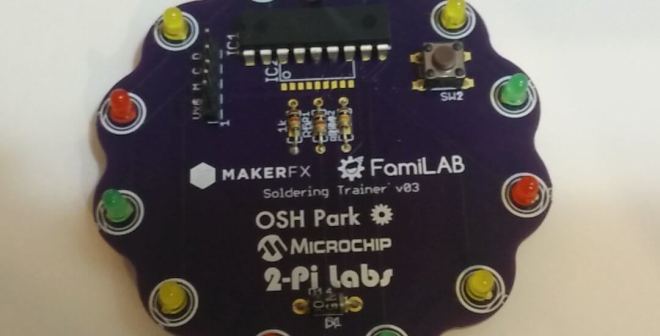
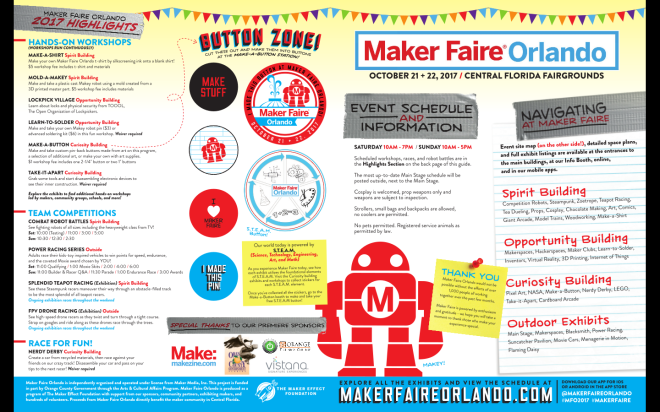
For the past six years at Maker Faire Orlando, members of FamiLab have taught attendees how to solder with a cool little Makey pin with 2 self-flashing LEDs. We’ve been asked for more advanced soldering training, and we responded with the addition of a PIC-microcontroller-based board twinkling several LEDs, and with a switch that can be used to change the LED display pattern.
We opted to design the board such that it can be used as a pendant on a necklace (lanyard) or as a keychain (especially for those of you who like large keychains). The design is a scalloped 2.7″ circle with LEDs on the outside circle, and a hole at the top for a keyring. Batteries are on the back of the board.
Maker Faire Orlando is a non-profit, community-organized, family-friendly celebration featuring local do-it-yourself science, art, rockets, robots, crafts, technology, music, hands-on-activities, and more. It’s an event where people show what they are making and share what they are learning.
The individuals behind these exhibits are known as “Makers” and they range from tech enthusiasts to crafters to homesteaders to scientists to garage tinkerers. They are of all ages and backgrounds. The aim of Maker Faire is to entertain, inform, connect and grow this community.
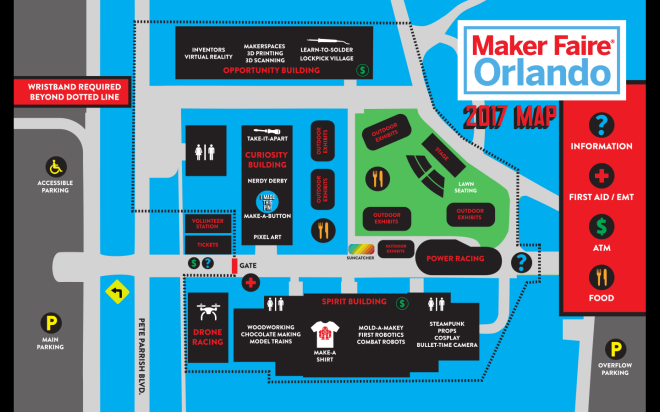
We’ve been busy prepping the Central Florida Fairgrounds & Expo Halls for Maker Faire Orlando 2017! Now you can check out the official program or mobile apps (iOS, Android) for information about Maker Faire including featured exhibits, hands-on workshops, and schedules for Combat Robots and Power Racing.
Open source hardware isn’t that easy. It is actually a mix of a bunch of different elements covered by a bunch of different types of IP. That means that you are probably going to need to pick a few types of licenses for a few different parts of your hardware.
OSHWA is working on building a tool to make this easier to figure out, but in the meantime I wanted to throw up a quick post setting up a bit of a framework. This framework is largely based on the work that Ryan Lawson and Adam Alperowicz did as students at the NYU Technology Law and Policy Clinic, although all errors are entirely mine.
The videos from ORConf 2017 are now online including this talk about hardware licensing:







 OSH Park