If you’ve sold items on Tindie, you may find it entertaining that something you made or provided has made its way to place X, Y, or Z. Perhaps you’ve even thought it would be fun to have some sort of map to track these geographic statistics. I know I have, but the assumed work involved in generating such a map always made it seem out of the realm of (realistic) possibility.
In reality, it’s not hard at all; you can easily generate a custom Google Map of your sales locations by following the instructions provided by Nick Pisarro, @highenergybeams on Twitter
OSHWA is looking for a Chair to the annual Open Hardware Summit set for April 22, 2022 in NYC @ NYU. This is an excellent opportunity to help shape the first in-person Summit since 2019, as well as to connect with the Open Hardware Community.
The Summit Chair helps to oversee the annual Open Hardware Summit. They work with OSHWA’s Executive Director, the Speaker Chair, and venue staff to produce the Summit. The Summit Chair is also an ex officio member of the OSHWA board for the duration of the position.
The Summit Chair is a paid, part-time position of $10,000. It begins in September of 2021 and concludes in early May of 2022. The Open Hardware Summit Playbook establishes milestones that allow for flexible time commitments in the months leading up to the Summit. The Chair should expect to be on site and work full days on April 20, 21, and 22 of 2022. As we approach the Summit dates, the time commitment of the position will ramp up. OSHWA pays travel expenses related to the Summit.
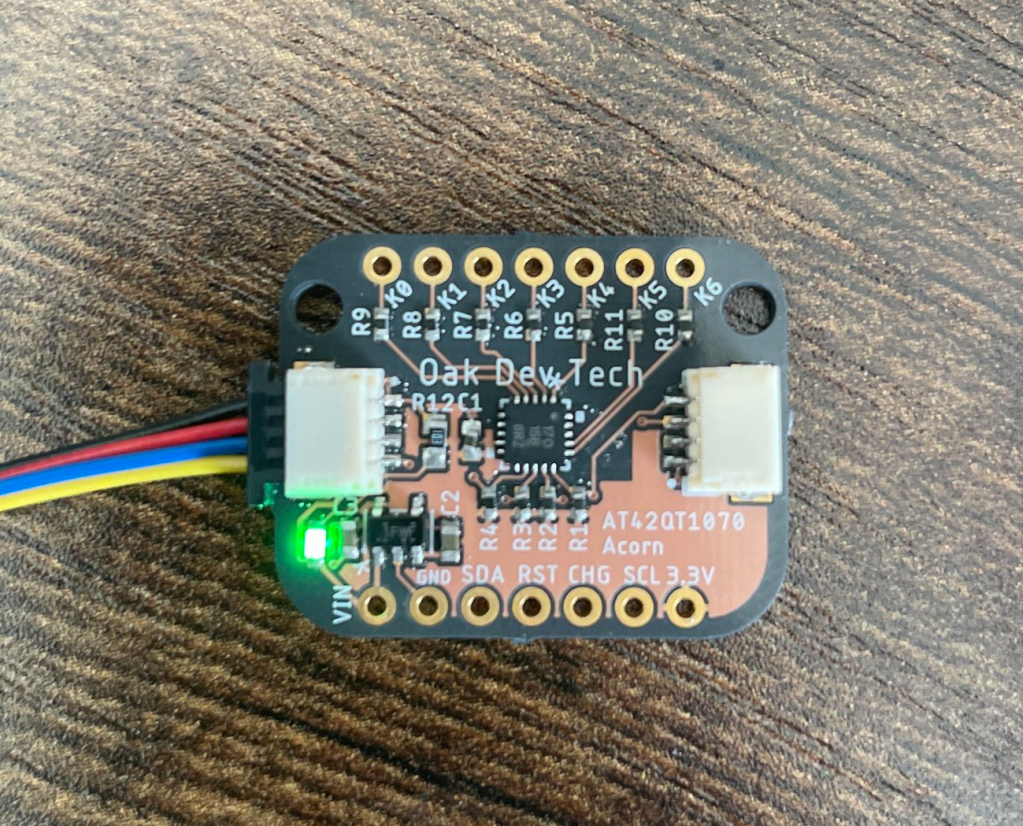
We’re pretty touched by this acorn! A powerful and versatile capacitive touch sensor by Microchip that provides 7 channels of touch input on a single chip with a large variety of configuration which make it ideal for all kinds of touch projects.
The AT42QT1070 breakout communications over I2C and features two Sparkfun QWIIC/ Adafruit STEMMA QT compatible connectors for a solderless interface to get you up to speed faster.
We’ve helped take the development guesswork out of your hands by providing two easy to use libraries in Python and Adruino! The python Library is available to be downloaded through pip, or through the Adafruit CircuitPython Community bundle.
Why did you make it?
I made this because I thought it would be a fun way to bring a really well featured capacitive touch IC to an easy to use form factor.
What makes it special?
It has two Stemma/Qwiic compatible connectors meaning you can use it with your favorite Adafruit and Sparkfun microcontrollers.
When you’re just learning to sketch, you use graphite. Why? It’s cheap, great at training you to recognize different shades, and most of all, it’s erasable. When you’re learning, you’re going to make mistakes, and un-making them is an important part of the game. Same goes for electronics, of course, so when you’re teaching someone to solder, don’t neglect teaching them to desolder
We could argue all day about the best ways of pressing the molten-metal undo button, but the truth is that it’s horses for courses. I’ve had really good luck with solder braid and maybe a little heat gun to pull up reluctant SOIC surface-mount chips, but nothing beats a solder sucker for clearing out a few through-holes. (I haven’t tried the questionable, but time-tested practice of blasting the joint with compressed air.)
For bulk part removal, all you really have to do is heat the board up, and there’s plenty of ways to do that, ranging from fancy to foolish. Low-temperature alloys help out in really tough cases. And for removing rows of pinheaders, it can help to add more solder along the row until it’s one molten blob, and then tap the PCB and watch the part — and hot liquid metal! — just drop out.
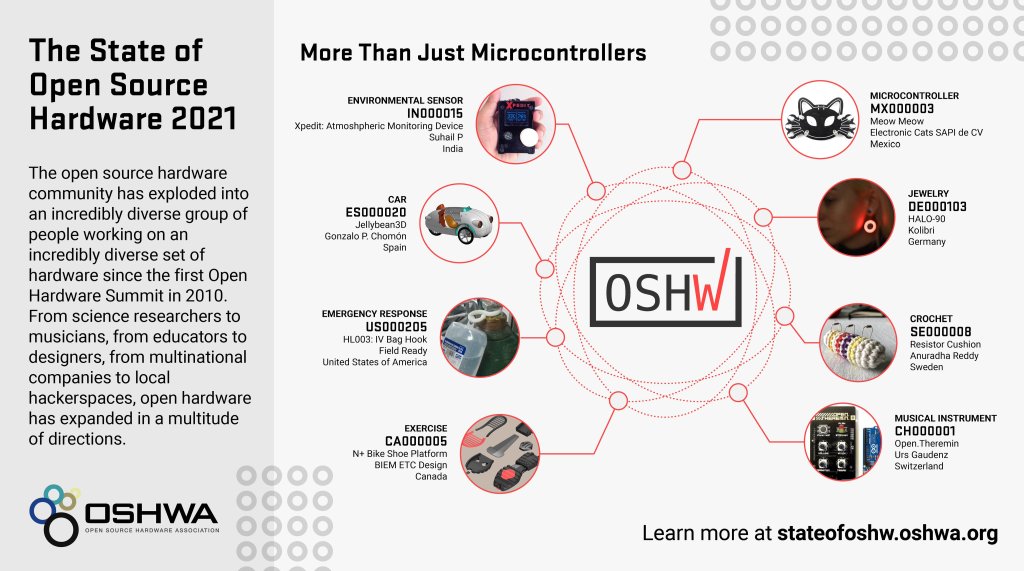
The state of open source hardware is strong. In the eleven years since the first Open Hardware Summit we have seen open hardware grow, with new communities creating new hardware for new uses around the world. Hundreds of pieces of open source hardware have been certified as compliant with the Open Hardware Definition from countries on every continent except Antarctica.
A wide range of companies have been built and grown on the foundation of open source hardware. Dozens of Ada Lovelace Fellows have helped to diversify the open hardware community. Nonprofit organizations in academia, conservation, science, medical, and more have helped to broaden the impact of open hardware in innumerable ways.
The results of the community survey makes it clear that people come to open hardware for a range of reasons and use open hardware to address a range of needs. However they start with open hardware, once they start using it they are hooked. Community members study designs, adapt them, and build upon existing designs in order to achieve their goals. Open hardware is used in teaching, the development of commercial products, and everything in between.
What are you waiting for? Click over, check it out, and let us know what you think. While the state of open source hardware is strong in 2021, we think it may get even stronger in the future.
We're excited to announce the State of Open Hardware 2021!
Beginning right now, the 2021 Hackaday Prize challenges you to Reimagine Supportive Tech. Quite frankly, this is all about shortcuts to success. Can we make it easier for people to learn about science and technology? Can we break down some barriers that keep people from taking up DIY as a hobby (or way of life)? What can we do to build on the experience and skill of one another?
For instance, to get into building your own electronics, you need a huge dedicated electronics lab, right? Of course that’s nonsense, but we only know that because we’ve already been elbow-deep into soldering stations and vacuum tweezers. To the outsider, this looks like an unclimbable mountain. What if I told you that you could build electrics at any desk, and make it easy to store everything away in between hacking sessions? That sounds like a job for [M.Hehr’s] portable workbench & mini lab project. Here’s a blueprint that can take a beginner from zero to solder smoke while having fun along the way.
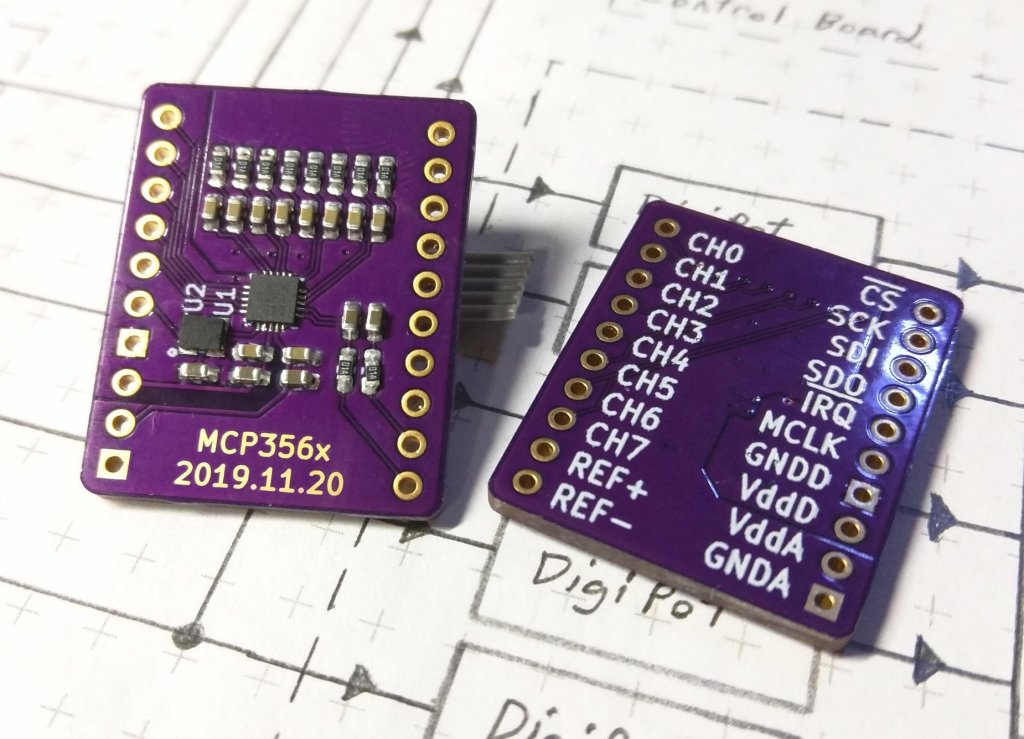
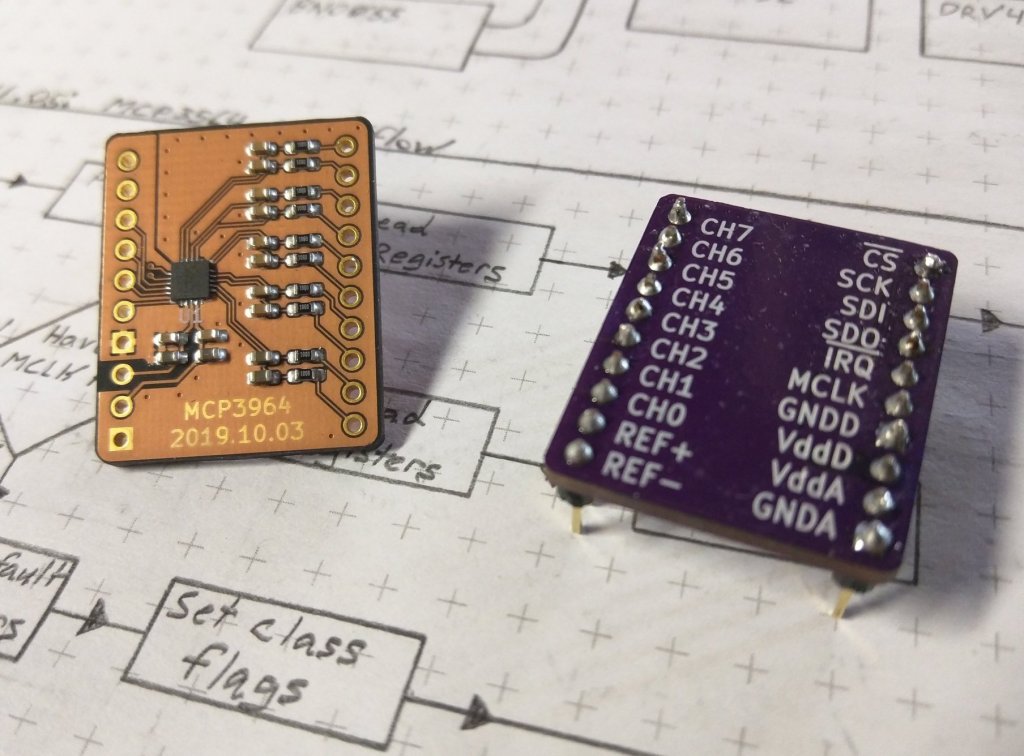
The MCP3564 is a 24-bit sigma-delta ADC with support for up to eight single-ended, or four differential channels. It supports extensive oversampling depths, flexible MUX front-end, circuit burnout detection, adjustable gain, Vref from [0v – 3.6v], and optional internal oscillator.
The board is available with or without high-accuracy external oscillator. If included, the oscillator frequency is fixed at the maximum rate for this part (19.6608 MHz).
The vast majority of us are satisfied with a standard, base ten display for representing time. Fewer of us like to be a bit old-fashioned and use a dial with a couple of hands that indicate the time, modulo twelve. And an even smaller minority, with a true love for the esoteric, are a fan of binary readouts. Well, there’s a new time-telling game in town, and as far as we’re concerned it’s one of the best ones yet: resistor color codes.
The Ohm Clock is, as you may have guessed, a giant model of a resistor that uses its color bands to represent time. Each of the four bands represents a digit in the standard HH:MM representation of time, and for anybody well-versed in resistor codes this is sure to be a breeze to read. The clock itself was designed by [John Bradnam]. It’s body is 3D printed, with RGB LEDs to brightly illuminate each segment. The whole thing is controlled by an old favorite – an ATtiny, supported by a Real Time Clock (RTC) chip for accurate timekeeping.
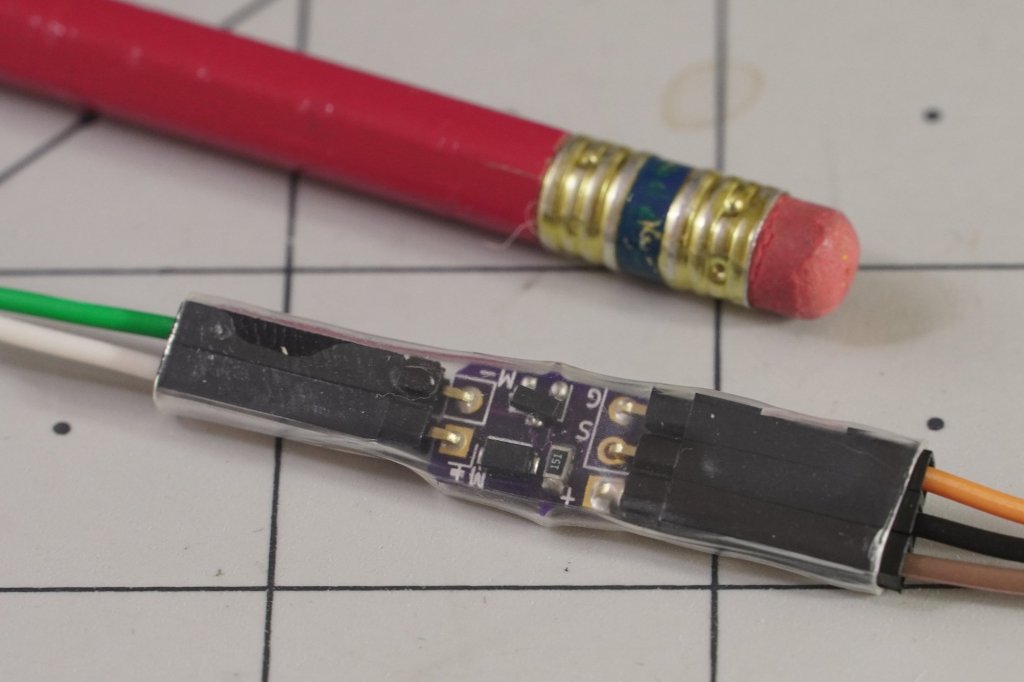
Jeremy Cook created this tiny PCB for controlling small cooling fans or other motors:
What is it?
PCB originally designed to control cooling fans on Raspberry Pi boards, but can be used with other small motors or DC loads. Includes a flyback diode to safely dissipate inductive voltage spikes.
Can also work with Arduino and other such dev boards.Why did you make it?
Wanted a way to control cooling fans off of a Raspberry Pi. While some fans have PWM inputs, some do not and cannot normally be controlled. This transistor board works well with the GPIO fan control option in Raspberry Pi OS (which turns it fully on and fully off).
Not a full motor driver (i.e. it only drives in one direction) but can be used with other simple DC motors as well. Includes a resistor and flyback diode.
What makes it special?
It’s very, very small, even compared to a prior THT version. It should therefore be able to fit inside nearly any case. The optional 90º headers are even spec’d out to be low profile.
Boards come fully assembled with or without headers depending on the option selected, and appearance of the boards may vary. Options also available for female-female wires as needed, and/or clear heat shrink.








 OSH Park