Open-V and YoPuzzle at RISC-V Workshop

screenshot-from-2016-12-23-13-01-21

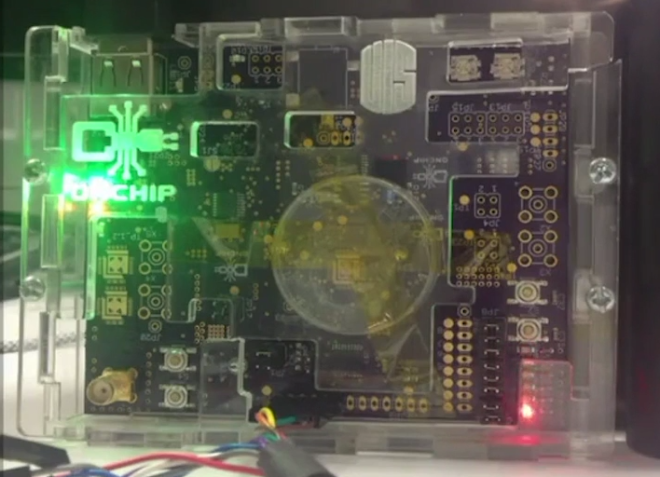
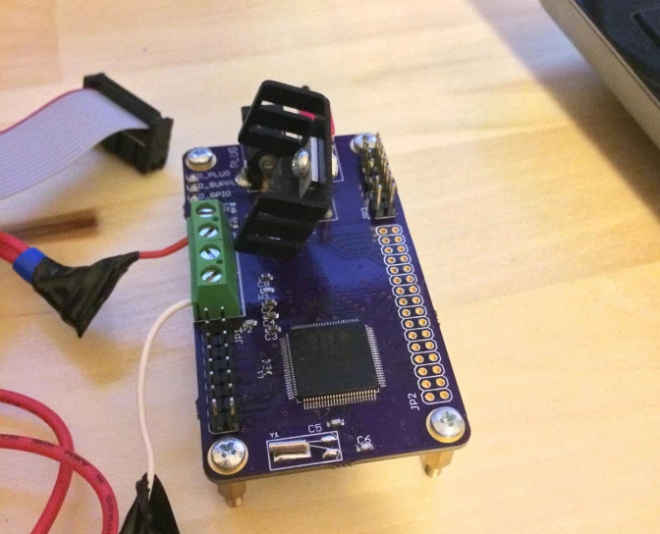
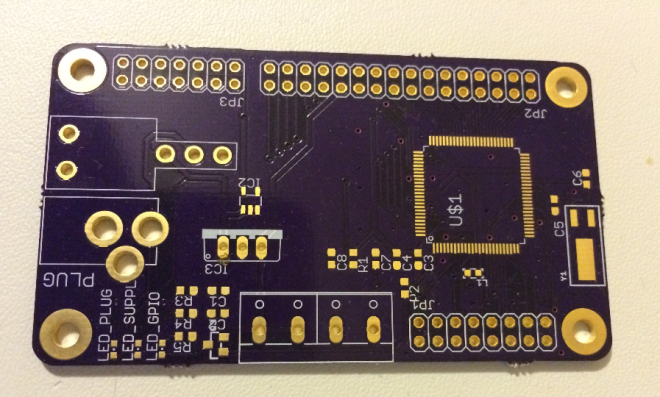
Elkim Roa of OnchipUIS presented recently at the 5th RISC-V Workshop on the latest news of the Open-V open silicon microcontroller and their YoPuzzle educational platform:

YoPuzzle: A mRISC V development platform for next generations

Slides from the his talk:

This slideshow requires JavaScript.

Live Demos Over the Internet

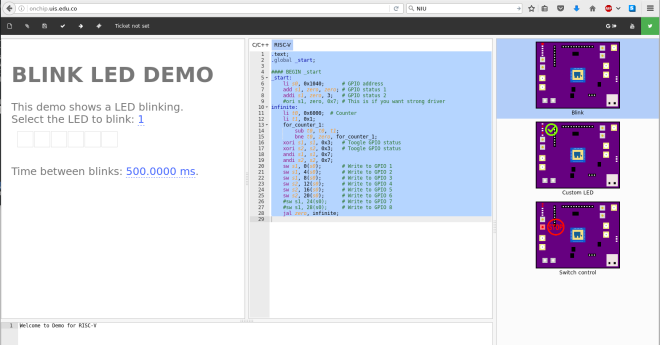
You can now program real Open-V dev boards from anywhere in the world and see the results on a live video feed! Here’s our first demo – blinking the dev board LEDs.

screenshot-from-2016-12-23-13-00-31Go to http://onchip.uis.edu/ to remotely program the demo board:

Screenshot from 2016-12-20 17-42-04.png


Open-V and YoPuzzle at RISC-V Workshop

Arduino-programmable ARM Cortex M4F Boards

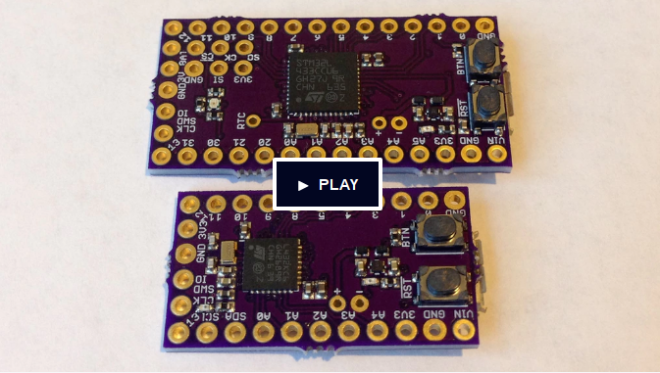
Kris Winer of Pesky Products designed these easy-to-program, high-performance and low-power dev boards:

screenshot-at-2016-12-19-18-21-29
Arduino-programmable Cortex M4F Development Boards

Program an STM32L4 Cortex M4F with the Arduino IDE via USB
07d323cc59a7037a2ce3db223c0fdf7d_original-jpg

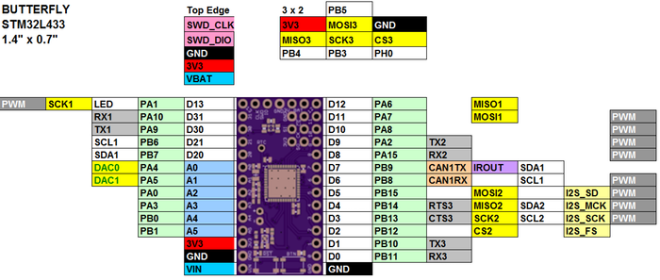
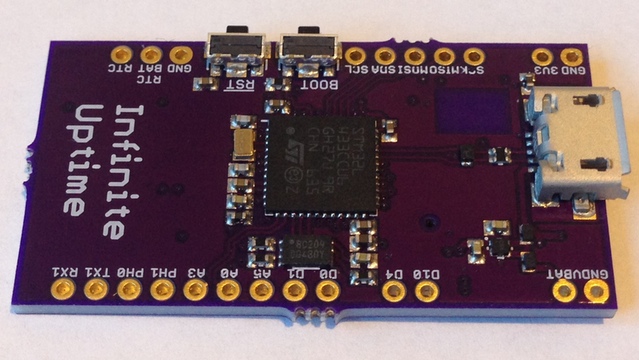
Technical specifications of the Butterfly and Ladybug STM32L4 dev boards:

  • Microcontroller: STM32L4 ARM Cortex M4F
  • Clock speed: 1, 2, 4, 8, 16, 24, 32, 48, 64, 80 MHz
  • Operating voltage: 3.3V
  •  I/O pin limits: most pins 5.0 V tolerant, 20 mA
  • Digital I/O pins: 22, with 11 PWM (Butterfly), 13, with 10 PWM (Ladybug)
  • Analog input pins: 6 (Butterfly), 5 (Ladybug), 12-bit ADC channels
  • Analog output pins: 2 12-bit DAC
  • RTC: 1 ppm accuracy
  • Flash memory: 256 KB
  • SRAM: 64 KB
  • Voltage regulator: 3.3-5.5V input / 3.3V, 150 mA output
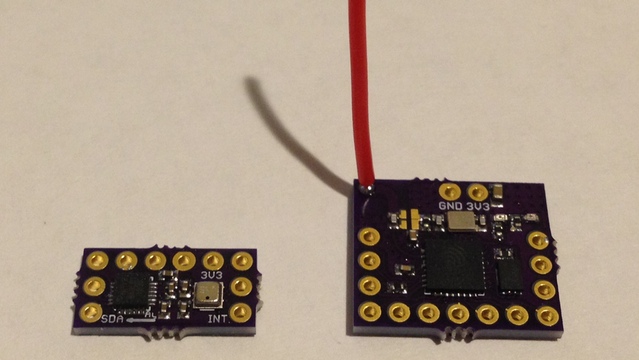
New Butterfly and Ladybug add-on boards

57b2768c5f3f65c565cb477bb7899e9a_original

To the left is an MPU9250 accel/gyro/magnetometer motion sensor and the BME280 pressure/humidity/temperature sensor

To the right is an ESP8266 wifi-enabled add-on board for Butterfly
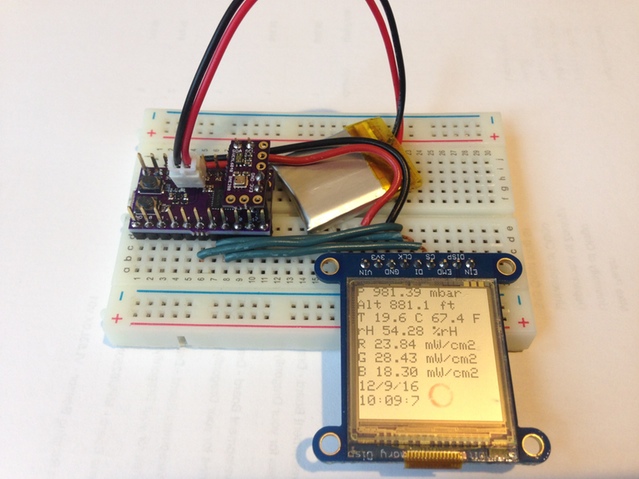
Ladybug environmental data logger

99dd694fbdf0d16502e4c95b29031171_original.jpg

Reading the BME280 and VEML6040 sensors at 0.5 Hz and outputting pressure, temperature, humidity, altitude, RGB light intensity and RTC time and date to the Sharp memory display
Simple designs make hardware customization easy

c2e3de0f40183339cd72afecdd487e5a_original

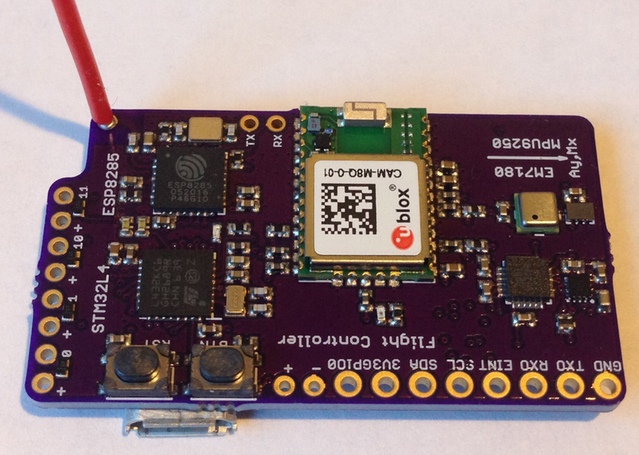
Flight Controller:

STM32L432 receives quaternions from the EM7180, which itself is master to the motion and pressure sensors, GNSS data from the CAM M8Q, then processes and packages the data and sends it to the ESP8285 via UART bridge for transmission to a hand-held controller
9627aadfc8bbc07331533d6a13b697b3_original

Industrial Diagnostics:

uses an STM32L433 as master to several slave sensors to detect and process signals from industrial equipment and report to a remote server via blue tooth


Arduino-programmable ARM Cortex M4F Boards

1bitsy and Black Magic Probe on embedded.fm

Screenshot from 2016-12-21 18-12-15.png

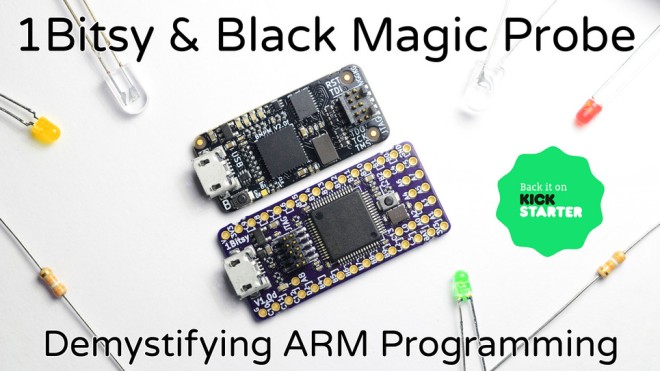
Piotr Esden-Tempski and Gareth McMullin joined the embedded.fm podcast to talk about their Black Magic Probe and 1bitsy projects:

Episode 180: Chickens in Helmets

They discussed their current Kickstarter campaign:slideshow_1

Design files and source code for both projects is available on GitHub:

8303676 blacksphere

In application debugger for ARM Cortex microcontrollers.

205056951bitsy

Open Source JTAG enabled ARM development platform

You can also ask questions on Black Magic’s Gitter channel.

1bitsy and Black Magic Probe on embedded.fm

DICE10: electronic dice controlled by two GPIO

Yay, another mini-project with the ATtiny10! A while ago I devised a scheme to drive an electronic dice with only two IO lines. I finally found the time and motivation to build up a small design using this as an entry for the hackaday 1k compo

via DICE10 – electronic dice controlled by two GPIO. — Tim’s Blog

DICE10: electronic dice controlled by two GPIO

ATtiny Keychain Arcade

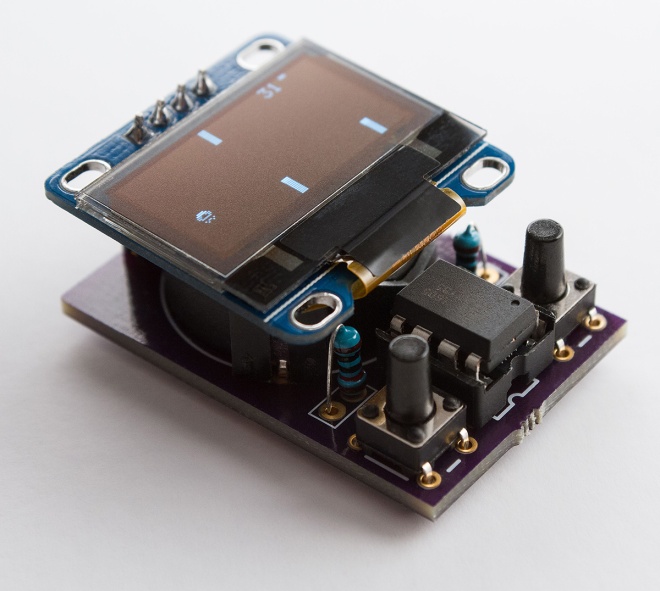
img_3420

Ilya Titov created this adorable, tiny keychain arcade kit:

ATtiny Arcade keychain game kit

ATtiny Arcade is a little game made using Atmel Attiny85 microcontroller and an OLED screen. The kit is a great hobby project that requires assembly with a soldering iron.

Kit contains:

  • Atmel Attiny85 microchip
  • DIP8 socket for the Attiny85
  • 2x pushbuttons
  • 2x pullup resistors
  • SSD1306 OLED screen 128×64 pixels
  • CR2032 battery holder
  • Piezo buzzer
  • Purple PCB manufactured by OSH Park
  • FDM ABS 3D printed case

Available games:

  • Breakout
  • Oroboros
  • UFO Escape
ATtiny Keychain Arcade

Dogbone VFD Wristwatch

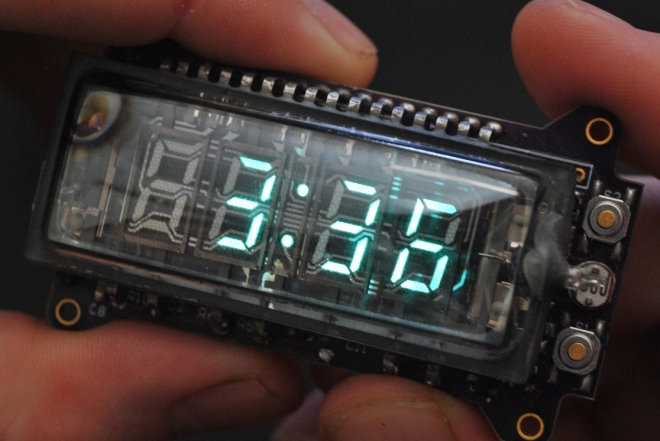
Callum Nunes-Vaz repurposed an old soviet vacuum fluorescent display (VFD) for use in a wristwatch:

dsc_0451.jpg

Dogbone VFD Wristwatch

The VFD display (IVL2-7/5) is a piece of soviet new-old-stock (NOS), and has a unique look to it. Making a watch out of it is a logical progression for anyone wants to give portability to the mesmerising glow of the display.

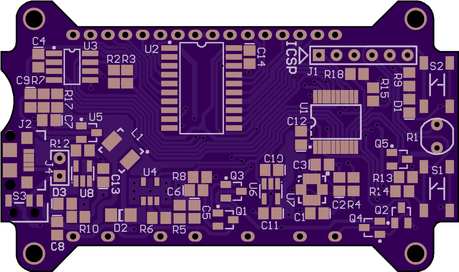
Callum shared the board on OSH Park:

IVL2-7/5 VFD Wristwatch (Prototype)

pcb_front
Order from OSH Park

Here’s a video of the display in action:


Dogbone VFD Wristwatch

RGB LED Panel Controller using MSP432

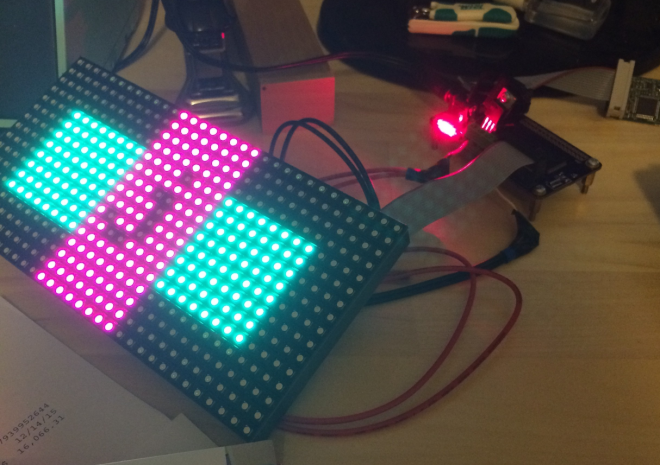
John Boyd created simple controller for RGB LED panels with the Texas Instruments MSP432 ARM microcontroller:

Screenshot from 2016-07-09 05-26-30

MSP432 RGB LED Panel Controller

I have managed to get it working without issue at 60 FPS [..] I think I could push to above 100 FPS.


Screenshot from 2016-07-09 05-29-00.png

The challenging part of this project was designing the firmware in a way to leverage all of the MSP432 peripherals to reduce the computational requirements for the CPU.

The hardware design files and firmware source code are hosted on GitHub:

 MSP432-RGB-LED-Panel-Controller

Screenshot from 2016-07-09 05-33-53

RGB LED Panel Controller using MSP432