Applied Ion Systems: open source space propulsion

This slideshow requires JavaScript.

Michael Bretti of Applied Ion Systems describes open source space propulsion at the 2020 Open Hardware Summit:

Applied Ion Systems is creating open source electric propulsion systems

Applied Ion Systems initially started out of a personal hobbyist effort to share projects involving plasma systems, particle beams, and and high vacuum projects.   Later, as I began to expand my efforts and meet awesome makers around the world, I began focusing my efforts on open source electric propulsion for small satellites, such as PocketQubes and CubeSats.

Eventually, this effort evolved into the world’s first and only open-source home-based electric propulsion program, working on cutting edge plasma and ion thrusters for small satellites on a hobbyist level budget.

My main objective was to provide intensive engineering resources, data, and system designs for the community to help lower the barriers of entry into the field, and allow enthusiasts to follow along the journey of creating and testing these advanced systems, with the ultimate goal of developing low-cost, easy-to-use, fully integrated space-qualified thrusters.

Applied Ion Systems: open source space propulsion

“Produce your own physical chips. For free. In the Open.”

Big news today from Tim Ansell of Google along with eFabless and Skywater Foundry.  FOSSi Foundation has a new post with the details:

Produce your own physical chips. For free. In the Open.

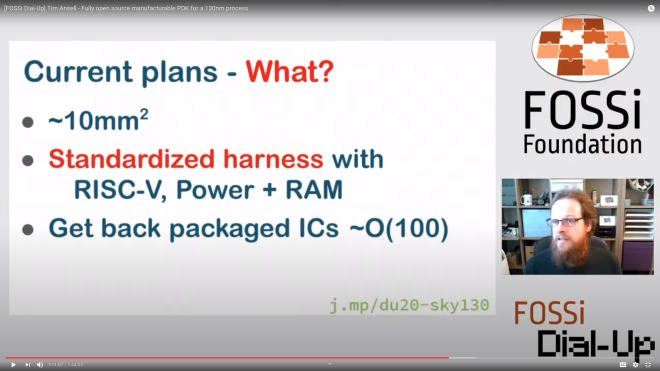
Today, in a FOSSi Dial-Up talk, Tim Ansell of Google announced SkyWater PDK, the first manufacturable, open source process design kit. What differentiates this PDK from previous attempts is the fact that it is manufacturable: with this PDK, you can actually produce chips with the SkyWater foundry in the 130nm node.

That leaves you as chip designer only with one road block: money. Manufacturing chips is expensive – even for more than a decade old nodes like the 130nm node, you need to spend at least a couple thousand dollars.

You know what? Don’t worry – Google and efabless have got you covered! They are providing completely free of cost chip manufacturing runs: one in November this year, and multiple more in 2021. All open source chip designs qualify, no further strings attached!

Screenshot from 2020-07-01 01-58-27

“Produce your own physical chips. For free. In the Open.”

Hackaday “Dream Team” grant application ends June 2nd

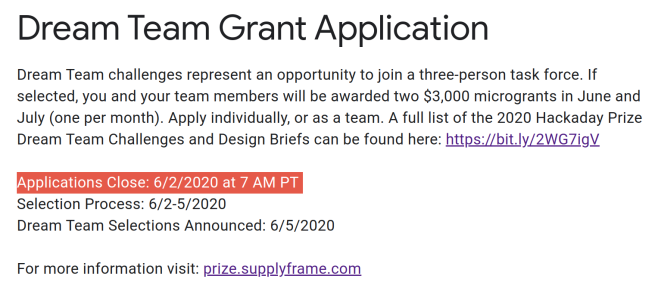
Tomorrow, June 2nd, is the last day to apply for the Hackaday “Dream Team” challenge:

Screenshot from 2020-06-01 21-27-36

We recognize it’s difficult to secure work in uncertain times. That’s why we have created a whole new category for the 2020 Hackaday Prize known as Dream Team Grants.

Dream Team challenges represent an opportunity to join a three-person task force. We are essentially recruiting top talent for our nonprofit partners, to help them solve some of their most pressing challenges. Each dream team member will be awarded two $3,000 grants for their work throughout the months of June and July.

Apply individually, or as a team.

Screenshot from 2020-06-01 21-30-34


Hackaday “Dream Team” grant application ends June 2nd

Virtual Maker Faire on Saturday, May 23rd

Tomorrow will be an online Maker Faire!

VMF_makerfaireDOTcomHero

Virtually Maker Faire – May 23, 2020

Featuring Makers Responding to COVID-19

24 Hours of Presentations, Workshops, Demos, and Exhibits Across All Time Zones

Across the world, makers have responded to shortages of medical supplies and equipment with agile designs, adaptive distributed manufacturing, and community organizing. Virtually Maker Faire will be a stage to share the projects and learn from the people behind this extraordinary civic response.

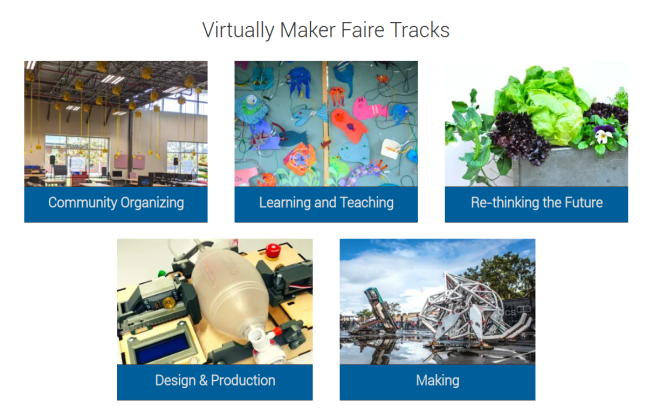
Virtually Maker Faire will take place online through video sessions and an exhibit showcase on Make: Projects

Screenshot from 2020-05-03 20-36-13

Virtual Maker Faire on Saturday, May 23rd

ESP32-S2 Hack Chat with Adafruit on Hackaday

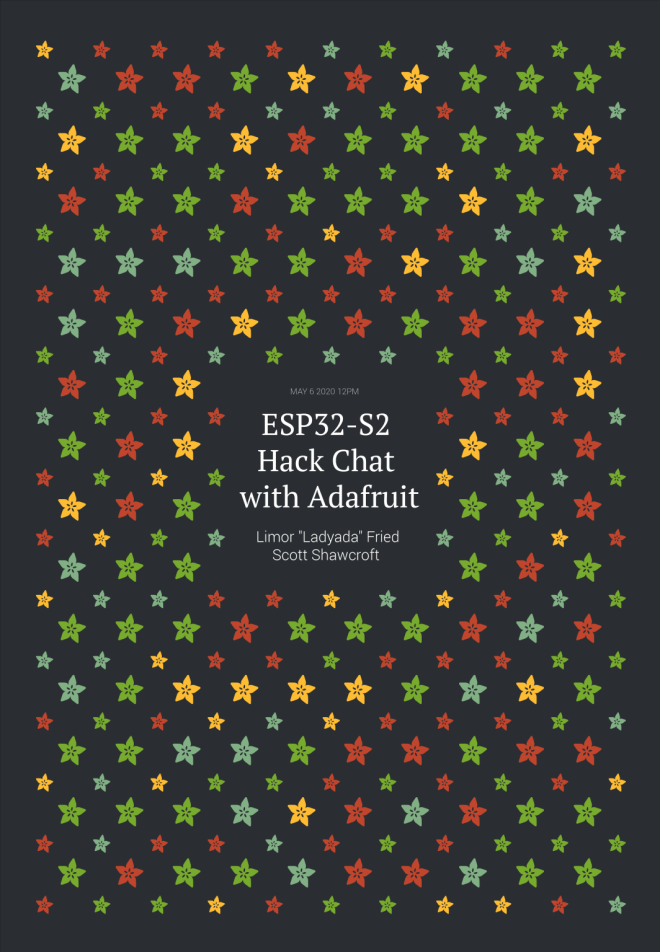
AdafruitESP32HackChatPosterV1_1-01

Join us on Wednesday, May 6 at noon Pacific for the ESP32-S2 Hack Chat with Limor “Ladyada” Fried and Scott Shawcroft!

When Espressif released the ESP8266 microcontroller back in 2014, nobody could have predicted how successful the chip was to become. While it was aimed squarely at the nascent IoT market and found its way into hundreds of consumer devices like smart light bulbs, hackers latched onto the chip and the development boards it begat with gusto, thanks to its powerful microcontroller, WiFi, and lots of GPIO.

The ESP8266 was not without its problems, though, and security was always one of them. The ESP32, released in 2016, addressed some of these concerns. The new chip added another CPU core, a co-processor, Bluetooth support, more GPIO, Ethernet, CAN, more and better ADCs, a pair of DACs, and a host of other features that made it the darling of the hacker world.

Now, after being announced in September of 2019, the ESP32-S2 is finally making it into hobbyist’s hands. On the face of it, the S2 seems less capable, with a single core and neither Bluetooth nor Ethernet. But with a much faster CPU, scads more GPIO, more ADCs, a RISC-V co-processor, native USB, and the promise of very low current draw, it could be that the ESP32-S2 proves to be even more popular with hobbyists as it becomes established.

To talk us through the new chip’s potential, Limor “Ladyada” Fried and Scott Shawcroft, both of Adafruit Industries, will join us on the Hack Chat. Come along and learn everything you need to know about the ESP32-S2, and how to put it to work for you.

join-hack-chatOur Hack Chats are live community events in the Hackaday.io Hack Chat group messaging. This week we’ll be sitting down on Wednesday, May 6 at 12:00 PM Pacific time. If time zones have got you down, we have a handy time zone converter.

Click that speech bubble to the right, and you’ll be taken directly to the Hack Chat group on Hackaday.io. You don’t have to wait until Wednesday; join whenever you want and you can see what the community is talking about.

via ESP32-S2 Hack Chat with Adafruit — Hackaday

Quote

Virtually Maker Faire

There will be a virtual Maker Faire tomorrow, Saturday, May 23rd:

VMF_makerfaireDOTcomHero

Virtually Maker Faire – May 23, 2020

Featuring Makers Responding to COVID-19

24 Hours of Presentations, Workshops, Demos, and Exhibits Across All Time Zones

Across the world, makers have responded to shortages of medical supplies and equipment with agile designs, adaptive distributed manufacturing, and community organizing. Virtually Maker Faire will be a stage to share the projects and learn from the people behind this extraordinary civic response.

Virtually Maker Faire will take place online through video sessions and an exhibit showcase on Make: Projects

Screenshot from 2020-05-03 20-36-13

Virtually Maker Faire

Ten Years of Open Source Hardware

writes about a special momeny for the Open Source Hardware User Group (OSHUG):

OSHUG5

Ten Years of Open Source Hardware

This week marks the tenth anniversary of the inaugural meeting of the Open Source Hardware User Group (OSHUG). As such it seemed only appropriate to take a look back over the past decade at not only the history of OSHUG, but some of the history and the future of open hardware also.

Setting the scene
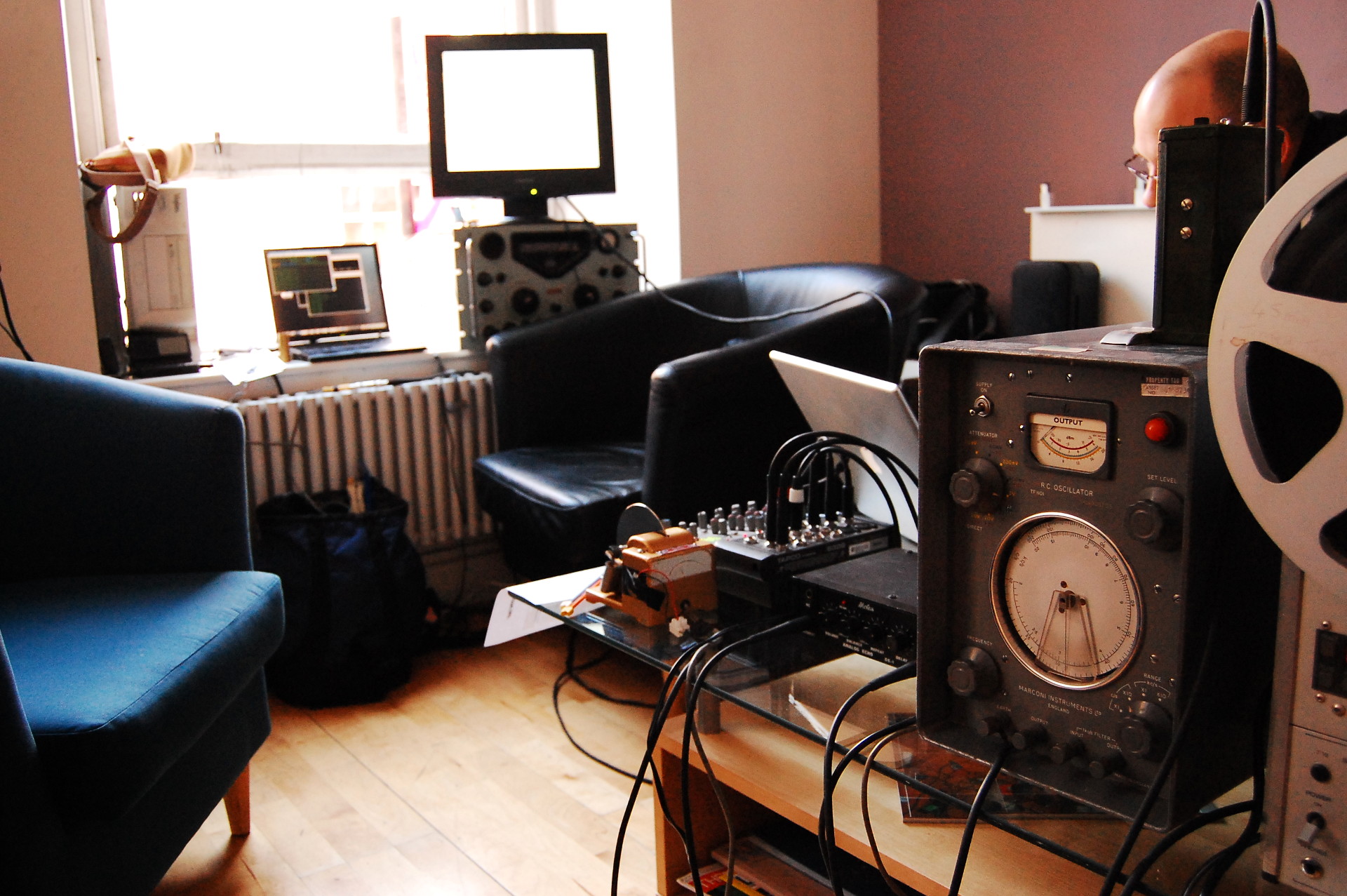
The Electron Club hackerpsace, Glasgow, 2008.

Let’s begin a little earlier and around 12-13 years ago. My own introduction to open source hardware — note that I will also use open hardware interchangeably and to mean the same thing — came in 2007/2008 via two different routes. The first of these being a fellow co-founder of Glasgow hackerspace, the Electron Club, who was excited at the artistic possibilities presented by the new Arduino platform. The second was a BT Osmosoft colleague who spotted the recently announced Bug Labs hardware and said, “Hey Andrew, this looks like it might be your sort of thing!”

Bug Labs are still around today and it appears their focus shifted from hardware to services. Of course, the Arduino story is well known and for many years it served as the open hardware poster child. What followed next, at least in the most visible sense, was a burgeoning ecosystem of relatively simple board designs — such as breakout modules for surface mount devices, along with Arduino compatibles and add-ons. There was a growing movement and this was focused mostly around microcontrollers and the enthusiast market. Simpler designs, but nevertheless important.
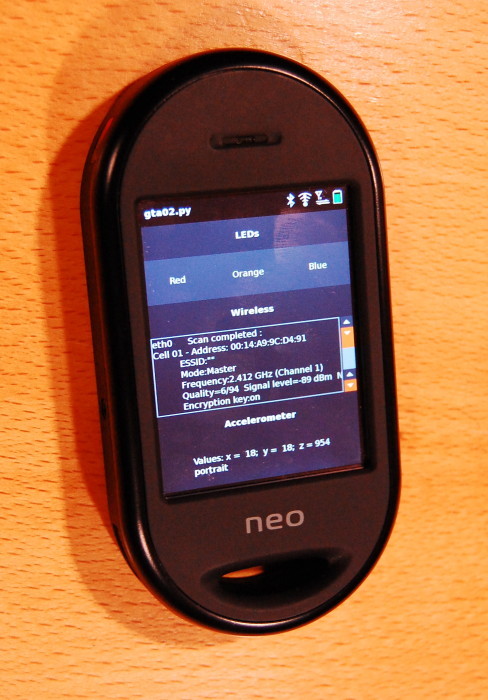
Openmoko

At this point it would be remiss not to mention two notable exceptions. The first of these being Openmoko, which set out to create a family of mobile phones with an open hardware specification — schematics and mechanical CAD files were provided — and open source O/S. Also another consumer electronics product, the Chumby, an embedded computer with a touch screen and WiFi.

In addition to which, Elphel had been quietly producing open hardware and free software powered video cameras for some time. Notably also there was OpenSPARC from Sun and the grassroots open silicon community, OpenCores, together with its flagship project, OpenRISC. These and other early open silicon efforts are covered in more detail in Gareth’s article, Digital FOSSils.

OSHUG #1

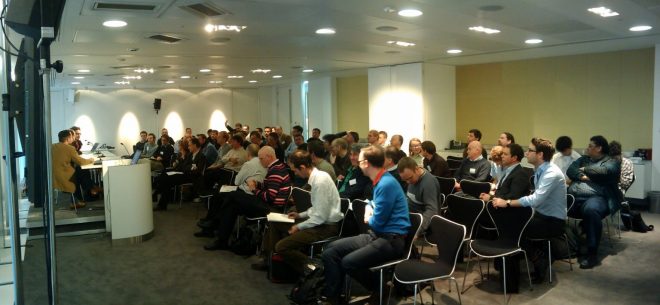
The nascent open hardware movement had started to gather momentum and in December 2009, Nesta, the UK based charity and innovation foundation, hosted a one day event dedicated to the topic. This served as a pivotal moment for many of those of us who attended and one outcome of this being the formation of the Open Source Hardware User Group.
Nesta-1536x710

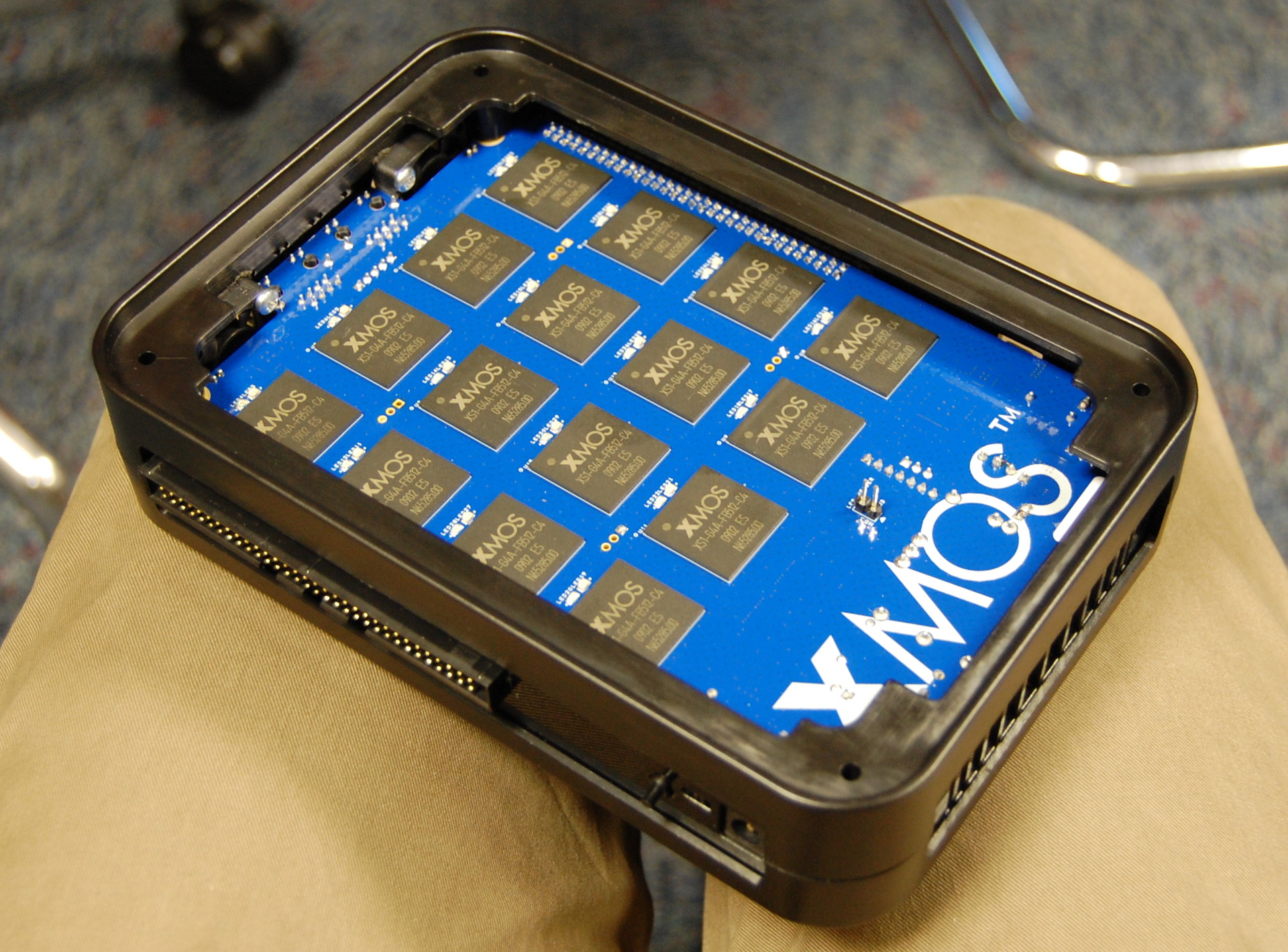
OSHUG was co-founded in early 2010 by Paul Downey, Alan Wood and myself. Inspired by the Nesta event and also encouraged by UK semiconductor company, XMOS, which had decided to publish its development board designs as open hardware.

Fortunately, Paul and I both worked for BT’s open source innovation unit, Osmosoft, where community events were part of its remit. So on Thursday 29th April 2010 we hosted the first ever OSHUG meeting. For this we were honoured to have Professor David May — architect of the Transputer and then CTO of XMOS — present.
We decided from the outset that, although the focus would primarily be hardware with liberal licensed design artefacts, we would also encourage talks on related topics, such as embedded development, along with tools and techniques employed in hardware design and manufacture. A policy which has served OSHUG well and led to an ever interesting mix of topics.

A community grows

The first few meetings really enabled the group to establish itself and this wouldn’t have been possible without the support of BT Osmosoft. Themes explored included licensing and community, along with topics such as software-defined radio and FPGA development. For the sixth meeting we were hosted by London Hackspace and for the seventh the BBC, which featured talks on the BBC Computer Literacy project — which gave birth to the BBC Micro — and Domesday project.

The eighth meeting was the last that was held at the Osmosoft offices (the security arrangements at the Westminster telephone exchange we occupied were… tricky).

For the ninth meeting we were kindly hosted by Skills Matter. This featured an introduction to FPGA programming from Omer Kilic, a talk on OpenCores and OpenRISC from Dr Jeremy Bennett, and Lawrence Wilkinson gave a talk on emulating an IBM System/360 mainframe in FPGA.

….
Read the rest!

Ten Years of Open Source Hardware

KiCad and FreeCAD meetup with Anool on Sat. May 2nd

EW6q5tUXsAApKYP

There will be another KiCAD and FreeCAD meetup tomorrow with Anool on Saturday, May 2nd, at:

  • 9:00 US EDT / 13:30 UTC / 15:30 CEST / 19:00 India

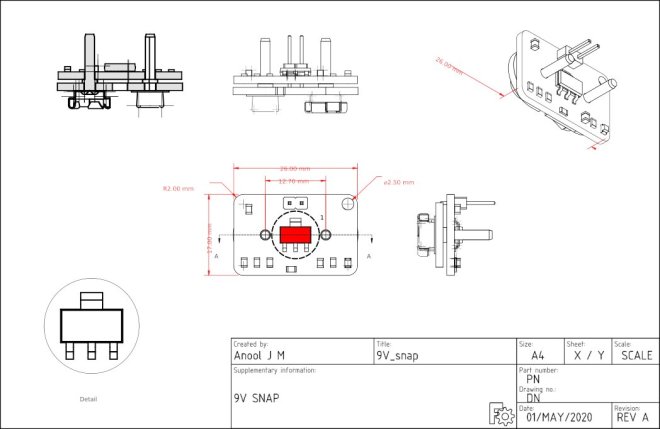
TechDraw basics – I’ll demo using the FreeCAD TECHDRAW workbench to produce dimension drawings of KiCAD PCB.

Sometimes, it is useful to add this to project documentation.

Will try & answer questions too.

Join the Jitsi Meeting


KiCad and FreeCAD meetup with Anool on Sat. May 2nd

Virtual Dorkbot PDX on Monday, May 4th

Exciting news!  Dorkbot PDX will be moving to cyberspace and everyone can now join in:
Screenshot from 2020-04-30 13-53-06

Virtual Dorkbot Meetup

Part virtual hackathon, part virtual geek social, these virtual biweekly meetings are a time for you to virtually join others for insight, inspiration or just insanity.

Bring your virtual toys for others to see, or log on to see what others have been painstakingly chipping away at in their spare time.

Whether it’s code or chips, hacking of all sorts is encouraged. But we also like to hear your crazy ideas, so please come join us online and bring your willingness to share your brilliance.

p.s. This event is open to everyone, dork or robot. No ^H membership is required to attend. All are welcome. That means you!

We’re meeting on jit.si as well as mozilla hubs, link here: https://kik.to/HY

https://www.meetup.com/CTRL-H/events/270343394/


Virtual Dorkbot PDX on Monday, May 4th