Adafruit becomes the company with the most certified OSHW

Exciting news from Adafruit:

4-Adafruit-Open-Source-Hardware-Logo-e1586378123382-1
Adafruit has become the #1 most OSHWA certified open-source hardware company

Yesterday, April 20th, Adafruit became the #1 most OSHWA certified open-source hardware company. In the last 27 days, 387 boards have been submitted by Adafruit for review by the Open Source Hardware Association (OSHWA). Of those 387 boards, 54 have already been approved. There are around 6 boards left to be submitted, which should  bring the number of approved Adafruit boards to around 393.

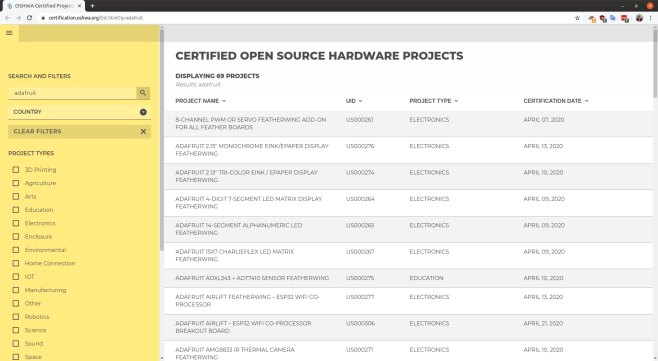
View the the full list of the certified boards:

Screenshot from 2020-04-22 13-42-15

Find out more about the Open Source Hardware Association (OSHWA) and their certification process.

Adafruit becomes the company with the most certified OSHW

OSHWA virtual talk: Open Source Nostalgia with Libi Rose Striegl

Screenshot from 2020-04-22 21-53-47

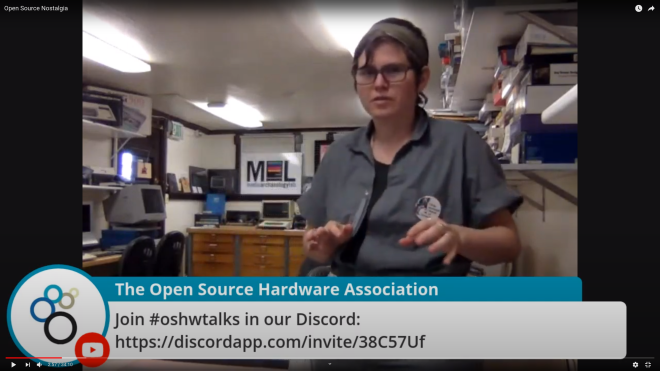
Join OSHWA this Wednesday, April 22nd, for a live virtual talk:

Open Source Nostalgia

Speaker: Libi Rose Striegl

Using open source projects to enable modern use of retro-tech is a
foundational part of my art practice. Open source practices are a
central part of my teaching. This forms a base for art and teaching
around technology that is empowering and joyful while still coming
from a place of critical learning.

The talk will be streamed live on OSHWA’s YouTube channel.

To join the discussion, visit the #oshwtalks channel on the OSHWA Discord server.

OSHWA virtual talk: Open Source Nostalgia with Libi Rose Striegl

Hackaday: PCB Bring-Up Hack Chat

Join us on Wednesday, April 15 at noon Pacific for the PCB Bring-Up Hack Chat with Mihir Shah and Liam Cadigan!

The printed circuit design process is pretty unique among manufacturing processes. Chances are pretty good that except for possibly a breadboard prototype, the circuit that sits before you after coming back from assembly has only ever existed in EDA software or perhaps a circuit simulator. Sure, it’s supposed to work, but will it?

You can — and should — do some power-off testing of new boards, but at some point you’re going to have to flip the switch and see what happens. The PCB bring-up process needs to be approached carefully, lest debugging any problems that crop up become more difficult than need be. Mihir and Liam from inspectAR will discuss the bring-up process in depth, offering tips and tricks to make things go as smoothly as possible, as well as demonstrating how the inspectAR platform can fit into that process, especially with teams that are distributed across remote sites. If your board releases the Magic Smoke, you’ll want to know if it’s your design or an assembly issue, and an organized bring-up plan can be a big help.

Note: Liam will be doing a simulcast web demo of inspectAR via Zoom. ​

via PCB Bring-Up Hack Chat — Hackaday

Quote

iCEBreaker FPGA: new video streams and new content

https://twitter.com/esden/status/1249917248795340800

An update from our Dorkbot PDX friend, Piotr Esden:

iCEBreaker FPGA: new video streams and new content

iCEBreaker Production

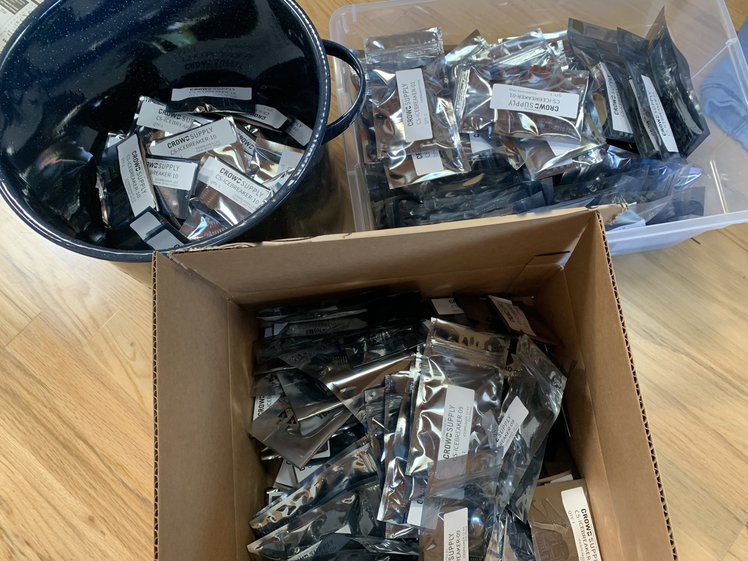
As you read in our last update in November, we finished fulfilling the campaign, but that does not mean work on iCEBreaker has stopped. We keep producing iCEBreakers and Pmods to keep 1BitSquared US and 1BitSquared DE, as well as Crowd Supply and Mouser, stocked.

For those of you who are patiently waiting for your shipments, don’t worry. A package with additional inventory is going out to the Mouser warehouse today!

Continuing Work on iCEBreaker

We are continuing work on new examples and additional iCEBreaker hardware. If you are not following 1BitSquared or Piotr on Twitter, you might have missed some stuff that Piotr is working on. Since January, Piotr started streaming on Twitch on a fairly regular basis. You can follow him on Twitch and be notified every time he goes live. Piotr is also announcing upcoming streams at least a day in advance on Twitter as well as on the 1BitSquared Patreon page.

As a result of the Twitch streams, we’ve had a few interesting new developments for the iCEBreaker platform. A few weeks ago, we published Litex RISC-V SOC generation examples that you can find in the iCEBreaker GitHub Organization. Piotr gave a Twitch stream presentation about the build system and how to use it. You can watch the stream Archive on Twitchdiode.zone, and YouTube. This example gives you the foundation to create your own SOC for the iCEBreaker, start adding your custom hardware to the RISC-V core, and program it in C or Rust. We are also working on MicroPython and maybe even CircuitPython support in the not too distant future.

Upcoming Twitch Stream

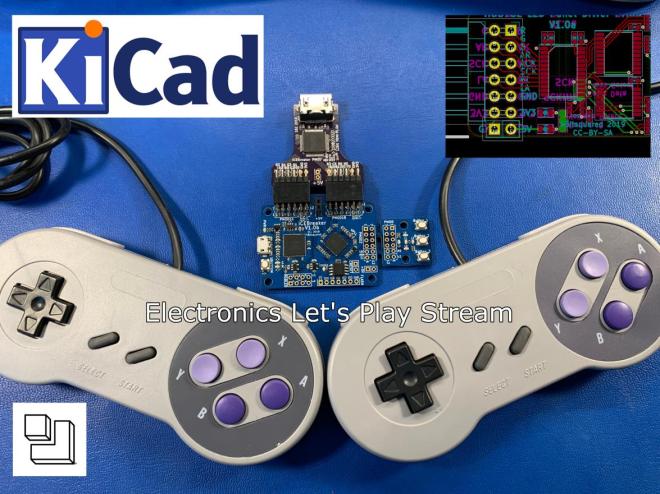
Piotr has scheduled a Twitch Stream for Tuesday, April 13th, 2020 at noon PDT. He will be working on a new Pmod for the iCEBreaker that will allow us to connect NES or SNES controllers from two very popular 8-bit game entertainment systems. 😉 That same Pmod will also contain a stereo audio output. This Pmod together with a DVI output, LED Panel output or VGA output will be an ideal combination to recreate old or build new custom game consoles and a wide range of emulations, for entertainment, preservation, and education.

electronics-lets-play-stream

If you are curious when the stream will happen in your timezone you can either check on Twitch itself, as there is a countdown timer till the next stream below the video streaming window, or you can check timeanddate.com.

Keep Supporting our iCEBreaker work

If you like to see continuing work and content creation for the iCEBreaker platform, and you already have all the hardware you need, then consider supporting us through Patreon. We keep adding perks for Patrons, like KiCad panel templates and behind the scenes news. We have a few very generous supporters that make the Twitch streams possible, but any additional support is appreciated.

Stay in Touch

And don’t forget, the continuing development and support for iCEBreaker keeps on rolling on the 1BitSquared Discord server, and iCEBreaker forum! So join the fun and show off your iCEBreaker projects! 🙂

Stay safe and healthy,
Piotr and Danika

iCEBreaker FPGA: new video streams and new content

Three years of HardwareX: Where are they now?

After three years of online publications, HardwareX may have solidified itself as an academic journal for open-source hardware. We originally wrote about HardwareX back in 2016. At the time, HardwareX hadn’t even published its first issue and only begun soliciting manuscripts. Now after three years of publishing, six issues as of October 2019 (with the seventh scheduled for April 2020), and an impact factor of 4.33, it’s fair to say that Elsevier’s push into open-access publications is on a path to success.

To give you a bit of background, HardwareX aims to promote the reproducibility of scientific work by giving researchers an avenue to publish all the hardware and software hacks that often get buried in traditional manuscripts. The format of HardwareX articles is a bit different than most academic journals. HardwareX articles look more like project pages similar to Hackaday.io. (Maybe we inspired them a bit? Who knows.)

It’s a bold attempt on Elsevier’s part because although open-access is held as an ideal scenario for scientific work, such efforts often come under quite a bit of scrutiny in the academic community. Don’t ask us. We can’t relate.

Either way, we genuinely wish Elsevier all the best and will keep our eyes on HardwareX. Maybe some of our readers should consider publishing their projects in HardwareX.

via Three years of HardwareX: Where are they now? — Hackaday

Quote

CircuitBrains Deluxe launches on Crowd Supply

A tiny, CircuitPython-compatible ARM Cortex-M4 module  Kevin Neubauer has launched on Crowd Supply:
Screenshot from 2020-04-09 12-47-51

CircuitBrains Deluxe

Easily Add a Powerful Microcontroller To Your Next Project

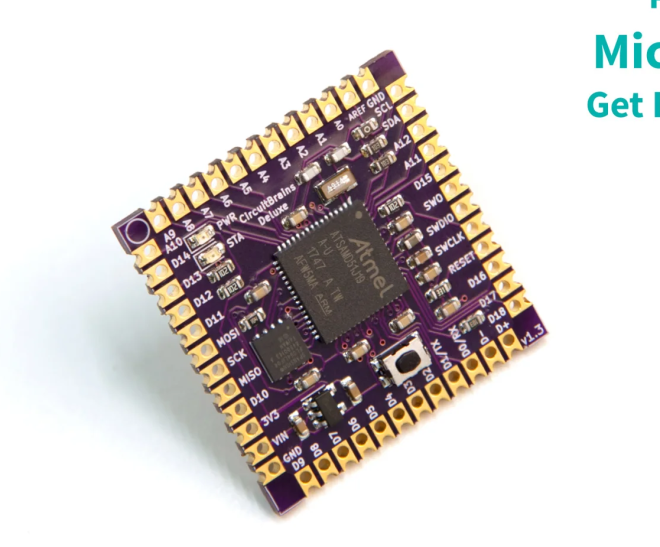
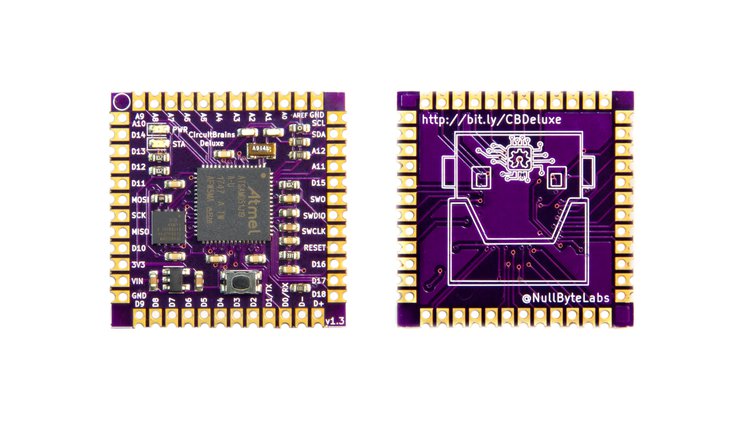
CircuitBrains Deluxe is the smallest soldererable ATSAMD51 module. Skip on all the tedious work of adding a 32-bit microcontroller to your next project. We’ve taken care of the tough work of pin mappings, power & decoupling layout, clock, flash, assembly, bootloader, and firmware. All you need to do is drop a footprint into your next PCB design project, connect your peripherals and USB connector, then solder it on and write your code.

Just Solder It On

Save time and frustration on your next project. We’ve taken care of the finicky fine-pitch surface mount assembly for you. CircuitBrains comes in an easy-to-solder castellated module format. You can either incorporate it into your project PCB design, or solder wires directly to it via the extra holes in each castellated pad. We’ve also made it easier to hand solder these modules by including a larger “hand solder” PCB footprint for your design.

Add Some Power to Your Project

The core of CircuitBrains Deluxe is the Microchip ATSAMD51J19 32-bit ARM Cortex M4 microcontroller, which can run up to 120 MHz. In addition to a powerful microcontroller, each CircuitBrains Deluxe module has 8 MB of Quad SPI flash onboard. You’ll have plenty of space for your project code and media files.

Easy to Program

CircuitBrains comes preloaded with CircuitPython. Who doesn’t love Python on microcontrollers? Plug your device into USB, modify your code, and see the changes take effect as soon as you hit Save.

Small Form Factor

CircuitBrains Deluxe won’t take up a lot of space. It was designed to be used in small projects. At just over 1 square inch (29 mm), there aren’t many places this thing won’t fit into.

CircuitBrains Deluxe launches on Crowd Supply

Altium Board importer for KiCad

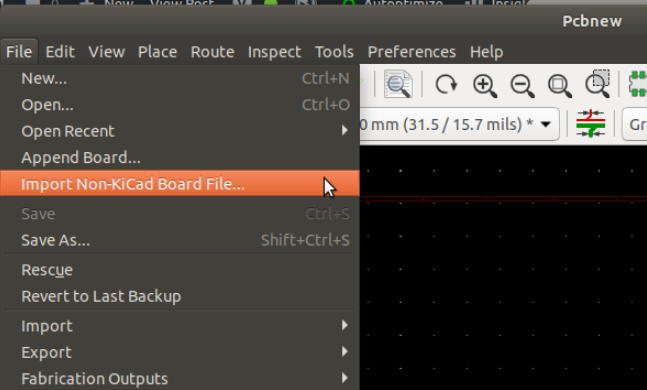
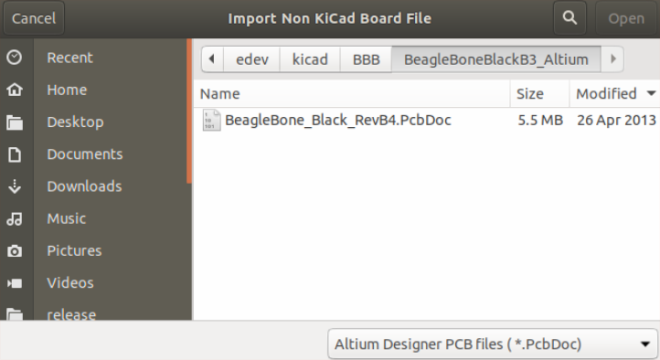
Thomas Pointhuber got Twitter excited yesterday with this video of importing Altium design into KiCad: 

Thomas Pointhuber has been developing an Altium importer and it was finally merged into KiCad:

Altium Board importer

This is the foundation to add support for native Altium import. Contributions are very welcome, because this is a quite some amount of work.

The work is mainly based on https://github.com/thesourcerer8/altium2kicad, which is an existing Altium Designer -> KiCad converter written in Perl. Because Altium Circuit Studio and Altium Circuit Maker uses quite similar file formats, I try to support them as well in one go.

My current workflow is to try to understand the existing code, and build a binary documentation of the Altium format using Kaitai Struct. This allows fast iterations, and tells me if something is parsed incorrect.

CNX Software has a nice blog post on how to build the development version of KiCad:

Screenshot from 2020-04-05 18-03-15

How to Build KiCad on Ubuntu 18.04 and Import Altium PCB Files

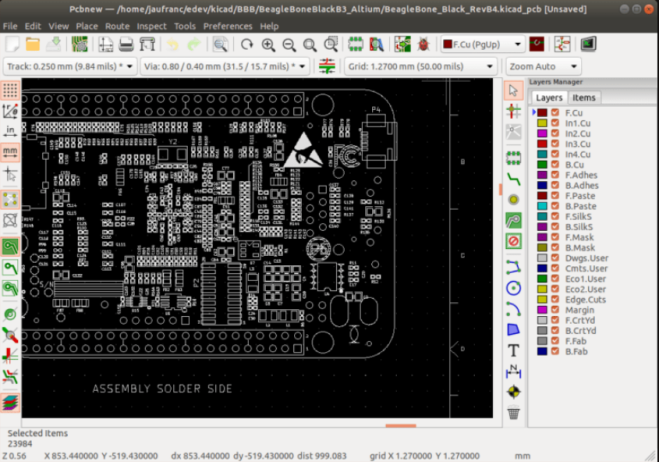
KiCad open-source EDA (Electronics Design Automation) suite software is now very popular, and many new projects are designed with the utility. AFAIK, some companies like Olimex switched all their new designs to KiCAD. But since many schematics and PCB layouts have been designed with other tools like EAGLE, Orcad Allegro, or Altium PCB design tools, it would be nice to be able to import those designs into KiCad.

Screenshot from 2020-04-05 18-36-18Screenshot from 2020-04-05 18-36-27

Altium Board importer for KiCad

Adafruit submitting OSHW certifications for boards

adafruit-oshwa

Exciting news from the Adafruit team, they have started the Open Source Hardware certification process for a bunch of their boards:

Adafruit submitting OSHW certifications for boards

Adafruit is an Open Source Hardware and Software company. To that end, Adafruit has begun working to submit many of their boards for certification by the Open Source Hardware Association. According to OSHWA:

“The certification program exists to make it easy for creators and users to identify hardware that follows the community definition of open source hardware maintained by OSHWA. Hardware projects that display the certification logo are licensed and documented in a way that makes it easy for users to use and build upon them.”

By registering their boards with OSHWA, Adafruit aims to ensure users that the products they sell are open-source, and easy to learn about.

Here are the boards that have recently been submitted:

CircuitPython Boards

FeatherWings

Keep an eye out for more updates on this process.

Adafruit submitting OSHW certifications for boards

Join two KiCad livestreams TODAY

Screenshot from 2020-04-01 16-17-56

At 9:00 AM US PDT today, April 1st, KiCad leader developer Seth Hillbrand will be hosting a KiCad Community meetup video conference on Jisti Meet:

Last week’s meetup was nice to see and talk with other KiCad users. Let’s do it again this week.

This week, I’m happy to answer questions and I’ll be working through designing a KiCad version of the Medtronic OpenVentilator project (http://www.medtronic.com/openventilator 5). You may have heard that Medtronic (a multi-billion $ company) bought the company that cancelled the original gov’t contract 2 for low-cost ventilators in 2015 and then this week released a “kind of” open source version 3 of their current (not low-cost) ventilator.

In reality, they released scans of the schematics and some word documents for bring-up procedures. I’m going to see if we can turn the scans into a set of useful KiCad schematics + board files. This still doesn’t get to what’s needed to actually recreate more of these ventilators but it is a needed first step.

If you are curious about recreating designs from incomplete schematics, reverse engineering in KiCad or just want to hang out and chat, please stop by.

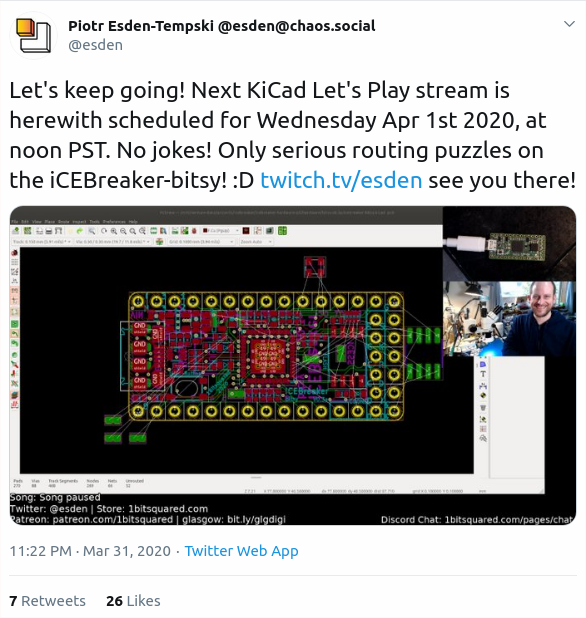
Then at 12:00 PM US PDT, Piotr Esden will livestream KiCad board layout:

Electronics Let’s Play – iCEBreaker-bitsy update/design work Ep. 3

Screenshot from 2020-04-01 16-15-10

Join two KiCad livestreams TODAY