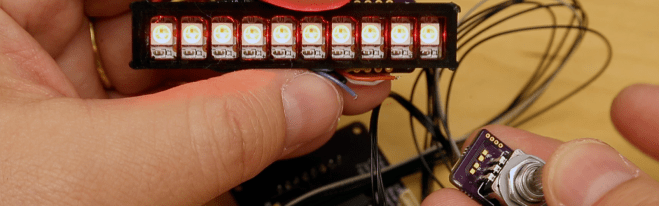
Tindie is a great place to find uncommon electronic components or weird/interesting boards. [Xose Pérez] periodically “stroll the isles” of Tindie to keep up on cool new components, and when he saw Panasonic’s Grid_EYE AMG88 infrared sensor, [Xose] knew that he had to build something with it. The awesome find is an 8×8 IR array…
Uncategorized
Hackaday: Show Us Your Internet of Useful Things by Monday
Don’t forget to get your connected device entered in the Hackaday Prize by Monday morning. The current challenge is IuT ! IoT, a clever tilt at the Internet of Things, which is so hot right now. We don’t just want things to connect, we want that connection to be useful, so save your Internet Toasters…
via Show Us Your Internet of Useful Things by Monday — Hackaday
Hackaday Prize Entry: MakerNet
One of the biggest trends in whatever market ‘Maker’ stuff belongs to is the Legofication of electronics. Building electronics is hard, if you haven’t noticed. Anything that turns transmission lines, current loops, and RF wizardry into something a five-year-old can use has obvious applications to education. For his Hackaday Prize entry, [Jeremy Gilbert] is building…
Hackaday: Ohm? Don’t Forget Kirchhoff!
It is hard to get very far into electronics without knowing Ohm’s law. Named after [Georg Ohm] it describes current and voltage relationships in linear circuits. However, there are two laws that are even more basic that don’t get nearly the respect that Ohm’s law gets. Those are Kirchhoff’s laws. In simple terms, Kirchhoff’s laws…
LiFePO4wered/Pi+
Patrick Van Oosterwijck created this board to power the Raspberry Pi with a LiFePO4 battery:
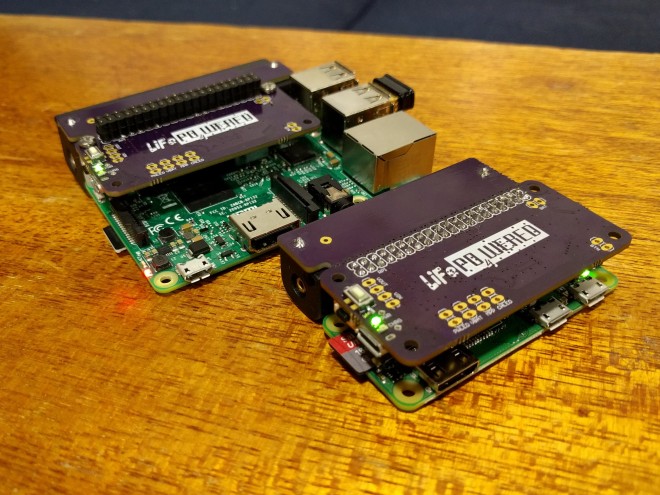
LiFePO4wered/Pi+
Many IoT and other projects are based on the Raspberry Pi, but usually little thought is given to the power supply. Most project use generic cell phone adapters or USB power banks, which is fine for one-off projects where the duct taped parts and cabling don’t matter and it’s expected that SD cards will die because power was removed with the Pi running.
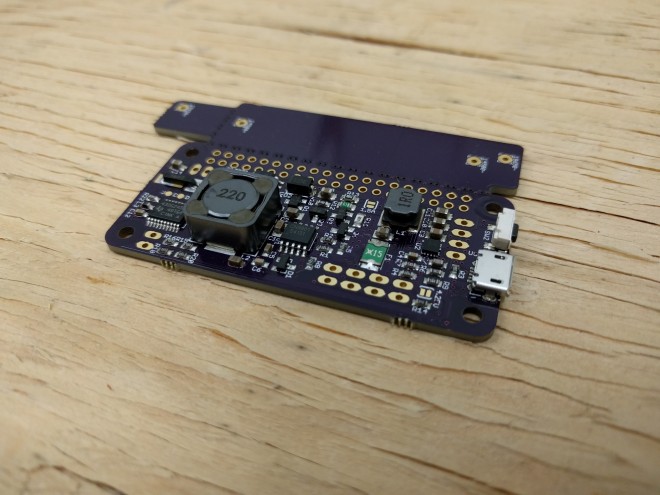
But when you need reliable non-stop operation for your prototypes, or you’re ready to turn your project into a good looking product, or you want to use different power sources such as solar, it’s time to look for a serious power manager for your Pi.
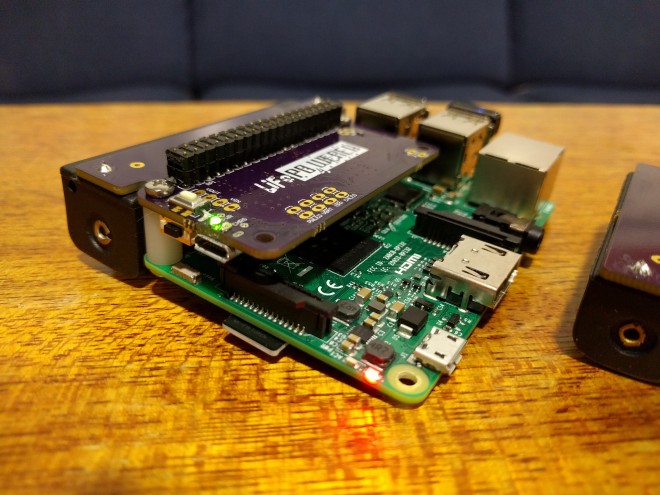
Built on the solid foundation of the #LiFePO4wered/Pi, this project provides Pi bootup and shutdown management based on button or touch, input voltage, battery voltage and time, all while making sure the Pi always performs a clean shutdown before power is removed.

Designing PCBs for Assembly
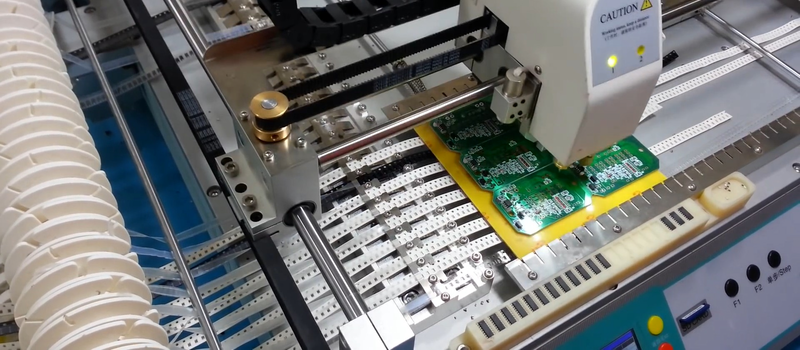
Designing pcbs for assembly is easy, right? We just squirt all the footprints onto a board layout, connect all the traces, send out the gerbers and position files, and we’re done–right? Whoa, hold the phone, there, young rogue! Just like we can hack together some working source code with variables named after our best friends, we can also…
via Designing for Fab: a Heads-Up before Designing PCBs for Professional Assembly — Hackaday
Hack Your Hot Air Station
It used to be hot air soldering gear was exotic, but not anymore. There are plenty of relatively inexpensive choices. Many of these appear to be the same despite having different brand names and model numbers. One that is common and inexpensive is the 858D. These run about $50. [Gabse] has one and decided to…
Photos of Bring-A-Hack after Maker Faire Bay Area 2017
Thanks to everyone that came to Bring-A-Hack last weekend after Maker Faire Bay Area! Here’s a gallery of photos:
Bring-A-Hack after Maker Faire Bay Area 2017
People were quite impressed by this soldering handiwork by Mike Szczys of Hackaday:
Mike also did a great job tweeting about all the wonderful hacks such as this care-free robot:
Follow #bringahack on Twitter to see more!
CPLDuino
Jeremy g. designed a mashup between an Arduino Uno and a Xilinx 9536XL CPLD:
CPLDuino
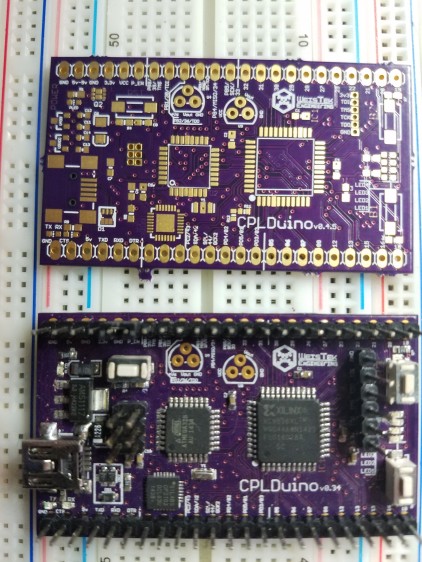
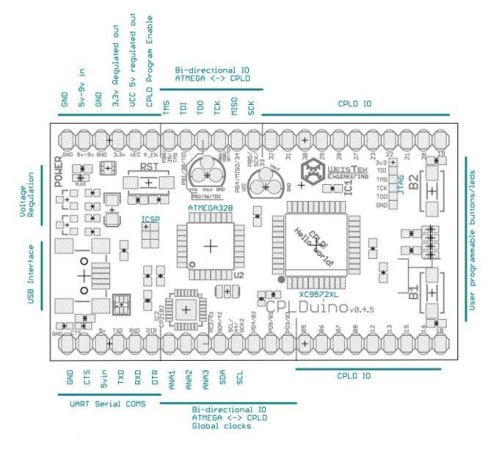
The XCACDV3, CPLDuino is a single board solution to meld Atmels ATmega 328 RISC microcontroller with a Xilinx XC9536XL1 CPLD. Allowing for rapid prototyping of digital circuits without the need for a breadboard. The CPLDuino is capable of passing information from the on board ATMega328 to the CPLD and vice versa, allowing for real-time data monitoring. Thanks to the on-board CP2102 USB to Serial UART, data can be viewed and manipulated via the virtual com port.
PewPew FeatherWing
From Radomir Dopieralski on Hackaday.io:
PewPew FeatherWing
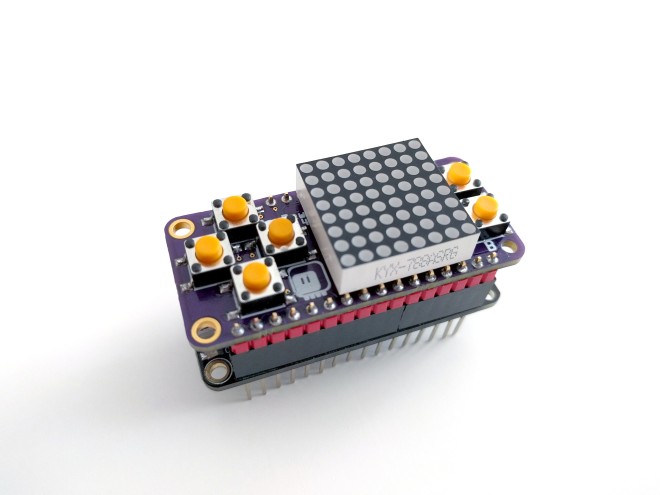
A shield for Adafruit Feather boards with buttons and a LED matrix display, for simple games.