KiCAD Best Practices: Library Management

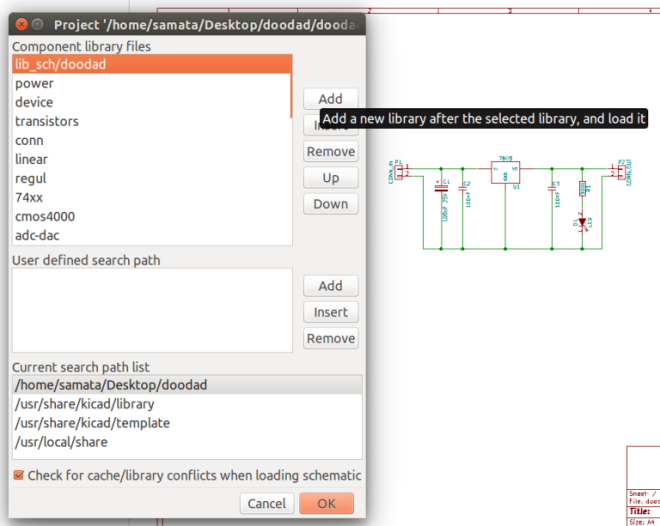
One common complaint we hear from most new KiCAD users relates to schematic and footprint libraries. The trick is to use just one schematic symbol and footprint library each with your project. This way any changes to the default schematic libraries will not affect your project and it will be easy to share your project with others without breaking…

via KiCAD Best Practices: Library Management — Hackaday

eeschema_lib.png

KiCAD Best Practices: Library Management

Wireless Terminal Over ESP8266

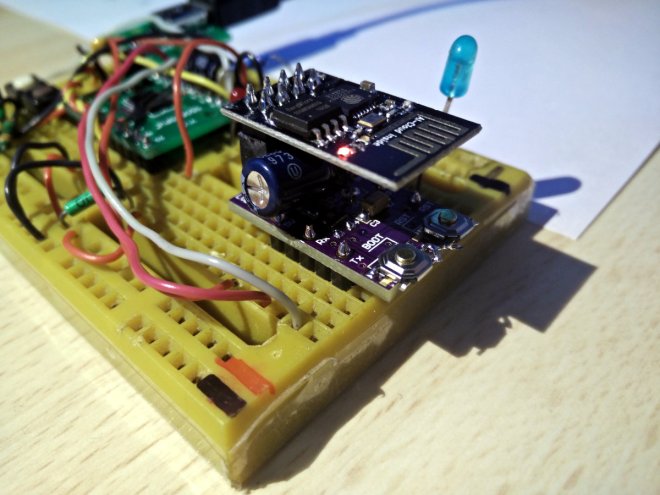
From debug messages to the fundamental ‘hello world’, serial communication does it all over three little wires. Now imagine being able to cut the cord to your next microcontroller project and use your phone as a VT100 terminal. This was the premise of [Ondřej Hruška]’s Wireless Terminal Project where he took an ESP8266 and added an in-browser terminal emulator which can be accessed…

via Wireless Terminal Over ESP8266 — Hackaday

assembled-on-bb.jpg

Wireless Terminal Over ESP8266

Hackaday Prize Entry: WiFi ePaper

[Frank Buss] designed an electronic version of a sticky note: a WiFi enabled, solar-powered ePaper, with magnets embedded in the casing. It’s based on the new ESP32, and the idea is that you can update it via your smart-phone or over the internet via a cloud app to show any message you want. Being an…

via Hackaday Prize Entry: WiFi ePaper — Hackaday

Hackaday Prize Entry: WiFi ePaper

Hackaday: “A Few of Our Favorite Chips”

Raindrops on roses, and whiskers on kittens? They’re alright, I suppose. But when it comes down to it, I’d probably rather have a bunch of 4051, 4052, and 4053 analog multiplexers on the component shelf. Why? Because the ability to switch analog signals around, routing them at will, under control of a microcontroller is tremendously…

via A Few of Our Favorite Chips: 4051 Analog Mux — Hackaday

Hackaday: “A Few of Our Favorite Chips”

Hackaday: Cheap Helping Hands

We think of helping hands as those little alligator clips on a metal stand. They are cheap and fall over, so we tend to buy them and don’t use them. However, if you are willing to put $35 or $40 into it, you can get the newer kind that have–well–tentacles–on a heavy base. [Archie_slap] didn’t…

via Cheap Helping Hands: Just Add Time — Hackaday

Hackaday: Cheap Helping Hands

3D Printing A Synthesizer


From Brian Benchoff on Hackaday:

3D Printing A Synthesizer

Before there were samplers, romplers, Skrillex, FM synths, and all the other sounds that don’t fit into the trailer for the new Blade Runner movie, electronic music was simple. Voltage controlled oscillators, voltage controlled filters, and CV keyboards ruled the roost. We’ve gone over a lot of voltage controlled synths, but [Tommy] took it to the next level. He designed a small, minimum viable synth based around the VCO in an old 4046 PLL chip

The circuit for this synth is built in two halves. The biggest, and what probably took the most time designing, is the key bed. This is a one-octave keyboard that’s completely 3D printed. We’ve seen something like this before in one of the projects from the SupplyFrame Design Lab residents, though while that keyboard worked it was necessary for [Tim], the creator of that project, to find a company that could make custom key beds for him.

Read more on the F0 on Tommy’s blog:

Hello, F0

Say hello to the F0: a minimalist, analog, square wave synthesizer.

3D Printing A Synthesizer

Hackaday Prize Entry: Secure Storage on SD Cards

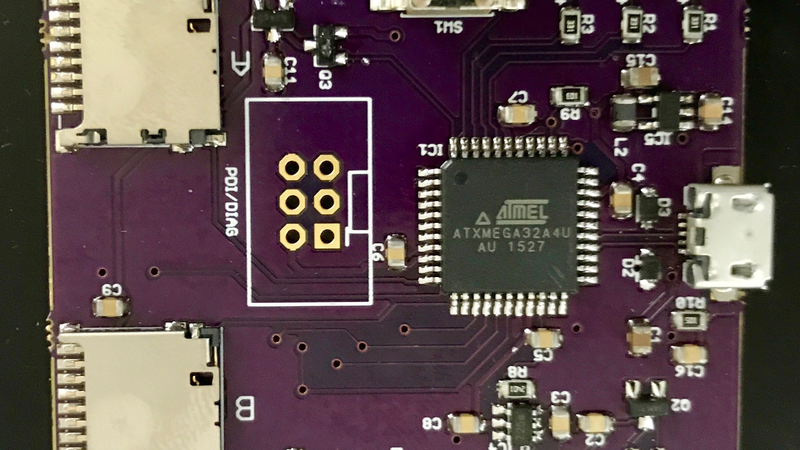
Here’s a puzzler for you: how do you securely send data from one airgapped computer to another? Sending it over a network is right out, because that’s the entire point of an airgap. A sneakernet is inherently insecure, and you shouldn’t overestimate the security of a station wagon filled with tapes. For his Hackaday Prize…

via Hackaday Prize Entry: Secure Storage on SD Cards — Hackaday

Hackaday Prize Entry: Secure Storage on SD Cards

Retro CPC Dongle – Part 22

From the Intelligent Toasters blog:

Retro CPC Dongle – Part 22

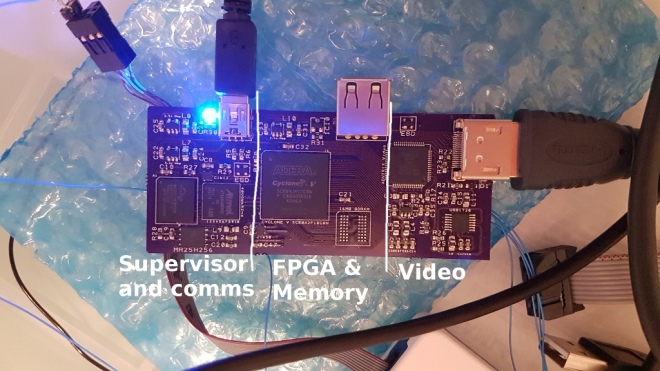
The screen shot below says it all. Yay! Video output from the CPC2.0! I promised myself that I wouldn’t post those shaky photos/videos that people seem to post of their game/emulator/screen. Unfortunately, at this time a photo of the screen is the best I can do. Longer term, I’ll get a HDMI capture card from eBay […]

20170429_214442s.jpg

Retro CPC Dongle – Part 22