Portland Mini Maker Faire recap

Portland Mini Maker Faire made for a fantastic weekend at OMSI earlier this month.  We’ve shared our favorite photos of the fun.

Thanks to everyone that visited our booth.   It’s wonderful to meet our customers in person and hear about their projects!

Sergey Kiselev and his son stopped by our booth to show us projects they’ve created including this Intel Quark environmental sensors board.

People enjoyed seeing our full PCB panels in person and learning more about the manufacturing process.  We’ll also have them on display at our open house on Open Hardware Summit eve next week.

Low Voltage Labs had a bunch of fun easy-to-solder kits:

Mark Keppinger created this blinky board kit for people to learn to solder at the faire:

Visit our photo album for more!
Portland Mini Maker Faire recap

Hackaday Prize Entry: A Charlieplexed Wristwatch

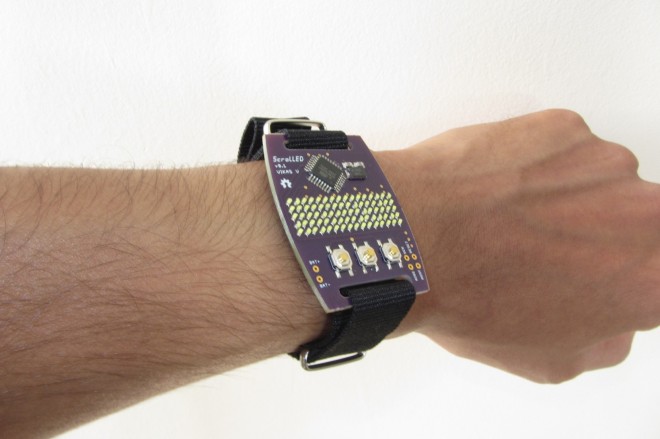
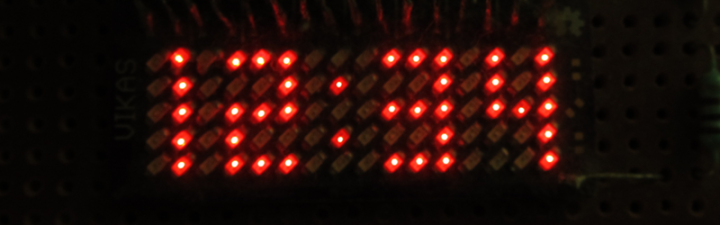
If there’s one thing we like, it’s blinky stuff, and you’re not going to get anything cooler than a display made of tiny SMD LEDs. That’s the idea behind this wristwatch and Hackaday Prize entry. It’s a tiny board, loaded up with an ATmega, a few buttons, and a bunch of LEDs in a big…

via Hackaday Prize Entry: A Charlieplexed Wristwatch — Hackaday

Hackaday Prize Entry: A Charlieplexed Wristwatch

Creating A PCB In Everything: Eagle, Part 2 — Hackaday

In the last (and first) post in this series, we took a look at Eagle. Specifically, we learned how to create a custom part in Eagle. Our goal isn’t just to make our own parts in Eagle, we want to make schematics, boards, and eventually solder a few PCBs. The board we’ll be making, like…

via Creating A PCB In Everything: Eagle, Part 2 — Hackaday

Creating A PCB In Everything: Eagle, Part 2 — Hackaday

Making A PCB in Everything: Eagle, Part 1 — Hackaday

For the first in a series of posts describing how to make a PCB, we’re going with Eagle. Eagle CAD has been around since the days of DOS, and has received numerous updates over the years. Until KiCad started getting good a few years ago, Eagle CAD was the de facto standard PCB design software…

via Making A PCB in Everything: Eagle, Part 1 — Hackaday

Making A PCB in Everything: Eagle, Part 1 — Hackaday

Wearable Navigational Aid for the Blind

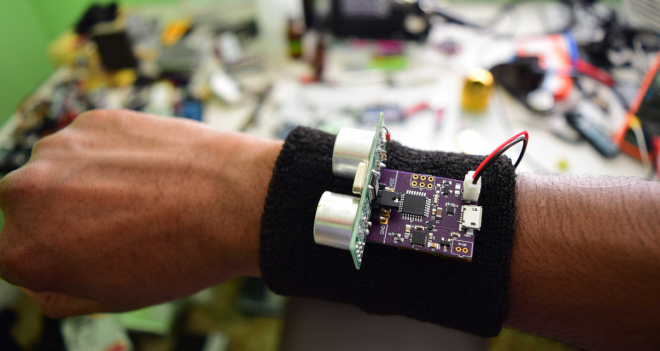
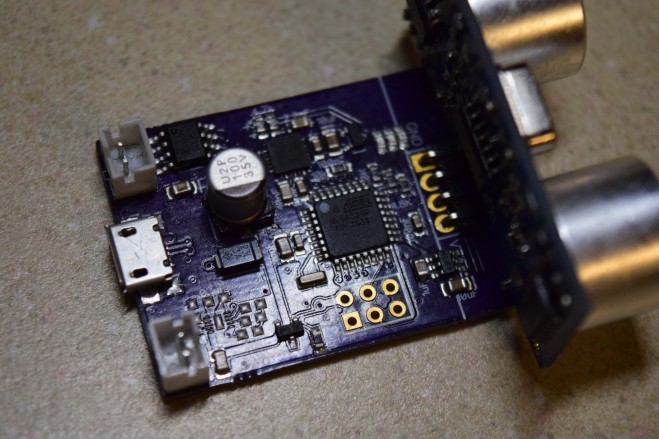
Neil Movva created this wearable project to assist the blind:screenshot-at-2016-09-20-10-57-32

Pathfinder – Haptic Navigation

wearable device that translates distance into haptic feedback. Users just wear the wristband (or glove) and point at objects up to 500 centimeters away, and feel gentle pulses at their fingertips corresponding to the object’s distance
5843931442812003701

The design files and source code are available on GitHub:

githubneilmovva/pathfinder

Wearable Navigational Aid for the Blind

USBuddy: USB Development Tool

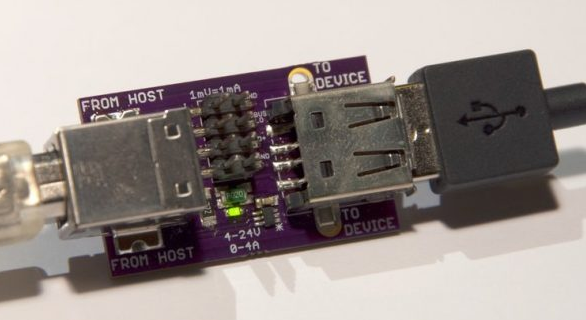
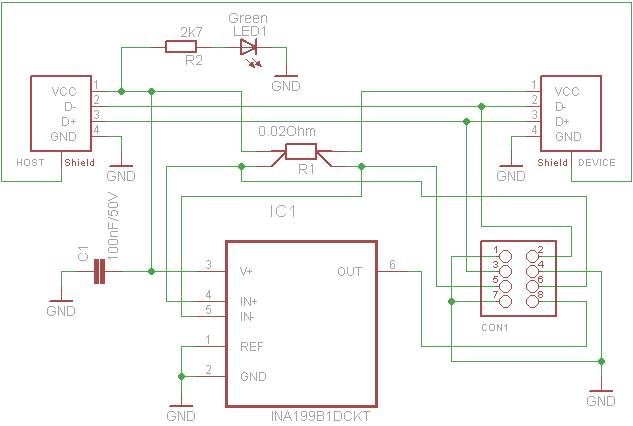
Kaktus Circuits created this board to analyze USB devices:

screenshot-from-2016-09-19-18-13-08

Tindie Blog: USBuddy

Easily tap into the USB signals coming and going while the device is still connected to the bus [..] monitors power consumption [..] handy for reverse engineering devices without having to take the device apart

usbuddy_1-0

The assembled board can be purchased on Tindie.  The hardware design files have be shared on GitHub:

github kaktus85/USBuddy


USBuddy: USB Development Tool

Hackaday: Get Your Ticket to SuperCon, the Greatest Hardware Creation Con

The world’s most excellent conference on hardware creation, the Hackaday SuperConference, is back. Get your tickets now for two magical days in Pasadena this November. This exclusive gathering of hackers, designers, and engineers is where brilliant people geek out with their peers. Talks tell the story of research, prototyping, product design, manufacturing, and getting that new…

va Get Your Ticket to SuperCon, the Greatest Hardware Creation Con — Hackaday

Hackaday: Get Your Ticket to SuperCon, the Greatest Hardware Creation Con

Hackaday Prize Entry: A Charlieplexed Wristwatch

6344261468860648419

Hackaday Prize Entry: A Charlieplexed Wristwatch

If there’s one thing we like, it’s blinky stuff, and you’re not going to get anything cooler than a display made of tiny SMD LEDs. That’s the idea behind this wristwatch and Hackaday Prize entry. It’s a tiny board, loaded up with an ATmega, a few buttons, and a bunch of LEDs in a big charlieplexed array.

Hackaday Prize Entry: A Charlieplexed Wristwatch

Smart Living Room with NodeMCU

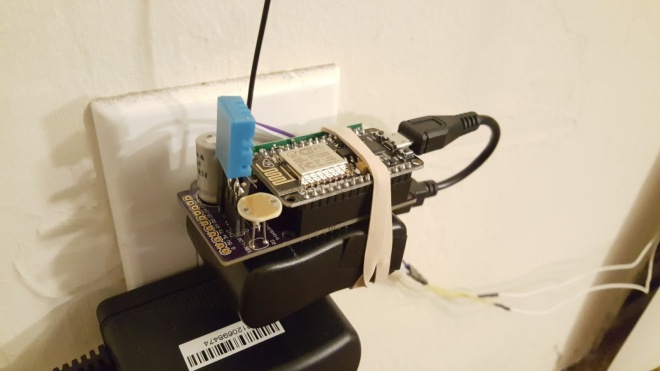
MobileWill revamped his living room monitor with a new board design:

20160821_223033

Living Room Node Upgrade

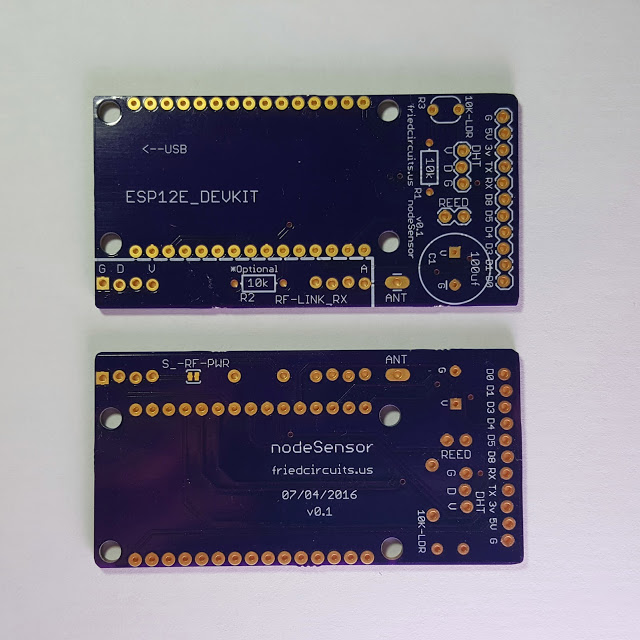
For over a year now the living room node and La Crosse Gateway has been sitting atop a plastic bin next to my patio slider in a mess of wires.  This is when you know you have too many projects lying around the house.  So this summer I decided to design a PCB with a nodeMCU that will replace both projects and mount atop of a power brick. I went with the nodeMCU since there is power nearby, ease of connecting directly to the MQTT broker, and I can broadcast more often without the power limitations of a battery. This project frees up two RFM12B boards so that they can be used for the other window and the front door.

The new board features:

  • 2x female headers (so the nodeMCU is removable)
  • DHT11 sensor for humidity/temperature
  • LDR for light level
  • 2pin header for reed switch attached to slider door
  • Connections for 433Mhz radio for the La Crosse outdoor temperature sensor
20160821_221832.jpg
Design files and code are available on GitHub:

github friedcircuits/nodeSensor


Smart Living Room with NodeMCU