Obsidian Boa: Greg Davill squeezes the ESP32 into a ItsyBitsy

Tom Fleet writes on Hackster about the latest open source board from the prolific Greg Davill:
image_AA1rCHSTD2

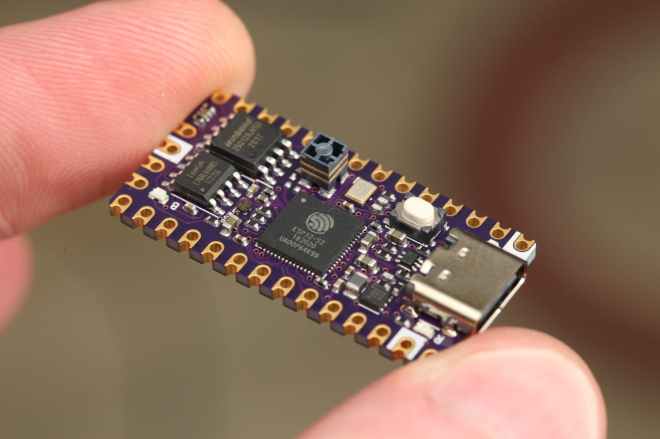
Meet Obsidian Boa: This ItsyBitsy — with WiFi — Is What It’s All About!

No, we’re not branching out into nursery rhymes, but it’s too hard to pass up on the chance offered by the latest development from Hackster favorite Greg Davill!

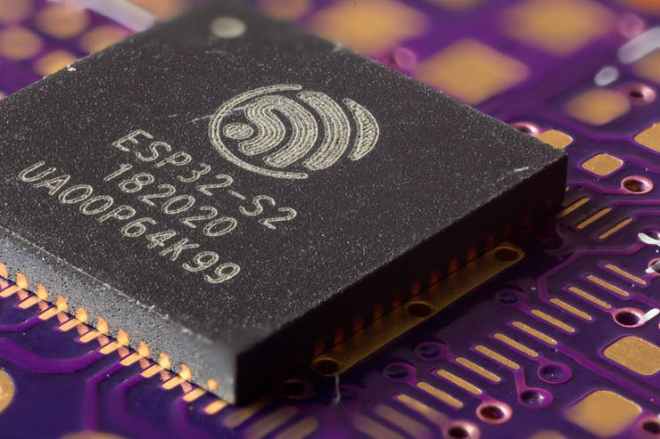
With the dust in his workshop only just settling (if that’s possible there…) from his successful OrangeCrab crowdfunding campaign, he’s gotten straight back to work, turning his sights from the Lattice ECP5, and setting them squarely on the Espressif Systems ESP32, with his latest creation — the ObsidianBoa!

While the above image is a render, the quality of Davill’s work shines through in both the the physical and the virtual world — some of his recent rendering work is hard to tell from reality.
image_hwhyR3mzg6

While there are a number of ESP32 development boards, there are few in such a diminutive form factor. The only one I know of, until now, has been the TinyPICO, from @unexpectedmaker. This is a fantastic board in it’s own right, and has been rightfully successful within the maker community.

Obsidian Boa has a few notable differences however, which might make it more suitable for certain applications.

The first point of note is where we get the title of this article from. Not just a descriptive phrasing, ItsyBitsy is a lesser-heard-of form factor — and just as we all know boards in the Arduino R3 layout, or the hugely popular Feather form factor from Adafruit, ItsyBitsy started out life as yet another Adafruit board format, and was shortly thereafter realized as a baby brother alternative to the well known iCEBreaker FPGA boards.
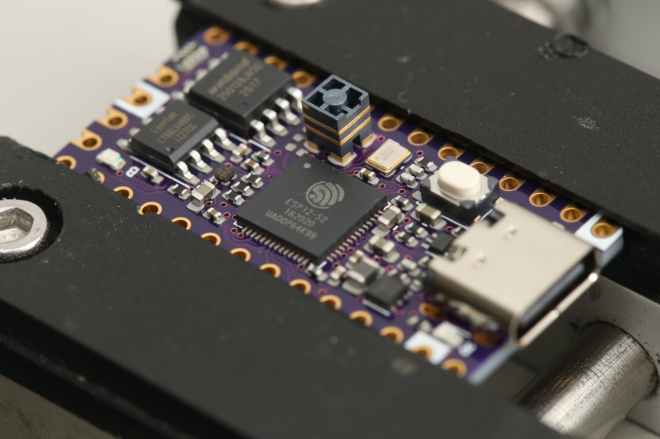
image_3w3adIdgXw

Obsidian Boa: Greg Davill squeezes the ESP32 into a ItsyBitsy

The Simplest TS100 Upgrade Leads Down A Cable Testing Rabbit Hole

By now, I must have had my Miniware TS100 soldering iron for nearly three years. It redefined what could be expected from the decent end of the budget soldering iron spectrum when it came on the market, and it’s still the one to beat even after those years. Small, lightweight, powerful, and hackable, it has even spawned direct imitations.

If the TS100 has a fault, it comes not from the iron itself but from its cable. A high-grade iron will have an extra-flexible PVC or silicone cable, but the TS100 does not have a cable of its own. Instead it relies on whatever cable comes on its power supply, which is frequently a laptop unit built with portable computing rather than soldering in mind. So to use it is to be constantly battling against its noticable lack of flexibility, a minor worry but one that I find irksome. I determined to find a solution, making a DC extension cable more flexible than that on my power supply.

via The Simplest TS100 Upgrade Leads Down A Cable Testing Rabbit Hole — Hackaday

Quote

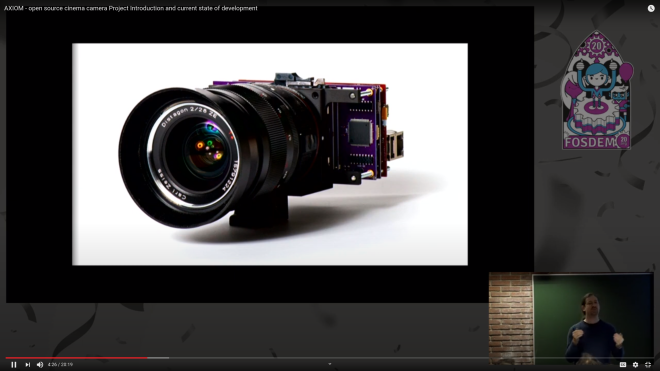
AXIOM: open source cinema camera at FOSDEM

Sebastian Pichelhofer of Apertus gave an exciting talk at FOSDEM earlier this year and the video is now on YouTube:

AXIOM – open source cinema camera Project Introduction and current state of development

The presentation will give a brief overview of the projects history & lessons learned during the course of developing a high tech camera device as community project. We also want to demo and explain the produced hardware, enclosures and sample footage then look at the challenges still ahead. Last 5 minutes reserved for Q&A

Screenshot from 2020-07-26 16-04-03

AXIOM: open source cinema camera at FOSDEM

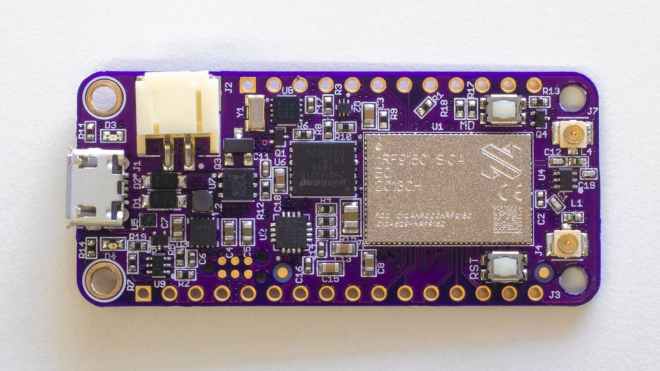
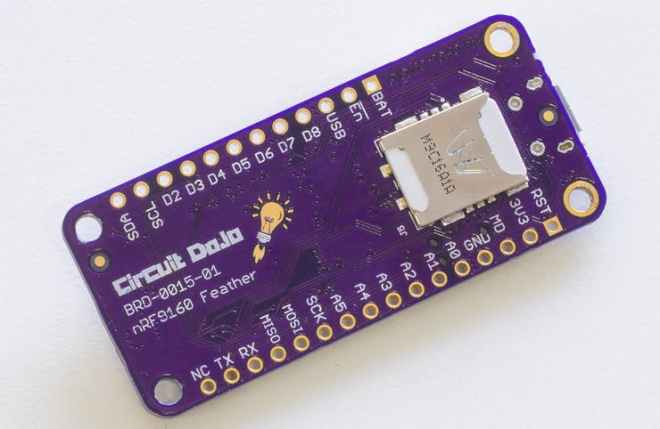
The nRF9160 Feather Is Now Served

Jared Wolff has design a Feather form factor board with the nRF9160:

_vuhruzmxps_blob_LWby6zDhG2

The nRF9160 Feather Is Now Served

Low-power shutdown, built-in 4FF SIM card slot, flexible power supply, and more.

I was a complete failure. My prototype wasn’t working. I spent at least an hour trying to rework a frustratingly large LTE module on an impossibly small circuit board.

It wasn’t going to work.

So I went back to the drawing board. I poured my years of hardware experience into a tiny form factor.

The end product?

Something smart. Something with LTE, NB-IoT, and GPS. Something anyone could get started with right away.

And thus, the nRF9160 Feather was born.

I need your help! 🙏

To make this campaign a reality, I need your help to meet our minimum order quantity of nRF9160 Feathers. Without that, we’re dead in the water! Head on over to the campaign page to reserve yours.

For those of you who’ve already committed, I thank you from the bottom of my heart. I can’t wait to get the nRF9160 Feather into your hands!

P.S. Huge thanks to Hackster and GroupGets for making this happen. You guys and girls are great. ❤

untitled_2_FCqZNSHpTW

The nRF9160 Feather Is Now Served

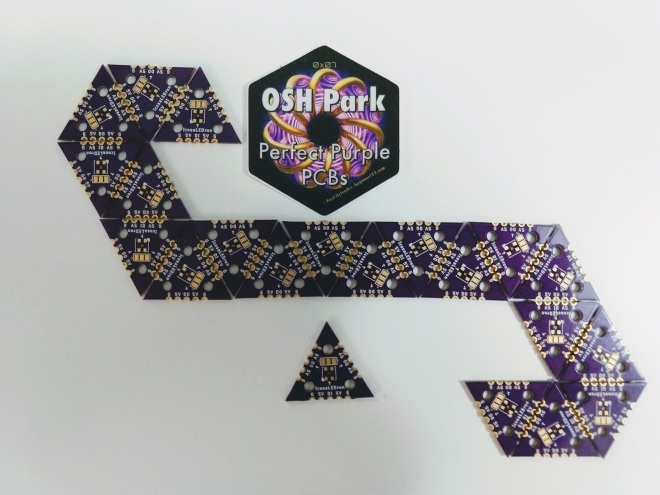
icosaLEDron by Evil Genius Labs

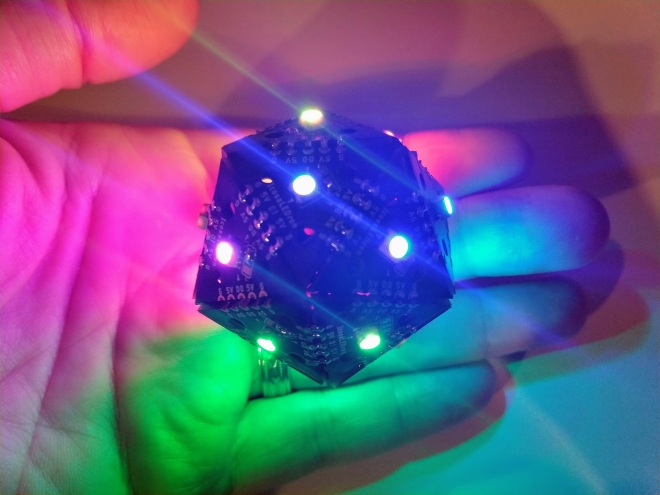
Jason Coon of Evil Genius Lab created an awesome 3-D PCB project named the icosaLEDron!

EdkAVzSX0AccZFpEdk1fcUWsAEmOnz

icosaLEDron by Evil Genius Labs

Ordering from OSH Stencils is now easier

Back in 2019, we added ability to order a stencil for your board design from OSH Stencils:

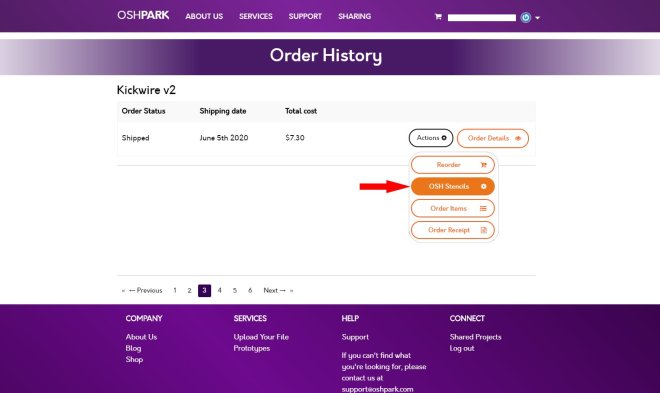
We have extended that capability so you can order from OSH Stencils based on the paste layers from your past OSH Park orders:
EaujomoUMAAr8PZ

Ordering from OSH Stencils is now easier

Printed TS100 Case Beats the Heat with a Bearing

As we’ve said many times in the past, the creation of custom cases and enclosures is one of the best and most obvious applications for desktop 3D printing. When armed with even an entry-level printer, your projects will never again have to suffer through the indignity of getting hot glued into a nondescript plastic box. But if you’re printing with basic PLA, you need to be careful that nothing gets too hot inside.

Which was a problem when [Oleg Vint] started work on this 3D printed case for the popular TS100 soldering iron. But with the addition of a standard 608 bearing, the case provides a safe spot for the iron to cool off before it gets buttoned back up for storage. Of course, you can also use the flip-out perch to hold the iron while you’re working.

As [Oleg] explains on the Thingiverse page for the case, he actually blended a few existing projects together to arrive at the final design. Specifically, the idea of using the 608 bearing came from a printable TS100 stand originally designed in 2017 by [MightyNozzle]. Released under Creative Commons, [Oleg] was able to mash the bearing stand together with elements from several other printable TS100 cases to come up with his unique combined solution.

via Printed TS100 Case Beats the Heat with a Bearing — Hackaday

Quote

Custom 16×16 matrix display PCB

Erik van Zijst writes about their latest project made with our “After Dark” service:
EdUOhStU0AAK80C
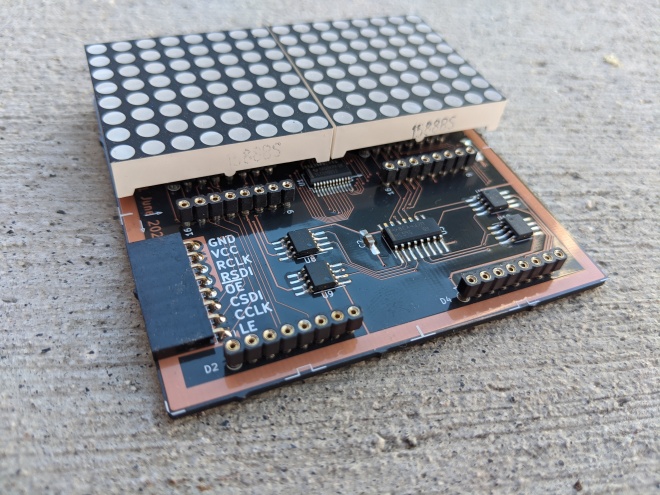
For a previous project I explored what it would take to create a text marquee on an 8×8 LED matrix display without microcontroller, using only 7400 chips, an old EEPROM and breadboard components. Matrix Displays I was interested in using an LED matrix display and I picked up some cheap 8×8 ones on Amazon. medium.com That worked, but 8×8 is very small to do anything interesting and so I wanted to give it another go, create a larger 16×16 panel, design a custom PCB and ultimately hook it up to a microcontroller this time to write some games for it.

View at Medium.com

Custom 16×16 matrix display PCB

Jerry Lawson: Father of the Video Game Cartridge

Jerry Lawson was an engineer from New York who had arrived at Fairchild Semiconductor in 1970 after having worked at various companies in the defense electronics industry. Working as part of their customer engagement effort, he achieved prominence in the company by revolutionising the point of contact with the customer using an RV (yes, a camping vehicle) converted as a demonstration lab for Fairchild products. He was lucky enough to be in the right place at the right time to be a member of the famous Homebrew Computer Club, cradle of so much of the later microcomputer industry, which put him at the center of a web of contacts covering the games business as it was in the early 1970s.

Though his employer was not involved in gaming, Jerry got his start in that field as a side project. When his friend Allan Alcorn installed the first Pong machine in Andy Capp’s Tavern it suffered from customers interfering with its coin mechanism to score free plays, so Jerry produced a game cabinet of his own called Demolition Derby that had a more robust system. This led to Fairchild Semiconductor International offering him the chance to start their new video game division, and the road to the Channel F was laid.

[..]

There are many names from the annals of computing history who roll off the tongue. People such as Jobs and Wozniak, Bushnell, Dabney, Sinclair, Miyamoto, or Miner. We should also add Jerry Lawson to that list, as his vision to make one console and sell multiple games, done inexpensively with the use of the PCB edge connector, set the standard for decades to come.

via Jerry Lawson And The Fairchild Channel F; Father of the Video Game Cartridge — Hackaday

Quote

RC2014 backplane constructed with flex PCB

We were exited to see this use of a flex PCB to create a backplane for the RC2014:

RC2014 is a simple 8 bit Z80 based modular computer originally built to run Microsoft BASIC. It is inspired by the home built computers of the late 70s and computer revolution of the early 80s. It is not a clone of anything specific, but there are suggestions of the ZX81, UK101, S100, Superboard II and Apple I in here. It nominally has 8K ROM, 32K RAM, runs at 7.3728MHz and communicates over serial at 115,200 baud.

RC2014 backplane constructed with flex PCB