MappyDot Distance Measurement Badge

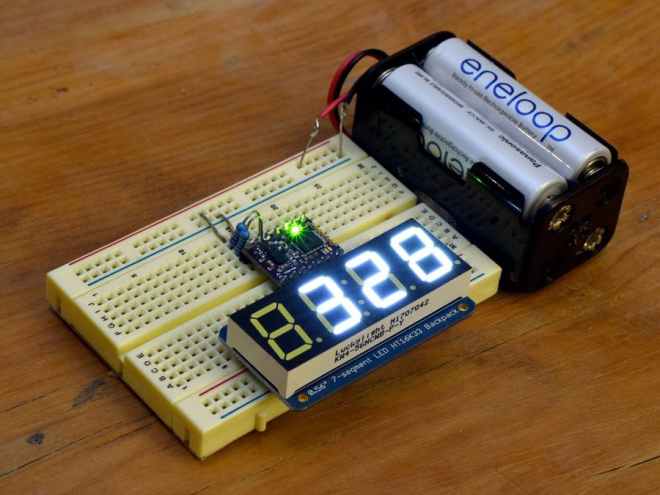
SensorDots created this standalone wearable badge that will show people how far away they are so they don’t accidentally run into you:
dsc_5468_s_nFtrvT5PAS

MappyDot Distance Measurement Badge

This project will show you how to create a standalone application with the MappyDot Plus working as an I2C master with an I2C 7 segment display. This example can also be adapted for use with a wide range of different client I2C devices for standalone applications.
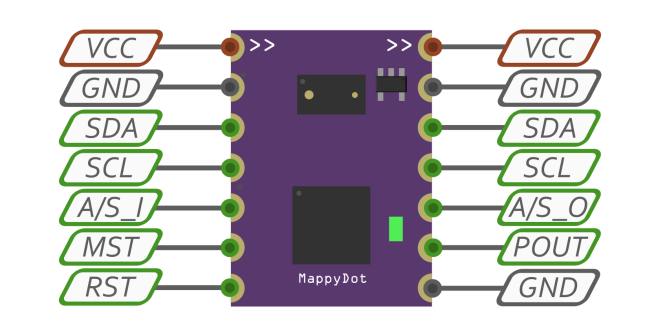
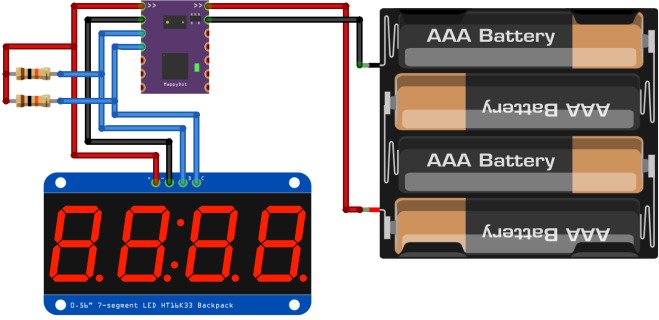
tindie_layout_U22F4c6FMZlanyard_bb_lsAEQRf88J

Once you have assembled the 7 segment display, you can now hook everything up as per the schematics below. Provided your battery supply outputs a voltage between 2.8 and 5 volts, you don’t need to use a voltage regulator to supply this project. Using 4xAA 1.2v rechargable NiMH batteries is perfect for this setup. If using 1.5V alkaline batteries, you should consider using a voltage regulator (or a diode with a large voltage drop) or opt for only 3xAA alkaline batteries.

MappyDot Distance Measurement Badge

Join two KiCad livestreams TODAY

Screenshot from 2020-04-01 16-17-56

At 9:00 AM US PDT today, April 1st, KiCad leader developer Seth Hillbrand will be hosting a KiCad Community meetup video conference on Jisti Meet:

Last week’s meetup was nice to see and talk with other KiCad users. Let’s do it again this week.

This week, I’m happy to answer questions and I’ll be working through designing a KiCad version of the Medtronic OpenVentilator project (http://www.medtronic.com/openventilator 5). You may have heard that Medtronic (a multi-billion $ company) bought the company that cancelled the original gov’t contract 2 for low-cost ventilators in 2015 and then this week released a “kind of” open source version 3 of their current (not low-cost) ventilator.

In reality, they released scans of the schematics and some word documents for bring-up procedures. I’m going to see if we can turn the scans into a set of useful KiCad schematics + board files. This still doesn’t get to what’s needed to actually recreate more of these ventilators but it is a needed first step.

If you are curious about recreating designs from incomplete schematics, reverse engineering in KiCad or just want to hang out and chat, please stop by.

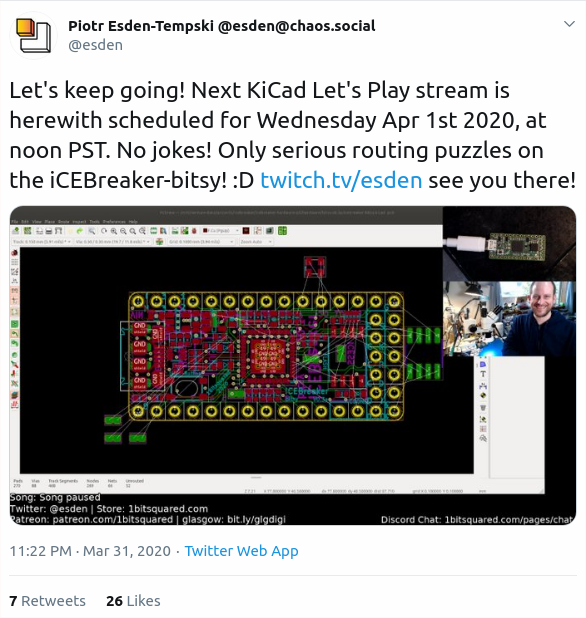
Then at 12:00 PM US PDT, Piotr Esden will livestream KiCad board layout:

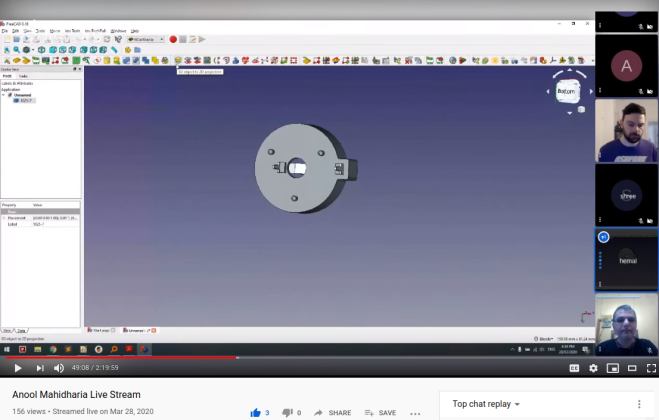
Electronics Let’s Play – iCEBreaker-bitsy update/design work Ep. 3

Screenshot from 2020-04-01 16-15-10

Join two KiCad livestreams TODAY

Ricmohte: Ricoh digital camera using ESP32

6273211569292908183
Morgan created this remote for a Ricoh digital camera using an ESP32s:

Ricmohte

The Ricoh GR II has a remote interface. But like most modern cameras the interface is terrible. It’s a WiFi Access Point that uses a web app. And because most modern phones are terrible, this means you have to juggle between WiFi that doesn’t provide an internet connection and a web app that kinda requires it. The Ricmohte uses the ESP32s WiFi to connect to the camera and issue commands.
Ricmohte: Ricoh digital camera using ESP32

Introducing The Hackaday Calendar Of Virtual Events

For many of us, the social distancing procedures being used to help control the spread of COVID-19 have been a challenge. We can’t go to our hackerspaces, major events have been postponed or canceled entirely, and even getting parts has become difficult due to the immense pressure currently being placed on retailers and delivery services.…

via Introducing The Hackaday Calendar Of Virtual Events — Hackaday

Quote

Embedded.fm podcast with Adam Wolf

Great new episode of the Embedded.fm podcast:

embeddedLogo-04

Embedded.fm 324: I’ll Let You Name Your Baby

Adam Wolf (@adamwwolf) of Wayne and Layne (www.wayneandlayne.com) spoke with us about making kits, museum exhibit engineering, working on KiCad, and extraterrestrial art philosophy.

Adam has a personal blog on www.feelslikeburning.com/blog/ as well as a website adamwolf.org. Adam co-wrote Make: Lego and Arduino Projects

If you want to know how to contribute to KiCad libraries, check out their instruction page: kicad-pcb.org/libraries/contribute/

We also mentioned:


  • IMG_0177.jpeg
Embedded.fm podcast with Adam Wolf

Hackaday: classes, events, and how you can help

Screenshot from 2020-03-23 17-59-25

From the Hackaday newsletter:

11393346-1eb8-4ef0-9f46-21b4e21c5494

Hello!
It’s a time of great stress and uncertainty. We are grateful for all of you who have contributed to the global effort so far. Let’s stick together so we stay healthy and hang out in the real life on the other side of all of this.

With that in mind, we’ve started a calendar of events and classes. If you’d like to teach a class, host a show and tell, or help to organize our climate change summit, respond directly to this email and we’ll help you get set up.

Upcoming: Show and tell, dance party, DIY Strandbeest Q&A, Quantum computing classes. If you have something set up on your own channel you’d like us to add, let us know!

Many of you want to help: with 3D printers at home and manufacturing expertise, this community is in a position to help out those on the front lines.

There are so many Covid-related projects around the web it’s difficult to know where best to put your efforts. We’ve started a doc (right now, today!) that aims to list all the slack channels, Discords, Hackaday.io projects in the world to help you connect.

So many of the really important jobs are the ones that can’t be done remotely, we salute you medical staff, sanitation workers, delivery folks, and all the many others keeping our world running.

With love, ~Hackaday

Hackaday: classes, events, and how you can help

7 open hardware projects working to solve COVID-19

Harris Kenny writes about open hardware projects working to solve COVID-19:

Seven open hardware projects working to solve COVID-19

Chai’s Open qPCR device uses polymerase chain reaction (PCR) to rapidly test swabs from surfaces (e.g., door handles and elevator buttons) to see if the novel coronavirus is present. This open source hardware shared under an Apache 2.0 license uses a BeagleBone low-power Linux computer. Data from the Chai Open qPCR can enable public health, civic, and business leaders to make more informed decisions about cleaning, mitigation, facility closures, contract tracing, and testing.

7 open hardware projects working to solve COVID-19