Tindie Names in Hackaday Prize Best Product Finalists

From  on the Tindie blog:
HAD-prize.png

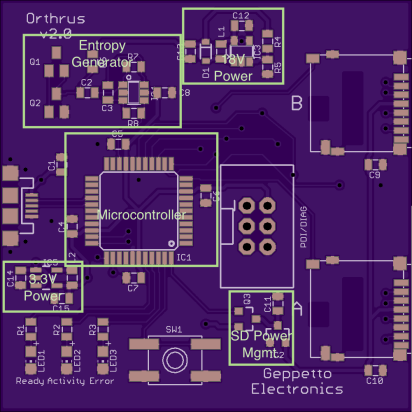
The first comes from Nick Sayer of Geppetto Electronics. His store includes a variety of interesting hardware devices, but his Hackaday Prize entry, an encryption system named Orthrus, is different from anything seen there.
orus

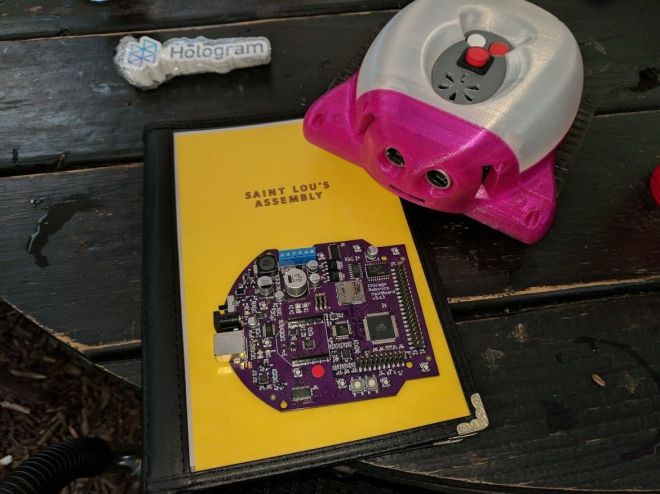
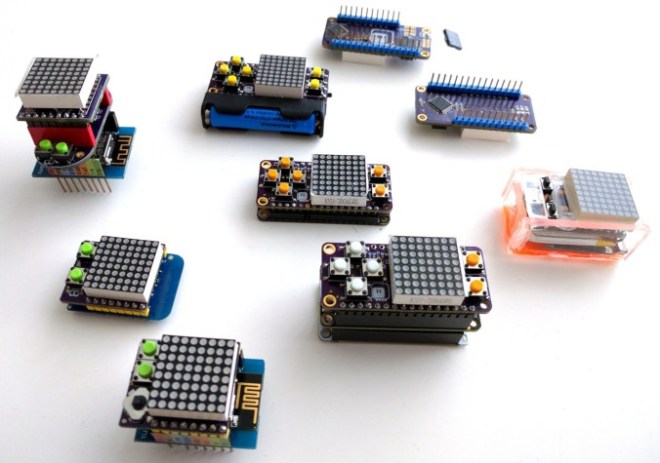
Keeping data secure is important, but if you simply need a little entertainment, or perhaps are looking for a good way to program in CircuitPython, Radomir Dopieralski of the Deshipu Store has a new idea with the PewPew FeatherWing project. According to its description
pewpew.jpg

Tindie Names in Hackaday Prize Best Product Finalists

New Release Makes EAGLE and Fusion 360 Besties

The latest release of EAGLE builds a bridge between mechanical design and electronic design. Version 8.3 rolls in the ability to synchronize between EAGLE and Fusion 360. You can now jump between mechanical design and PCB layout without the need for extra steps in between. This is the first release of EAGLE that highlights what…

via New Release Makes EAGLE and Fusion 360 Besties — Hackaday

New Release Makes EAGLE and Fusion 360 Besties

Help gamaral’s Cancer Treatment

If you’ve enjoyed Guillermo Amaral’s electronics projects such as the Canon DSLR WiFi RemoteRaspberry Pi PSUUARTMatic 3000+, Keypad Submodule and many more, then please consider giving to his cancer treatment fund:

Gamaral’s Cancer Treatment

I’ve unfortunately had to flip the bill for my two past surgeries and my on going cancer treatment… and as you can imagine, I’m running out of cash.

If you like my content and/or have found my published projects interesting or useful, please consider sending me some spare change and I’ll be ever so grateful.

Here are couple great project videos by Guillermo on YouTube:

Help gamaral’s Cancer Treatment

Imaging Magnetism With A Hall Effect Camera

[Peter Jansen] is the creator of the Open Source Tricorder. He built a very small device meant to measure everything, much like the palm-sized science gadget in Star Trek. [Peter] has built an MRI machine that fits on a desktop, and a CT scanner made out of laser- cut plywood. Needless to say, [Peter] is all about…

via Imaging Magnetism With A Hall Effect Camera — Hackaday

Imaging Magnetism With A Hall Effect Camera

Hackaday Prize Entry: BeagleLogic Standalone

Brian Benchoff writes on Hackaday about the latest project from Kumar Abhishek: Hackaday Prize Entry: BeagleLogic Standalone A few years ago, [Kumar] created the BeagleLogic, a 14-channel, 100 MSPS logic analyzer for the BeagleBone as an entry for the Hackaday Prize. This is a fantastic tool that takes advantage of the PRUs in the BeagleBone to give […]

via Hackaday Prize Entry: BeagleLogic Standalone — BeagleBoard.org Blog

Hackaday Prize Entry: BeagleLogic Standalone

Hackaday Prize Best Product Finalist: PewPew

This year for the Hackaday Prize, we’re doing something very, very cool. We’re encouraging hardware entrepreneurs to come up with the next big electronic thing. We’re giving the Best Product in the Hackaday Prize $30,000, and an opportunity to work in a lab filled with tools to turn that prototype into a marketable reality. Last week, we…

via Hackaday Prize Best Product Finalist: PewPew — Hackaday

Hackaday Prize Best Product Finalist: PewPew

Mr. Runner

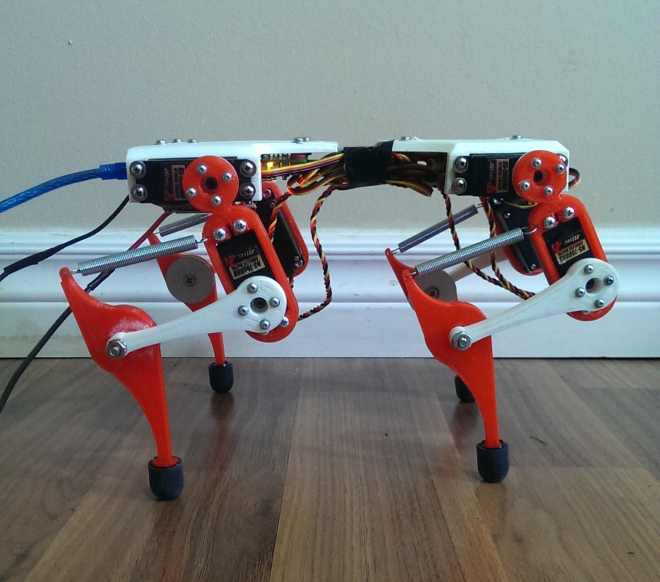
Alex Martin is creating a four legged robot with a running bound gait:

9754291472923566463.png

Mr. Runner

The aim of this project is to lower the barrier of entry into dynamic robotics. After seeing Boston Dynamic’s Wildcat I became interested in working on something similar, but was disappointed with what the hobbiest scene had to offer. They all used static locomotion. I wanted it to feel alive!

I hope that if people can see that this style of robotics is reproducible with basic development skills, it will attract a wider range of people to legged robots than just those who want to see a vaguely spider looking device re-implement the same kinematic equations over and over again.

371011500859268418.jpg

The approach is based on the work of Fumiya Iida and Rolf Pfiefer at the University of Zurich in the mid 2000’s. Dr. Pfeifer is well known in the field of embodied cognitive science, and these experiments were an attempt to generate movement in quadruped robots based on those principles.

Mr. Runner