
We were excited to see this tweet from Josh Talbot:
The EAGLE design files are shared on BitBucket:

Sarunas designed this RC receiver replacement which uses a smart phone as remote controller via WiFi or Bluetooth:
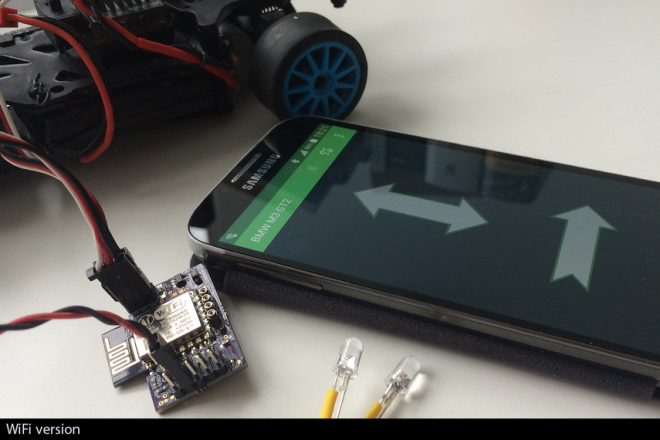 Smart Racer
Why not control your RC car with smart phone?
Features include:
The design files and source code are available on GitHub:
 drme/ble-rc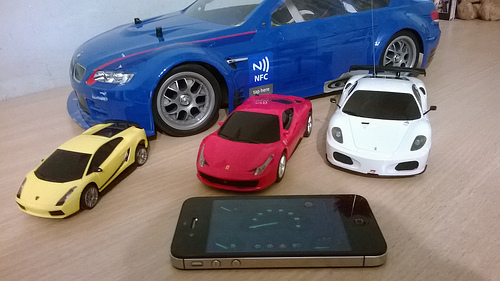
Here’s the Smart Racer in action:

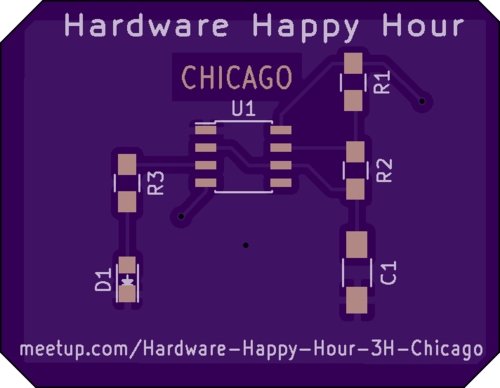
The first meeting of Hardware Happy Hour (3H) Chicago is Tuesday, December 6th, with Chris Gammell of The Amp Hour and Contextual Electronics. Our Drew Fustini will be there along with Andrew Sowa and many more:
https://www.meetup.com/Hardware-Happy-Hour-3H-Chicago/events/235937326/
Sarunas built this device to replace a bunch of different remote controls with a smart phone:
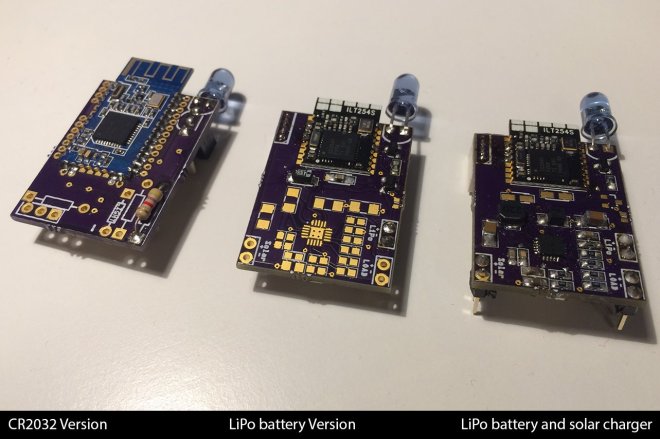
Build your own universal remote
Features include:
A solar version was also designed to avoid having to change the battery:
Despite that Bluetooth Low Energy device uses so little of it, the battery will eventually run out. To overcome that, the old device was improved by adding a solar charger.
The design files and source code are available on GitHub:
 drme/ble-remote
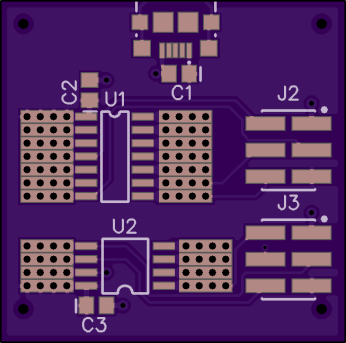
jonmash designed this simple board with two ATTiny processors powered by a micro USB connector.
ATTiny-WidgetMicro USB power input to two ATTiny MCU’s. There are two different ATTinys on this board. An ATTiny84 and an ATTiny85. These MCUs are great because they can be used with no additional components. In fact, on this board, the only additional components are some filter capacitors for the power rail and a header for the programmer interface.
I have exposed an array of copper pads for every pin. This makes it easy to add LEDs or to wire to just about any sensor.
jonmash has shared the board on OSH Park:
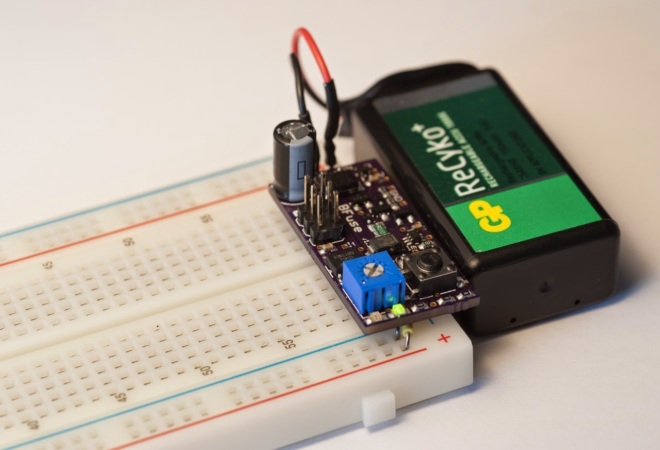
Jakub Polonský created this solution to make breadboard prototyping safer for components:
adjustable and programmable electronic fuse especially designed for breadboards – a breadboard fuse, or BFuse
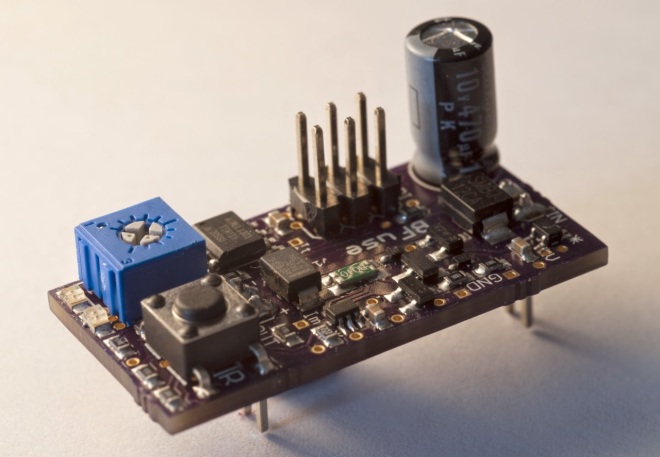
The trip current can be set from 50 mA to 1 A but it can measure current up to 6 A [..] It has reverse polarity protection (by P-FET), transient voltage suppressors both on its input and output and two LEDs for indication
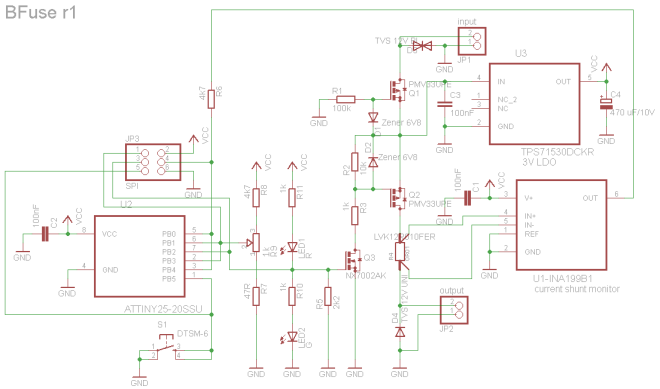
Set current and actual current can be compared using ATTiny’s built-in comparator or sampled by the ATTiny’s ADC. Then, the microprocessor controls a P-FET switch that opens or closes the power supply
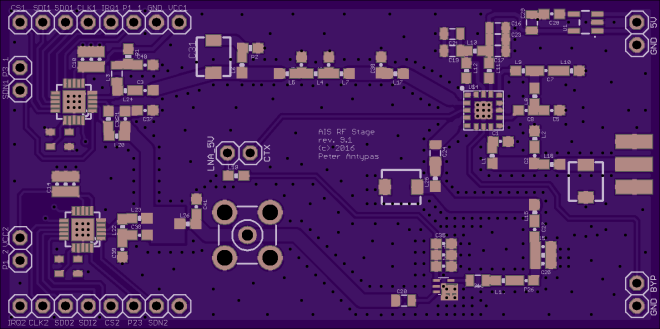
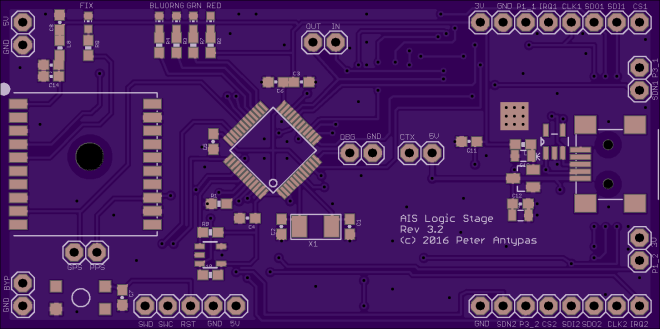
Open Source AIS Transponder (Class B)This is the first ever (that I’m aware of) attempt at creating an open source AIS transponder
On the hardware side, the design is based on two Silicon Labs 4463 transceiver ICs and an STM32F302CBT6 ARM Cortex M4 microcontroller. One of the SiLabs ICs acts as a transceiver, while the other IC works as a receiver only. In receiver mode, each IC tunes to a different channel. When a transmission is scheduled, the ICs swap channels if the transceiver is not listening on the next transmit channel. This configuration may be construed as a violation of the AIS specification, but it makes for a much simpler PCB layout and negates the need for a 3-position RF switch.
There are two programs that need to be installed on the flash. The bootloader and the main application.
petera650 has shared the boards on OSH Park:

Ever since Jimi Hendrix brought guitar distortion to the forefront of rock and roll, pedals to control the distortion have been a standard piece of equipment for almost every guitarist. Now, there are individual analog pedals for each effect or even digital pedals that have banks of effects programmed in. Distortion is just one of…
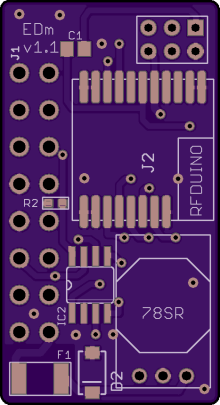
MyLab-odysseymonitor the status of your Smart electric drive EV with this RFduino CAN bus dongle and the Blynk app on your mobile phone:
/EDm_BLE
Hardware used:

MatthiasR is building a scanning tunneling microscope:
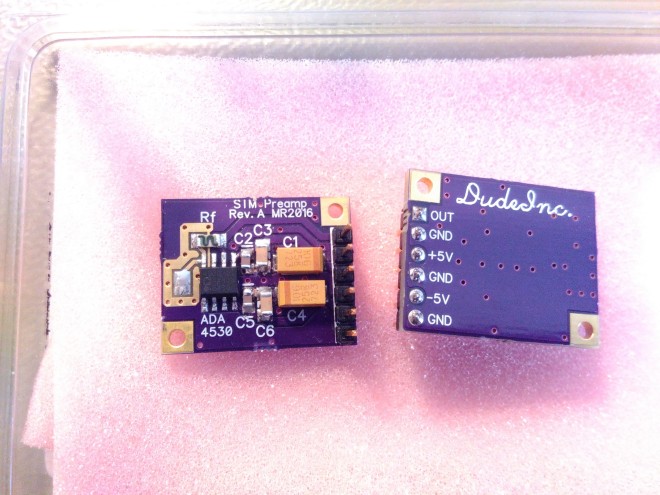
At the end of last year i started collecting information about needed system components like the vibration isolation, the tunneling current amplifier, the z-height controller, the coarse approach mechanism and so on


Here’s a video of his DIY vibration isolation system:


 OSH Park