
KiCad 5: A New Generation

Screenshot from 2018-07-25 10-31-52.png

KiCad 5 – A New Generation

Almost a year after the release of KiCad 4.0.7, the KiCad development team is proud to present a new and improved KiCad 5.0 release!

The stable release version 5.0.0 is made from the stable 5.0 branch. KiCad binaries should be available now or in the very near future for download for Windows, macOS and Linux. See the download page for guidance.

Instructions for packagers can be found on the download page describing how to build from source . Below are also some packaging packaging related changes since the 4.0 releases.  The official KiCad libraries have also seen a lot of improvement in management, style and consistency by the librarians. Read more about this on the new library section on the website.

Thank you to all developers, packagers, librarians, document writers, translators, and everyone else who helped make this release possible.

KiCad 5: A New Generation

Belgrade Badge Hacks

We’re still coming off the Hackaday Belgrade conference right now. If you were there, you know it was the greatest hardware conference ever. If you weren’t there, you missed out. Sorry. (Make sure you get in on the Hackaday Superconference in November.)

One of the many highlights of the Belgrade conference was, of course, the badge. The 2018 Hackaday Belgrade Badge is a masterpiece of hardware with a 55-key keyboard, RGB TFT LED, speaker, and a BASIC interpreter.

This badge is a masterpiece of electronic design by Voja Antonic. Just to take one small example from the design, check out the placement of the buttons. Think the slightly rotated buttons that make up the keyboard is only a stylistic choice? It’s not; by carefully rotating each button, the legs of each switch can fit in between each other. It’s brilliant.

via Belgrade Badge Hacks — Hackaday

Quote

Open Source Hardware Certification Logo is Official

Michael Weinberg writes on the Open Source Hardware Association blog:

OSHWAcert

Open Source Hardware Certification Logo is Official

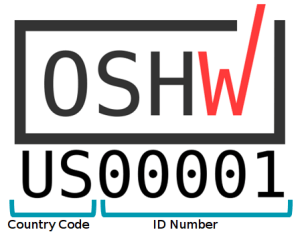
We at OSHWA are excited to announce that the OSHWA Certification process has an officially registered trademark. This registration will make it easier for OSHWA to prevent people from using the OSHWA Open Source Hardware Certification logo if they have not actually gone through the certification process. We hope this will give the community more confidence when they see the OSHWA certification logo on hardware out in the world.

Open Source Hardware Certification Logo is Official

Tindie Seller Projects in The Robotics Module Challenge

From  on Tindie blog:

2018-hackaday-prize-challenges-from-poster1.jpgTindie Sellers Competing in the Hackaday Prize

The Robotics Module Challenge just wrapped up and last week we featured two of the twenty finalists who are also Tindie Sellers. Today let’s look at several other Tindie Sellers who got in the game with their own robotics module designs!

Tindie seller Citrus CNC Store is working on a low-cost automatic pick and place feeder and entered it into the robotics challenge. The pick and place machine is a valuable resource for building electronics.

The end goal here is to create a fully featured pick and place machine at a mid-range hobby 3D printer price point, with support for at least 20 automatic tape feeders and loop control of every motion related component. Check out this project on Hackaday.io.

Another Tindie seller who owns the proto-Phi Store is working on a modular design for a soft robotic gripper.

The design is for soft robotics fabrication and emphasizes the molds and subsequent actuators. The current method combines the softness of a silicone actuator and a 3D plastic exoskeleton.

Check out the project page for more details!

Supporting Our Tindie Sellers

These aren’t the only Tindie sellers participating in this year’s Hackaday Prize. Take a look at these other robotics projects from our talented makers:

Stay tuned for more updates on the finalists, and future modules in this year’s Hackaday Prize!

Tindie Seller Projects in The Robotics Module Challenge

Emotional Hazards That Lurk Far From The Uncanny Valley

From  on the Hackaday blog:

Emotional Hazards That Lurk Far From The Uncanny Valley

A web search for “Uncanny Valley” will retrieve a lot of information about that discomfort we feel when an artificial creation is eerily lifelike. The syndrome tells us a lot about both human psychology and design challenges ahead. What about the opposite, when machines are clearly machines? Are we all clear? It turns out the answer is “No” as [Christine Sunu] explained at a Hackaday Los Angeles meetup.


When we build a robot, we know what’s inside the enclosure. But people who don’t know tend to extrapolate too much based only on the simple behavior they could see. As [Christine] says, people “anthropomorphize at the drop of the hat” projecting emotions onto machines and feeling emotions in return. This happens even when machines are deliberately designed to be utilitarian. iRobot was surprised how many Roomba owners gave their robot vacuum names and treated them as family members. A similar eruption of human empathy occurred with Boston Dynamics video footage demonstrating their robot staying upright despite being pushed around.

Quote

How You Can Build Complex Circuits

How You (Yes YOU) Can Build Complex Circuits

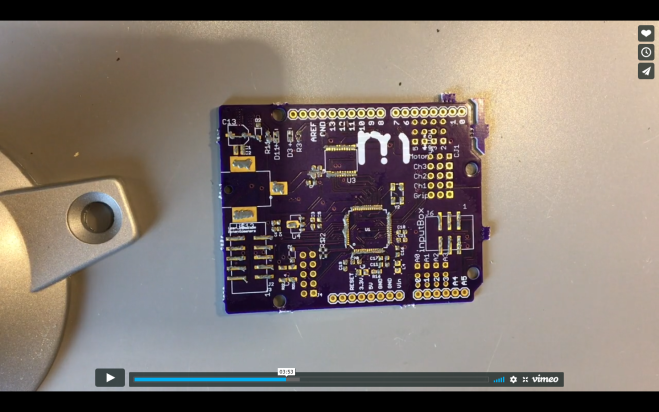
Here at mimicEducationalRobots we farm out most of our production circuit board assembly, but we still assemble all prototypes in house. Most people are surprised to learn how relatively simple the process really is. This blog assumes that a unique PCB of your own design has come out of your wonderful brain, or at least that you’re interested in how we do things here.

Screenshot from 2018-07-18 19-34-24.png

How You Can Build Complex Circuits

Hot Camera Contest: Build A Battery Powered Thermal Camera

Here’s a challenge for all you hardware hackers out there. Peter Jansen has opened up the Hot Camera Contest on Hackaday.io to use a thermal imaging camera in a battery-powered project.

The challenge here is simple. Use a Flir Lepton thermal imaging camera module in a battery-powered configuration. There’s a catch, though: this is a project to use the Lepton in radiometric mode, where the camera spits out an actual temperature value for each pixel. Yes, this is a documented feature in the Flir Lepton module, but so far very few people are using it, and no one has done it with a small, battery-powered device.

The rules for this challenge are to use the Flir Lepton 2.5 in radiometric mode using either the Raspberry Pi Zero W or ESP32. Any software in this challenge must spit out absolute temperature values in a text format, and there must be a demonstration of putting the Flir Lepton into low-power mode. There are two challenges here, one for the Raspi and one for the ESP32; and winner will be named for each.

via Hot Camera Contest: Build A Battery Powered Thermal Camera — Hackaday

963711531424781533.jpg

Quote