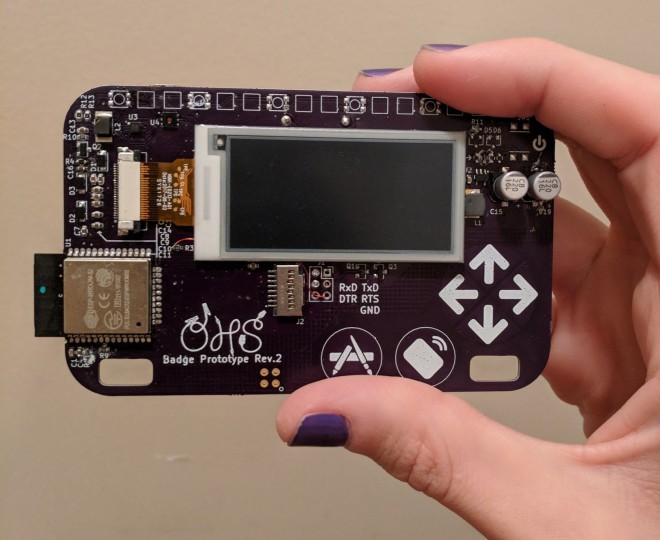
Open Hardware Summit 2018 badge

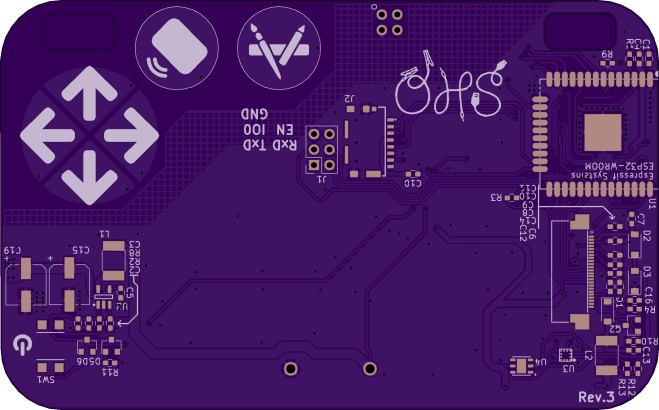
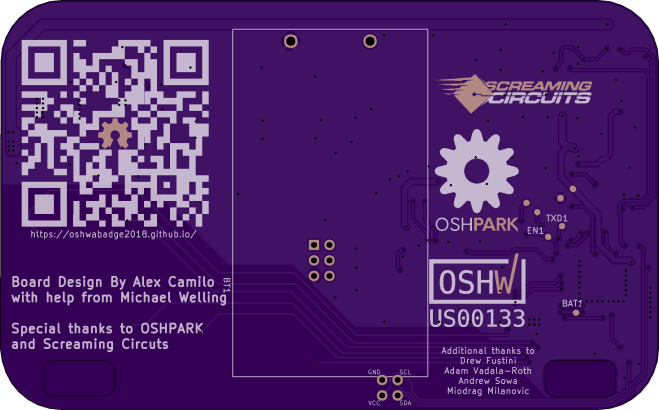
OSH Park is producing electronic conference badges for the 2018 Open Hardware Summit.  The hardware has been designed Alex Camilo, based on concepts from the ESP trINKet by Mike Rankin.  The badge features an ESP32 microcontroller and a 2.13″ E-Paper display.
6202441533283525215

OSH Park shared project for the Rev 3 by Alex Camilo :

https://oshpark.com/shared_projects/8yeLK5gd

Order from OSH Park

a

b

We expect this to be the final revision.

Timeline:

It is ordered on Super Swift today and should be validated next weekend.  This will allow us to order the full quantity PCB panels in August 13th.  Assembly is estimated to be 10 business days from the day when all components and PCBs are received.

Rev 2 photos:

And for those interested, here is a link to a gallery:

https://photos.app.goo.gl/UhCUX7eRN38tAhsF7
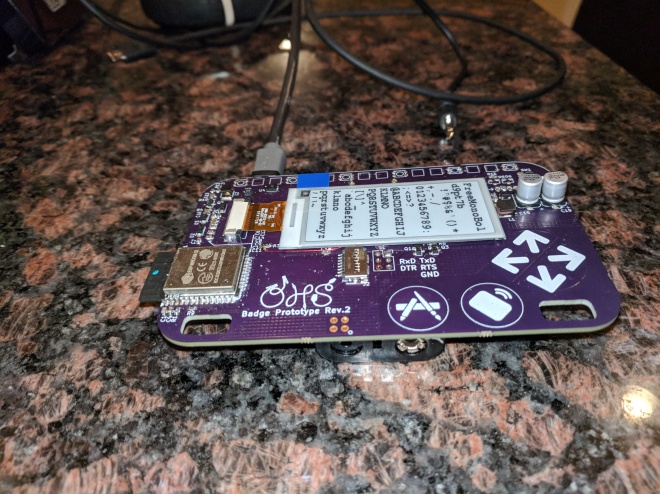
IMG_20180805_031614

Terminal output on Rev 2 prototypes:

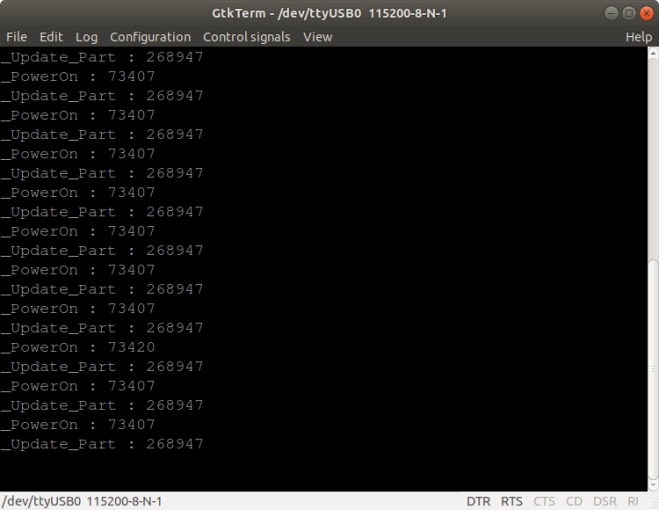
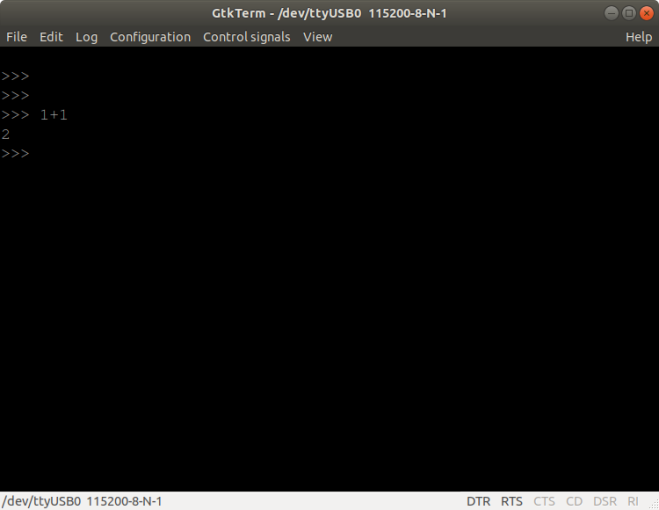
The Rev 2 prototypes have NodeMCU boards soldered on to the back to serve as a USB to serial adapter.

One of the Rev 2 prototype boards that Alex sent me has the default e-paper demo:
3633741533555804296

The other has MicroPython installed! 🙂
1079331533555818375

Resources for the 2018 Open Hardware Summit badge:
Open Hardware Summit 2018 badge

Hackaday Belgrade: Sophi Kravitz’s Blimp Army

From  on Hackaday:

Hackaday Belgrade: Sophi Kravitz’s Blimp Army

Building things that fly is hard. The constraints on small, battery powered, radio-operated gear already presents a challenge, but adding weight, balance, and aerodynamic constraints takes it to a whole new level. Sophi Kravitz rises to the occasion and discusses each challenge of building a blimp from start to finish in her presentation at the 2018 Hackaday Belgrade conference.

sophi-blimp-blimp.jpg

One of the pleasures of writing for Hackaday comes through the incredible array of talent and experience to be found among our colleagues. We all do our own work, but one is humbled by that which flows from the benches of those one works alongside. Just such a project is the Remote Control Mini Blimp from our colleague Sophi Kravitz. It’s a game involving an obstacle course and a set of remote-controlled blimps. The challenges in such an endeavour have been pushing the limits of what is possible with off-the-shelf components.

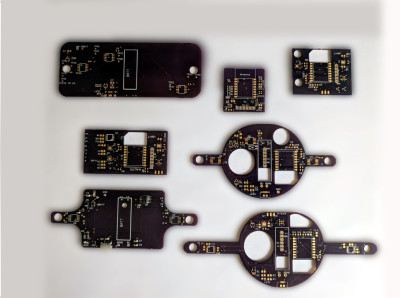
sophi-blimp-pcbs.jpg

So after a series of versions, she had a PCB with left and right motors on two arms and a lift motor pointing downwards, which she suspended beneath the helium bag. Her controllers are simple enough 3D-printed joystick housings, with another ESP8266 within. The blimp ESP8266 forms a wireless network to which the controller connects.

Quote

KiCad 6 development fundraiser

KiCad 6 Donation Campaign

The world needs a freely available tool for designing open-source hardware. Without it, designers do not have the freedom to share their work efficiently. KiCad is that tool, and you can help to develop it.

A stable release of KiCad Version 6 could become available very soon, so that everybody can profit from its enhanced features. With an extra 600 hours of expert development, this might become a reality!

Contribute to KiCad Version 6 with a donation and help us reach the goal of 600 hours of expert development that can make the new release available sooner than you think.

KiCad 6 development fundraiser

Belgrade Badge Hacks

We’re still coming off the Hackaday Belgrade conference right now. If you were there, you know it was the greatest hardware conference ever. If you weren’t there, you missed out. Sorry. (Make sure you get in on the Hackaday Superconference in November.)

One of the many highlights of the Belgrade conference was, of course, the badge. The 2018 Hackaday Belgrade Badge is a masterpiece of hardware with a 55-key keyboard, RGB TFT LED, speaker, and a BASIC interpreter.

This badge is a masterpiece of electronic design by Voja Antonic. Just to take one small example from the design, check out the placement of the buttons. Think the slightly rotated buttons that make up the keyboard is only a stylistic choice? It’s not; by carefully rotating each button, the legs of each switch can fit in between each other. It’s brilliant.

via Belgrade Badge Hacks — Hackaday

Quote

ERRF 18: The Start of Something Great

From  on the Hackaday blog:

ERRF 18: The Start of Something Great

For years, the undisputed king of desktop 3D printing conferences has been the Midwest RepRap Festival (MRRF). Hosted in the tropical paradise that is Goshen, Indiana, MRRF has been running largely unopposed for the top spot since its inception. There are other conferences focused on the industrial and professional end of the 3D printing spectrum, and of course you’d find a Prusa or two popping up at more or less any hacker con; but MRRF is focused on exploring what the individual is capable of once they can manifest physical objects from molten plastic.

But on June 23rd, 2018, MRRF finally got some proper competition. As the name might indicate, the East Coast RepRap Festival (ERRF) is an event very much inspired by its Hoosier State predecessor. Held in Bel Air, Maryland, hackers on the right side of the United States for the first time had the opportunity to attended a true 3D printing festival without having to get on a plane. Not to say it was a neighborhood block party; people from all over the country, and indeed the globe, descended on the APG Federal Credit Union Arena for the two-day celebration of everything plastic.

This inaugural ERRF was, to put it mildly, a massive success. A couple of Hackaday Field Agents were in attendance, and we definitely came away impressed with the event considering it was the first attempt. We saw evidence that the RepRap dream of printable printers is still going strong, a gaggle of new printers and products that will be prying at your wallet this year, and an American-made hotend that challenges traditional wisdom. Of course we also saw a huge number of 3D printing fanatics who were eager to show off their latest creations.

We have no doubt that ERRF will return again next year, but until then, you’ll have to settle for the following collection of selected highlights from this year’s show.

We’re no strangers to the work [David Shorey] has been doing with 3D printing on fabric, but it’s always awesome to see up close. The concept here is actually quite simple: pause the print after a few layers, pull a piece of tulle (the kind of thing bridal veils are made of) tight over the bed, and then let the print finish. The fabric is caught between the layers of the print, and as long as you aren’t too rough with it, will hold together quite nicely.

[David] wasn’t the only person to have this idea, but he certainly seems to be on the forefront of perfecting it. Perhaps the most interesting element of this technique is that essentially anyone with a 3D printer and a nearby fabric store can try their hand at it.


Quote

Sarah Petkus: Using Body-data to communicate the intimate and the unseen

Awesome talk by Sarah Petkus for HDDG last night at Supplyframe in SF:

Using Body-data to communicate the intimate and the unseen

Sarah Petkus is a kinetic artist, roboticist, and transhumanist from Las Vegas, who designs electronic and mechanical devices which encourage reflection regarding the human relationship with technology.

Their talk will be about a series of wearable augments built to facilitate in sensing, tracking, and indicating one’s level of excitement (or arousal)! Each of the wearables uses a variety of sensors as input to influence quirky electronic and mechanical devices of my design as output. The goal in doing so is not only to create a stellar suit of electronic armor (or amour), but also to help facilitate a dialogue about sex and intimacy amongst my peers that is relatable, honest, healthy, and fun.

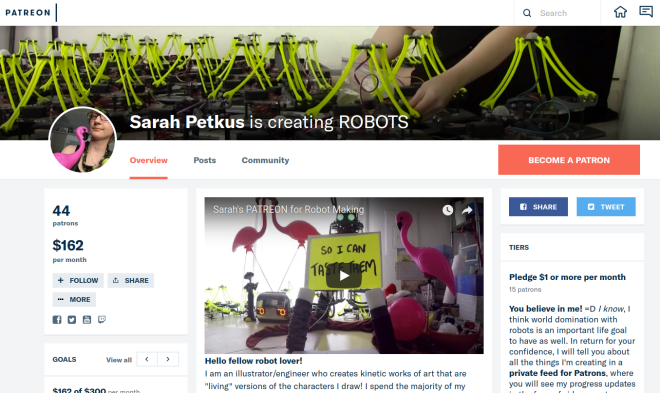
Follow Sarah and her projects on Patreon:Screenshot from 2018-07-13 13-00-51.pngSarah Petkus is creating ROBOTS

Sarah Petkus: Using Body-data to communicate the intimate and the unseen

Hackaday Superconference: Tickets and Proposal

Get your tickets now for the 2018 Hackaday Superconference. Join us November 2nd-4th in Pasadena, California! This is the ultimate hardware conference. Hackers, designers, and engineers from all over the world converge — from the greenest beginners to those who have made history with their designs. This is the Hackaday community, these are your people,…

via Hackaday Superconference: Tickets and Proposals — Hackaday

Quote

SF Hardware meetup this week with Sarah Petkus

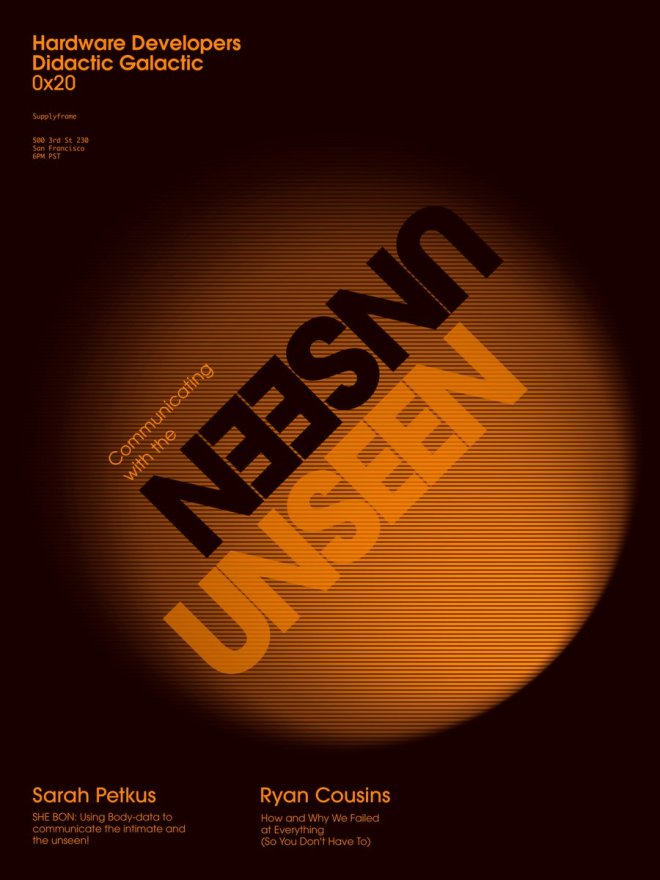
DhcJXrZU0AEzaPf.jpg
The next Hardware Developers Didactic Galactic (HDDG) take place at SupplyFrame in San Francisco this Thursday with Sarah Petkus and Ryan Cousins:

HDDG 32: Communicating with the Unseen

Come enjoy yummy snacks and bevs and hear fascinating talks by these kickass engineers.

Sarah Petkus – SHE BON: Using Body-data to communicate the intimate and the unseen

Ryan Cousins – How and Why We Failed at Everything (So You Don’t Have To)

https://www.meetup.com/Hardware-Developers-Didactic-Galactic/events/252249466/

Sarah Petkus is a kinetic artist, roboticist, and transhumanist from Las Vegas, who designs electronic and mechanical devices which encourage reflection regarding the human relationship with technology.

Their talk will be about a series of wearable augments built to facilitate in sensing, tracking, and indicating one’s level of excitement (or arousal)! Each of the wearables uses a variety of sensors as input to influence quirky electronic and mechanical devices of my design as output. The goal in doing so is not only to create a stellar suit of electronic armor (or amour), but also to help facilitate a dialogue about sex and intimacy amongst my peers that is relatable, honest, healthy, and fun.

Ryan Cousins is cofounder and CEO of krtkl inc. Based in Silicon Valley, krtkl (“critical”) makes life easier for companies developing heavily connected and automated products. Ryan earned a B.S. in mechanical engineering – with an emphasis in thermodynamics and fluid mechanics – from UCLA. He has worked in both R&D and business capacities across a variety of markets, including medical and embedded, and has been granted a European patent.

After years of working on embedded systems, product development, manufacturing, and startup-ing, Ryan has had the “pleasure” of experiencing nearly every type of failure a hardware business has to offer. Ryan will share some humorous – and horrifying – anecdotes from his arduous journey, along with some key takeaways that will (hopefully) prevent others from making the same mistakes.

After the talks, there will be demos, community announcements, and socializing. If you’d like to give a 2 minute demo/ community announcement, please see the organizers when you arrive to get set up.

A community announcement includes looking for a project partner, a job, offering a project/ job, the announcement of your startup launch, your Crowdfunding pitch, etc.

We’re looking forward to seeing you Thursday, July 12th, at 6:30pm!

SF Hardware meetup this week with Sarah Petkus