
 Hackaday will discuss the road map and status of KiCad with project leader Wayne Stambaugh:
Kicad HackChat
Friday, January 20, 2017 10:00 am PDT – 10:30 am PDT
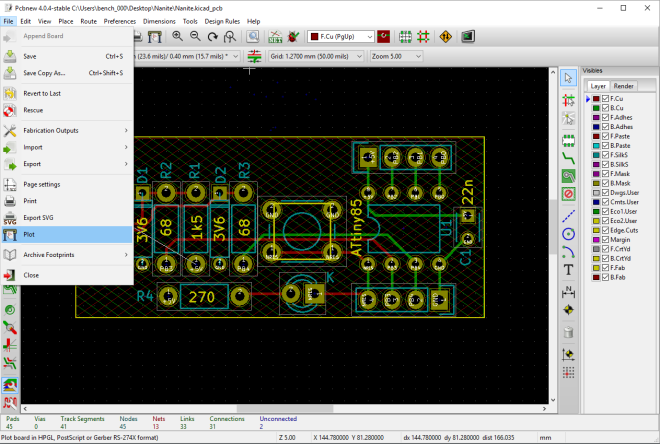
Hackaday will discuss the road map and status of KiCad with project leader Wayne Stambaugh:
Friday, January 20, 2017 10:00 am PDT – 10:30 am PDT
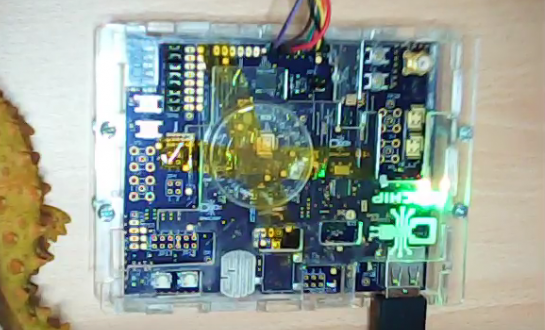
You can now program the Open-V on the web, and see the results in real time. The code is compiled in the web IDE and then flashed to a microcontroller which is connected to a live YouTube live stream. It’s pretty neat to flash firmware on a microcontroller thousands of miles away and see the…
via Programming the Open-V Open Source CPU on the Web — Hackaday

Elkim Roa of OnchipUIS presented recently at the 5th RISC-V Workshop on the latest news of the Open-V open silicon microcontroller and their YoPuzzle educational platform:
Slides from the his talk:
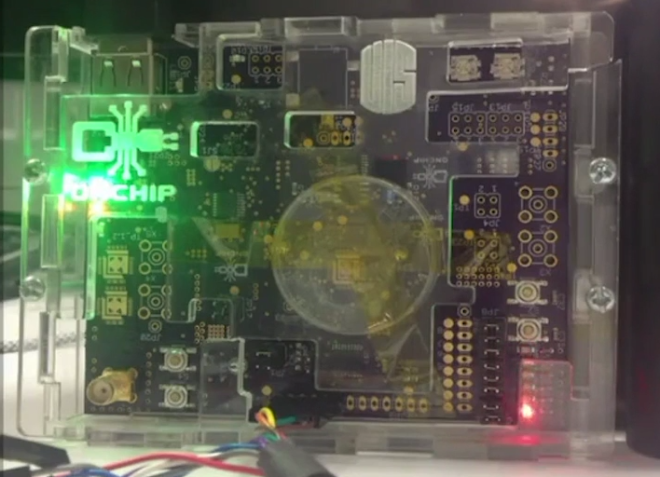
You can now program real Open-V dev boards from anywhere in the world and see the results on a live video feed! Here’s our first demo – blinking the dev board LEDs.
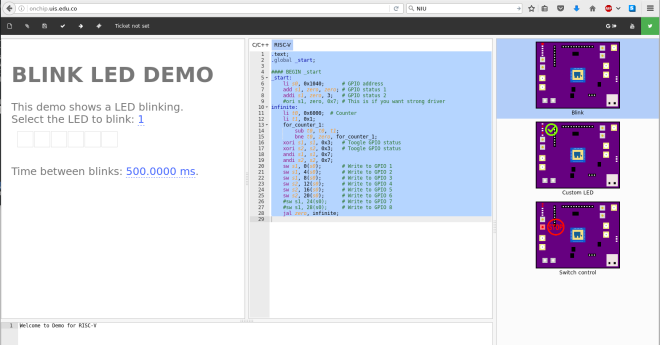
 Go to http://onchip.uis.edu/ to remotely program the demo board:
Kris Winer of Pesky Products designed these easy-to-program, high-performance and low-power dev boards:
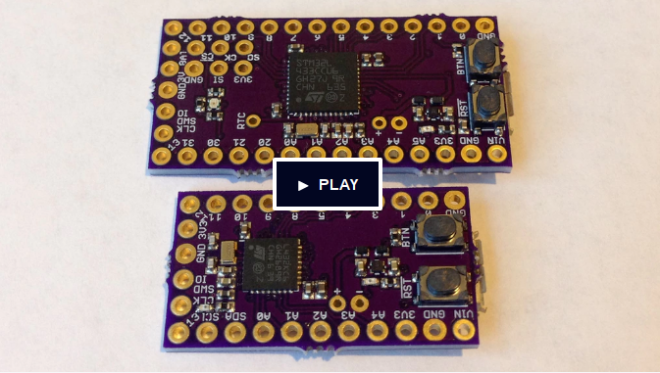
Program an STM32L4 Cortex M4F with the Arduino IDE via USB
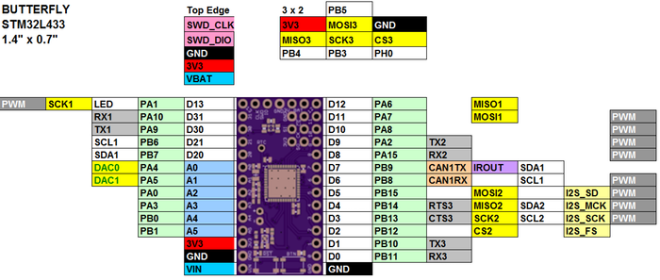
Technical specifications of the Butterfly and Ladybug STM32L4 dev boards:
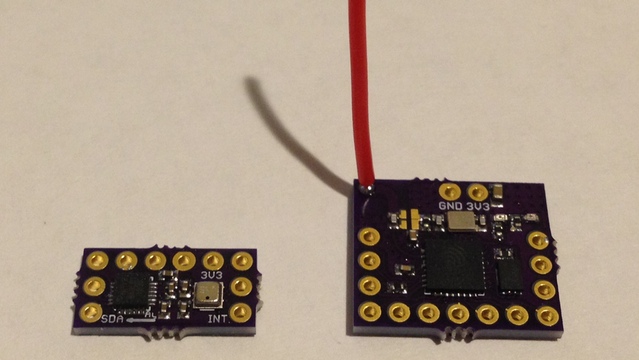
To the left is an MPU9250 accel/gyro/magnetometer motion sensor and the BME280 pressure/humidity/temperature sensor
To the right is an ESP8266 wifi-enabled add-on board for Butterfly
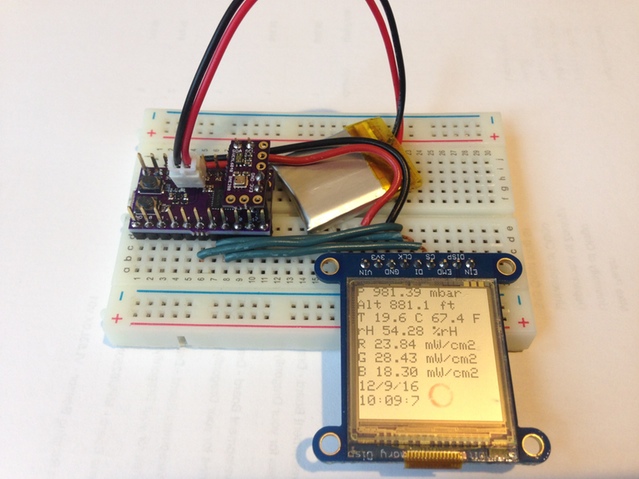
Reading the BME280 and VEML6040 sensors at 0.5 Hz and outputting pressure, temperature, humidity, altitude, RGB light intensity and RTC time and date to the Sharp memory display
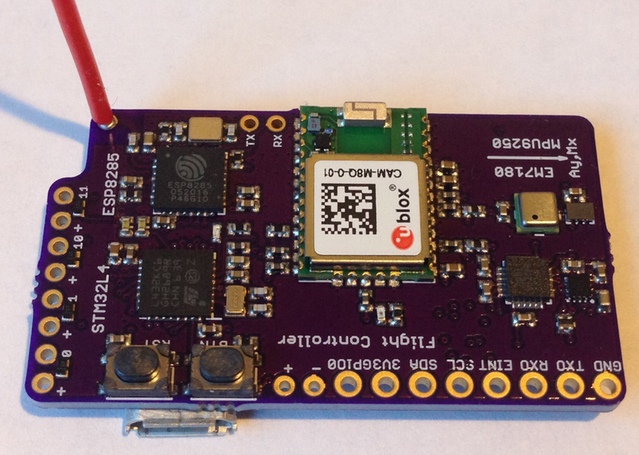
Flight Controller:
STM32L432 receives quaternions from the EM7180, which itself is master to the motion and pressure sensors, GNSS data from the CAM M8Q, then processes and packages the data and sends it to the ESP8285 via UART bridge for transmission to a hand-held controller
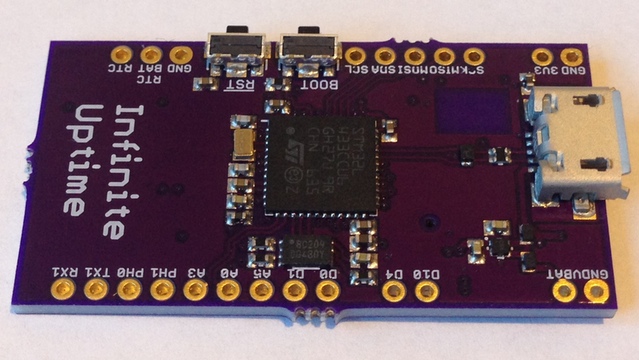
Industrial Diagnostics:
uses an STM32L433 as master to several slave sensors to detect and process signals from industrial equipment and report to a remote server via blue tooth

Piotr Esden-Tempski and Gareth McMullin joined the embedded.fm podcast to talk about their Black Magic Probe and 1bitsy projects:
They discussed their current Kickstarter campaign: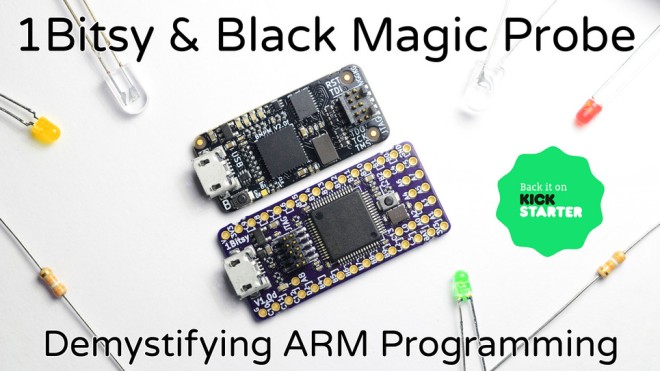
Design files and source code for both projects is available on GitHub:
 blacksphere
In application debugger for ARM Cortex microcontrollers.
 1bitsy
Open Source JTAG enabled ARM development platform
You can also ask questions on Black Magic’s Gitter channel.
 The KiCad project recently announced a new stable release:
The 4.0.5 stable version contains critical bug fixes and version string improvements since the last release. The stable release version 4.0.5 is made from the stable 4.0 branch with bug fixes cherry picked from the development branch of KiCad.
KiCad binaries for Windows, OS X, and several GNU/Linux distributions can be found on the download page:
Please note that KiCad board files (.kicad_pcb) can be uploaded directly to our website:
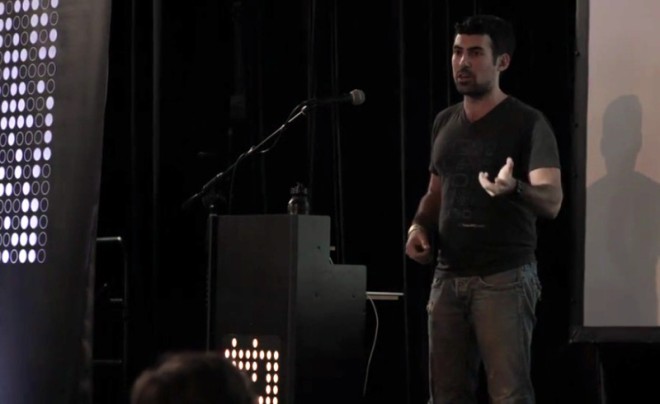
Wondering who is involved in the development of KiCad? Project leader Wayne Stambaugh presented at FOSDEM last year about the past, present, and future of the KiCad project:
Wayne also presented at FOSDEM 2016 back in March, but the audio and video quality is worse than the 2015 video.
From Hackaday Supercon last month in Pasadena, California:
Samy Kamkar is well known for many things, but lately it has been his hardware security hacks that have been turning heads. The nice thing to know is that, despite not having a background in hardware, Samy is able to run with the best of hardware researchers
We’re offering our fast-turn super swift service for only an additional $5/sqin until New Year’s!
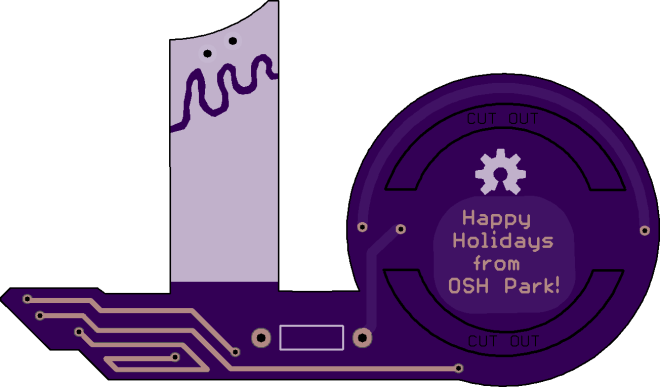
Need 2-layer boards in a hurry? Our Super Swift Service has the same quality you know and love, with an even faster turn time of 5 business days.
Pricing
Happy Holidays! Until Jan 1st, we’re reducing the price of to $10 per square inch, which includes three copies of your design.
For example, a 2 square inch board would cost $20 and you’d get three copies of your board. This includes our Free Shipping option, although expedited shipping options are available.
Starting Jan 1st, the price will return to the normal rate of $89 + $5 per square inch.
Turn Times
Orders are sent to fabrication daily, and will ship within 5 business days days.
You can get a quote, approve a design, and pay for an order at OSH Park.
Super Swift Service is not available for Medium Run or Four Layer orders.
As a special bonus, orders placed before 11AM on Monday will ship by Friday of that week.
Note for international orders: In most cases, it will cost less and arrive faster if you order on the standard 2 layer service with expedited shipping.
Quick 2-layer Specs

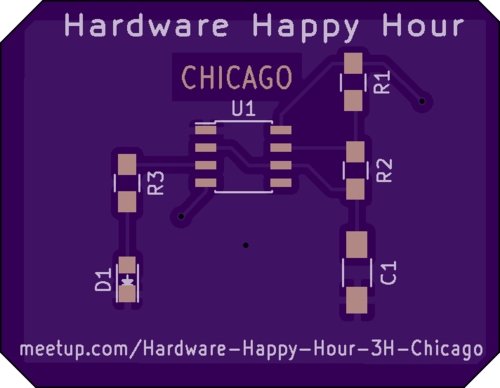
The first meeting of Hardware Happy Hour (3H) Chicago is Tuesday, December 6th, with Chris Gammell of The Amp Hour and Contextual Electronics. Our Drew Fustini will be there along with Andrew Sowa and many more:
https://www.meetup.com/Hardware-Happy-Hour-3H-Chicago/events/235937326/
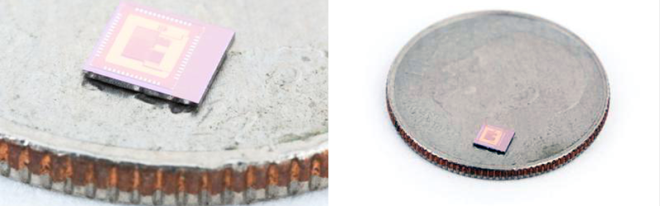
Hackaday reports that OnChip launched a Crowd Supply campaign:
Now, this is finally changing. OnChip, a startup from a group of doctoral students at the Universidad Industrial de Santander in Colombia, have been working on mRISC-V, an open 32-bit microcontroller based on the RISC-V instruction set [..]
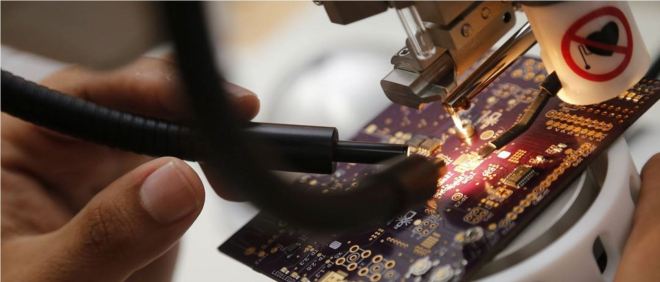
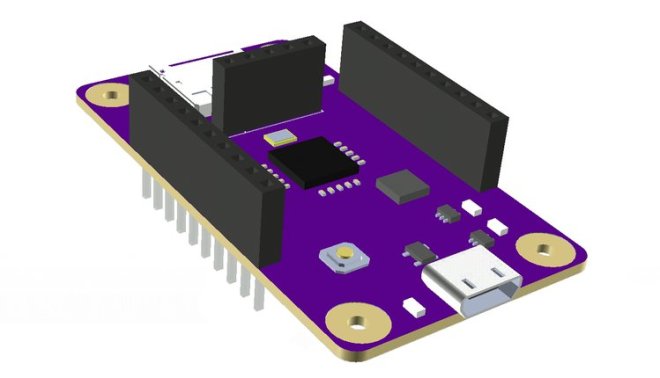
The dev board comes completely assembled.
 OSH Park