Reflowduino: Circuit Board Assembly for Everyone

Timothy Woo has launched a Indiegogo campaign to manufacture his open-source, Arduino-compatible, wireless PCB reflow oven controller:
vwqlvw1alqs19g9mq16x.jpg.png

Reflowduino: Circuit Board Assembly for Everyone!

Reflowduino is the first completely open-source, Arduino-compatible reflow oven controller of its kind that enables practically anyone to assemble their own beautiful circuit boards at home!

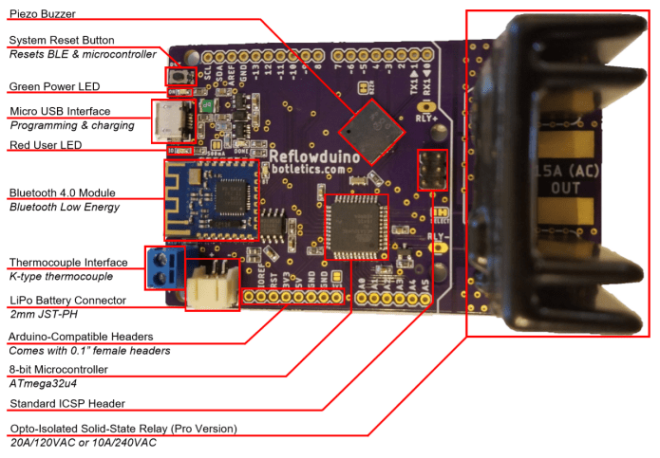
Reflowduino comes loaded with features, all in a compact Arduino-compatible package, with full documentation, example code, demo app, and comprehensive wiki on Github.
ecriw1wwk9mpio5pmbz4

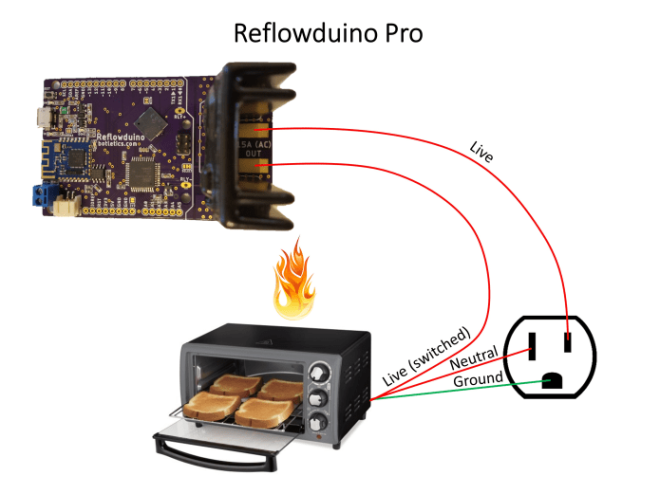
Reflowduino is designed to be extremely easy to use! The general concept is to switch the power of the appliance on or off with a solid-state relay as shown below, measuring the temperature by placing the thermocouple tip inside the oven during the whole process.

If nothing else, please share this campaign to your friends, family, and anyone who might be interested on social media! Remember that every view counts for me, and I’m depending on you to make this happen!
arynyhrvcfd87k9omiwx

Reflowduino: Circuit Board Assembly for Everyone

Mike Ossmann and Dominic Spill: IR, Pirates!

https://youtube.com/watch?v=ahYe5kF23_Q%3Fversion%3D3%26rel%3D1%26fs%3D1%26autohide%3D2%26showsearch%3D0%26showinfo%3D1%26iv_load_policy%3D1%26wmode%3Dtransparent

Mike Ossmann and Dominic Spill have been at the forefront of the recent wave of software-defined radio (SDR) hacking. Mike is the hardware guy, and his radio designs helped bring Bluetooth and ISM-band to the masses. Dominic is the software guy who makes sure that all this gear is actually usable. The HackRF SDR is…

via Mike Ossmann and Dominic Spill: IR, Pirates! — Hackaday

Mike Ossmann and Dominic Spill: IR, Pirates!

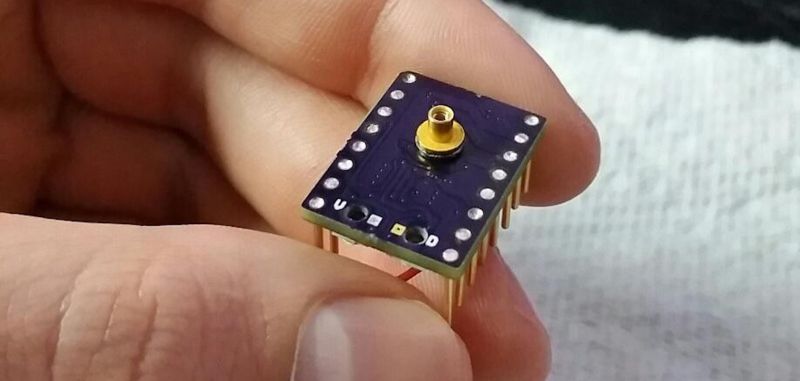
Stepper Driver Module with Swappable Heatsinks

At first glance, [Dean Gouramanis]’s stepper driver module for 3D printers looks like just another RAMPS-compatible stepper board. Except, what could that gold-plated copper peg sticking out of the PCB possibly be? That would be [Dean]’s PowerPeg Thermal Management System that he built and entered in the Hackaday Prize competition for 2015, where it rocked…

via Stepper Driver Module with Swappable Heatsinks — Hackaday

Stepper Driver Module with Swappable Heatsinks

Hackaday: A Fidget Spinner We Can Love


https://youtube.com/watch?v=BGk6_KEFtLE%3Fversion%3D3%26rel%3D1%26fs%3D1%26autohide%3D2%26showsearch%3D0%26showinfo%3D1%26iv_load_policy%3D1%26wmode%3Dtransparent

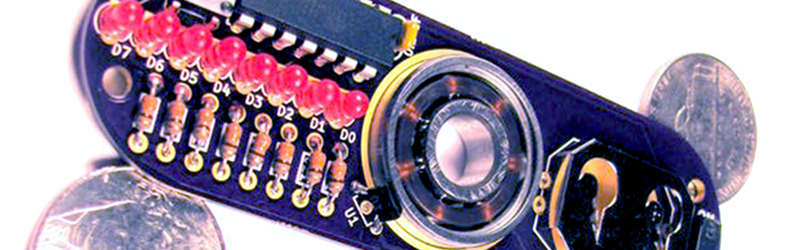
We’ve been frankly mystified at the popularity of fidget spinners. After all, we can flip an ink pen around just fine. However, [MakersBox] just sold us on what he calls the geek spinner. The fact that the spinner is actually a PCB and has parts on it, would probably have been cool enough. However, the…

via Finally, A Fidget Spinner We Can Love — Hackaday

Hackaday: A Fidget Spinner We Can Love

Prototyping, Making A Board For, And Coding An ARM Neural Net Robot

https://youtube.com/watch?v=0D5lcNIEa24%3Fversion%3D3%26rel%3D1%26fs%3D1%26autohide%3D2%26showsearch%3D0%26showinfo%3D1%26iv_load_policy%3D1%26wmode%3Dtransparent

[Sean Hodgins]’s calls his three-part video series an Arduino Neural Network Robot but we’d rather call it an enjoyable series on prototyping, designing a board with surface mount parts, assembling it, and oh yeah, putting a neural network on it, all the while offering plenty of useful tips. In part one, prototype and design, he starts…

via Prototyping, Making A Board For, And Coding An ARM Neural Net Robot — Hackaday

Prototyping, Making A Board For, And Coding An ARM Neural Net Robot

An Interview with Alex Williams, Grand Prize Winner


https://youtube.com/watch?v=5HUCAF6898w%3Fversion%3D3%26rel%3D1%26fs%3D1%26autohide%3D2%26showsearch%3D0%26showinfo%3D1%26iv_load_policy%3D1%26wmode%3Dtransparent

Alex Williams pulled off an incredible engineering project. He developed an Autonomous Underwater Vehicle (AUV) which uses a buoyancy engine rather than propellers as its propulsion mechanism and made the entire project Open Source and Open Hardware. The design aims to make extended duration missions a possibility by using very little power to move the…

via An Interview with Alex Williams, Grand Prize Winner — Hackaday

An Interview with Alex Williams, Grand Prize Winner

Interface the Raspberry Pi Zero W to Commodore 64

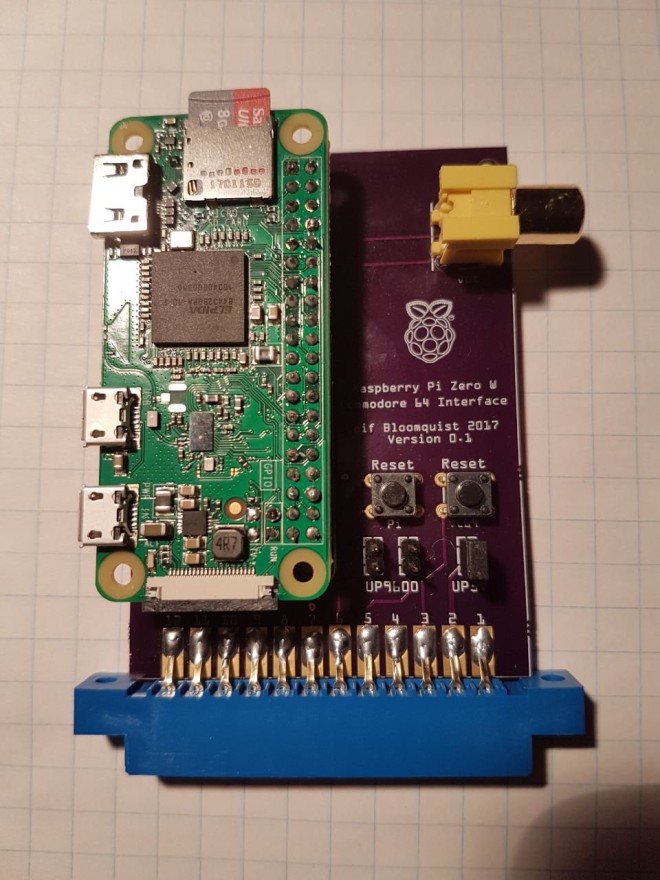
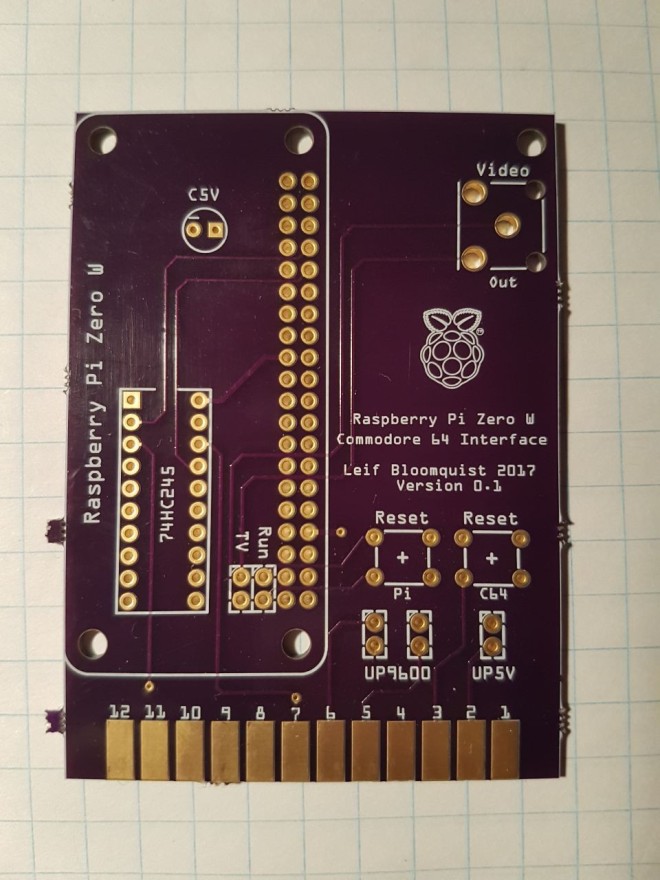
Leif Bloomquist has designed a board to interface the Raspberry Pi Zero W to the Commodore 64 through the User Port.

4826291511238099961.jpg

Raspberry Pi Zero W / Commodore 64 Interface Board

Project goals:

1. Get a Linux shell prompt on your C64 through the Pi Zero’s Console Pins.

2. Use the Pi Zero as a virtual Floppy Disk Drive through raspbiec (https://github.com/Flogistoni/raspbiec) (another option is ninepin, https://github.com/FozzTexx/ninepin)

3. Allow your C64 to access the Internet, USB, etc. through the Pi Zero. ssh!

4. Provide Composite Video out from the Pi Zero that is usable directly on a Commodore monitor.

5. (Stretch Goal #1) If possible – use your C64’s keyboard as the keyboard on the Pi Zero (through the serial port). Maybe through softwedge? (https://github.com/theatrus/softwedge)

6. (Stretch Goal #2) Add PWM audio output (along the lines of https://learn.adafruit.com/introducing-the-raspberry-pi-zero/audio-outputs)


  • 1 × Commodore 64
  • 1 × Raspberry Pi Zero W
  • 1 × 75HC245 For 5V / 3.3V translation
  • 1 × Custom board To be designed.

955771511238228834

Interface the Raspberry Pi Zero W to Commodore 64

Hackaday: What Actually Happens At A Hardware Hacking Con


The Hackaday Superconference was last weekend, and it was the greatest hardware con on the planet. What can you build out of a conference badge? If you answered “a resin-based 3D printer” you would have won a prize. If you decided to put your badge in a conference water bottle and make a stun gun…

via What Actually Happens At A Hardware Hacking Con — Hackaday

Hackaday: What Actually Happens At A Hardware Hacking Con

LTE NB-IoT Shield for Arduino

From Timothy Woo on Hackaday.io:

8302141510267404941.jpg

LTE NB-IoT Shield for Arduino

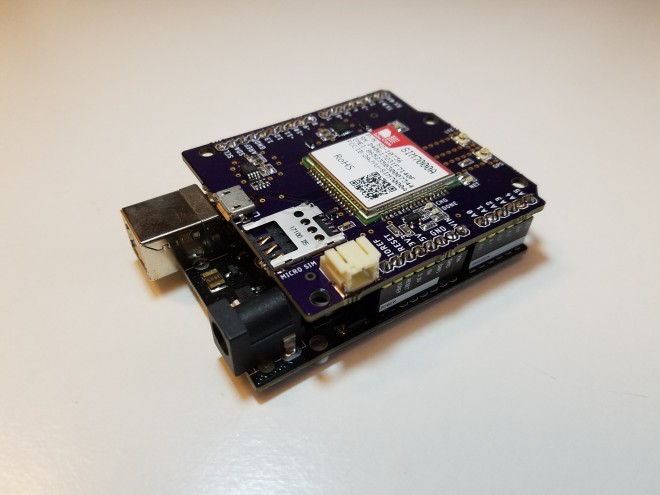
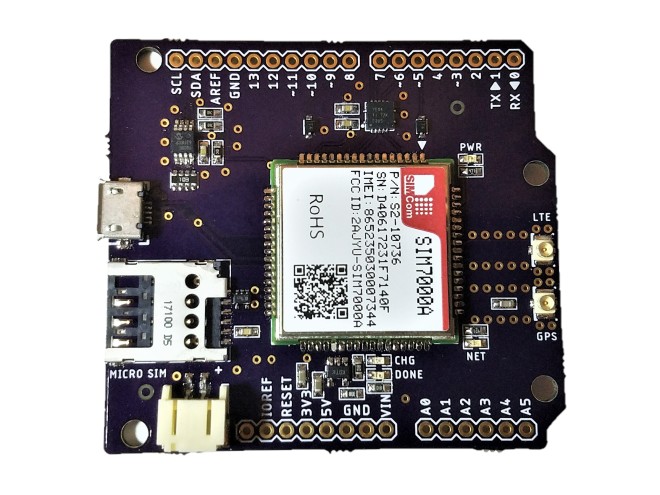
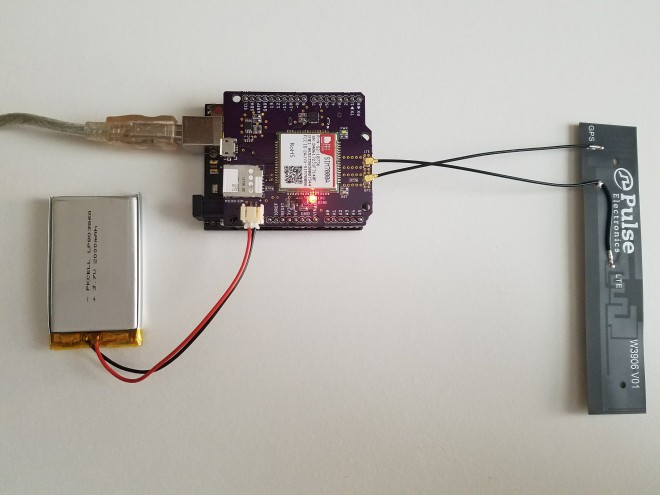
This open-source LTE shield uses SIMCOM’s SIM7000-series modules with the latest LTE CAT-M technology to allow Arduino users to painlessly connect their low-power IoT devices with the next-generation cellular technology!

6990071510267413269

NB-IoT is also available for many countries (but sadly not in the USA yet) simply by swapping out to a different SIM7000 module version. Luckily SIMCOM made it super easy to integrate this module because most of the AT commands are identical to previous version, and Adafruit has a wonderful library for their FONA 2G and 3G products. Check it out and help make this happen!

3454341510977654311

You can view the latest code and design files here on my Github page: https://github.com/botletics/NB-IoT-Shield. Note: The hardware works great but software is still under development! I plan on launching an Indiegogo campaign when I get a fully-working prototype, so stay tuned for updates!

LTE NB-IoT Shield for Arduino