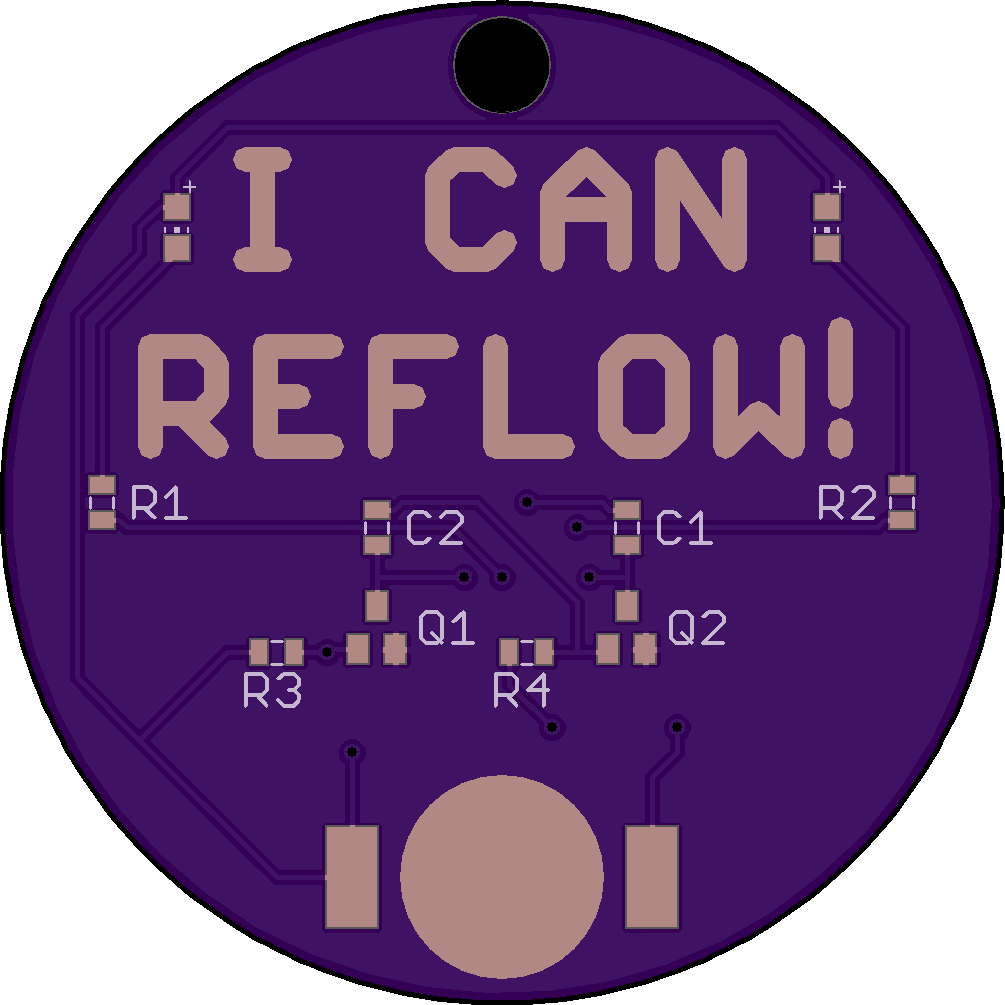

Teardown kicks off Friday in Portland

Interested in hacking, discovering, and sharing hardware?

Teardown 2024 kicks off this Friday:

When?Friday 21st June to Sunday 23rd June 2024
Where?Beautiful Portland, Oregon at Lloyd Center Mall
What?Talks, workshops, installations, demos and space to hack – check out last year’s line up
Who?Anyone interested in hardware: engineers, designers, artists, educators or enthusiasts

The Teardown 2024 schedule is packed with two tracks of talks and two tracks of workshops. There will will also be dozens of demos and art installations, too.


You can get hands on with a Focused Ion Beam (FIB) microscope and explore the nano world with Adam McCombs in the Microscopy Village on Friday afternoon. We are excited to hear the latest about KiCad from project leader Wayne Stambaugh on Saturday. Hardware hacking legend Joe Grand will kick off Sunday with an introduction introduction to fault injection.

OSH Park is proud to sponsor the Teardown SMD Soldering Challenge:

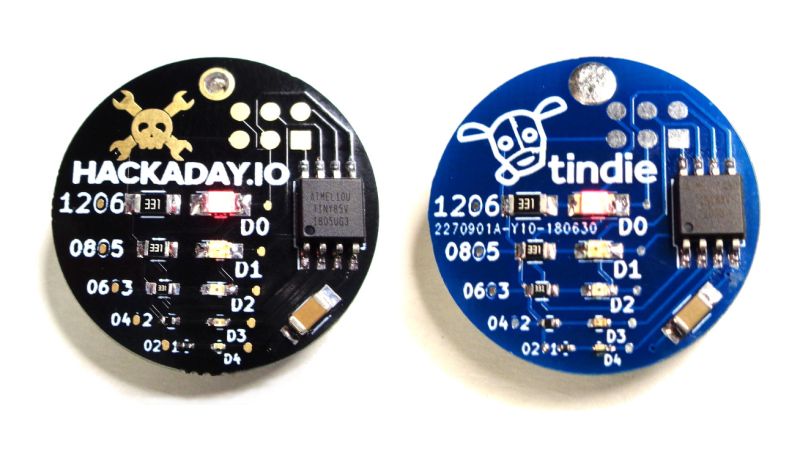
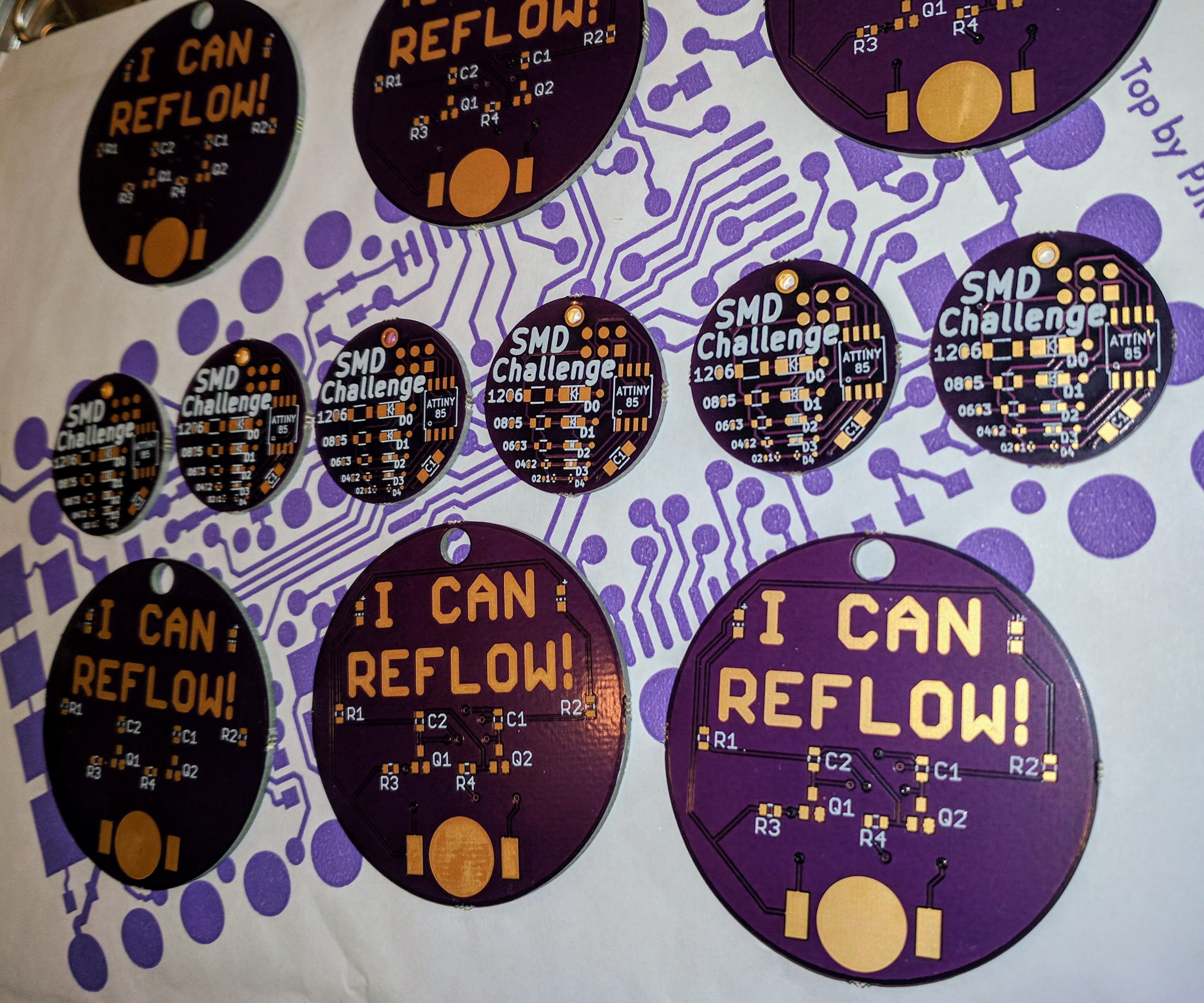
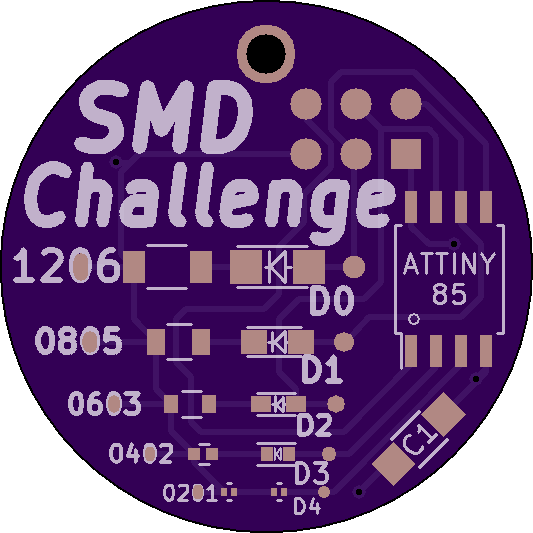
Put your surface mount soldering skills to the ultimate test! Begin with the manageable 1206 package and take on increasingly tiny components, each step pushing your abilities further. This SMD project is powered by a CR2032 coin cell and an Attiny85 SOIC, offering a perfect blend of challenge and excitement. Brace yourself for the ultimate trial: hand soldering a 0201 package, a feat so intricate it will have you questioning your sanity. Are you ready to show off your skills and conquer this soldering adventure

Ever wonder how to get a bare die running?

OSH Park has also sponsored an exciting Die Rebonding Workshop

  • Learn decapping, x-ray inspection, and how to rebond dies
  • Get your own custom hardware badge
  • Hands on experience
Teardown kicks off Friday in Portland

uSMD shrinks soldering challenge down to BGA

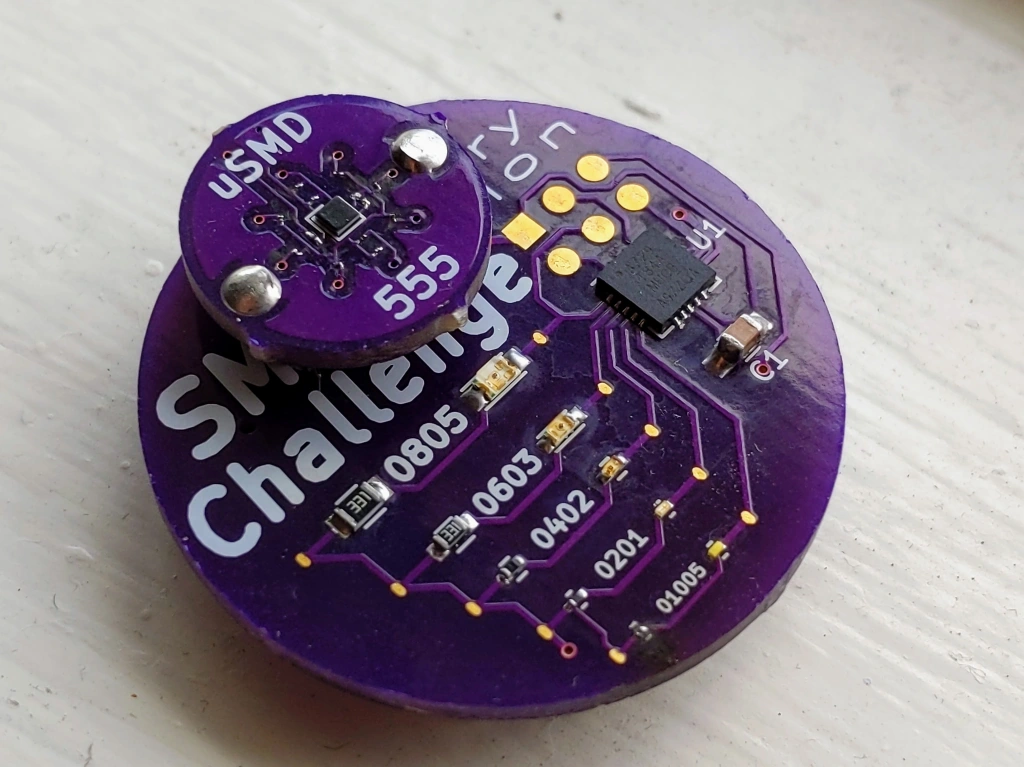
The uSMD designed by Arthur Benemann in KiCad shrinks The Maker’s Box SMD Challenge down to a 555 in 8-UFBGA package and a 008004 cap:

A highlight of last year’s Hackaday Remoticon was a soldering competition that had teams from around the world came together online and did the well-known MakersBox SMD Challenge kit in which a series of LED circuits of decreasing size must be soldered. The Hackaday crew acquitted themselves well, and though an 01005 resistor and LED certainly pushes a writer’s soldering skills to the limit it’s very satisfying to see it working. Lest that kit become too easy, [Arthur Benemann] has come up with something even more fiendish; his uSMD is a 555 LED flasher that uses a BGA 555 and a selection of 008004 small components.

The trick with an 01005 is to heat not the tinned and fluxed solder joint, but the trace leading up to it. If components of that size can be mastered then perhaps an 008004 isn’t that much smaller so maybe the same technique might work for them too. In his tip email to us he wrote “Soldering 008004 isn’t much worse than a 0201, you just need magnification“, and while we think he might be trolling us slightly we can see there’s no reason why it shouldn’t be do-able. Sadly he doesn’t seem to have made it available for us to buy and try so if you want to prove yourself with a soldering iron you’ll have to source the PCBs and parts yourself. Still, we suspect that if you are the type of person who can solder an 008004 then that will hardly be an onerous task for you.

Read more on Hackaday…

uSMD shrinks soldering challenge down to BGA

Portable Ham Antenna Uses SMD Capacitors

From Al Williams on Hackaday:

Portable Ham Antenna Uses SMD Capacitors

[K6ARK] likes to operate portable, so he puts together very lightweight antennas. One of his latest uses tiny toroids and SMD capacitors to form trap elements. You can see  the construction of it in the video below.

You usually think of toroid winding as something you do when building transmitters or receivers, especially small ones like these. We presume the antenna is best for QRP (low power) operation since the tiny core would saturate pretty quickly at higher power. Exactly how much power you should pass through an FT50-43 core depends on the exact application, but we’ve seen numbers around 5 watts.

Portable Ham Antenna Uses SMD Capacitors

Spare SMD Storage with Stacking SMT Tape Reels

From Donald Papp on Hackaday:

Spare SMD Storage, With Stacking SMT Tape Reels

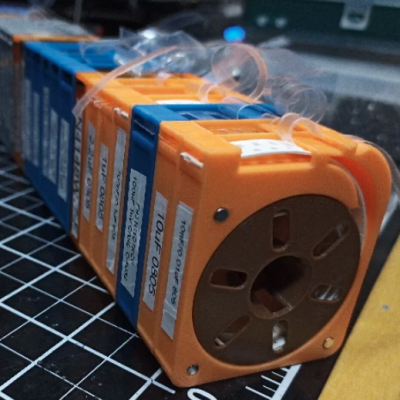
[Kadah]’s solution for storing short tapes of SMT parts is as attractive as it is clever. The small 3D-printed “tape reels” can double as dispensers, and stack nicely onto each other thanks to the sockets for magnets. The units come in a few different sizes, but are designed to stack in a consistent way.

We love the little touches such as recessed areas for labels, and the fact that the parts can print without supports (there are a couple of unsupported bridges, but they should work out fine.) Also, the outer dimensions of the units are not an accident. They have been specifically chosen to nestle snugly into the kind of part drawers that are a nearly ubiquitous feature of every hardware hacker’s work bench.

STLs are provided for handy download but [Kadah] also provides the original Fusion 360 design file, with all sizes defined as easily-customized parameters. In addition, [Kadah] thoughtfully provided each model in STEP format as well, making it easy to import and modify in almost any 3D CAD program.

Providing 3D models in STEP format alongside STLs is nice to see, because it gives more options to people if things need some tweaking, because editing the STL file can be done if needed, but isn’t optimal. Thankfully the ability to export STEP files is still open to hobbyists using Fusion 360, since Autodesk decided to leave that feature available to personal use licenses.

Spare SMD Storage with Stacking SMT Tape Reels

Challenge Your Soldering Skills With Snowy0201

From  on the Tindie blog:

Snowy0201_from_NWMaker_on_Tindie.jpg

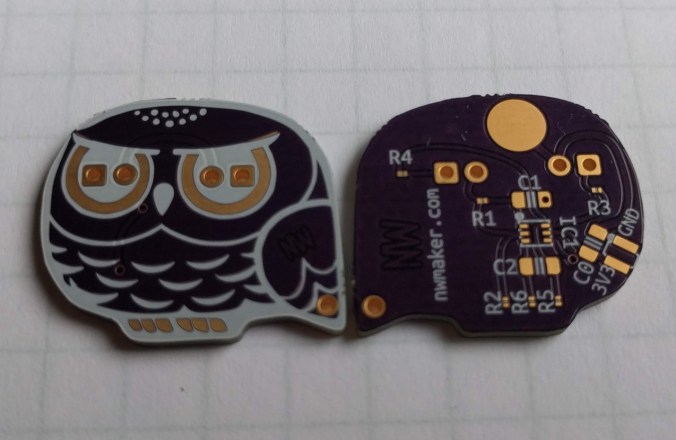
The Snowy Owl is the rebel of owls. They live in the north near arctic regions of the world, and unlike other owls, they are active during the day instead of the night. Owls in general are pretty great, which is why this Snowy Owl version of the Surface Mount Device 0201 soldering challenge kit caught my eye.

For this challenge, the resistors on the back of the owl have been changed to a 0201 packages for an additional level of difficulty. These are cellphone-level miniaturization so it will be a challenge. A dual inverter NL27WZ04 is used to implement the ring oscillator, which drives the blinking LEDs.

Think you’re up to the challenge?


Challenge Your Soldering Skills With Snowy0201

Competitive Soldering is Now a Thing

At Hackaday, we’re constantly impressed by the skill and technique that goes into soldering up some homebrew creations. We’re not just talking about hand-soldering 80-pin QFNs without a stencil, either: there are people building charlieplexed LED arrays out of bare copper wire, and using Kynar wire for mechanical stability. There are some very, very talented people out there, and they all work in the medium of wire, heat, and flux.

At this year’s DEF CON, we opened the floodgates to competitive soldering. Along with [Bunny] from Hardware Hacking Village and the many volunteers from the HHV and Soldering Skills Village, dozens competed to solder up a tiny kit full of LEDs and microscopic resistors.

The kit in question was an SMD Challenge Kit put together my MakersBox, and consisted of a small PCB, an SOIC-8 ATtiny, and a LED and resistor for 1206, 0805, 0603, 0402, and 0201 sizes. The contest is done in rounds. Six challengers compete at a time, and everyone is given 35 minutes to complete the kit.

via Competitive Soldering is Now a Thing — Hackaday

Quote

A 3D-Printed Bowl Feeder for Tiny SMD Parts

[Andrzej Laczewski] has something big in mind for small parts, specifically SMD resistors and capacitors. He’s not talking much about that project, but from the prototype 3D-printed bowl feeder he built as part of it, we can guess that it’s going to be a pretty cool automation project.

Bowl feeders are common devices in industrial automation, used to take a big pile of parts like nuts and bolts and present them to a process one at a time, often with some sort of orientation step so that all the parts are the right way around. They accomplish this with a vibratory action through two axes, which [Andrzej] accomplishes with the 3D-printed ABS link arms supporting the bowl.

via A 3D-Printed Bowl Feeder for Tiny SMD Parts — Hackaday

Quote

Simple Mechanism Gives Support for SMT Assembly

 on the Hackaday blog:

pick-and-place-e1523119167760.png

Simple Mechanism Gives Support for SMT Assembly

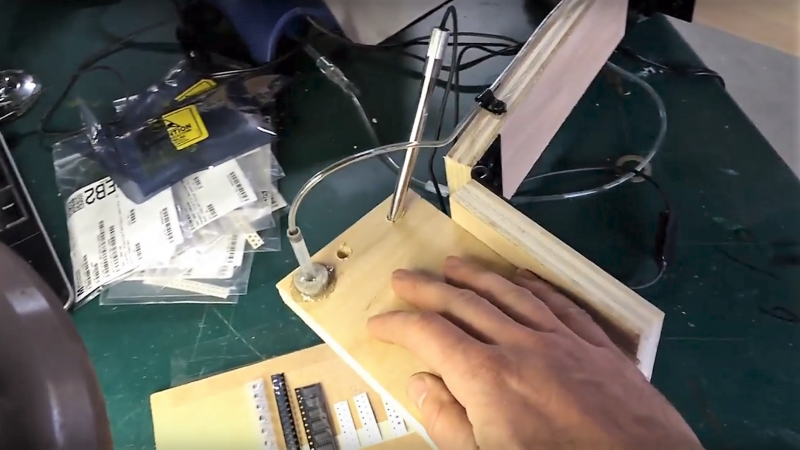
To fight the shakes, you can do one of two things: remove the human, or improve the human. Unable to justify a pick and place robot for the former, [Tom] opted to build a quick hand support for surface-mount work, and the results are impressive considering it’s built entirely of scrap.

It’s just a three-piece arm with standard butt hinges for joints; mounted so the hinge pins are perpendicular to the work surface and fitted with a horizontal hand rest, it constrains movement to a plane above the PCB. A hole in the hand rest for a small vacuum tip allows [Tom] to pick up a part and place it on the board — he reports that the tackiness of the solder paste is enough to remove the SMD from the tip.

Simple Mechanism Gives Support for SMT Assembly

Reflowduino: Open Source Reflow Oven Controller

 writes on Hackaday about Timothy Woo’s Reflowduino:

1658421509137060505-e1509247070943

Hackaday Prize Entry: Reflowduino, the Open Source Reflow Oven Controller

Face it — you want a reflow oven. Even the steadiest hands and best eyes only yield “meh” results with a manual iron on SMD boards, and forget about being able to scale up to production. But what controller should you use when you build your oven, and what features should it support? Don’t worry…

3821281510029060878

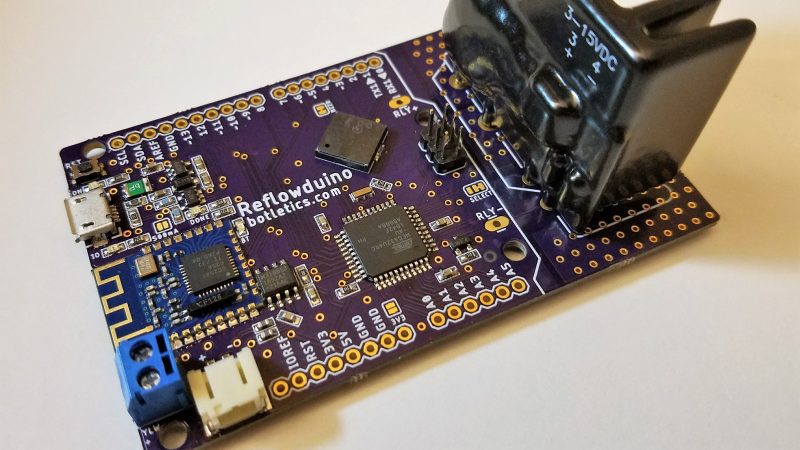
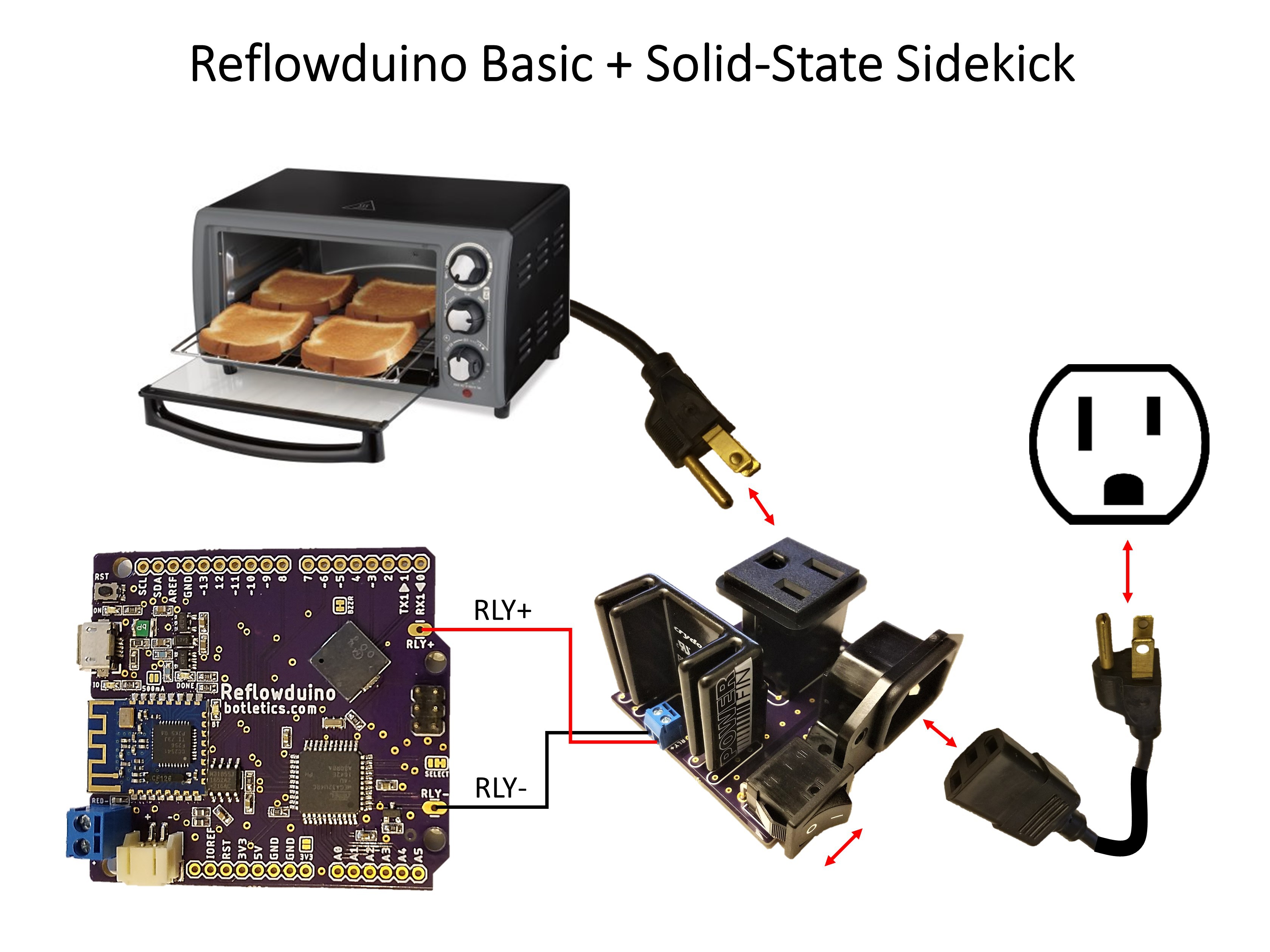
Dubbed the Reflowduino for obvious reasons, Timothy Woo’s Hackaday Prize entry has everything you need in a reflow oven controller, and a few things you never knew you needed.
 
 
Reflowduino: Open Source Reflow Oven Controller