Open Hardware Summit 2018 badge

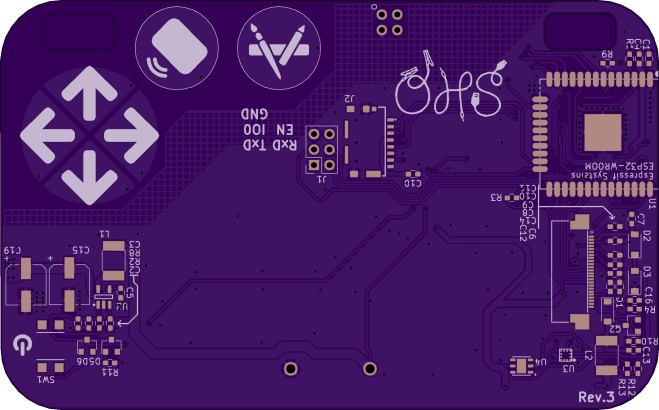
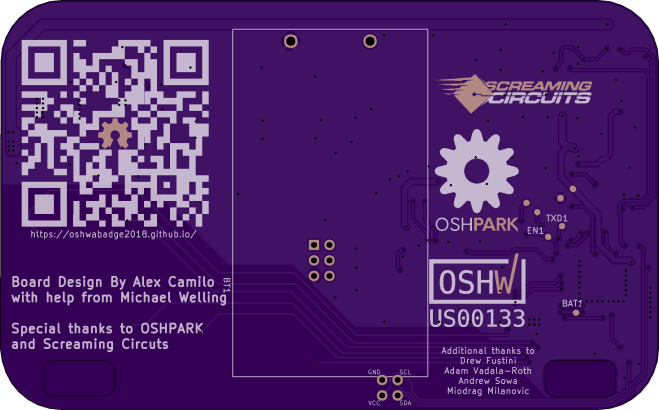
OSH Park is producing electronic conference badges for the 2018 Open Hardware Summit.  The hardware has been designed Alex Camilo, based on concepts from the ESP trINKet by Mike Rankin.  The badge features an ESP32 microcontroller and a 2.13″ E-Paper display.
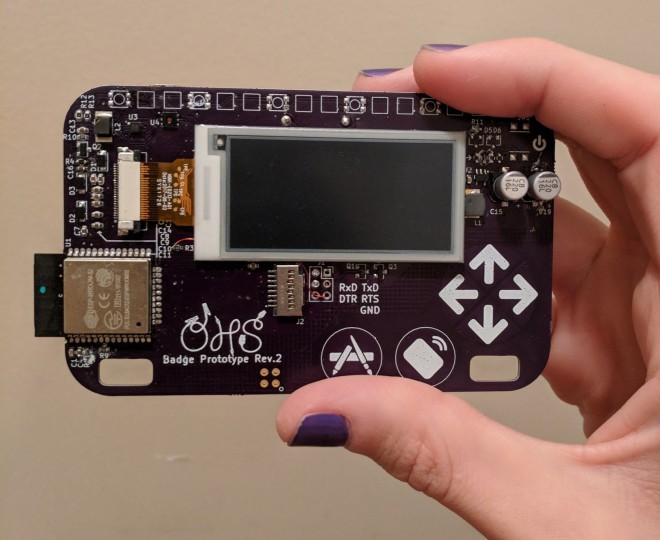
6202441533283525215

OSH Park shared project for the Rev 3 by Alex Camilo :

https://oshpark.com/shared_projects/8yeLK5gd

Order from OSH Park

a

b

We expect this to be the final revision.

Timeline:

It is ordered on Super Swift today and should be validated next weekend.  This will allow us to order the full quantity PCB panels in August 13th.  Assembly is estimated to be 10 business days from the day when all components and PCBs are received.

Rev 2 photos:

And for those interested, here is a link to a gallery:

https://photos.app.goo.gl/UhCUX7eRN38tAhsF7
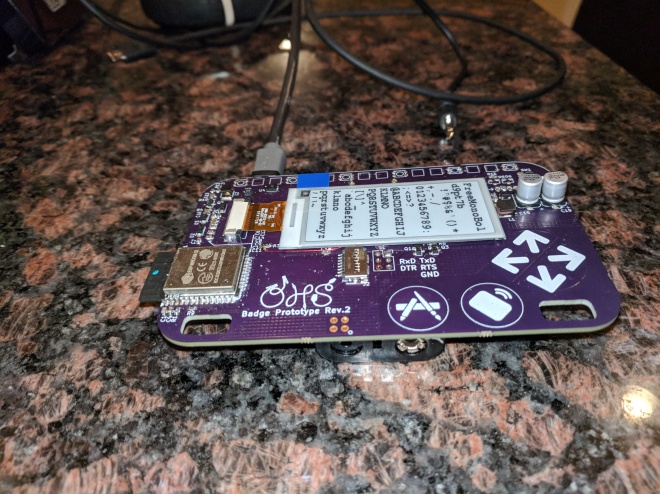
IMG_20180805_031614

Terminal output on Rev 2 prototypes:

The Rev 2 prototypes have NodeMCU boards soldered on to the back to serve as a USB to serial adapter.

One of the Rev 2 prototype boards that Alex sent me has the default e-paper demo:
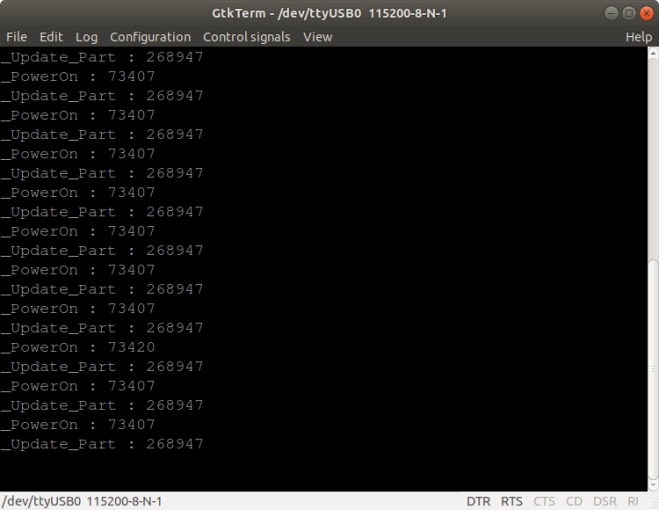
3633741533555804296

The other has MicroPython installed! 🙂
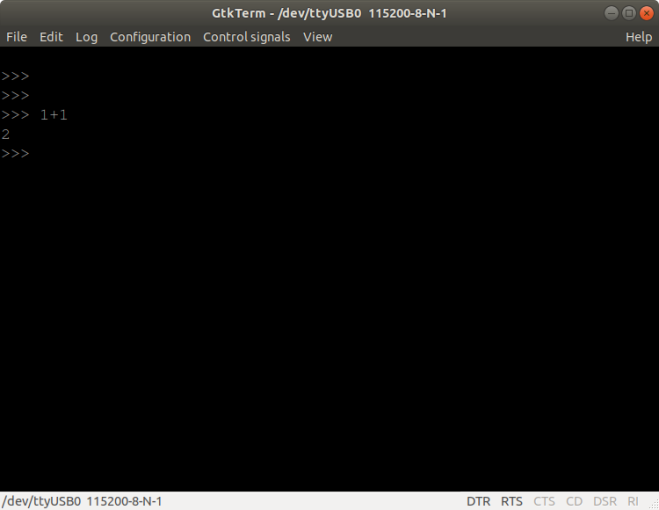
1079331533555818375

Resources for the 2018 Open Hardware Summit badge:
Open Hardware Summit 2018 badge

Hackaday Belgrade: Sophi Kravitz’s Blimp Army

From  on Hackaday:

Hackaday Belgrade: Sophi Kravitz’s Blimp Army

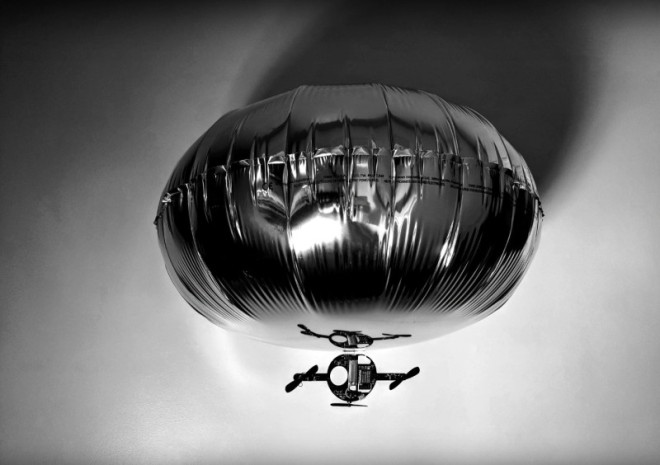
Building things that fly is hard. The constraints on small, battery powered, radio-operated gear already presents a challenge, but adding weight, balance, and aerodynamic constraints takes it to a whole new level. Sophi Kravitz rises to the occasion and discusses each challenge of building a blimp from start to finish in her presentation at the 2018 Hackaday Belgrade conference.

sophi-blimp-blimp.jpg

One of the pleasures of writing for Hackaday comes through the incredible array of talent and experience to be found among our colleagues. We all do our own work, but one is humbled by that which flows from the benches of those one works alongside. Just such a project is the Remote Control Mini Blimp from our colleague Sophi Kravitz. It’s a game involving an obstacle course and a set of remote-controlled blimps. The challenges in such an endeavour have been pushing the limits of what is possible with off-the-shelf components.

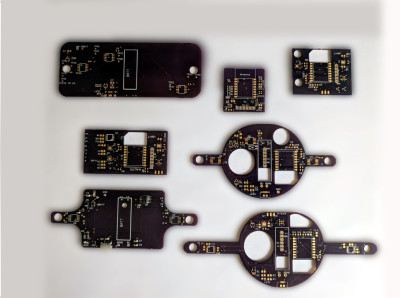
sophi-blimp-pcbs.jpg

So after a series of versions, she had a PCB with left and right motors on two arms and a lift motor pointing downwards, which she suspended beneath the helium bag. Her controllers are simple enough 3D-printed joystick housings, with another ESP8266 within. The blimp ESP8266 forms a wireless network to which the controller connects.

Quote

Teardown 2018 session videos

Teardown: Portland 2018 session videos

Between the talks, workshops, presentations, demos, and installations at Teardown 2018, there was a lot of intense information to absorb at once. Luckily, we were able to record some of the speakers doing their thing so attendees could reflect back and those who weren’t able to come physically are still able to participate. Videos are embedded in the sessions page. Here are shortcuts to each video:

Teardown 2018 session videos

A 3D-Printed Bowl Feeder for Tiny SMD Parts

[Andrzej Laczewski] has something big in mind for small parts, specifically SMD resistors and capacitors. He’s not talking much about that project, but from the prototype 3D-printed bowl feeder he built as part of it, we can guess that it’s going to be a pretty cool automation project.

Bowl feeders are common devices in industrial automation, used to take a big pile of parts like nuts and bolts and present them to a process one at a time, often with some sort of orientation step so that all the parts are the right way around. They accomplish this with a vibratory action through two axes, which [Andrzej] accomplishes with the 3D-printed ABS link arms supporting the bowl.

via A 3D-Printed Bowl Feeder for Tiny SMD Parts — Hackaday

Quote

ESP8266 Power Switch

9f1b7d6c82f7723494f75bccf80b69b4bb7c1bed

ESP8266 Power Switch

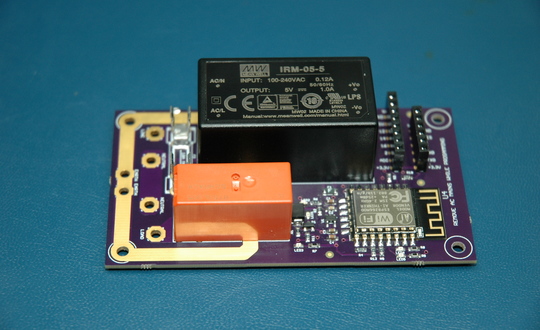
The DomCo Electronics, Inc. ESP8266 AC Power Switch is everything you need to get started with controlling AC mains from an ESP8266. We know dealing with AC can be intimidating for people at times and we wanted to simplify the process of making your own IoT device.

Everything you need to control a 100-240VAC 50/60Hz load is built right onto the board. Simply solder on a power lead and socket of your choice to the Power Switch and the on-board code can get you up and started in minutes. (We have a USA power tail and socket in the optional extras below.) No more needing to wire up an ESP board, a Wall wart, an IoT Power Relay (Power Tail), and a bunch of wires just to control your light or coffee maker.

ESP8266 Power Switch

Monoprice Mini Converted to Pick and Place (Kinda)

Would you believe that you can take a cheap 3D printer and easily convert it into a full function pick and place machine to help assemble your PCBs? No? Well good, because you can’t. A real pick and place needs all kinds of sensors and logic to identify parts, rotate them, make sure everything is aligned, etc, etc. There’s no way you could just bolt all that onto a cheap 3D printer, and let’s not even talk about the lack of closed loop control.

But if you have a very specific use case, namely a PCB that only has a relatively large single part that doesn’t need to be rotated, [Connor Nishijima] might have a solution for you. He bought a $150 USD Monoprice Mini, and with the addition of a few printed parts, was able to build a machine that drastically cuts down the time it takes for him to build his LED boards. Best of all the modification doesn’t involve any permanent changes to the printer, he can just pop off the vacuum attachment when he wants to print something.

via Monoprice Mini Converted to Pick and Place (Kinda)

Quote

KiCad 6 development fundraiser

KiCad 6 Donation Campaign

The world needs a freely available tool for designing open-source hardware. Without it, designers do not have the freedom to share their work efficiently. KiCad is that tool, and you can help to develop it.

A stable release of KiCad Version 6 could become available very soon, so that everybody can profit from its enhanced features. With an extra 600 hours of expert development, this might become a reality!

Contribute to KiCad Version 6 with a donation and help us reach the goal of 600 hours of expert development that can make the new release available sooner than you think.

KiCad 6 development fundraiser

Twenty Power Harvesting Projects Headed to the Hackaday Prize Finals

The Academy Awards of hardware creation is going on right now! The Hackaday Prize is a challenge to you — yes, you — to create the next great piece of Open Hardware. It is simply incomparable to anything else, and we have the projects to show for it.

We wrapped up the Power Harvesting Challenge portion of The Hackaday Prize. Now we’re happy to announce twenty of those projects have been selected to move onto the final round and have been awarded a $1000 cash prize. Congratulations to the winners of the Power Harvesting Challenge portion of the Hackaday Prize.

via Twenty Power Harvesting Projects Headed to the Hackaday Prize Finals — Hackaday

Quote