Microgamer Is A Micro:Bit Handheld Console

From on the Hackaday blog:

Screenshot from 2018-02-27 18-25-39.png

 Microgamer Is A Micro:Bit Handheld Console

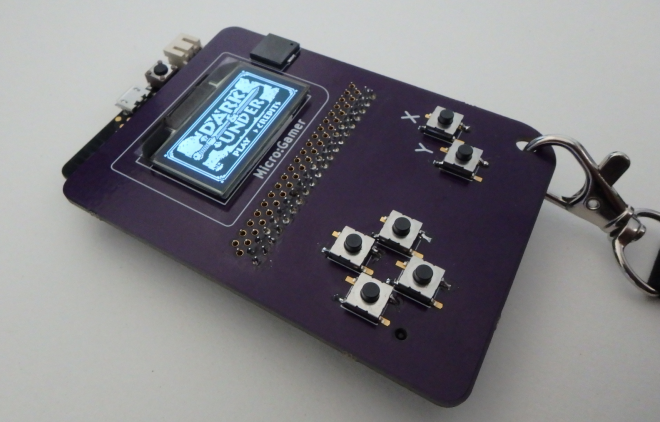
The BBC micro:bit single board ARM computer aimed at education does not feature as often as many of its competitors  in these pages. It’s not the cheapest of boards, and interfacing to it in all but the most basic of ways calls for a slightly esoteric edge connector. We’re then very pleased to see that edge connector turned from a liability into a feature by [Fabien Chouteau] with his handheld console, he uses micro:bits preprogrammed with different games in the manner of game cartridges in commercial consoles.
Screenshot from 2018-02-27 18-24-23.png

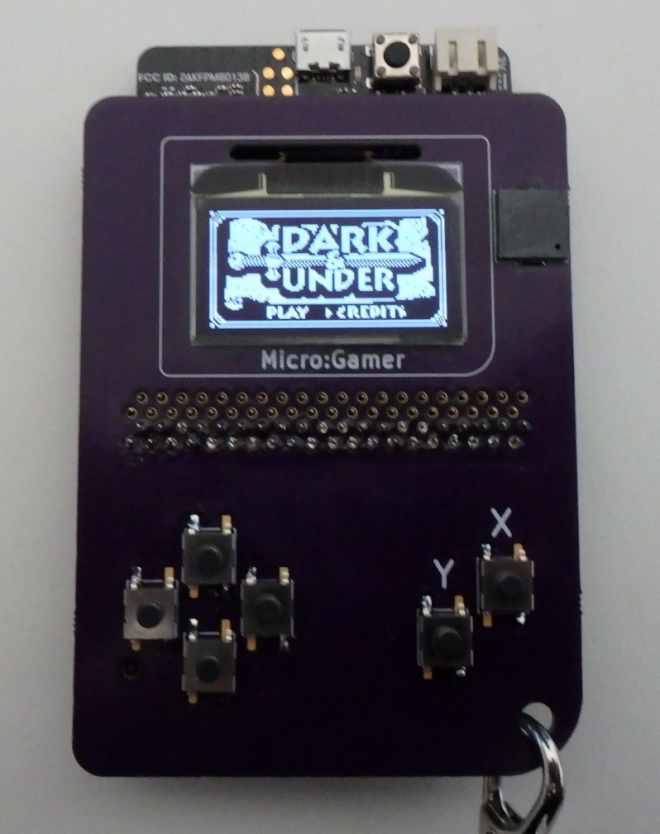
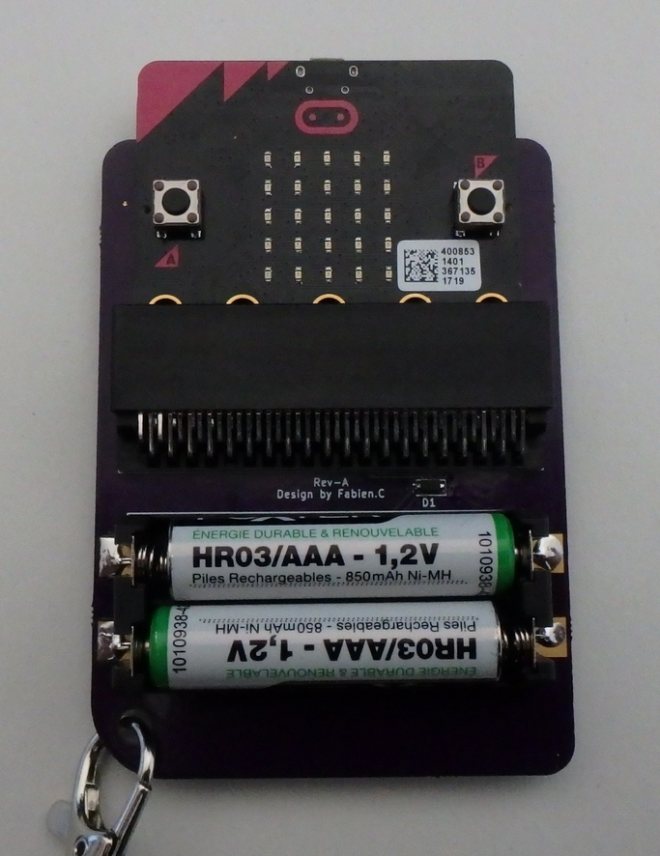
The micro:bit sits in its edge connector on the underside of a handheld PCB above a pair of AAA batteries, while on the other side are an OLED display and the usual set of pushbuttons. It’s a particularly simple board as the micro:bit contains all the circuitry required to support its peripherals.


He’s coded the games using the Arduino IDE with a modified version of the Arduboy2 library that allows him to easily port Arduboy games written for Arduino hardware. It’s a work in progress as there are a few more features to incorporate, but the idea of using micro:bits as cartridges is rather special. There is a video of the console in action, which we’ve placed below the break.
Screenshot from 2018-02-27 18-25-10.png

Microgamer Is A Micro:Bit Handheld Console

iceRadio SDR project

Software Defined Radio (SDR) project by Eric Brombaugh:
iceRadio.jpg

iceRadio

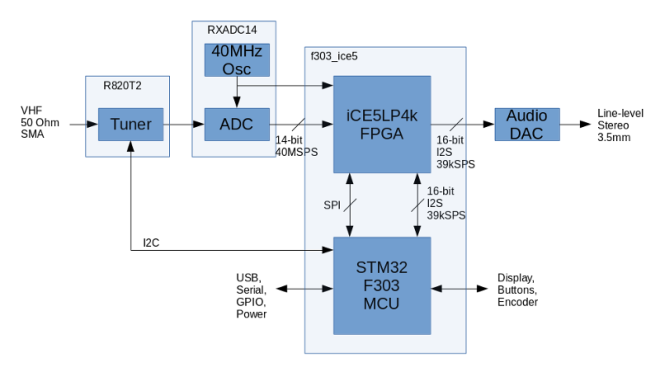
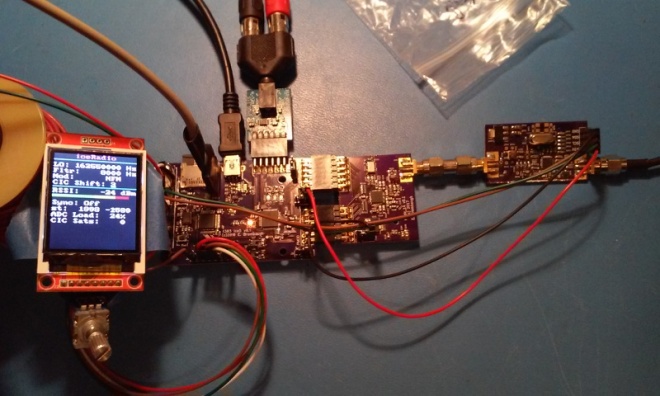
This is a test prototype for experimenting with Software Defined Radio (SDR). It is composed of several boards that are described in detail elsewhere on this site:

Combined with suitable firmware and FPGA design, these boards comprise a receiver capable of capturing 20kHz of signal from DC to over 1GHz, demodulating it with a variety of formats and driving high-quality audio.

iceRadio_system.png

Tuner

RF input from the antenna can optionally be tuned down from VHF/UHF frequncies to an IF frequency in the HF range before passing to the ADC.

ADC

Raw HF or downconverted VHF at an IF of 5MHz is digitized to 14-bit resolution. The maximum input signal allowed without exceeing the range of the ADC puts the 0dBfs point of this system at -10dBm in 50 ohms. The ADC runs at 40MSPS with a resolution of 10 bits, providing approximately 60dB of dynamic range and 20MHz of bandwidth which places the quantization noise floor at about -70dBm.

FPGA

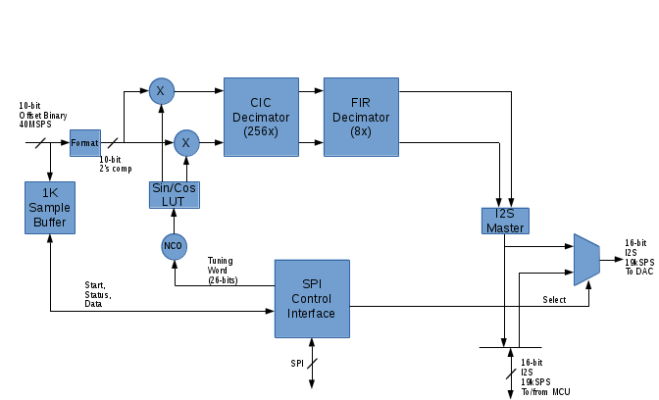
From the ADC, data passes into the FPGA. This is an iCE5LP4k part which provides 20 4kb RAM blocks and 4 16×16 MAC blocks which are essential for the DSP required for the downconversion. In the FPGA the ADC data is pre-processed to a sample rate appropriate for the MCU. Figure 2 below shows the primary components of the FPGA design.

iceRadio_fpga

The C and Verilog source code is available on GitHub:

emeb/iceRadio

iceRadio SDR project

World Create Day is the Hackaday Event in Your Neighborhood

Hackaday World Create Day is on March 17th and it’s happening near you. Get together with hackers in your area and create something. Sign up now to host a World Create Day gathering! These are really easy to organize, but we can only do it with your help.

via World Create Day is the Hackaday Event in Your Neighborhood — Hackaday

World Create Day is the Hackaday Event in Your Neighborhood

An Especially Tiny And Perfectly Formed FM Bug

It used to be something of an electronic rite of passage, the construction of an FM bug. Many of us will have taken a single RF transistor and a tiny coil of stiff wire, and with the help of a few passive components made an oscillator somewhere in the FM broadcast band.

via An Especially Tiny And Perfectly Formed FM Bug — Hackaday

An Especially Tiny And Perfectly Formed FM Bug

TritiLED Flashes for 20 Years on a Single Coin Cell

From  on Tindie blog:

tritiled

TritiLED Flashes for 20 Years on a Single Coin Cell

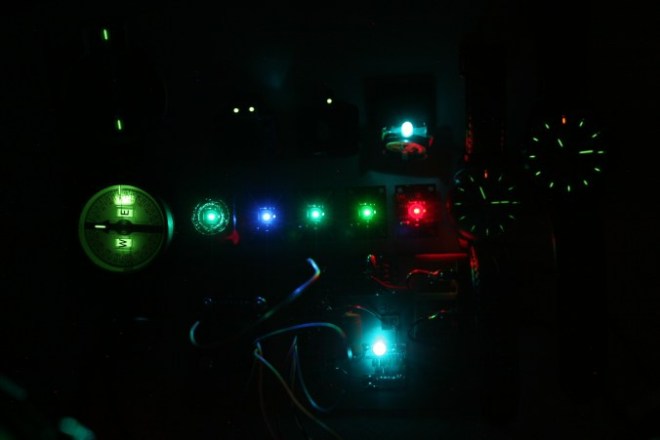
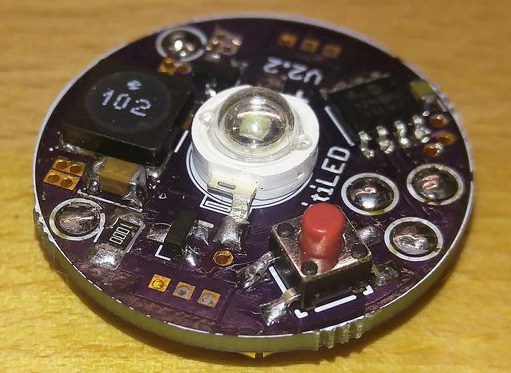
Ted Yapo had a small problem. As an amateur atronomer and astrophotographer, he needed a way to mark his expensive equipment so that he wouldn’t trip over it in the dark. Glow-in-the-dark materials were out because of they only glow for a short time, and glow sticks were also less than ideal because of their single-use nature. Tritium light sources would be perfect, barring the small details that they’re radioactive, expensive, and in the US only a few uses are allowed, most are prohibited by law.

tritiled1

So Yapo instead came up with an LED light that can run for not 20 hours, or even 20 days, but 20 yearson a single CR2032 coin cell battery!

TritiLED Flashes for 20 Years on a Single Coin Cell

Friday Hack Chat: Trusting The Autorouter

For this week’s Hack Chat, we’re talking about trusting the autorouter. The autorouter is just a tool, and like any tool, it will do exactly what you tell it. The problem, therefore, is being smart enough to use the autorouter.

Our guest for this week’s Hack Chat is Ben Jordan, Director of Community Tools and Content at Altium. Ben is a Computer Systems engineer, with 25 years experience in board-level hardware and embedded systems design. He picked up a soldering iron at 8, and wrote some assembly at 12. He’s also an expert at using an autorouter successfully.

via Friday Hack Chat: Trusting The Autorouter — Hackaday

Friday Hack Chat: Trusting The Autorouter

Save with our Medium Run discount

Need 100 square inches or more?

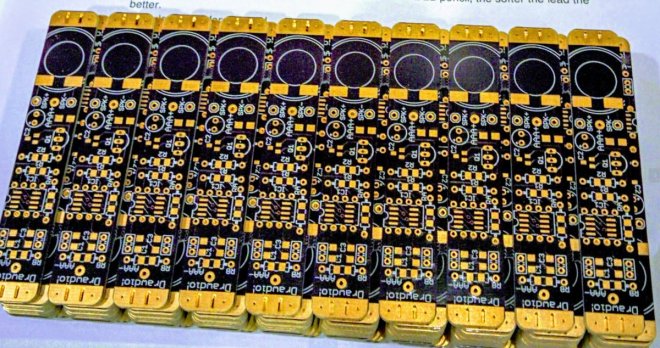
Our 2 Layer Medium Run service is $1 per square inch and ships in 15 calendar days or fewer:

DDCg02YXsAI-nV7

$1 per square inch, 100 square inch minimum. You can have as many different designs as you want, as long as each design is ordered in a multiple of 10 boards.

For example, if you had two different 5 square inch designs, you could order 10 of each for a total cost of $100.

100 inches is just the minimum order. You can order as much as you’d like beyond that.

Turn Times

Fabrication time can vary for medium run orders, but boards will ship in 15 calendar days or fewer.

Medium Run orders cannot be expedited. For faster fabrications options, you may be interested in our 2 Layer Service or even faster 2 Layer Super Swift Service.

You can get a quote, approve a design, and pay for an order at OSH Park.

2 Layer PCB Specs

Quick Specs

  • 6 mil (0.1524mm) minimum trace width
  • 6 mil (0.1524mm) minimum trace spacing
  • 10 mil (0.2540mm) minimum drill
  • 5 mil (0.127mm) annular ring
  • PCB thickness of 1.6mm (.063”)
  • 1oz copper on both sides (1.4mil, 35um)

Detailed Specs

  • ENIG (gold) finish for superior soldering and environmental resistance.
  • Solder resist and silkscreen on both sides.
  • Minimum 15 mil (0.3810mm) keepout distance from traces to the board edge.
  • PCB substrate is FR4 (170 Tg).
  • PCB substrate is compatible with a lead-free process.
  • The boards themselves are also lead free and RoHS compliant.
  • PCB Substrate dielectric constant of 4.6 at 1MHz.
  • Minimum 4 mil soldermask web.
  • Maximum soldermask expansion, retraction, or shift is 3mil.
  • Minimum 100 mil (2.54mm) width on internal cutouts. See our Slots page for further information.
  • Manufactured in the United States.
  • Castellations are allowed, but not officially supported.
  • Non-plated slots smaller than 100 mil (2.54mm) are not officially supported.
  • Plated slots and smaller slots are possible, but not officially supported. See our Slots page for more.
Save with our Medium Run discount

Magnetic Imager Tile v3.0

 writes in the latest Hackaday Links:

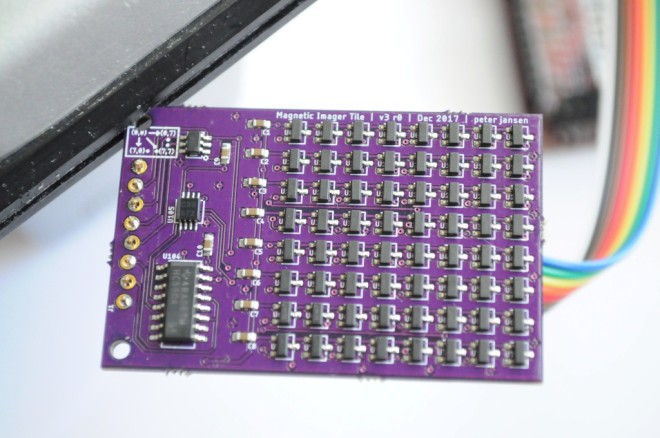
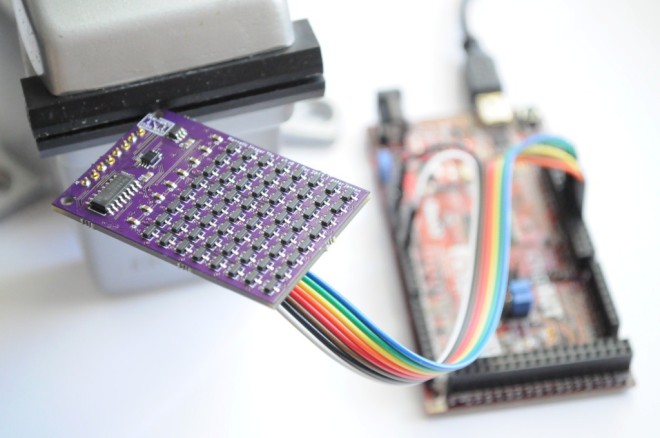
A while ago, [Peter Jansen], the guy who built a tricorder and a laser-cut CT scanner, made a magnetic camera. This Hall Effect camera is a camera for magnetism instead of light. Now, this camera has been fully built and vastly improved. He’s capturing ‘frames’ of magnetism in a spinning fan at 2000 Hz (or FPS, terminology kind of breaks down here), and it’s beautiful.

4117781518466589929 (1)

3723931518466577069 (2)

Magnetic Imager Tile v3.0