ADSR Envelope Generator Module


https://youtube.com/watch?v=LQK_8QNw8T4%3Fversion%3D3

What’s an ADSR envelope generator? If you are a big music hacker, you probably know. If you are like the rest of us, you might need to read [Mich’s] post to find out that it is an attack-decay-sustain-release (ADSR) envelope generator. Still confused? It is a circuit used in music synthesis. You can see a…

via The Sound of (Synthesized) Music — Hackaday

ADSR Envelope Generator Module

Best Product Entry: Emulating Memory

For this year’s Hackaday Prize, we’re giving everyone the opportunity to be a hardware startup. This is the Best Product portion of the Hackaday Prize, a contest that will award $30,000 and a residency in our Design Lab to the best hardware project that is also a product. Imagine all the memory chips in all…

via Best Product Entry: Emulating Memory — Hackaday

Best Product Entry: Emulating Memory

Hackaday Superconference tickets on sale

https://youtube.com/watch?v=vuO-XK470mE%3Fversion%3D3

We’re thrilled to announce Supercon tickets are now available. The 2017 Hackaday Superconference is November 11th and 12th in Pasadena, California. This is the ultimate hardware conference. Hackers, designers, and engineers from all over the world converge — from the greenest beginners to those who have made history with their designs. This is the Hackaday community,…

via Hackaday Superconference: Tickets and Proposals — Hackaday

Hackaday Superconference tickets on sale

DIY 6-Axis Micro Manipulator

[David Brown]’s entry for The Hackaday Prize is a design for a tool that normally exists only as an expensive piece of industrial equipment; out of the reach of normal experimenters, in other words. That tool is a 6-axis micro manipulator and is essentially a small robotic actuator that is capable of very small, very precise movements.…

via Hackaday Prize Entry: DIY 6-Axis Micro Manipulator — Hackaday

DIY 6-Axis Micro Manipulator

EasyPWR

From mcu_nerd on Hackaday.io:

1456891490358322562.JPG

EasyPWR

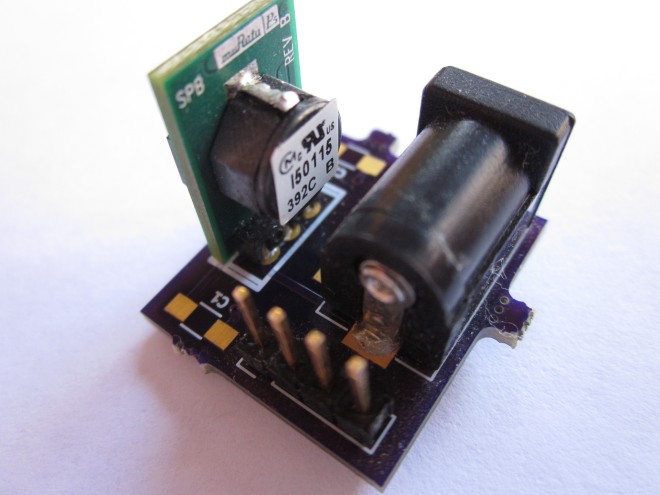
A small, easy to assemble board that makes use of old wall warts.


Like many of us, I had a bunch of various wall-warts lying around, but sadly though none of them produced a regulated 5V/3.3V. I had some 78xx regulators around, so I went into KiCad and made a board to make those wall-warts useful! Changing the world by saving old wall warts from the dumpster!

EasyPWR

Ultrasound Imaging with Raspberry Pi

 writes on the Hackaday blog:20170529_203924_notes

Best Product Entry: A HSDK for Ultrasound Imaging

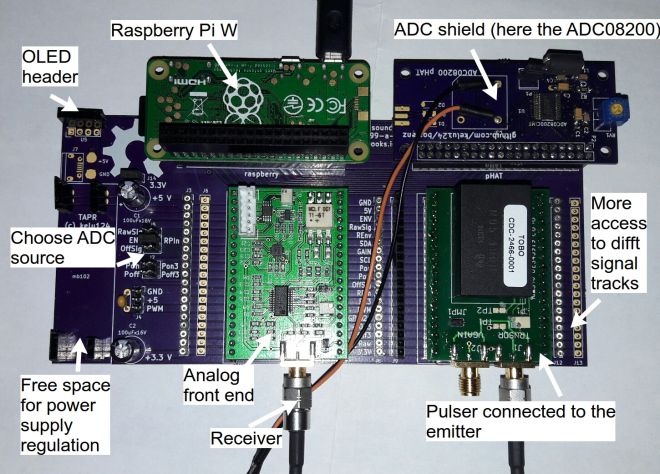
As an entry into this year’s Best Product portion of the Hackaday Prize, [kelu124] is developing a hardware and software development kit for ultrasound imaging.

Ultrasound is one of the primary tools used in modern diagnostic medicine. Head to the doctor with abdominal pain, and you can bet you’ll be seeing the business end of an ultrasound system. While Ultrasound systems have gotten cheaper, they aren’t something everyone has in the home yet.
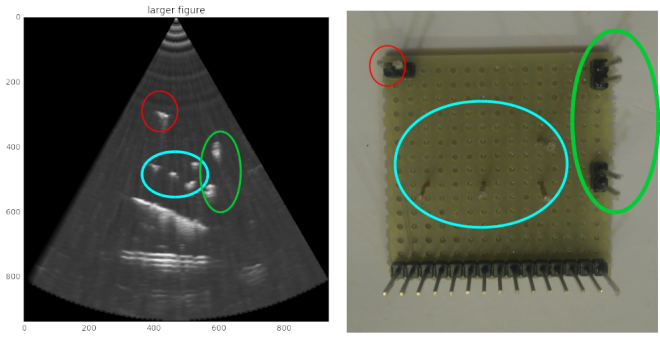
AD9200

[kelu124] is working to change that by building a hardware and software development kit which can be used to explore ultrasound systems. This isn’t [kleu124’s] first rodeo. HSDK builds upon and simplifies Murgen, his first open source ultrasound, and an entry in the 2016 Hackaday prize. [kelu124’s] goal is to “simplify everything, making it more robust and more user-friendly”.
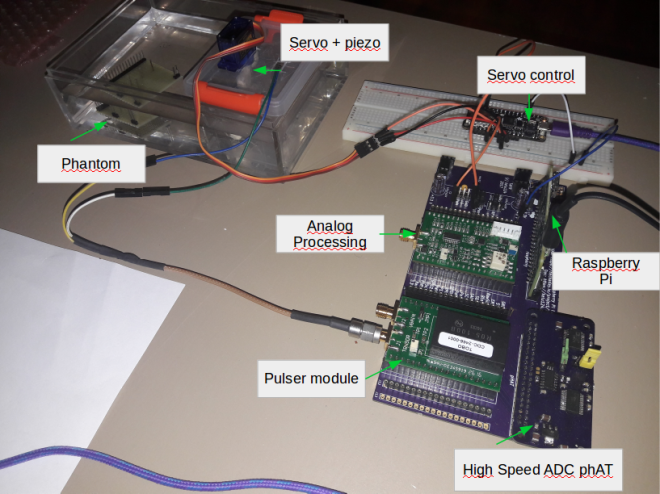
setup.png

The system is driven by a Raspberry Pi Zero W. A custom carrier board connects the Pi to the pulser block, which sends out the ultrasonic pings, and the analog front end, which receives the reflected signals. The receiver is called Goblin, and is a custom PCB designed [kelu124] designed himself. It uses a variable gain amplifier to bring reflected ultrasound signals up out of the noise.

 

Ultrasound Imaging with Raspberry Pi

PCB Artwork in 2017

Screenshot from 2017-06-26 19-46-18

wrote on Hackaday about the amazing PCB artwork that he’s seen so far in 2017:

Hackaday Links: June 11, 2017

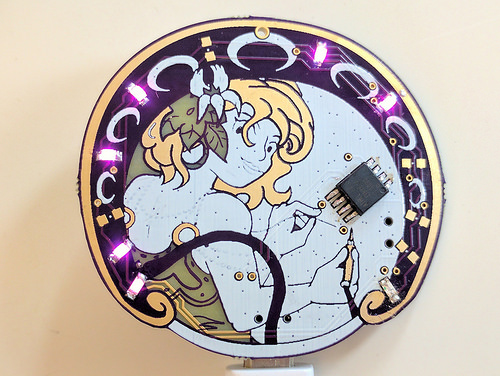
PCB art is getting better and better every year.  This year, though, is knocking it out of the park.  In March, Andrew Sowa turned me into money.

screenshot-from-2017-03-23-13-54-53.png

More recently, Trammell Hudson has explored the layers of OSH Park soldermask and silk to create a masterpiece.

34937910986_9bdbb83edc.jpg

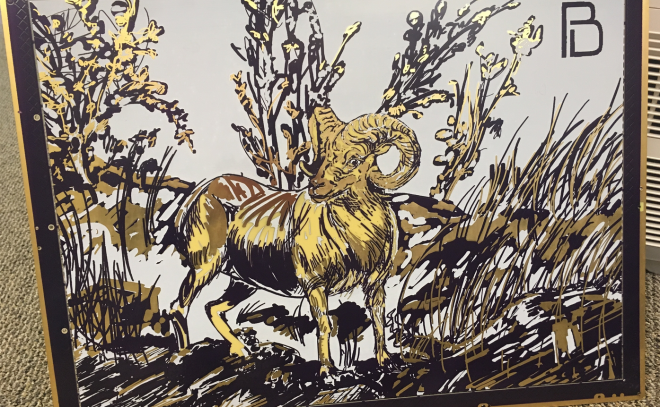
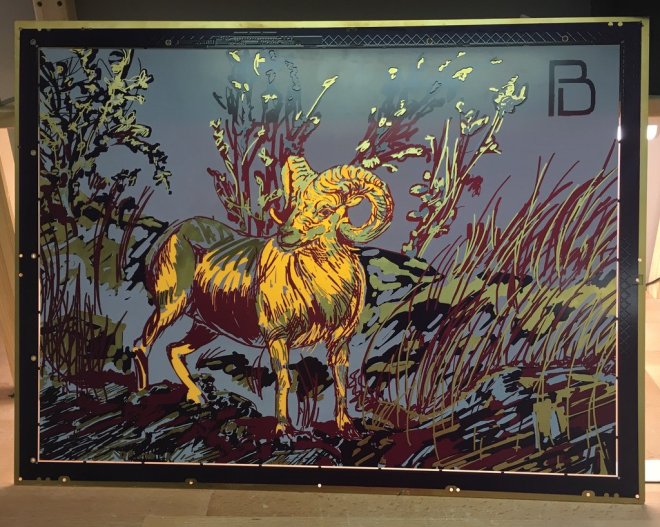
Now, we’re moving up to full-blown art. Blake Ramsdell worked with OSH Park to create a full panel of art in gold, fiberglass, soldermask, and silkscreen. It’s 22×16 inches, and it’s fantastic.

DB02l7LXoAIhTwL

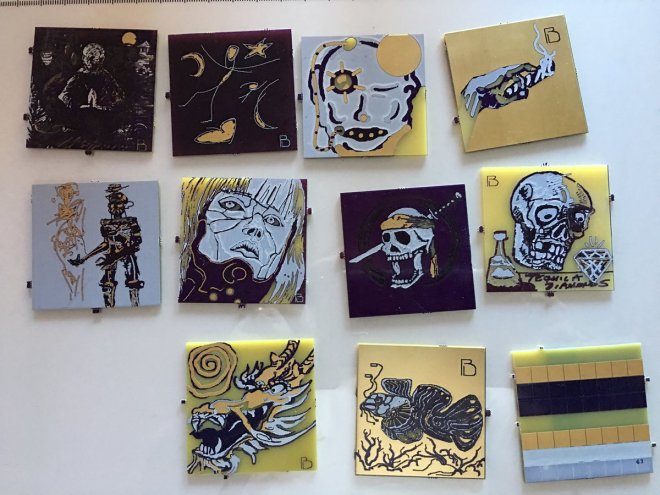
David I. Herman just created a Facebook group for PCB paintings.

DC_ANixW0AEB2Fq

PCB Artwork in 2017

Friday Hack Chat: Perfect Purple PCBs

We’re doing a Hack Chat this Friday at 12:00 pm US PDT!oshparkhackchat.png

Friday Hack Chat: Perfect Purple PCBs

Every Friday, we gather ’round the hot air gun over on Hackaday.io, invite some cool people over, and get them to talk about what they do. This is the Hack Chat. It’s become a tradition, and already we’ve had a ton of awesome people walk through our doors.

This week, we’re inviting [Drew Fustini] and [Dan Sheadel] to talk about what OSH Park does, how they became the first place that comes to mind when you need a PCB. They’ll explain why the boards are purple, environmental regulations for PCB manufacturing in the US, shared projects and tips and tricks for creating the perfect board.

3618711498065461013

Friday Hack Chat: Perfect Purple PCBs

Hackaday: BBSing with the ESP8266

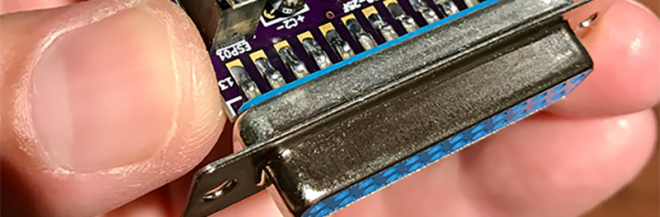
Modems have been around for longer than the web, and before we had Facebook we had the BBS scene. Somewhat surprisingly, people are still hosting BBSes, but have fun finding a landline these days. [Blake Patterson] is one of the leading aficionados of retocomputers, and recently he took it upon himself to review an interesting new…

via BBSing with the ESP8266 — Hackaday

Hackaday: BBSing with the ESP8266