
Paul Stoffregen has shared this Teensy audio shield:
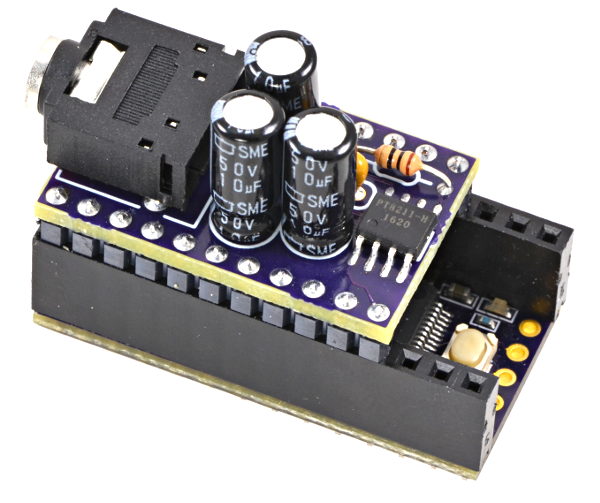
PT8211 Audio Shield for Teensy
PT8211 is an inexpensive 16 bit stereo DAC.
This small breakout board connects the PT8211 to Teensy 3.2, Teensy 3.5 or Teensy 3.6.

Paul Stoffregen has shared this Teensy audio shield:
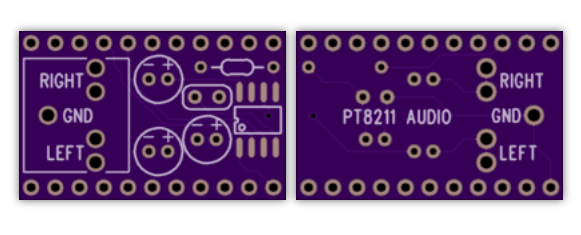
PT8211 is an inexpensive 16 bit stereo DAC.
This small breakout board connects the PT8211 to Teensy 3.2, Teensy 3.5 or Teensy 3.6.
From the The Oddbloke Geek Blog, an EEPROM programmer shield designed for Arduino Mega:
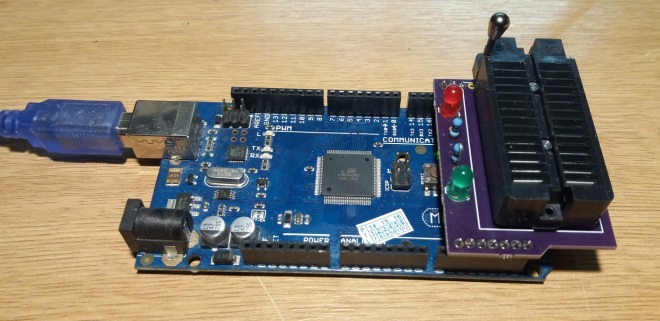
Some time ago, I wrote about my DIY EEPROM programmer driven by an Arduino Mega. It’s a very simple, low-tech project … but has attracted a consistently-high number of visitors to the site and is something I use several times a week.
Elliot Williams writes on Hackaday:
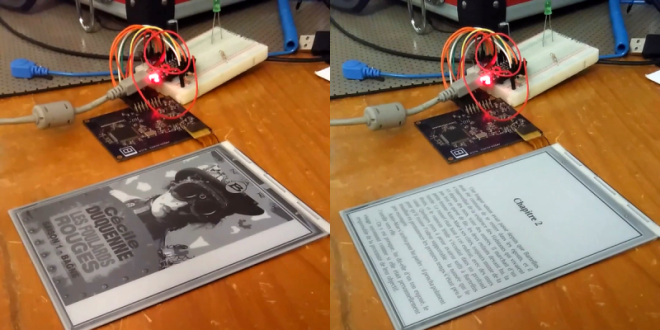
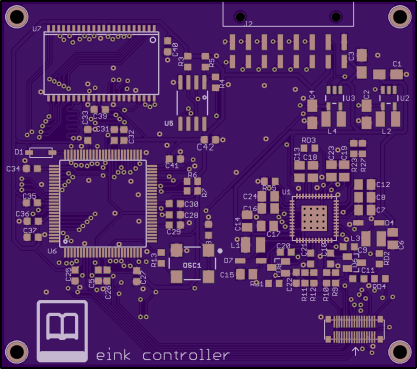
E-ink displays are awesome. Humans spent centuries reading non-backlit devices, and frankly it’s a lot easier on the eyes. But have you looked into driving one of these critters yourself? It’s a nightmare. So chapeau! to [Julien] for his FPGA-based implementation that not only uses our favorite open-source FPGA toolchain, and serves as an open reference implementation for anyone else who’s interested.
Watch the E-Ink controller in action:
Design files and source code are available on GitHub:
 julbouln/ice40_eink_controller
julbouln has shared the board on OSH Park:
Bob Baddeley writes on Hackaday:
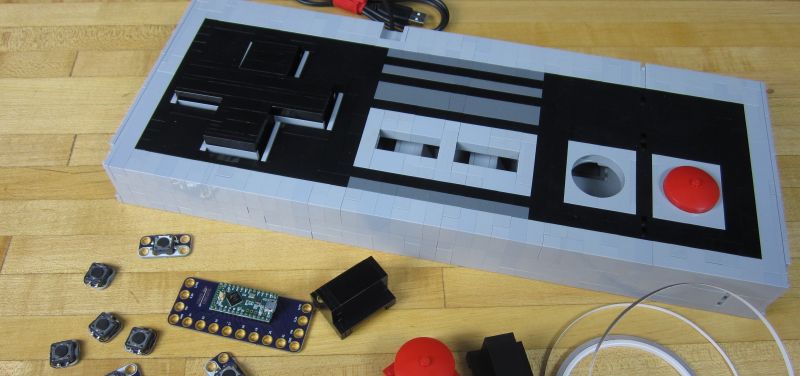 Giant Solderless LEGO NES Controller Gives Everyone Tiny Hands
 [BrownDogGadgets] built a giant NES controller out of LEGO. The controller is designed in LEGO Digital Designer, which lets you create a virtual model, then get a full list of parts which can be ordered online.
The electronics are based on a Teensy LC programmed to appear as a USB keyboard, and the buttons are standard push buttons. The insides are wired together with nylon conductive tape. LEGO was an appropriate choice because the Teensy and switches are built on top of LEGO compatible PCBs, so components are just snapped in place. The system is called Crazy Circuits and is a pretty neat way to turn electronics into a universal and reusable system.
Here is the controller in action:
Design files and source code for Crazy Circuits modules and projects are available on GitHub:
BrownDogGadgets/CrazyCircuitsFind out more in our previous blog post:
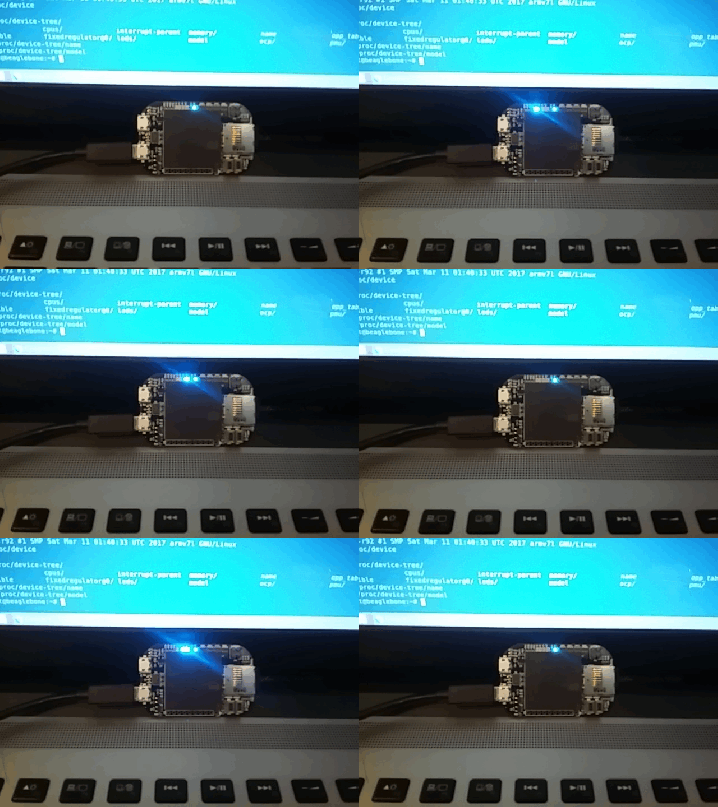
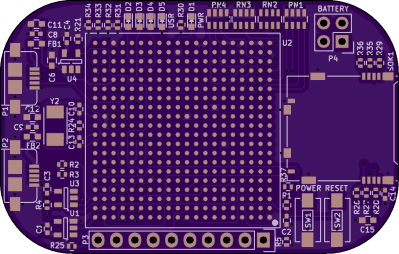
We’re excited to see that Michael Welling of QWERTY Embedded Design has completed manual assembly of his KiCad-designed PocketBone with the Octavo Systems OSD3358 SiP (System-in-Package):
Michael used vacuum pickup tool to manually place the components:
Here is a video of him placing the components:
Michael then used Reflowster to reflow the solder paste:

Here is a video of the reflow process:

Check out the Hackaday.io project for more info:
The KiCad design files are available in the GitHub repo:
 mwelling/pocketbone-kicad
mwelling has shared the board on OSH Park:

Every week Hackaday.io features an AMA of sorts. This is the Hack Chat, a chatroom where we sit down with the best in the business to talk about manufacturing techniques, engineering, and how to build the best hardware around. Over the last few months, we’ve hosted a few hardware celebrities, from [Sprite_TM] talking about the ESP32,…
Jeremy Cook writes on the Tindie blog about this IR receiver board by Atomsofttech:
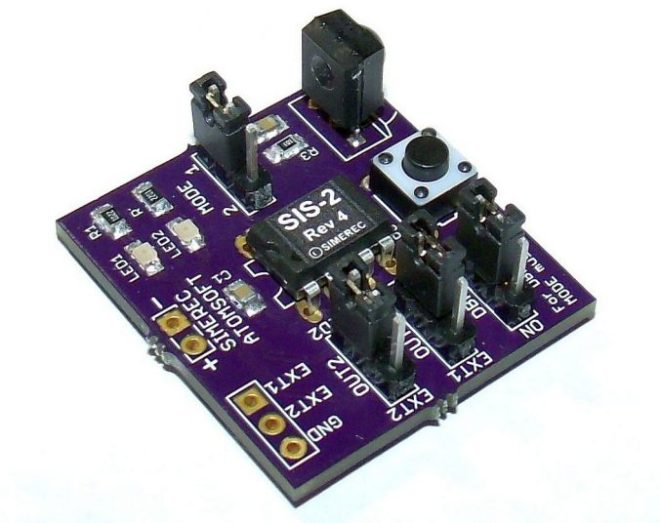
When you think of a “universal remote,” you generally picture an infrared (IR) emitter that can be setup to control your TV, AV receiver, and any other number of devices that work using IR signals. On the other hand, what’s to keep someone from doing the opposite, and having a universal receiver that can be programmed to accept codes from a remote that you just have lying around?
Watch the receiver board in action:
From K.C. Lee on Hackaday.io:
A low cost hardware dongle for capturing and analyzing Full Speed (12Mbps) traffic using ARM microcontroller
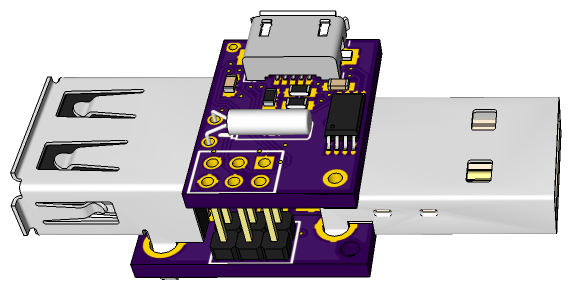
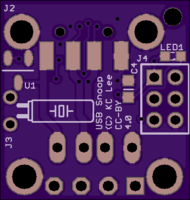
The board has been shared project by FPGA-Computer on OSH Park:
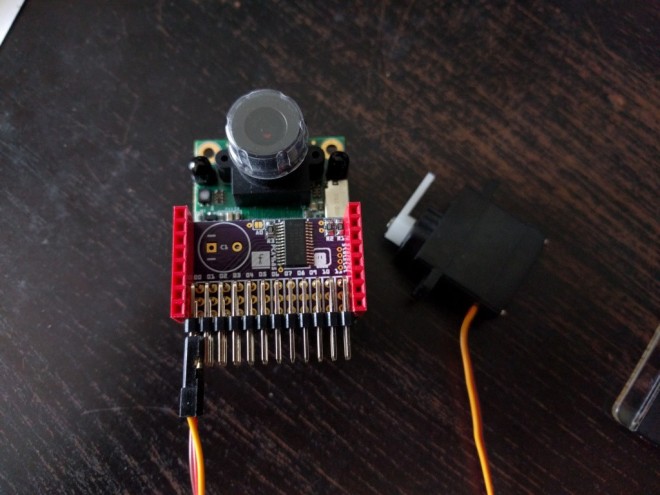
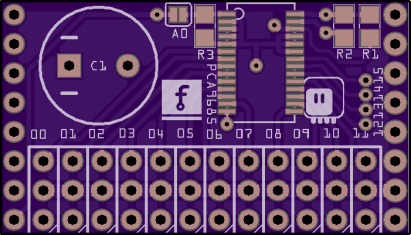
OpenMV has a couple of pins that you can use for connecting servos (for example, if you want to mount it on a pan-and-tilt base), but you can’t use those if you also want to use the WiFi shield or any other shield that uses up a lot of pins. Practically the only pins left to use are the I²C ones
deshipu has shared the board on OSH Park:
From the bitknitting blog:

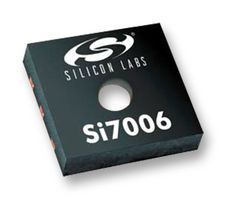
I made a PCB with the Si7006 on it. This post is my bumblings encountered as I successfully got temperature and humidity readings from a Si7006 using the PCB I designed. In summary, the Si7006 is easy to work with. It is relatively easy to solder and very easy to access via I2C […]
The design files and source code are available on GitHub:
BitKnitting/TheLeafSpa


 OSH Park