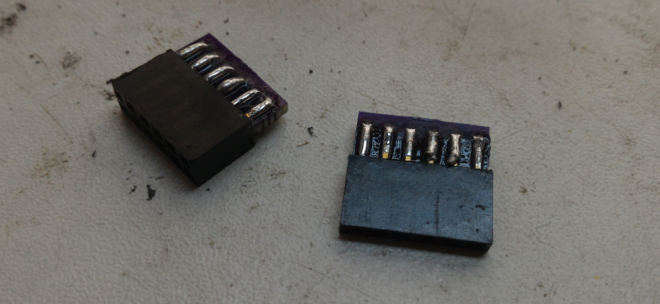
Normally you would use through hole then either have a 90 degree headers or just bend them over. [..] I had a brain wave, why don’t I lie the header down flat on the board and solder it to a SMD pad
ESP32-WROOM-32 modules are in stock now! Again these are from the very first lot and with limited supply. To give chances to more developers to try them we will not allow more than 3 modules per order. This module is good only if you develop your own board. For these who are not good with […]
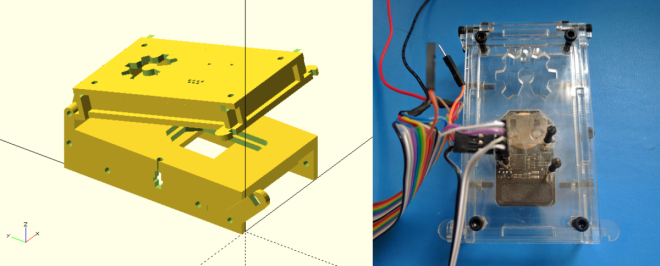
[Elliot] wrote in with his OpenFixture model for OpenSCAD. It’s awesome because it takes a small problem, that nonetheless could consume an entire day, and solves it neatly. And that problem is making jigs to test assembled electrical products: a PCB test fixture.
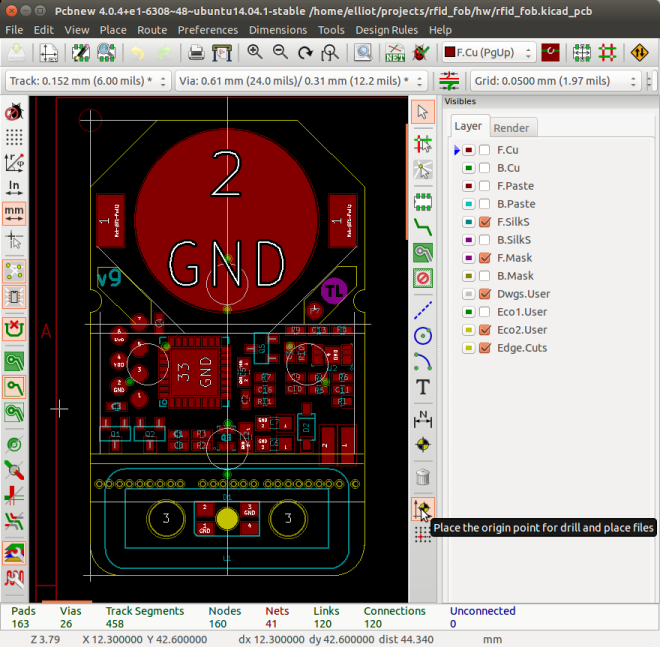
In the PCB design software, you simply note down the locations of the test points and feed these into the OpenSCAD model. [Elliot] shows you exactly how to do it using KiCAD. There are a few more parameters of the model that you can tweak to match your particulars, but you should have a DXF outline for a test jig in short order. Cut that out, assemble, and test.
ORCONF 2016 was held earlier this month in Bologna, Italy:
ORCONF is an open source digital design and embedded systems conference, covering areas of electronics from the transistor level up to Linux user space and beyond. Expect presentations and discussion on free and open source IP projects, implementations on FPGA and in silicon, verification, EDA tools, licensing and embedded software, to name a few.
We’re big fans of podcasts about electronics and embedded systems likeThe Amp Hour, embedded.fm andThe Spark Gappodcast. (Please let us know in the comments of other shows we should check out)
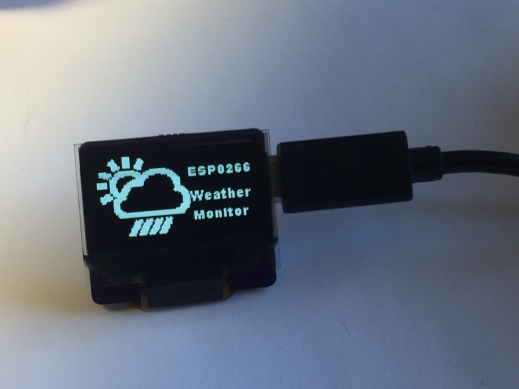
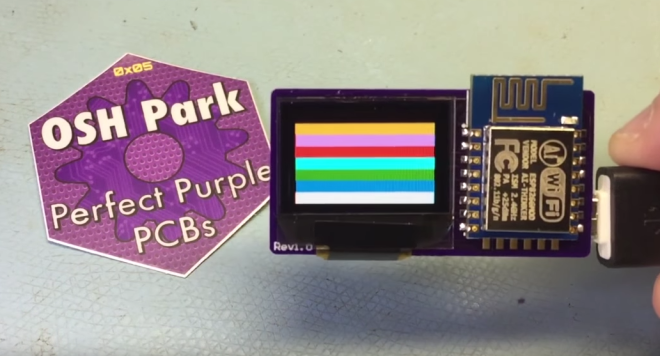
I’ve been keeping an eye on the SSD1331 library to see if it would eventually work with the ESP8266 wifi modules. I noticed the support for it appeared one day with the Adafruit library so I tried it out on my Adafruit Hazzah and success!
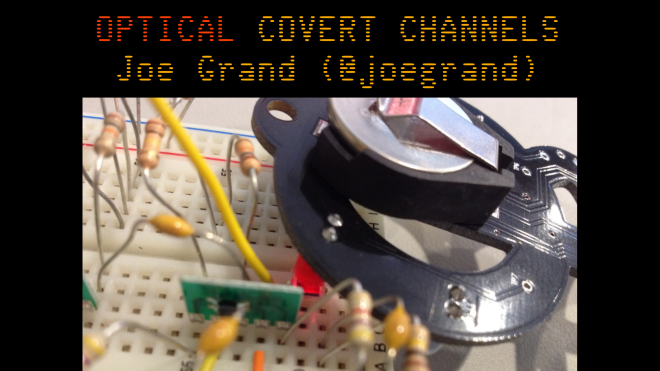
Data exfiltration from a device is usually achieved over the network, via hardware implant, or by manipulating the characteristics of an internal electronic component. Optical covert channels transmit data using visible light in a method undetectable to the human eye.
This slideshow requires JavaScript.
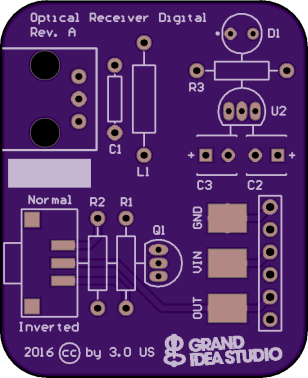
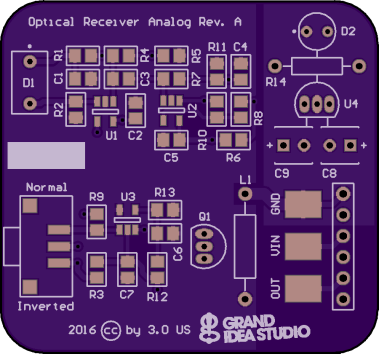
Joe demonstrates using an optical receiver to capture data transmitted through a LED:
joegrand has shared the receiver boards on OSH Park:
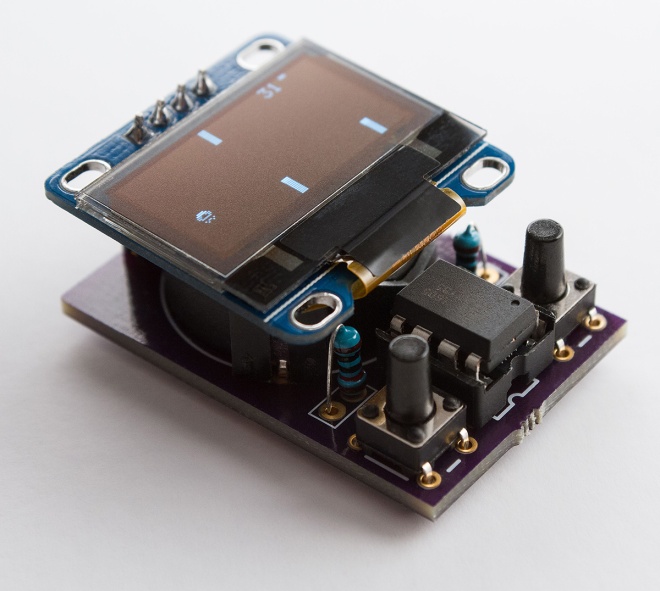
ATtiny Arcade is a little game made using Atmel Attiny85 microcontroller and an OLED screen. The kit is a great hobby project that requires assembly with a soldering iron.
















 OSH Park