BeagleWire: fully open ICE40 FPGA BeagleBone cape

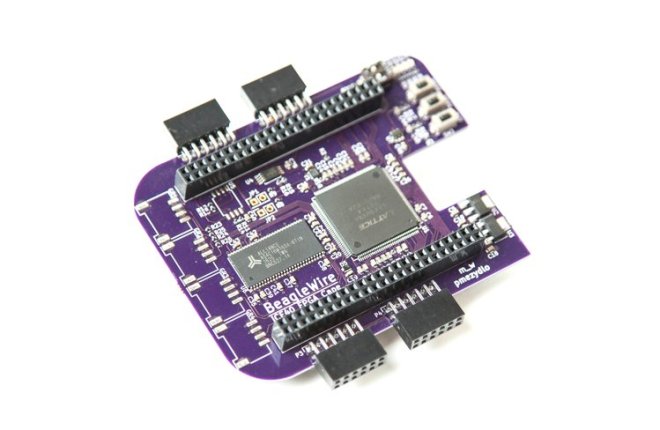
BeagleWire by Michael Welling is a fully open ICE40 FPGA BeagleBone cape:
beaglewire-prelaunch-1-1_jpg_project-body

BeagleWire: fully open ICE40 FPGA BeagleBone cape

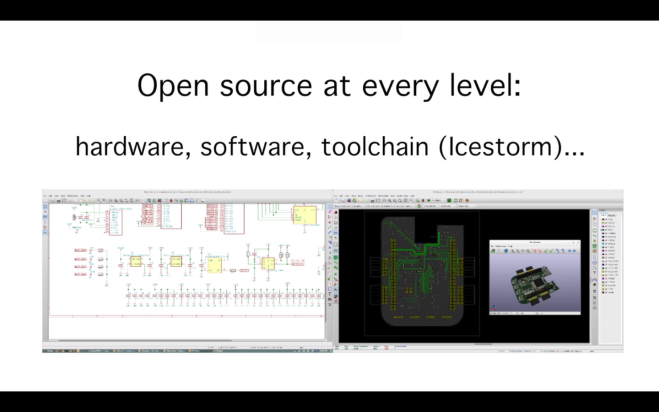
BeagleWire is a completely open source FPGA development board. Unlike most other FPGA dev boards, the BeagleWire’s hardware, software, and FPGA toolchain are completely open source.  The BeagleWire is a Beaglebone compatible cape leveraging the Lattice iCE40HX FPGA.

BeagleWire can be easily expanded by adding additional external modules for example, modules for high speed data acquisition, software defined radio, and advanced control applications. Using well-known connectors like Pmod and Grove makes it possible to connect various interesting external modules widely available in stores. Owing to this, prototyping new imaginative digital designs is easier.
Screenshot from 2018-02-26 13-26-43.png

BeagleWire: fully open ICE40 FPGA BeagleBone cape

PCB projects with awesome artwork


Here’s a list of some project with great PCB artwork:

Pure art boards

Functional boards with awesome art/layouts

PCB projects with awesome artwork

Can Open-source Hardware Be Like Open-source Software?

Hardware and software are certainly different beasts. Software is really just information, and the storing, modification, duplication, and transmission of information is essentially free. Hardware is expensive, or so we think, because it’s made out of physical stuff which is costly to ship or copy. So when we talk about open-source software (OSS) or open-source hardware (OSHW), we’re talking about different things — OSS is itself the end product, while OSHW is just the information to fabricate the end product, or have it fabricated [..]

What would it take to get you to build someone else’s OSHW project, improve on it, and contribute back? That’s a question worth a thoughtful deep dive.

via Can Open-source Hardware Be Like Open-source Software?

Can Open-source Hardware Be Like Open-source Software?

Hack Chat tomorrow with OSH Park

UPDATE: 
If you missed our Hack Chat yesterday, then check out the transcript.

Also, please feel free to ask any additional questions on the Hackaday.io event pageIf you include “@oshpark” then we will get a notification and reply.

Please join us tomorrow on Hackaday.io for a Hack Chat with Dan Shaedel and Drew Fustini:

Friday Hack Chat: Everything PCB

For this week’s Hack Chat, we’re going to be talking about everything PCB. How do you do castellated holes? How do you mill slots and square or otherwise non-round holes? Internal cutouts? Stop mask expansion? Artwork? Panelization? Why purple? More POGs!

Our guests for this chat will be [Dan Sheadel] and [Drew Fustini] of OSH Park, and they’re going to be there answering all your questions. [Dan] has been around OSH Park from the beginning and enjoys designing tiny useless robots and mentoring students building better ones. [Drew] is an Open Source hardware developer, firmware designer, a BeagleBoard board member, and is usually found at hardware meetups wearing purple.

join-hack-chat

Our Hack Chats are live community events on the Hackaday.io Hack Chat group messaging. This Hack Chat is going down Friday, March 2nd at noon, Pacific time. Want to know what time this is happening in your neck of the woods? Have a countdown timer!

Hack Chat tomorrow with OSH Park

Microgamer Is A Micro:Bit Handheld Console

From on the Hackaday blog:

Screenshot from 2018-02-27 18-25-39.png

 Microgamer Is A Micro:Bit Handheld Console

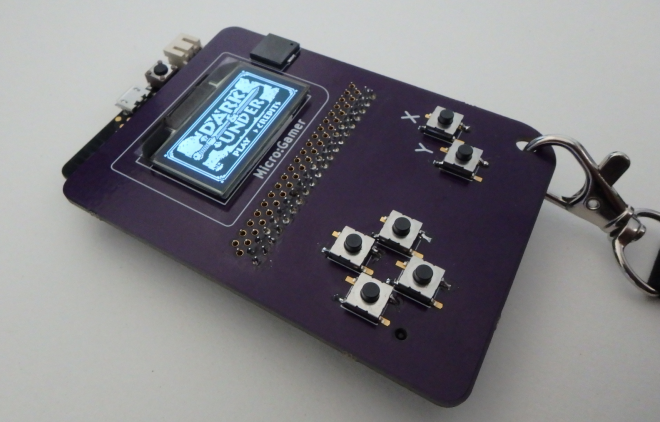
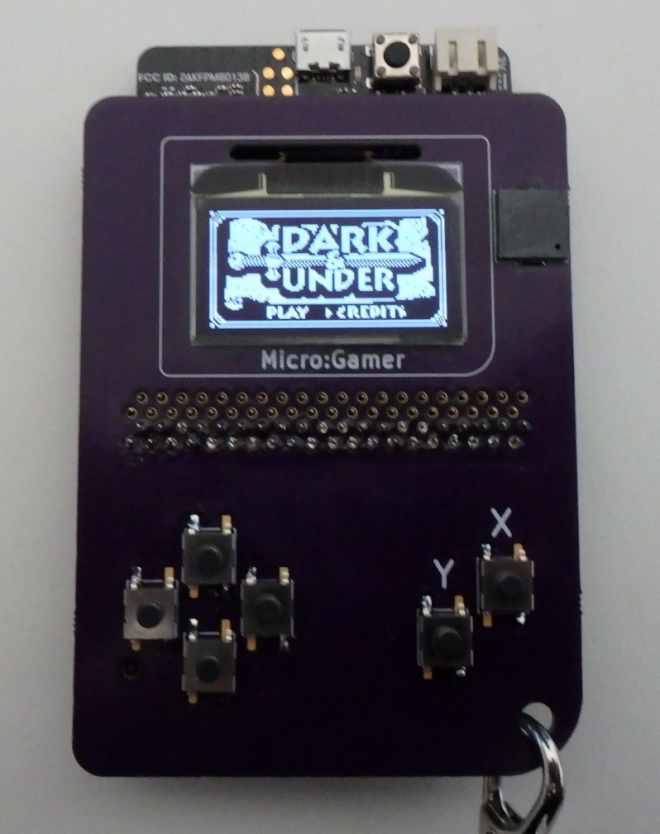
The BBC micro:bit single board ARM computer aimed at education does not feature as often as many of its competitors  in these pages. It’s not the cheapest of boards, and interfacing to it in all but the most basic of ways calls for a slightly esoteric edge connector. We’re then very pleased to see that edge connector turned from a liability into a feature by [Fabien Chouteau] with his handheld console, he uses micro:bits preprogrammed with different games in the manner of game cartridges in commercial consoles.

Screenshot from 2018-02-27 18-24-23.png

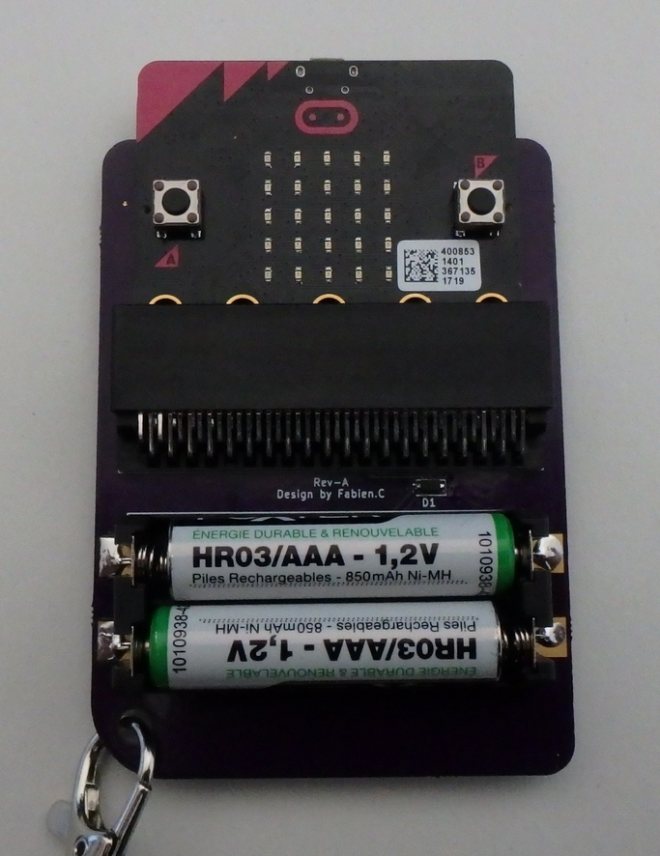
The micro:bit sits in its edge connector on the underside of a handheld PCB above a pair of AAA batteries, while on the other side are an OLED display and the usual set of pushbuttons. It’s a particularly simple board as the micro:bit contains all the circuitry required to support its peripherals.


He’s coded the games using the Arduino IDE with a modified version of the Arduboy2 library that allows him to easily port Arduboy games written for Arduino hardware. It’s a work in progress as there are a few more features to incorporate, but the idea of using micro:bits as cartridges is rather special. There is a video of the console in action, which we’ve placed below the break.

Screenshot from 2018-02-27 18-25-10.png

Microgamer Is A Micro:Bit Handheld Console

iceRadio SDR project

Software Defined Radio (SDR) project by Eric Brombaugh:
iceRadio.jpg

iceRadio

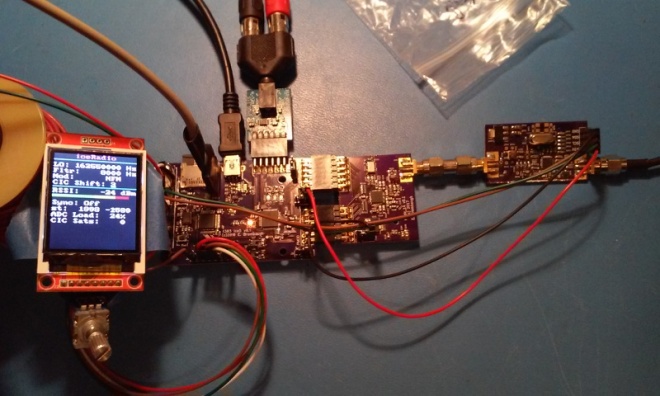
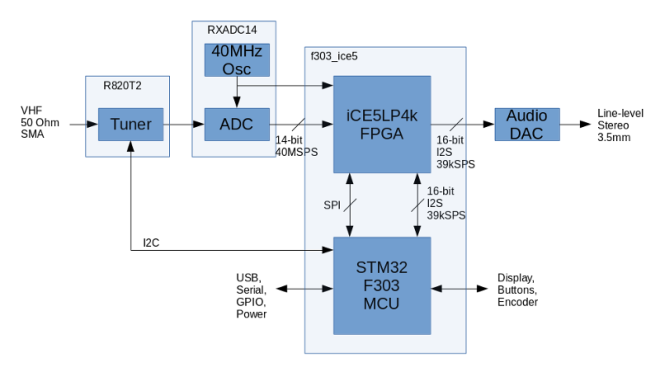
This is a test prototype for experimenting with Software Defined Radio (SDR). It is composed of several boards that are described in detail elsewhere on this site:

Combined with suitable firmware and FPGA design, these boards comprise a receiver capable of capturing 20kHz of signal from DC to over 1GHz, demodulating it with a variety of formats and driving high-quality audio.

iceRadio_system.png

Tuner

RF input from the antenna can optionally be tuned down from VHF/UHF frequncies to an IF frequency in the HF range before passing to the ADC.

ADC

Raw HF or downconverted VHF at an IF of 5MHz is digitized to 14-bit resolution. The maximum input signal allowed without exceeing the range of the ADC puts the 0dBfs point of this system at -10dBm in 50 ohms. The ADC runs at 40MSPS with a resolution of 10 bits, providing approximately 60dB of dynamic range and 20MHz of bandwidth which places the quantization noise floor at about -70dBm.

FPGA

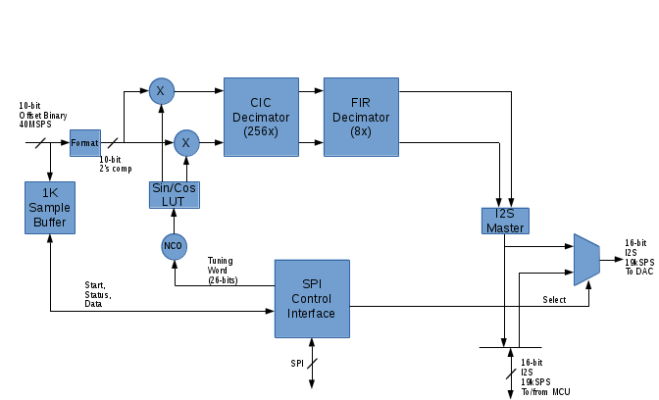
From the ADC, data passes into the FPGA. This is an iCE5LP4k part which provides 20 4kb RAM blocks and 4 16×16 MAC blocks which are essential for the DSP required for the downconversion. In the FPGA the ADC data is pre-processed to a sample rate appropriate for the MCU. Figure 2 below shows the primary components of the FPGA design.

iceRadio_fpga

The C and Verilog source code is available on GitHub:

emeb/iceRadio

iceRadio SDR project

World Create Day is the Hackaday Event in Your Neighborhood

Hackaday World Create Day is on March 17th and it’s happening near you. Get together with hackers in your area and create something. Sign up now to host a World Create Day gathering! These are really easy to organize, but we can only do it with your help.

via World Create Day is the Hackaday Event in Your Neighborhood — Hackaday

World Create Day is the Hackaday Event in Your Neighborhood

An Especially Tiny And Perfectly Formed FM Bug

It used to be something of an electronic rite of passage, the construction of an FM bug. Many of us will have taken a single RF transistor and a tiny coil of stiff wire, and with the help of a few passive components made an oscillator somewhere in the FM broadcast band.

via An Especially Tiny And Perfectly Formed FM Bug — Hackaday

An Especially Tiny And Perfectly Formed FM Bug

TritiLED Flashes for 20 Years on a Single Coin Cell

From  on Tindie blog:

tritiled

TritiLED Flashes for 20 Years on a Single Coin Cell

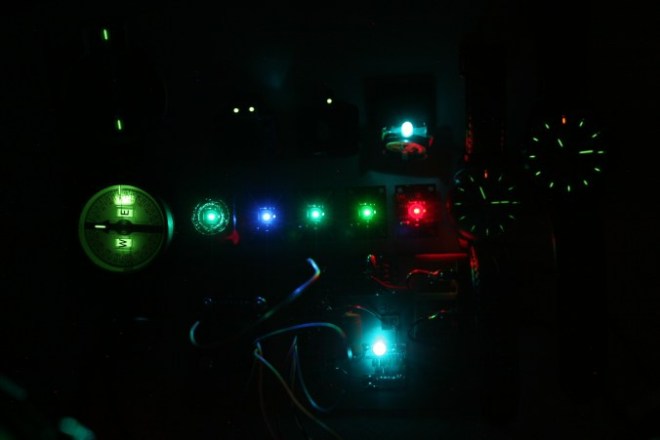
Ted Yapo had a small problem. As an amateur atronomer and astrophotographer, he needed a way to mark his expensive equipment so that he wouldn’t trip over it in the dark. Glow-in-the-dark materials were out because of they only glow for a short time, and glow sticks were also less than ideal because of their single-use nature. Tritium light sources would be perfect, barring the small details that they’re radioactive, expensive, and in the US only a few uses are allowed, most are prohibited by law.

tritiled1

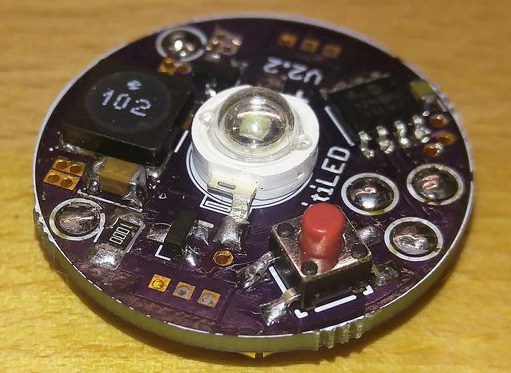
So Yapo instead came up with an LED light that can run for not 20 hours, or even 20 days, but 20 yearson a single CR2032 coin cell battery!

TritiLED Flashes for 20 Years on a Single Coin Cell