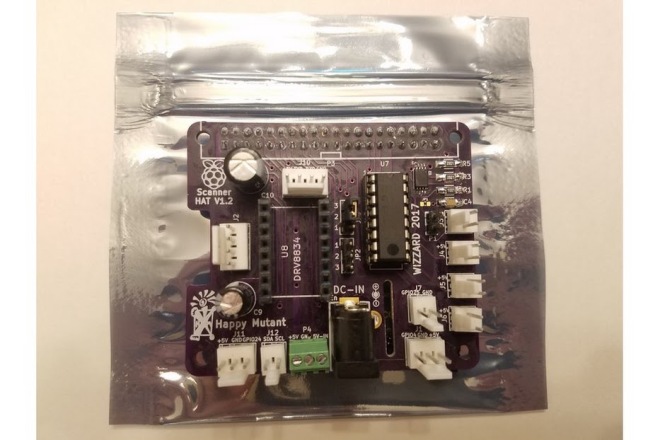
I wanted to make a custom interface for use with the open-source 3D Scanning software, FreeLSS. I was very impressed with the Arduino-based Ciclop scanner and the Raspberry Pi-based Atlas Scanner. Several FreeLSS users merged the two scanner platforms, creating the PiCLOP 3D Scanner. However, there were few changes to the basic PCB design used for the scanner. I wanted to integrate the hardware functionality into a Raspberry Pi HAT format, with the inclusion of extra features for expandability — and who knows, other uses !
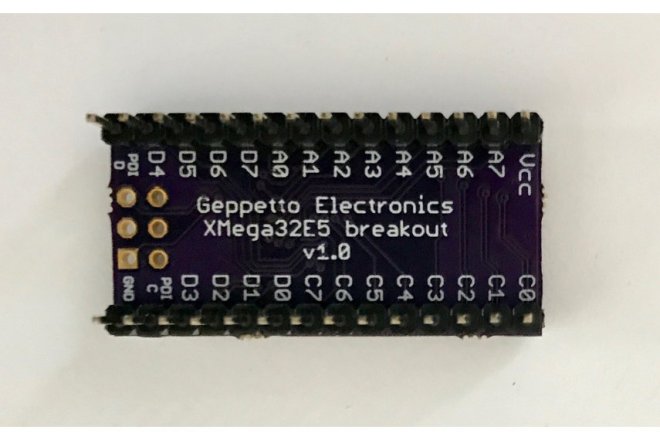
The ATXMega32E5 is the next step up for those experienced with the AVR series of microcontrollers from Microchip (formerly Atmel). They use the same compilers and libraries as the rest of the AVR 8- and 16-bit families, but they can run at 32 MHz and have an amazingly powerful set of internal peripherals that can take your projects to the next level and beyond.
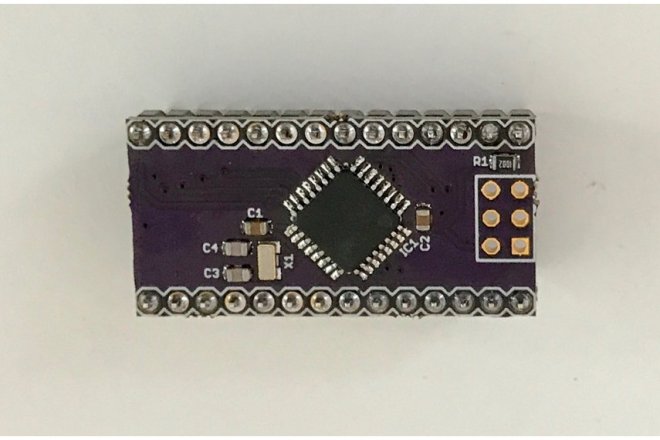
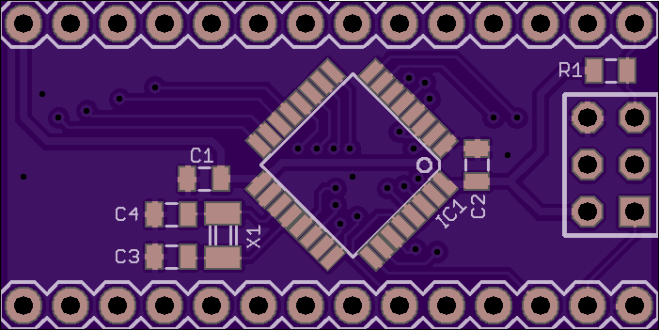
For prototyping, however, the disadvantage is that the XMega chips are not available as through-hole parts. That’s where this breakout board comes into play.
Alex Albino, of the Femtoduino Store, is one of the original sellers on Tindie, with his store officially listed as opening on November 26, 2012. During this time, he’s sold well over 300 of his custom boards, and I was glad to catch up to him to ask a few questions.
Albino, who works as a software and web developer, first got into electronics after his NES was fried in a thunderstorm in junior high, and he got to take it apart. Eventually his interests led him to the Arduino and Fabio Varesano’s work, and multiple hardware platforms over the years.
Albino’s store started with him asking Fabio Varesano if he could sell Femtoduino boards, which have the same outputs as an Arduino Uno in the size of one’s thumb. Since Varesano wasn’t interested in selling them himself, he generously gave Albino permission to run with this design. Albino then went to work assembling and selling these boards, and even made sure to give a portion of the money he made—though he didn’t have to—back to Varesano to promote his open source work.
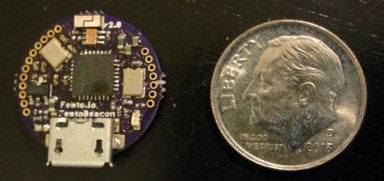
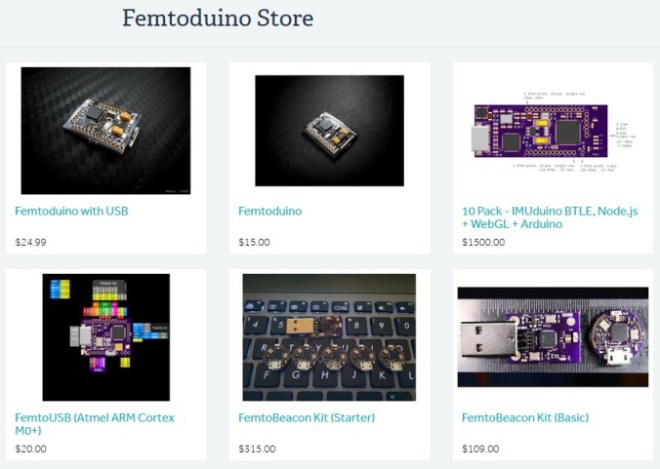
Of course, these tiny Arduino clones are still for sale, but Albino sells several other items, including the FemtoBeacon wireless IMU (inertial measurement unit) sensor. He even notes his store theme as providing the smallest open source IMU sensors in the world. You can see one in the image above next to a U.S. dime—quite small indeed. He hopes to grow the Femtobeacon business into a full-time job in the future.
Naturally, Albino has bought from other Tindarians in the past, which he says is always fun. He also notes that, “If you sell anything on Tindie, make sure to package carefully, take decent photos, and include videos of stuff in action!” As such, here’s a video of the tiny Femtoduino in action:
It’s Maker Faire Bay Area time of year again and we’re holding our 4th annual Hackaday and Tindie MFBA Meetup!
After a ridiculously fun Saturday at Maker Faire, carry on the festivities with us at O’Neill’s in San Mateo on Saturday night from 7pm.
Bring your finest blinky, flashy, IoT, hacks, wearables, or other techy items for us to paw. Bonus points if you bring your #HackadayPrize project for us to get super excited about.
We can’t wait to see you there or at the faire.
Space is limited, so get your foot in the door early. 21 or over only. Please bring ID.
There are people of diverse backgrounds selling on Tindie, but as far as I know, Jakub Polonský is the only one here with a PhD in electrochemistry. Though this gave him a good background in testing of electronic quantities for electrochemical systems, as far as designing electronics, he’s self taught. He graduated in 2012, but started with Arduino boards in 2010, allowing him to use this versatile tool for research purposes.
Check out our previous blog post for more information on the project:
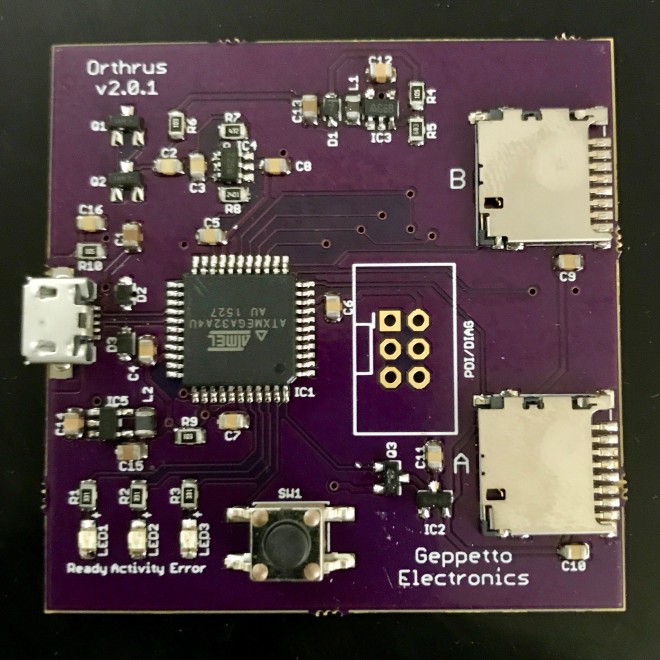
This project is a hardware mechanism to provide secure “two man control” over a data store. It is a USB microSD card reader, but it requires two cards. The data is striped in the style of RAID 0, but the data is also encrypted with a key that is stored in a key storage block on each card. In essence, each card is useless without the other. With possession of both cards, the data is available without restriction, but with only one, the remaining data is completely opaque.
This allows you to securely transport a data set by writing it onto a pair of cards and separately transporting them to a destination for recombination.
The intent is that only the pairing of two cards becomes in any way special. A card pair could be inserted in any Orthrus device and the data would be made available. But with only one card, all you get is half of the data encrypted with a key which you only half-possess.
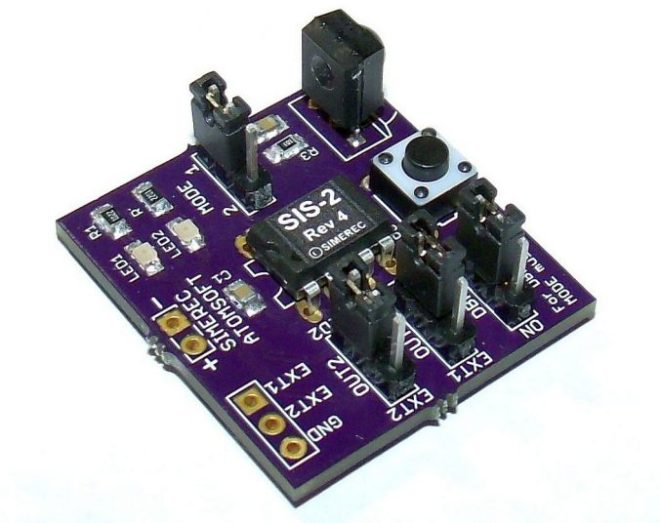
When you think of a “universal remote,” you generally picture an infrared (IR) emitter that can be setup to control your TV, AV receiver, and any other number of devices that work using IR signals. On the other hand, what’s to keep someone from doing the opposite, and having a universal receiver that can be programmed to accept codes from a remote that you just have lying around?
Do you like Open Source? Join Hackaday and Tindie at the largest community-run Open Source conference in North America. We’ll be at the Southern California Linux Expo next week, and we want to see you there. What’s happening at SCALE this year? Amateur radio license exams, a PGP signing party, Bad Voltage Live and The Spazmatics, and…
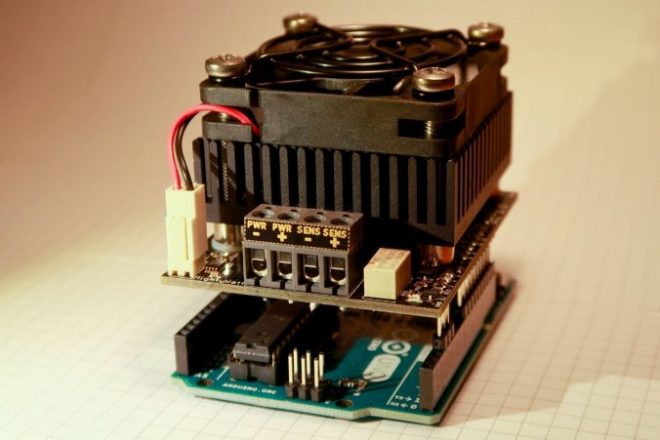
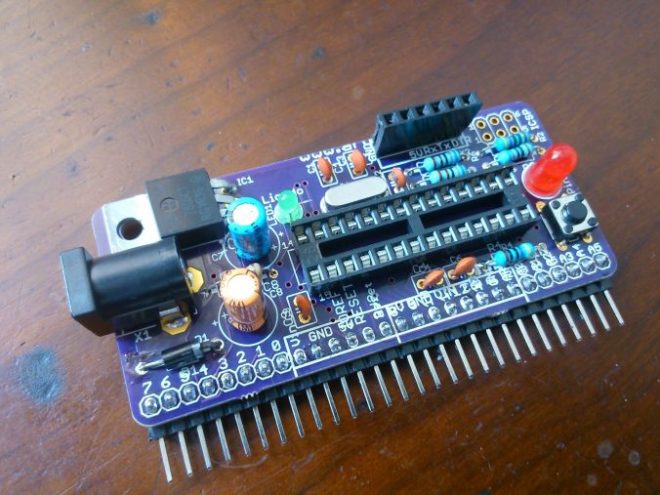
I personally love the concept of electronic boards connected in “slots” (vertically attached to a horizontal board), like most industrial-grade PLC’s or even our desktop’s expansion cards (video, sound memory): it saves a lot of space and adds more functions to the system, all at once!













 OSH Park