MagSpoof for Raspberry Pi

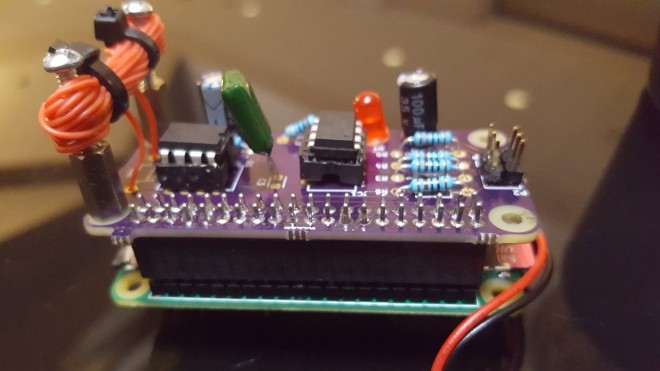
Salvador Mendoza created this Raspberry Pi project based on MagSpoof:

2648361474757845366

MagSpoofPI

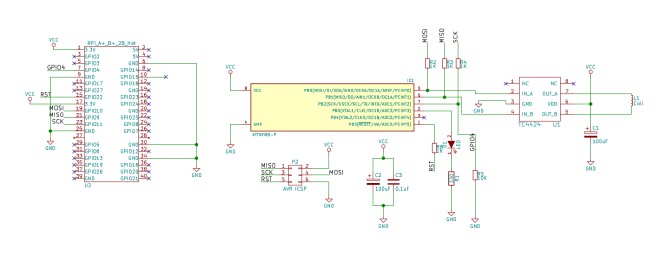
Be able to make & upload MagSpoof with variable tracks, to use it without Arduino dependencies, and implement it on the same Raspberry GPIO.

More details are available on Salvador’s blog.

screenshot-from-2016-10-27-20-54-37

The makefile and the modified MagSpoof library are avialabel on GitHub:

images MagSpoofPI

MagSpoof for Raspberry Pi

Intel Quark D2000 Environmental Sensors Board

d2000-assembled-board-2
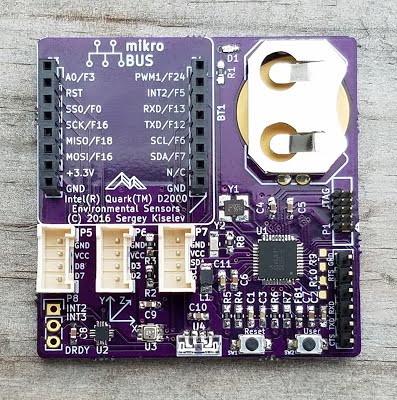
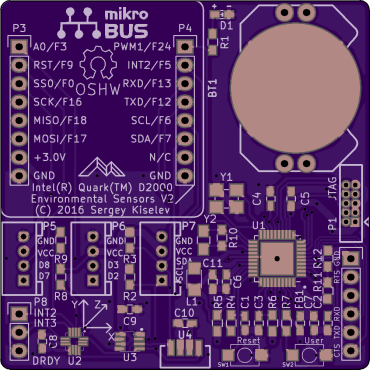
Sergey Kiselev created this small board, equipped with a low power Intel Quark D2000 microcontroller and several sensors:

Intel Quark D2000 Environmental Sensors Board

The board can be used to monitor the environment conditions, and store or transmit the data to a remote system for further processing.
The Intel Quark D2000 microcontroller contains:
  • 32-bit x86 processor core
  • 25 GPIO pins
  • Support for UART, PWM, I2C, SPI, JTAG
  • 32 KiB of the instruction Flash ROM
  • 8 KiB of the SRAM
The on-board sensors include:
  • Accelerometer and Magnetometer
  • Atmospheric Pressure, Humidity and Temperature Sensor
  • Ambient Light Sensor

Serge has shared the board on OSH Park:

bd1517cba926cf3aa1de557a3a5bf0d5-1
Order from OSH Park
Intel Quark D2000 Environmental Sensors Board

Tindie: PCB with Chaos Theory Built In

chaos-good-news-676x418.png

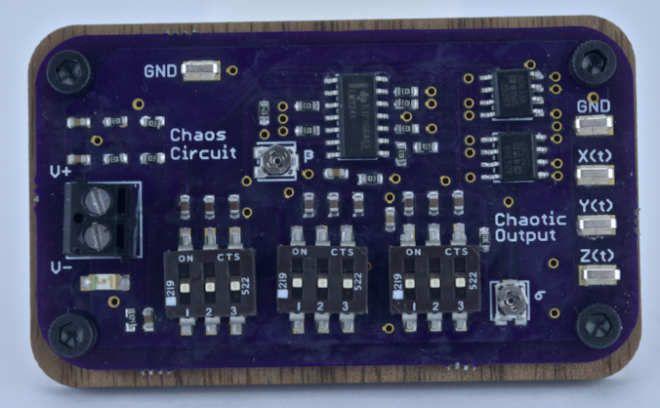
 wrote on the Tindie blog about the Chaos Computer by Tom Quartararo:

PCB with Chaos Theory Built In

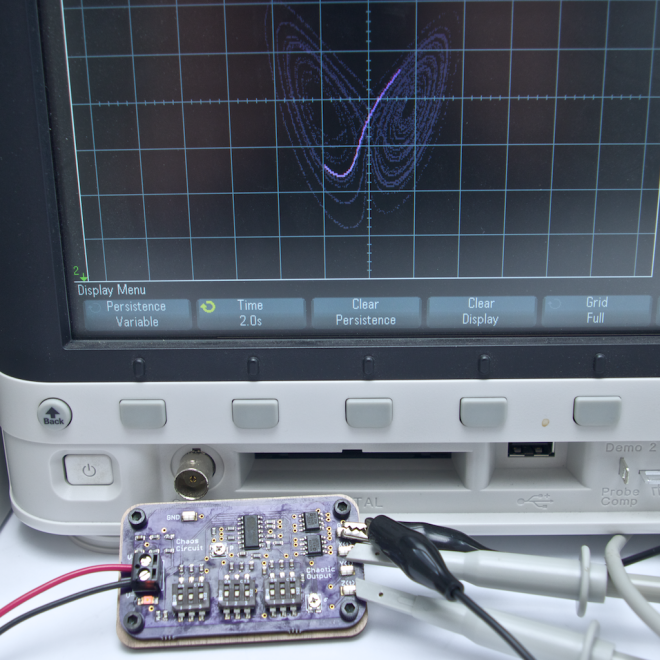
It turns out you can solve ordinary differential equations using simple op-amp circuits. Paul Horowitz, author of the famous book The Art Of Electronics took an interest in the Lorenz Attractor and made a circuit to solve the Lorenz Attractor equation

6561921455625763695

Tindie: PCB with Chaos Theory Built In

BoosterBot for TI LaunchPad

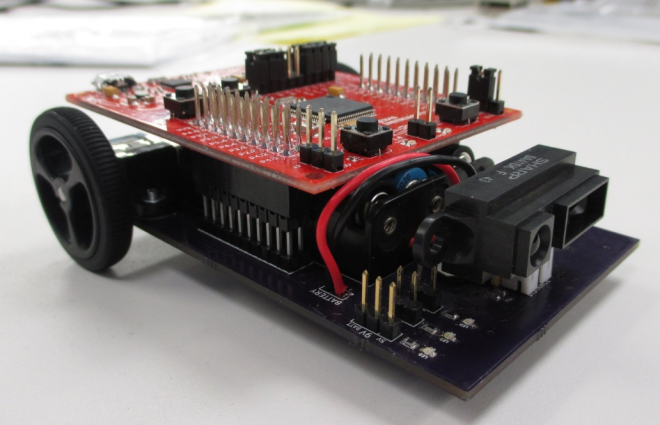
BoosterBot turns a TI Launchpad into a fully functional robot:

Screenshot at 2016-10-27 00-26-48.png

Perfect for anyone who wants to get started with MSP430 and robotics, or just wants an easy to use robotics platform to build off of.

The board features:

  • Micro Metal Gearmotors from Pololu
  • Powered by 3xAAA batteries
  • Five QRE1113 Reflectance sensors for line following and maze solving
  • Header for a Sharp IR distance sensor
  • Header for a servo

The design files and source code are available on GitHub:

imagesHylian/BoosterBot


Here’s a video of the BoosterBot in action:

BoosterBot for TI LaunchPad

3 Inch Tall 7-segment Clock

lcd_clock_final_build11-1

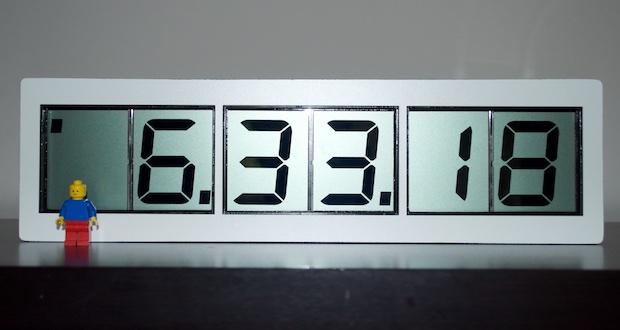
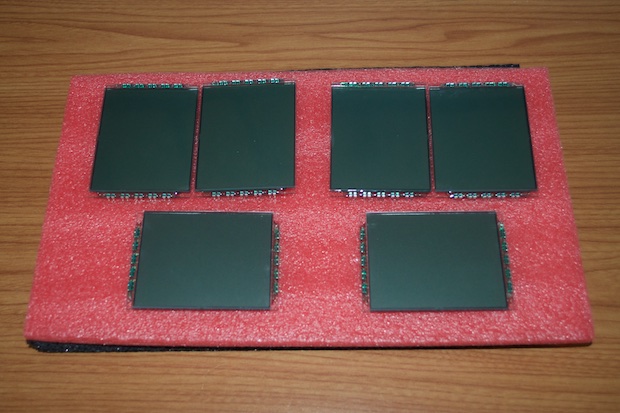
Kevin Rye decided to build a 15 inch long digital clock after acquiring these 3 inch 7-segment displays.  He documented the project from start to finish:

s101d22tr_0001 (1).jpg

I picked up these sweet LUMEX S101D22TR 7-Segment LCDs the other day.

3inlcdclock_assembly_0142

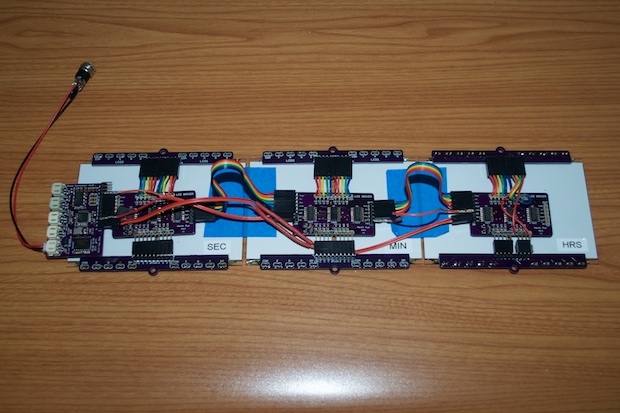
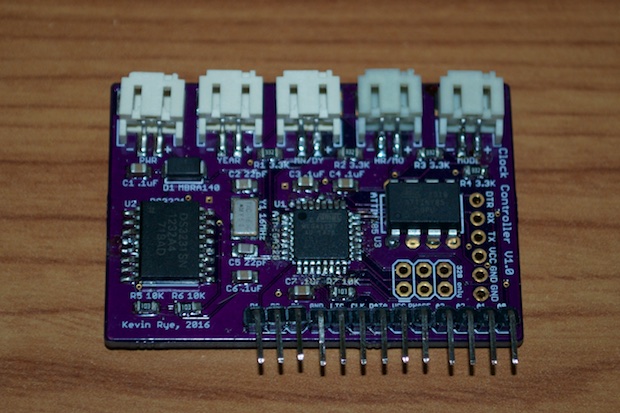
The PCBs for the hours, minutes, and seconds display modules are identical. They’ll just be wired differently.

dsc_0146

On the driver boards, data flows in from the left out to the next section on the right.

LumexLCDClockworking_0147

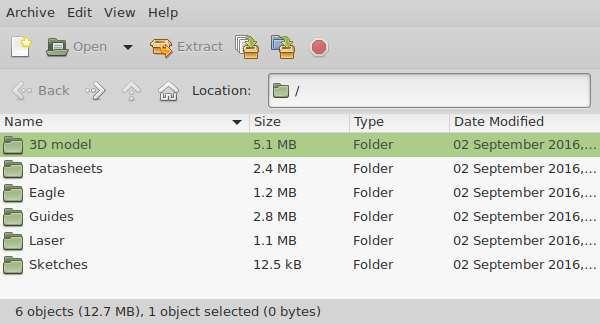
The source files can be downloaded from:

15inch-LCD-Clock-Source.zip

Screenshot at 2016-10-26 23-34-48.png

3 Inch Tall 7-segment Clock

Lumen Electronic Jewelry

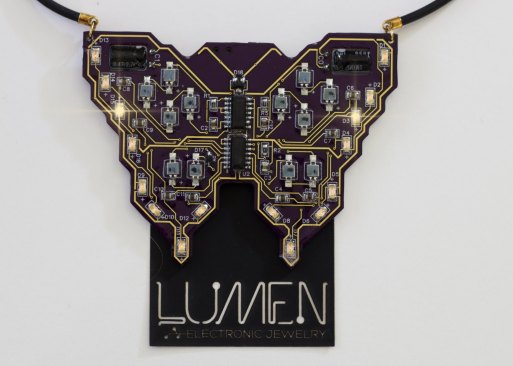
We love PCBs, so we were excited to see this beautiful circuitry from Lumen Electronic Jewelry:

il_fullxfull.612359614_el5q.jpg

Fashion Gets Geeky

Lumen is the creation of Robin and Marty Lawson in Madison, Wisconsin:

We’re life-long tinkerers, siblings, and fourth generation mechanical engineers.

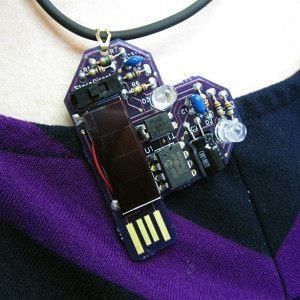
They’ve designed soldering kits for all levels: beginner, intermediate, and advanced surface mount soldering.  This heart is an example of an intermediate kit:

il_fullxfull.459957961_j39n-300x300.jpg

Lumen also makes beautiful fully-assembled LED jewelry:

Solar powered twinkling LED jewelry. No batteries, hours of blinky.

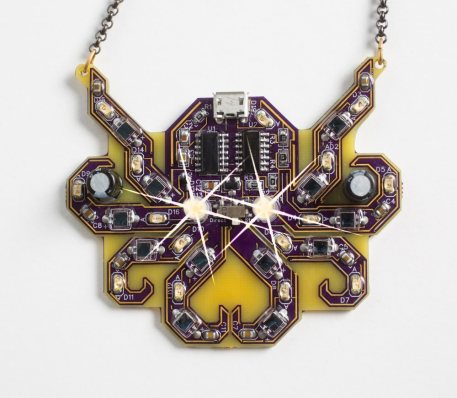
We particularly like this twinkling fiberglass cephalopod:

Blinky Octopus Necklace

8604-11

Each octopus has 16 amber LED lights throughout the arms connected to 12 tiny solar cells. So your necklace will charge and blink all on its own, no batteries required.

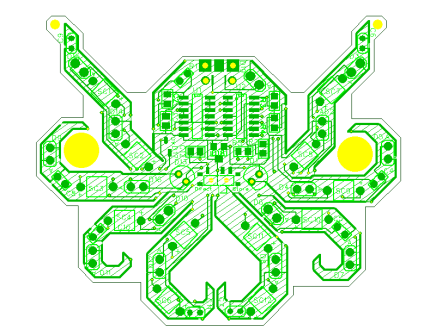
Robin tells me that they use Free PCB for layout:

octopus0401

Robin informed me that they laser their own stencils out of thin mylar sheets at their local Makerspace, Sector 67:

Robin explains that afterwards they clean the boards in an orange -based degreaser then seal in a ResinLab epoxy:
It is expensive but has a long working life, excellent hardness and optical clarity, as well as UV resistance to yellowing.
P.S. Here’s an insightful talk that Robin gave at TEDxMadison last year:
Lumen Electronic Jewelry

SMS for Orange Pi and Raspberry Pi

8477531476525689130

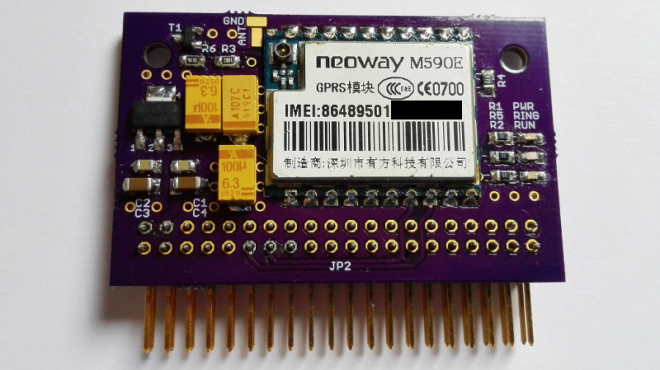
Knudt designed this board to connect an inexpensive dual-band GSM module with to an Orange Pi or Raspberry Pi:

SMS for Orange Pi / Raspberry Pi

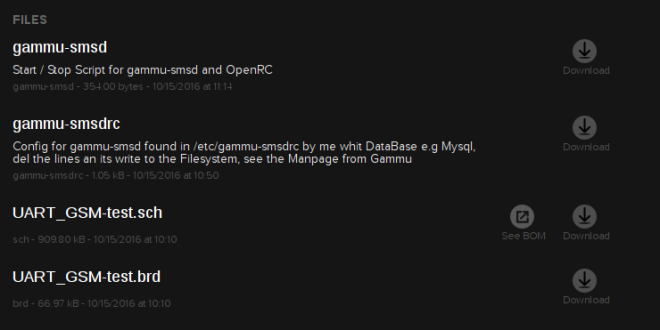
The config files and EAGLE design files can be downloaded from the Hackaday.io project:

Screenshot at 2016-10-27 07-09-36.png

SMS for Orange Pi and Raspberry Pi

Ethernet PHY for Teensy 3.5 and 3.6

board-1

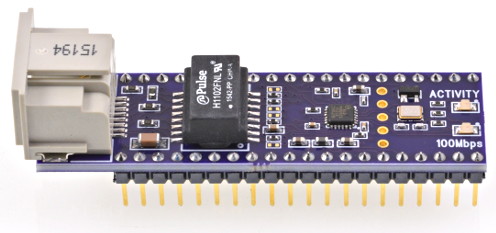
Paul Stoffregen of PJRC designed this shield as a Kickstarter reward earlier this year:

Ethernet Shield for Teensy 3.5 and 3.6

Please understand this shield has very limited software support at this time. However, Manitou’s early benchmarks show excellent performance we can someday hope to achieve as the software matures.

PaulStoffregen has shared the board on OSH Park:
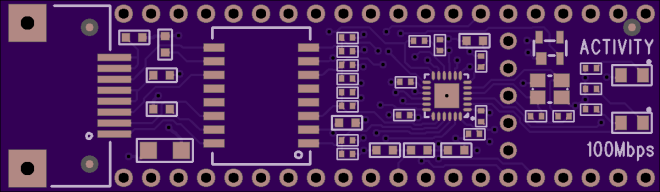
650e9646875b0e22bc42fa630ebc0a6f

Order from OSH Park

The source code is available on GitHub:
images PaulStoffregen/k66_ethernet


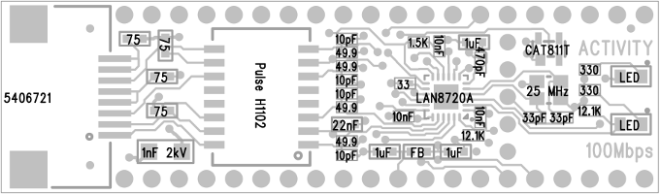
placement-1

Bill of Materials:

Qty  Part                               Digikey
---  ----                               -------
1    LAN8720A                           LAN8720A-CP-CT-ND
1    CAT811T                            CAT811TTBI-GT3OSCT-ND
1    Crystal, 25 MHz                    535-13419-1-ND
1    Transformer, Pulse H1102FNL        553-2204-1-ND
1    Connector, RJ45                    A102068CT-ND
1    Capacitor, 1nF, 2000V              709-1036-1-ND
2    Capacitor, 33pF                    490-5936-1-ND
1    Capacitor, 470pF                   490-1297-1-ND
3    Capacitor, 10nF                    445-1260-1-ND
1    Capacitor, 22nF                    490-8022-1-ND
3    Capacitor, 1uF                     399-5090-1-ND
1    Resistor, 33, 1%                   311-33.0LRCT-ND
4    Resistor, 49.9, 1%                 RMCF0402FT49R9CT-ND
4    Resistor, 75, 1%                   RHM75.0HCT-ND
2    Resistor, 330, 1%                  311-330LRCT-ND
1    Resistor, 1.5K, 1%                 311-1.50KLRCT-ND
2    Resistor, 12.1K, 1%                P12.1KLCT-ND
1    Inductor, Ferrite bead             553-2387-1-ND
2    LED, Green                         475-1410-1-ND

Ethernet PHY for Teensy 3.5 and 3.6